What Endura hardwood shutters are made from
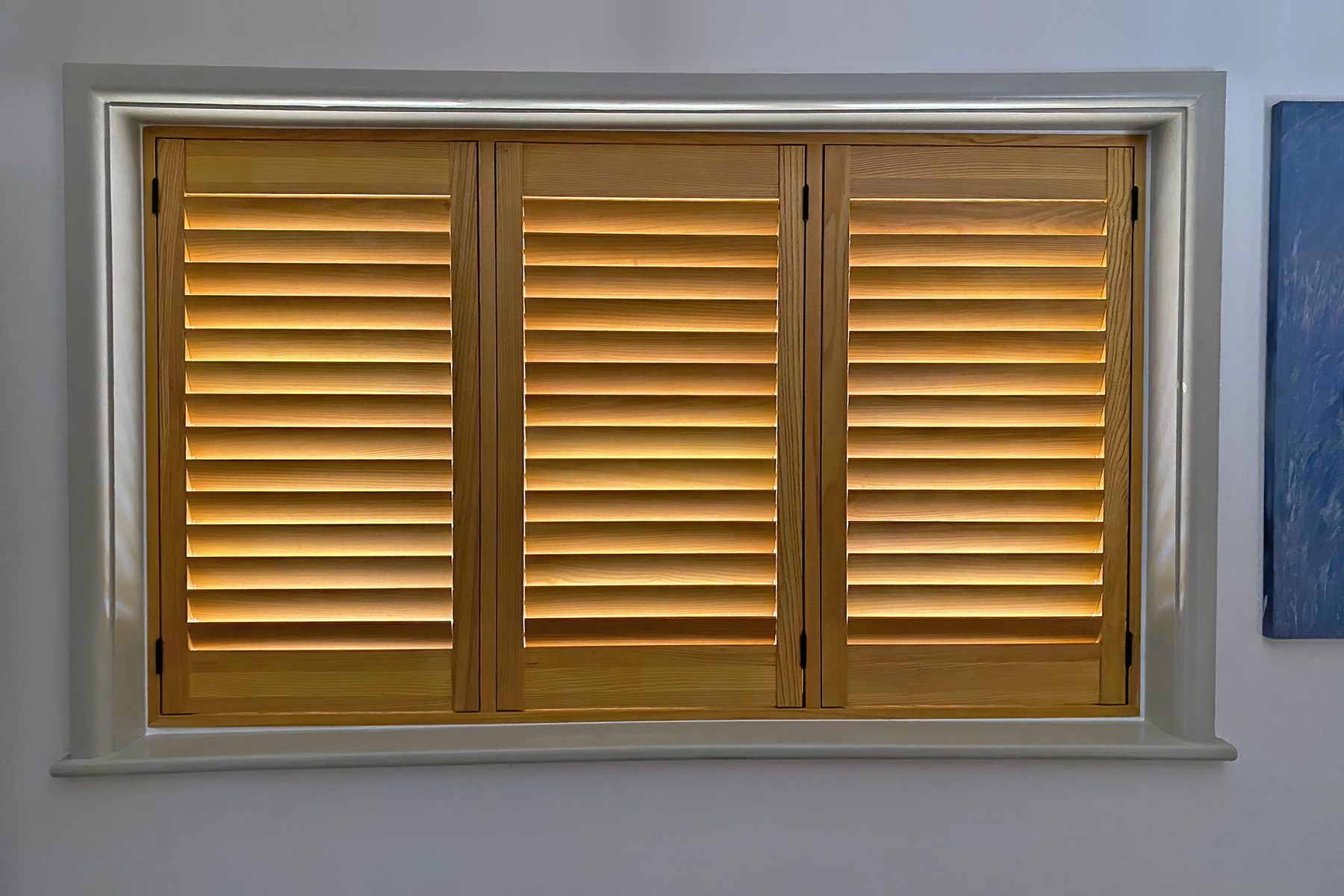
Endura shutters are built from solid hardwood — a stable, furniture-grade timber selected for its straight grain and uniform density. Each louvre, frame, and stile is milled from the same species and kiln-dried to control moisture content before the panels are assembled, painted, and finished. The result is a shutter that responds predictably to the seasonal temperature and humidity cycles of UK homes rather than warping or splitting at the joints.
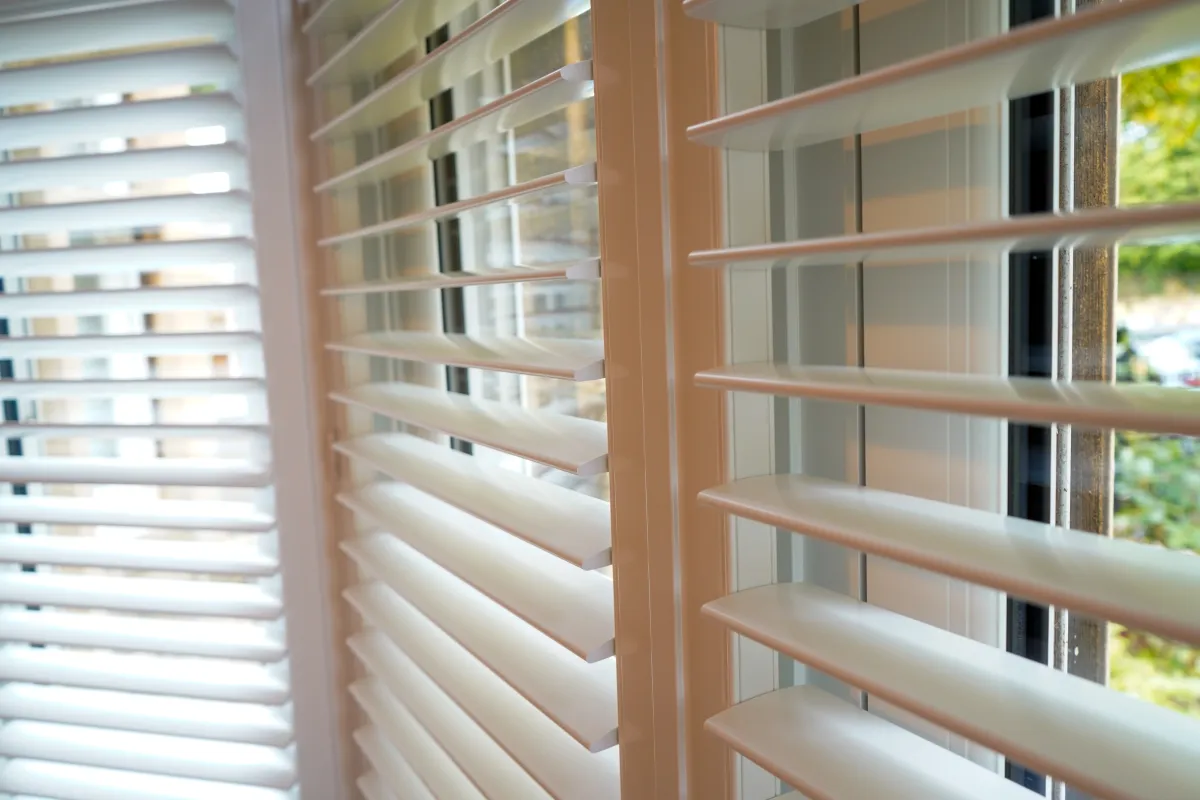
The painted finish on Endura shutters is applied in multiple coats in a controlled factory environment, giving a smoother and more durable surface than site-applied paint. The paint is hardwearing and chip-resistant under normal use. When the finish eventually needs attention — typically after 15–20 years — it can be touched up or repainted in situ without removing the panels. For a detailed look at how hardwood performs over time compared to composite and aluminium, see our guide to how long shutters last.
The rooms and window types where hardwood delivers
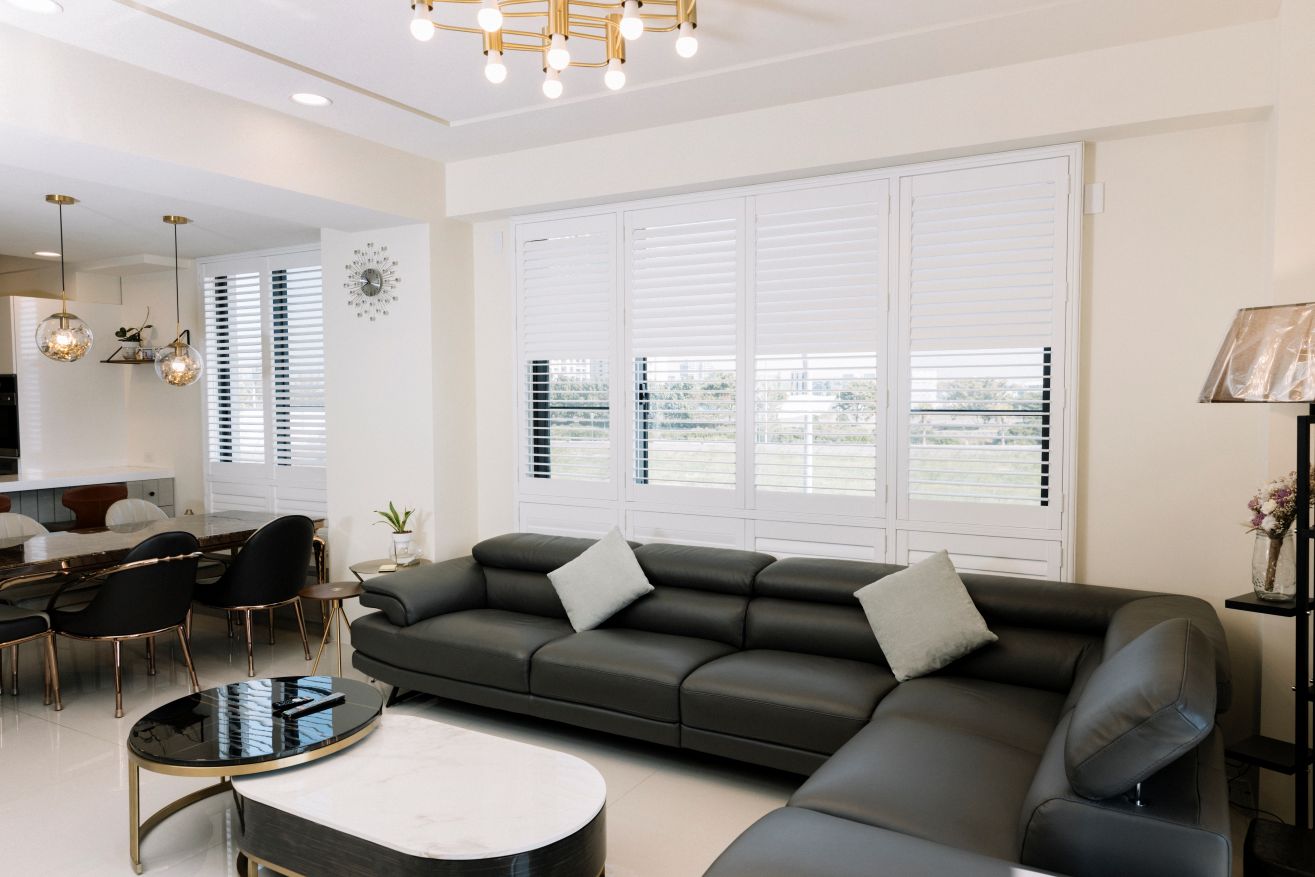
Hardwood shutters perform at their best in dry rooms with good natural light and architectural detail — the conditions where the material's warmth and weight are visible. The principal reception room of a period London house, a formal dining room, a master bedroom with deep sash reveals: these are the spaces where full-height Endura shutters look not just acceptable but considered.
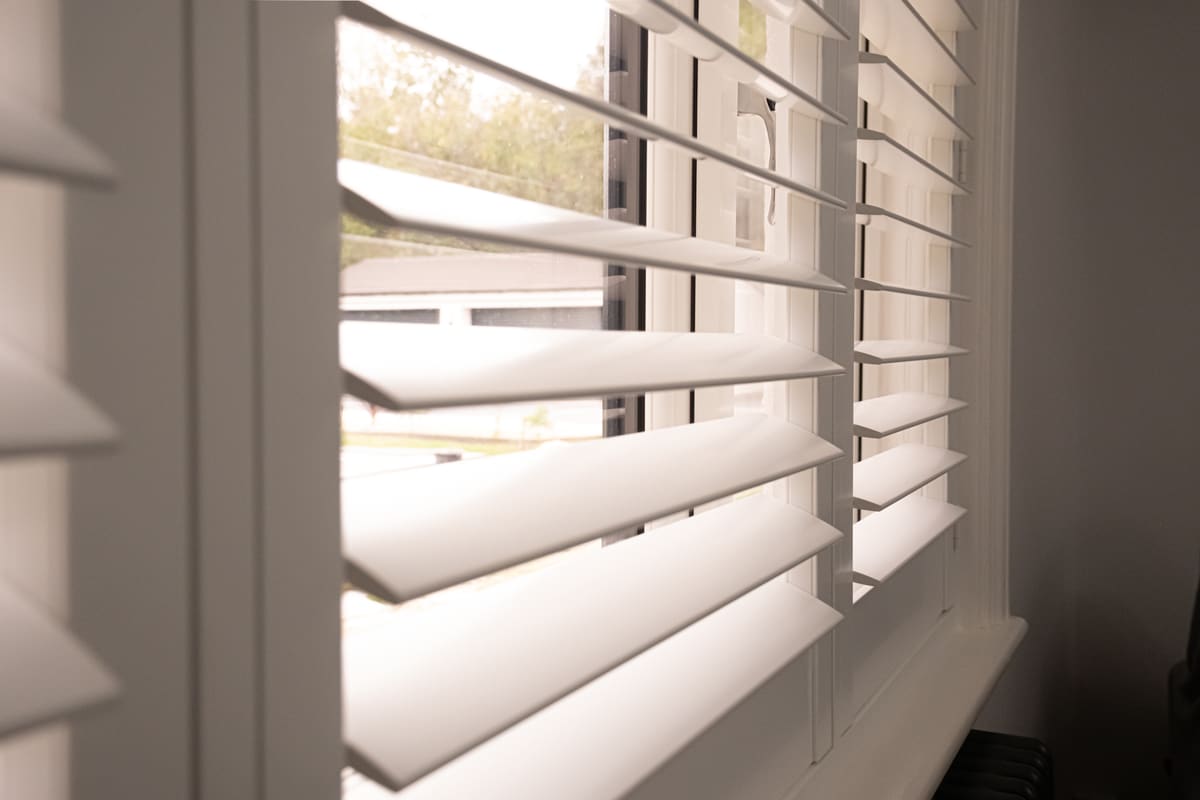
Sash windows are the natural home for hardwood shutters. The deep reveals that characterise Victorian and Edwardian properties give the frame plenty to bite into, the tall proportions suit full-height panels, and the combination of period timber surrounds and painted hardwood shutters reads as a coherent whole rather than two different ideas in the same room. Bay windows are the other strong case: a bay window installation in hardwood — mitred at each angle, painted to match the skirting, with a mid-rail level with the sash meeting rail — has a built-in architectural quality that composite does not fully replicate.
Tier-on-tier shutters in Endura work particularly well for first-floor bedrooms and front-of-house windows where independent control of the top and bottom halves matters. The weight of hardwood panels means each section closes firmly and holds its position without drift — a practical point in a bedroom where precise light control overnight is the priority. For more on how shutters perform in period homes, see our guide to shutters for Victorian period homes.
Colour options and custom paint matching
Endura shutters come in a range of standard whites and off-whites — from bright white through to warm cream and heritage ivory — covering the tones that most UK homeowners actually specify. The standard palette is curated around colours that complement period architecture and neutral contemporary interiors alike.
Where Endura has a clear advantage over composite is custom colour matching. Hardwood accepts RAL and BS paint systems, so the shutters can be matched precisely to your existing skirting boards, architraves, or window surrounds — important in a period room where a slightly different tone from the woodwork looks wrong. Some clients bring a sample of their skirting paint to the survey and we colour-match directly from that. For guidance on how colour choices interact with room type and natural light, see our shutter colour options guide.
- Standard finishes: bright white, soft white, off-white, warm white, heritage cream
- Custom colour matching: available via RAL or BS reference — bring a paint sample to the survey
- Custom colours add approximately 2–3 weeks to lead times
- Hardwood accepts paint differently from composite — the surface absorbs rather than sits on top, giving a more integrated finish
Endura versus composite — when hardwood is the right choice
The honest picture is that composite outperforms hardwood in most of the house. Mimeo composite shutters are waterproof, maintenance-free, easier to clean, and 25–35% less expensive per square metre. For kitchens, bathrooms, rental properties, and rooms that see regular moisture, composite is the correct specification. For a full breakdown of where composite wins, see our Mimeo composite shutters guide.
Hardwood wins in dry rooms with architectural character — where the shutters are a considered finish and the quality of the material is visible. A period living room with original cornicing and hardwood skirting; a formal dining room where the shutters are part of the room's design brief; a master bedroom where surface quality matters. In these situations, the extra cost of Endura over composite is justified by the difference in finish: hardwood has a density and warmth that the polymer shell on composite does not match.
The practical approach for most period London houses is a mixed specification: Endura hardwood in the principal reception rooms and bedrooms, composite or aluminium in bathrooms, kitchens, and basement conversions. The two materials come in closely matched whites and off-whites, so the house reads consistently without every room being specified to the highest material grade. For further context on the wooden shutter category as a whole, see our guide to wooden plantation shutters.
Realistic 2026 pricing for Endura hardwood shutters
Endura pricing is driven by window dimensions and configuration — bay angles, shaped tops, and tier-on-tier splits all affect the final figure. The prices below are supply-and-fit, covering survey, manufacture, frames, hardware, delivery, and installation. Nothing is added after the written quote is approved.
- Standard flat sash or casement window: from £550 per m² supply and fit
- Bay window (three panes, mitred frame): from £1,650 total supply and fit
- Tier-on-tier: approximately 10–15% above full-height pricing for the same window
- Shaped or arched tops (common in Victorian properties): from £620 per m²
- Custom paint colour: add approximately £80–£120 per window to the above
Lead times and what to expect from installation
All Endura shutters are UK-manufactured, with production beginning as soon as you approve the written quote. Standard lead times run 6–8 weeks from survey to installation. Shaped or arched top shutters require 8–10 weeks; custom colour orders add 2–3 weeks to the standard timeline. For reference, composite orders typically run 4–6 weeks — one reason composite is preferred when speed matters.
Installation for a typical Endura order is a single half-day. A room with a bay window and two additional sash windows takes roughly four hours, including the final hardware check and handover. The surveyor confirms the installation date at quote stage so there is no wait for a booking slot after approval. For a step-by-step walkthrough of the full process, see our installation process guide. For period-home scenarios across south and west London, the guide to shutters for Victorian and Edwardian homes covers the most common configurations we encounter.
To get a fixed all-in price for your windows, book a free home survey — you will receive a written quote within 48 hours with no obligation to proceed. Browse the full Shutters Factory product range before the survey if you want to arrive with a material preference already in mind.