What Mimeo composite shutters are actually made of
Mimeo composite shutters use a solid polymer core encased in a furniture-grade PVC shell. There is no wood fibre in the panel — which is precisely the point. Because the core is inorganic, it cannot absorb moisture, swell at joints, or harbour mould growth. The outer shell is factory-painted and colour-stable: it will not yellow, crack, or peel under normal UK indoor conditions.
The louvres, frames, and stiles are all manufactured from the same material, so the whole assembly responds to humidity uniformly rather than at different rates. In a high-moisture room like a bathroom or a basement kitchen, that consistency is the reason composite lasts decades where hardwood might struggle within a few years.
For a fuller overview of how the material compares across all shutter types, see our complete composite shutters buyer's guide.
Bathrooms and en-suites — where composite wins decisively
The single most common shutter mistake in UK homes is fitting painted hardwood in a bathroom without adequate ventilation. The result is swelling at panel joints within two to three years, followed by paint cracking along the grain and eventual warping of the louvres. It is one of the most avoidable shutter failures, and composite eliminates it entirely.
Bathroom shutters made from Mimeo composite are unaffected by daily steam cycles, direct splashes from the bath or shower, and the long stretches of high relative humidity that even well-ventilated UK bathrooms experience in winter. Wipe them down with a damp cloth and mild soap — no specialist products, no seasonal re-treatment, no concerns about the extractor fan not running.
Composite is also the sensible choice for en-suites in Victorian conversions and basement flats, where ventilation is often poor by design and a window that opens onto an internal light well contributes little airflow. In these conditions, hardwood is an ongoing liability. For a detailed comparison of bathroom shutter materials, see our bathroom shutters waterproof options guide and the definitive guide to waterproof shutters.
Supply-and-fit pricing for composite in a standard UK bathroom starts from £380 per m², including survey, frames, hardware, and installation.
Kitchens — grease, steam, and daily wiping
Kitchens combine three challenges that wood handles poorly over time: airborne grease from cooking that settles on every nearby surface, steam from hobs and kettles that raises localised humidity well above background levels, and the daily wiping with mild detergents that strips paint finish from wood long before the shutter itself needs replacing.
Mimeo composite shrugs off all three. The polymer shell does not absorb grease and responds to repeated cleaning without losing its finish. The panel-to-frame joints do not soften or swell in sustained steam. And because the colour is integral to the shell rather than applied on top, moderate chemical cleaners — the kind that actually cut kitchen grease — do not damage it.
Kitchen shutters are one of the most frequently replaced categories in the UK, largely because homeowners initially choose wood for the look and end up replacing it within a decade. Specifying composite from the outset avoids that cycle. For the full breakdown of material choices by window position in a kitchen, see our kitchen shutters heat and steam guide.
Rental properties and high-traffic homes
For landlords and high-footfall households, the decision criteria for shutters are different from an owner-occupied living room. Durability, ease of cleaning, and the ability to withstand hands that are not always gentle matter more than the precise warmth of the paint finish.
Composite is the standard recommendation for rental properties for three reasons. First, the surface is genuinely scrub-resistant — crayons, sticky fingers, and the scuffs that accumulate on louvres with regular handling do not leave permanent marks. Second, the material does not require periodic maintenance: there is no repainting schedule, no seasonal treatment, and no wood movement to adjust for between tenancies. Third, composite's lower cost per square metre means a landlord fitting a three-bedroom flat can dress every window for a realistic budget without compromising on quality.
The shutters for rental properties guide sets out the full landlord case in detail, including warranty terms and what to expect from a composite shutter across a ten-year hold period.
Cost — composite versus hardwood at comparable quality
Composite's price advantage over hardwood is real and consistent. At comparable louvre size and frame quality, Mimeo composite runs roughly 25–35% less than Endura painted hardwood on a like-for-like window.
For a single window, that difference is manageable. For a Victorian terrace with eight or ten windows to dress — bay on the ground floor, several sash windows upstairs, plus bathrooms and a kitchen — the aggregate saving on composite versus hardwood can run to £1,500–£3,000 on a whole-house order. That is a meaningful difference for most budgets, and in rooms where hardwood provides no practical benefit over composite (bathrooms, kitchens, children's bedrooms), it is money spent without return.
Reference pricing for Mimeo composite supply and fit: standard flat sash or casement window from £380 per m²; bay window (three panes, mitred frame) from £1,200 total; tier-on-tier from £420 per m². For hardwood equivalents and a full breakdown of what drives shutter pricing across the UK, see our complete guide to window shutter prices in 2026.
Where hardwood still wins
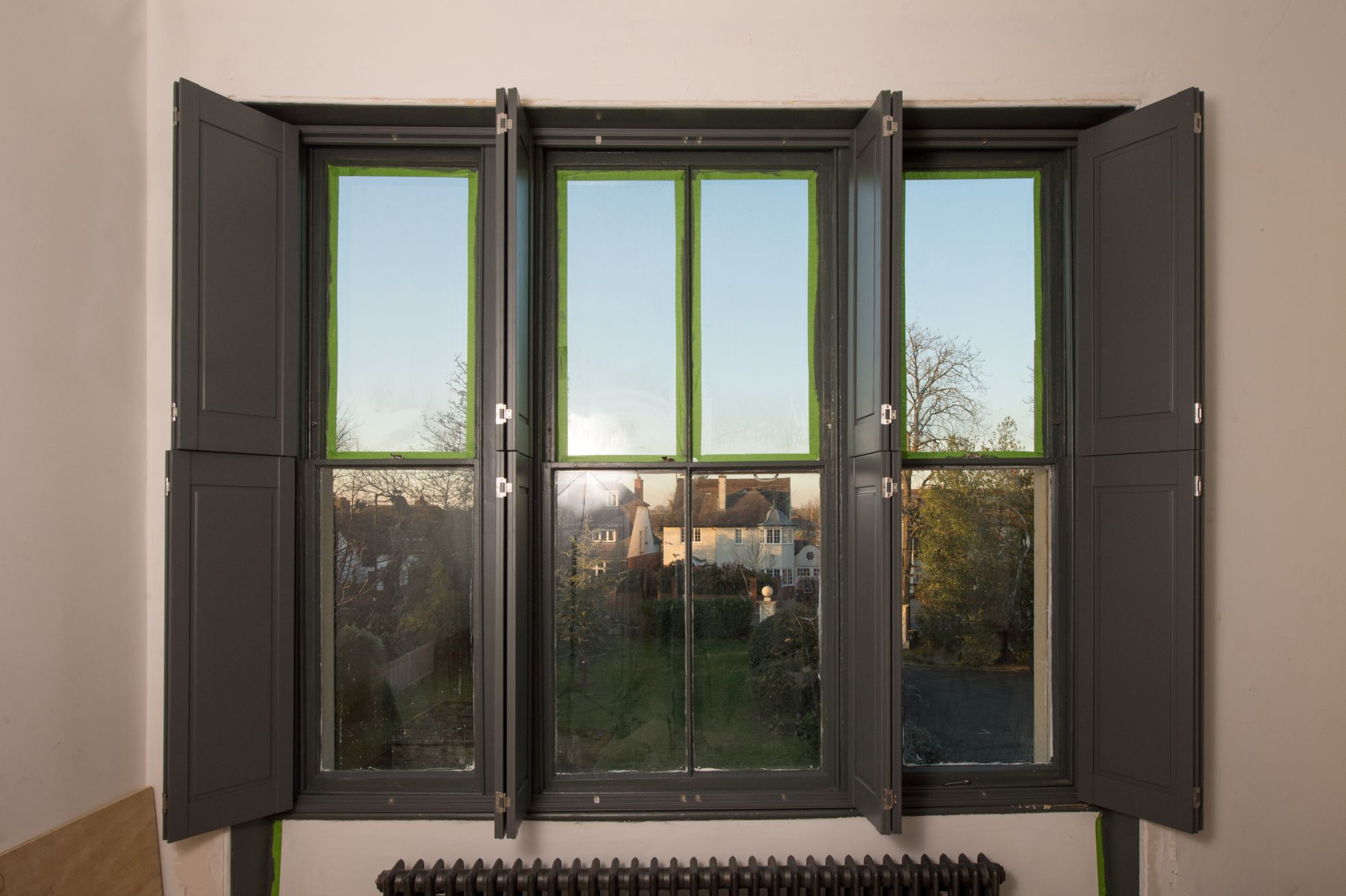
Composite does not outperform hardwood in every situation — and it is worth being honest about that. In a period London living room with original cornicing, picture rails, and architraves, a custom-painted Endura hardwood shutter has a weight, depth of finish, and warmth that composite currently does not match. Hardwood accepts bespoke colour matching to existing trim, ages in a way that can add character, and feels unambiguously premium in rooms where that distinction matters.
The practical dividing line: use composite wherever moisture, heavy cleaning, or budget is a priority; use hardwood in dry rooms where the shutters are a considered finish and the rest of the interior is specified to the same level. Most houses end up with a mix of both — composite in bathrooms and kitchens, hardwood in the principal reception room. For the complete lifespan picture by material and room type, see our guide to how long shutters last.
Aluminium (Dura) is a third option for very wide windows, bi-fold door openings, and exterior or coastal installs — the cases where composite panels would need to be split to span the opening. For most standard UK windows, however, composite is the practical default and aluminium is a specialist upgrade.
Styles and lead times for Mimeo composite
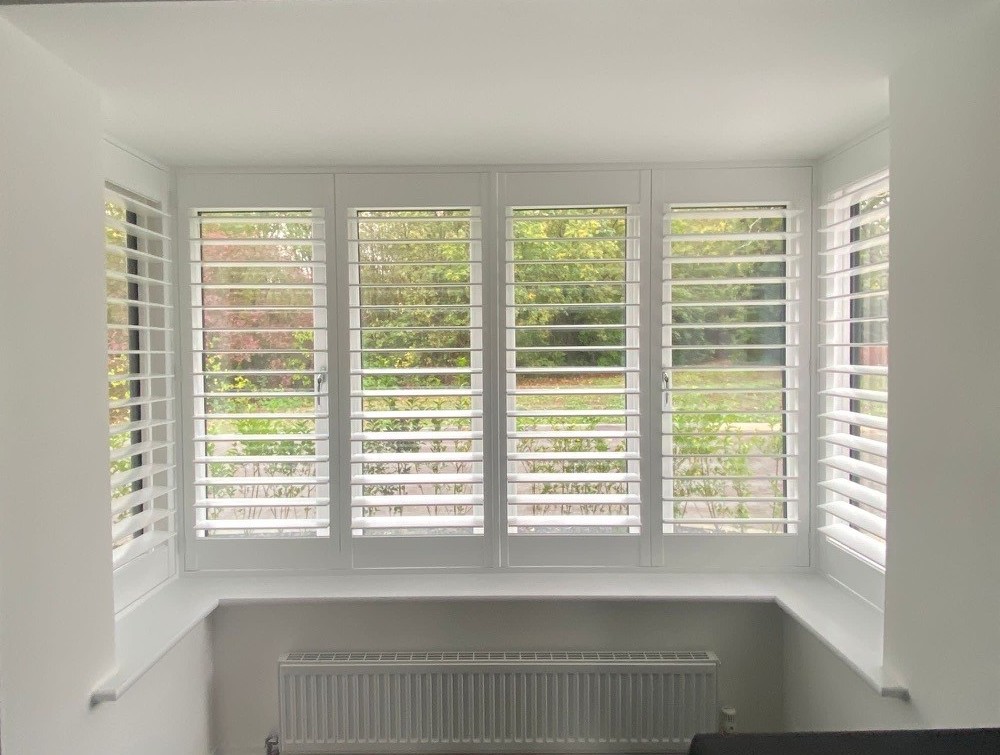
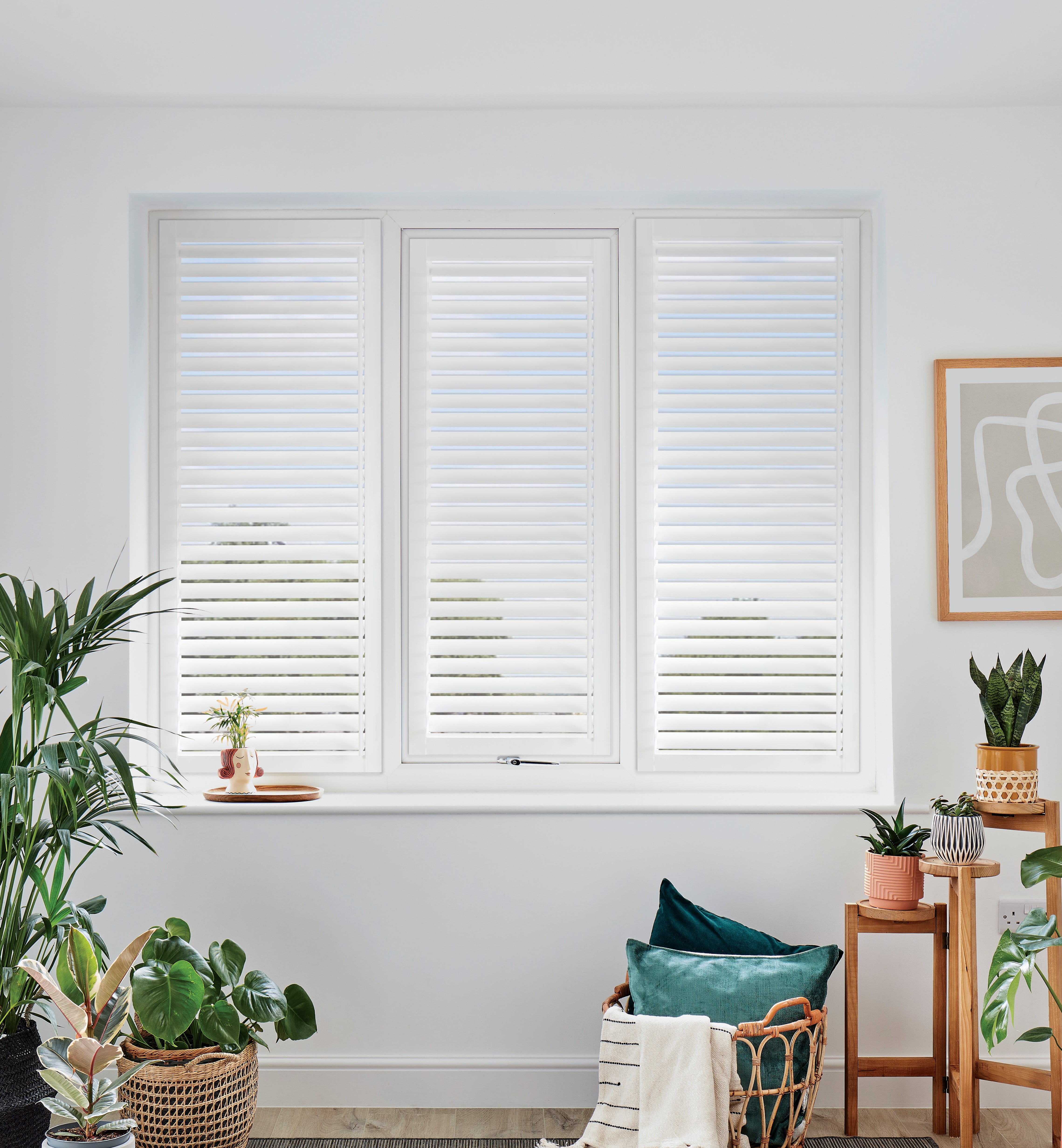
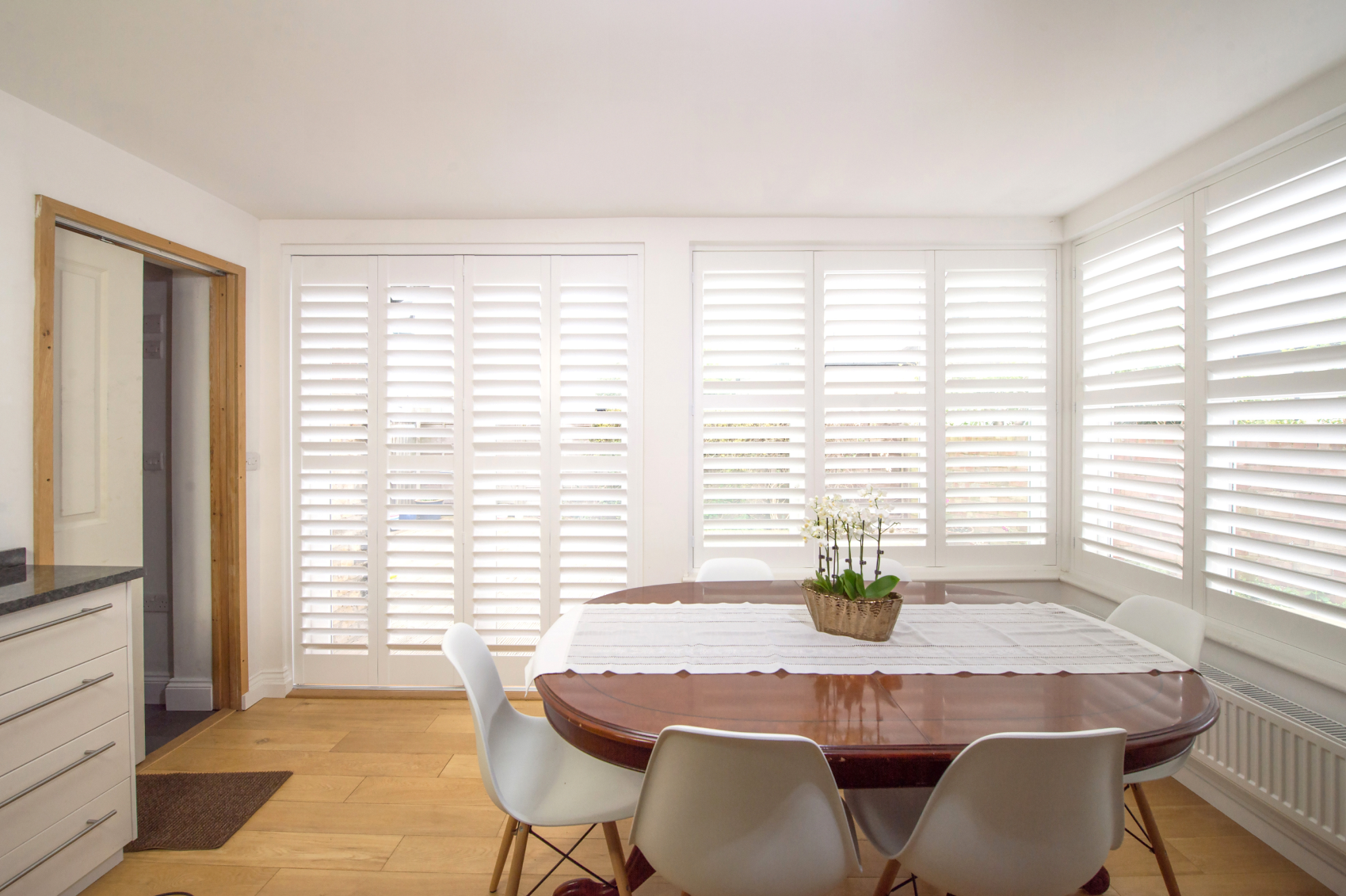
Mimeo composite is available across the full range of shutter styles. Full-height shutters in composite are the most common order — a single continuous panel per side with an optional mid-rail suits the majority of UK windows regardless of whether the property is a Victorian terrace or a modern flat. Tier-on-tier, café style, solid panel, and tracked configurations are all manufactured in the same composite material.
Lead times for Mimeo composite are the fastest in the Shutters Factory range: typically 4–6 weeks from the survey visit to installation, including UK manufacture, delivery, and the fit itself. That is 2–4 weeks shorter than equivalent hardwood orders, and considerably faster than imported panel alternatives.
Browse the full Shutters Factory product range or go straight to the Mimeo product page for colour options, louvre sizes, and specification details. If you want a fixed supply-and-fit price for your specific windows, book a free home survey — pricing is confirmed in writing within 48 hours of the visit, with no obligation to proceed.