What paulownia is and why it matters for shutters
Strato shutters are made from paulownia (Paulownia tomentosa), a fast-growing deciduous hardwood native to East Asia that has been cultivated for commercial timber production across Europe, North America, and Australasia for several decades. It is classified as a hardwood by botanical definition — the wood comes from a broad-leaved, flowering tree — but its density is unusually low compared with other hardwoods. Kiln-dried paulownia typically measures 240–300 kg/m³: significantly lighter than basswood (around 450 kg/m³), oak (around 720 kg/m³), or the denser hardwoods used in traditional joinery.
For plantation shutters, this density difference is practically meaningful rather than just a specification footnote. Shutter panels carry their own weight on hinge points at the frame, and tilt rods manage the coordinated angle of every louvre in a panel. A lighter panel places less cumulative load on those hinge points across years of daily operation. It also means that taller panels — floor-to-ceiling configurations on full-height shutters or multi-panel bay configurations — operate with noticeably less effort than the equivalent heavier hardwood product. For anyone using shutters daily, particularly in a household with older residents or children, the physical difference between paulownia and a denser hardwood is apparent from the first use.
Paulownia also has a fine, even grain structure that accepts a smooth painted finish with very little filler or primer preparation compared with open-grained hardwoods. The result is a clean, contemporary painted surface that suits the white and off-white shutter finishes that account for the majority of UK residential shutter orders. For more on why paulownia was adopted by the shutter industry ahead of traditional timber species, see our guide to lightweight wood shutters and why paulownia wins.
Strato versus other materials in the range
Understanding where Strato sits relative to the other products in the range helps clarify the specification decision. The range covers four principal shutter materials: Mimeo composite, Strato paulownia, Graino paulownia, and Endura painted hardwood — each suited to a different set of priorities.
Composite is the waterproof, fully moisture-resistant option — the correct specification for kitchens, bathrooms, and any room with sustained humidity or condensation. It is not real wood and cannot be refinished, but it is dimensionally stable in conditions that cause timber to move. For a detailed look at the scenarios where composite outperforms wood, see our guide to where Mimeo composite shutters outperform wood.
Within the wood range, Strato and Graino are both paulownia — they share the same fundamental material properties, including that characteristic low density and fine grain. The distinction is in the finish: Strato is supplied in a smooth painted finish, typically white, off-white, or a range of painted colours. Graino is finished to reveal the natural timber grain through a stained or lacquered surface. If a genuine woodgrain appearance is the priority for a room, Graino is the specification to consider. For a full treatment of the Graino product and its grain finish options, see our guide to natural timber shutters and the Graino range.
Endura painted hardwood sits above Strato in the range. It uses denser, harder timber species with a deeper material weight and a premium paint system. For period properties where the shutters will be inspected closely as a joinery element, Endura's heavier feel and more substantial material character can justify the additional cost. For standard UK residential windows where the finish and performance at normal viewing distance is the criterion, Strato delivers indistinguishable visual results at a more accessible price point. For a detailed look at the Endura range, see our Endura hardwood shutters guide.
Where Strato shutters suit UK homes best
Strato is the broad-applicability painted hardwood shutter — the right specification for most standard windows in most rooms across a typical UK home, provided moisture is not the primary concern. The combination of a genuine timber product, a smooth painted finish, and a price point below premium hardwood makes it the default wood shutter for living rooms, bedrooms, hallways, and period properties.
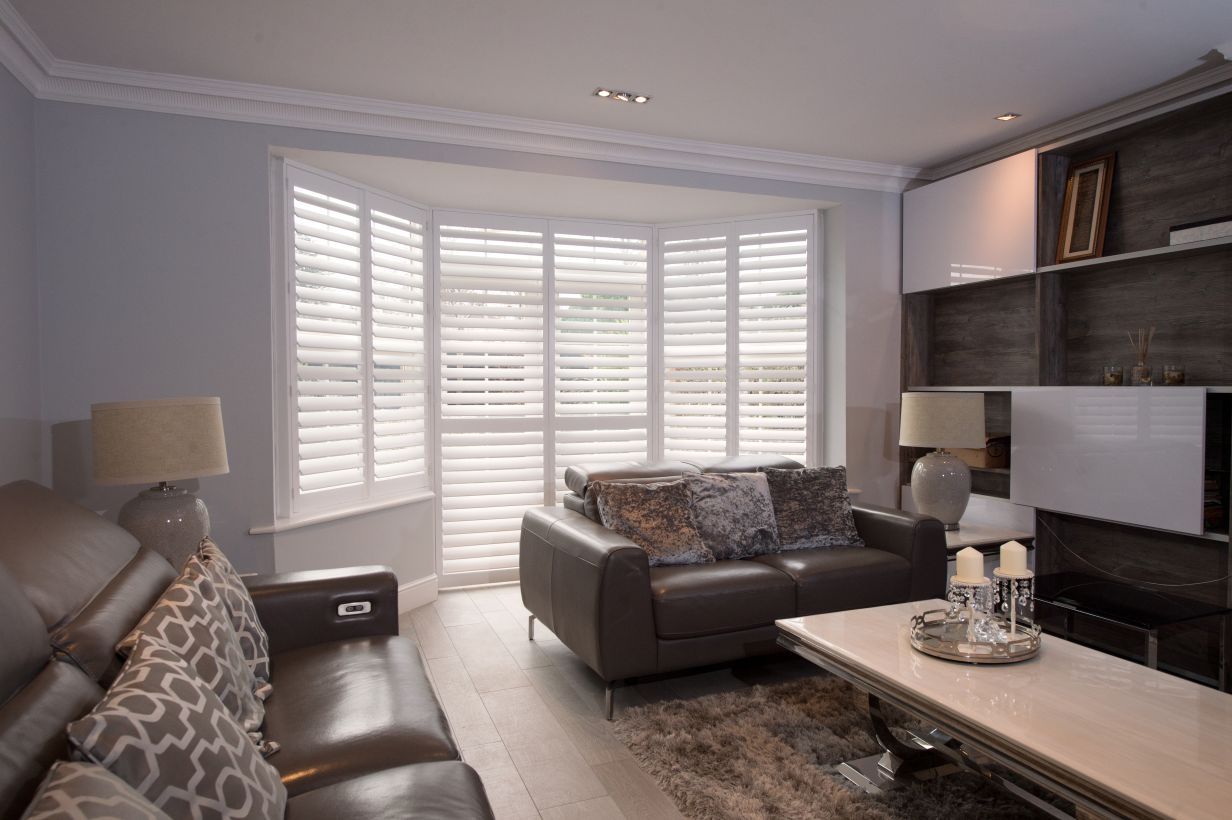
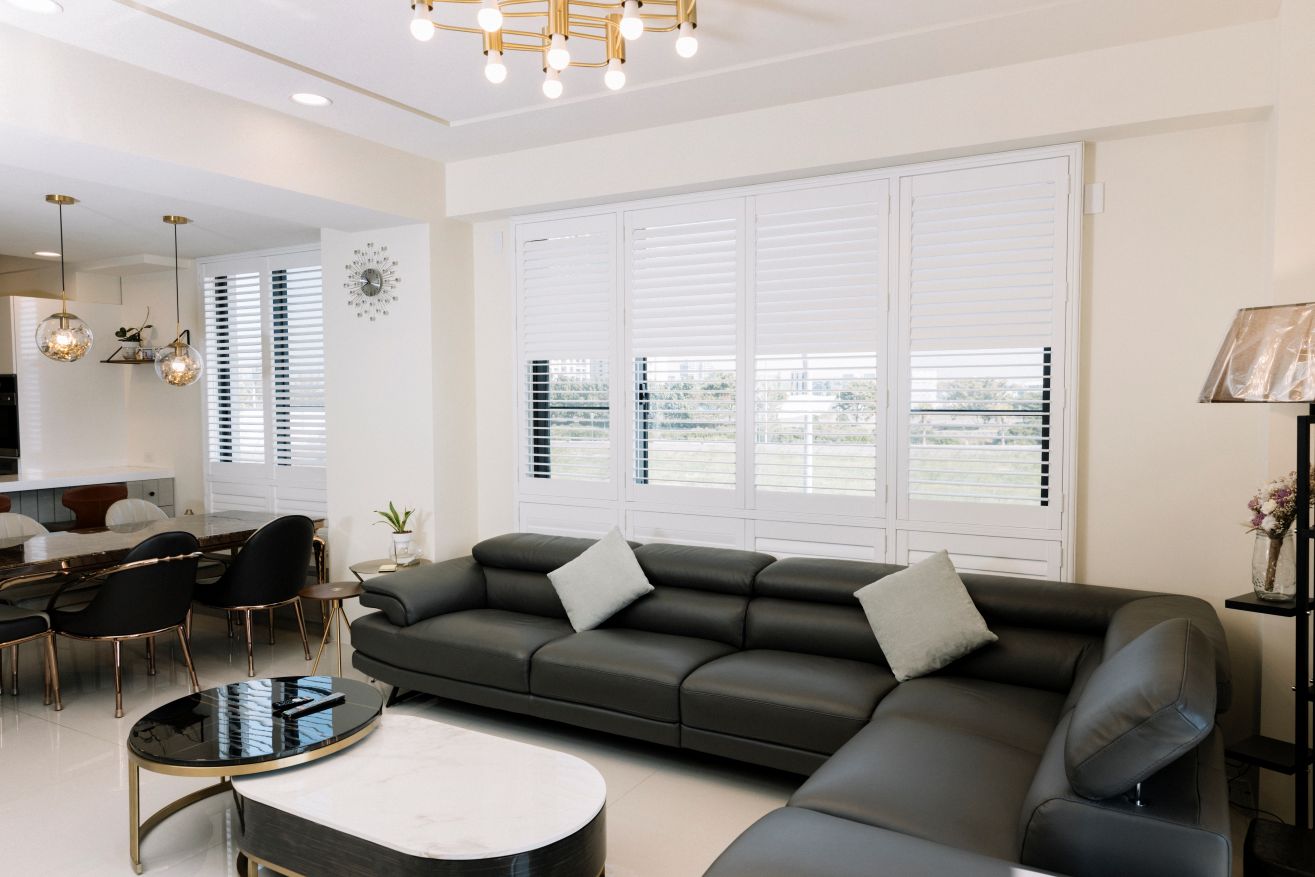
- Living rooms and reception rooms — the standard application. Full-height shutters in Strato on a standard sash window or casement window provide the clean, considered appearance that has made plantation shutters the most popular fixed window treatment in London homes. The light painted finish reflects daylight into the room; the louvres allow continuous adjustment from fully open to full privacy.
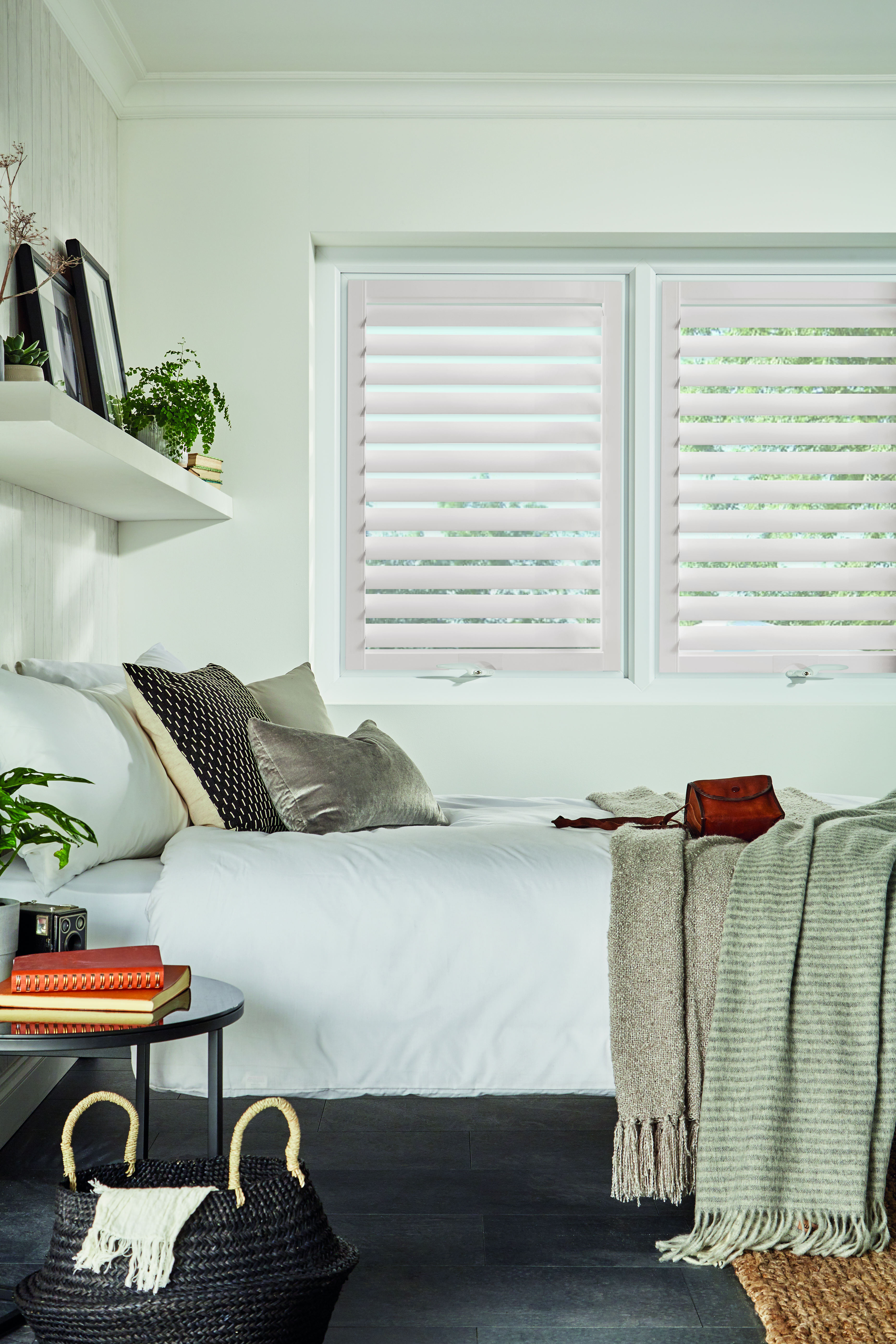
- Bedrooms — Strato paired with a 47 mm or 63 mm louvre in a bedroom provides strong light control and a quiet, uncluttered aesthetic. The low weight of paulownia means that even a tall panel — 2.2 m floor-to-ceiling — operates smoothly without effort at the tilt rod. For more on optimising shutters for bedroom light control, see our guide to bedroom shutters.
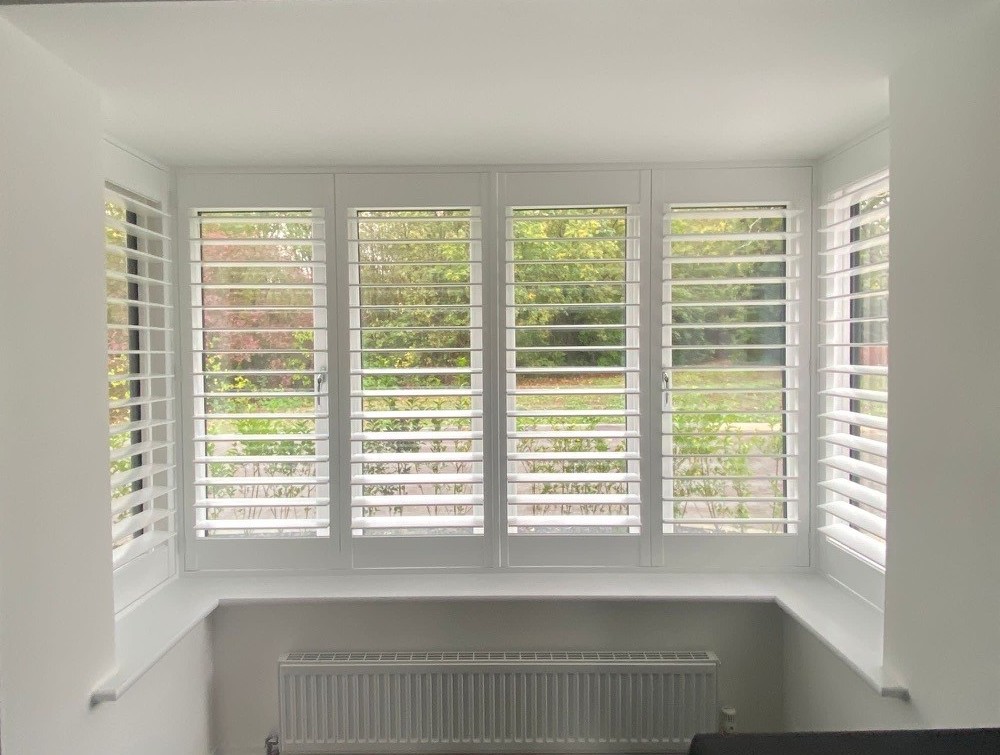
- Bay windows — bay window shutters require panels that fold compactly into the angled reveals when open. The lighter weight of paulownia panels makes this configuration more practical than with heavier hardwoods — less force is required to fold and unfold the panels, and there is less cumulative hinge wear over time. Bay window configurations in Strato are among the most frequently specified combinations in London period homes.
- Period and Victorian properties — the smooth painted finish of Strato reads as traditional painted timber from both inside and outside the property. For Victorian terraces and Edwardian semis where the visual language is painted woodwork, Strato delivers period authenticity without the price premium of heavier hardwood.
- Tier-on-tier configurations — tier-on-tier shutters require two panels stacked vertically in the reveal, each hinged independently. The reduced weight of paulownia is particularly beneficial here, where the upper panel operates at shoulder or head height: a lighter panel is easier to open without disturbing the lower panel's position.
Louvre sizes and colour options
Strato shutters are available in three louvre widths: 47 mm, 63 mm, and 89 mm. Each size has a distinct visual character and practical effect on light control.
The 47 mm louvre is the traditional plantation shutter specification — a tighter, more classical look that suits period properties and smaller windows. When open, more slats fill the panel, creating a layered horizontal rhythm well established in the UK period home aesthetic. The 63 mm louvre is the most commonly specified size in UK residential installations — a middle ground that reads as contemporary without being stark, and that works across the widest range of window types and interior styles. The 89 mm louvre is the contemporary, open-feeling specification: fewer slats per panel, a more relaxed light-control mechanism, and a look that suits wider, more modern windows rather than traditional sash proportions.
In terms of colour, Strato is available in an extensive range of painted finishes — from standard cotton white and antique white through pale greys, soft blues, and greens, to deeper custom-mixed shades. All Strato shutters are factory-painted in the chosen colour as part of the manufacturing process. For a full exploration of colour options and how to choose a shutter colour for a specific interior, see our guide to shutter colour options.
Thermal and acoustic performance
A closed Strato shutter panel creates a still-air layer between the louvres and the glazing surface. This trapped air acts as an insulating buffer — reducing the rate at which heat conducts from the warmed interior surface of the glazing into the room on a cold day. The thermal effect is meaningful in draughty period properties with single or original sash glazing, where the shutter reduces cold-air convection at the window and lowers the thermal gradient between the glazing and the room. For a detailed treatment of how shutters contribute to thermal efficiency, see our guide to shutters for insulation and thermal benefits.
The acoustic effect of a closed shutter panel operates on a similar principle: the timber panel and the enclosed air layer absorb and reflect sound energy, reducing the transmission of external noise into the room. For properties on busy roads, near train lines, or in dense urban areas, the acoustic contribution of a closed shutter is a secondary benefit that often becomes a selling point after installation. Paulownia's fine, dense cellular structure absorbs sound frequencies effectively, and its dimensional stability across temperature and humidity cycles means panels stay flat and true over the long term.
Paulownia is notably resistant to warping in response to temperature and humidity changes — one of the failure modes that affects some hardwoods used in painted shutter manufacture. Its low density comes with a correspondingly low rate of moisture absorption and dimensional movement, which means Strato panels maintain their flat, even surface across seasonal changes in room humidity without the cupping or twisting that can develop in poorly kiln-dried hardwood.
Realistic 2026 pricing for Strato paulownia shutters
Strato sits in the mid-tier of the shutter range — above composite in price, and below Endura premium hardwood. All figures below are supply-and-fit, covering survey, manufacture, factory paint finish, hardware, delivery, and installation.
- Strato paulownia, standard window, full-height hinged: from £480 per m² supply and fit
- Typical single sash window (approx. 0.9 m × 1.4 m): from £600–£760 total supply and fit
- Bay window configuration, three panels (approx. 2.8 m × 1.4 m total): from £1,900–£2,600 total supply and fit
- Full-height shutters, floor-to-ceiling (approx. 1.0 m × 2.2 m): from £1,060–£1,400 total supply and fit
- Tier-on-tier configuration, standard sash window: from £720–£950 total supply and fit
- Composite (Mimeo) for comparison — from £380 per m² supply and fit; Endura hardwood from £550 per m² supply and fit
- Lead time: 5–7 weeks from confirmed order to installation
Survey, lead time, and what to expect
The survey process for Strato follows the standard procedure: a surveyor visits the property, measures every window to be fitted, checks reveal depth and squareness, photographs the windows, and confirms the louvre size and colour specification. For bay windows and tier-on-tier configurations, the survey is particularly important — the geometry of a bay determines the precise panel widths and hinge angles, and no accurate fixed price is possible without a confirmed measurement.
After the survey, a written fixed quote is provided within 48 hours. Strato shutters are manufactured to the confirmed dimensions and factory-painted in the specified colour. Lead time from confirmed order to delivery and installation is typically 5–7 weeks — one of the shorter lead times in the range, reflecting the straightforward manufacturing process for painted paulownia panels. Installation is carried out by trained fitters who fix the frames into or onto the reveal, hang the panels, set the louvre tension, and leave the shutters operating correctly.
For a full house of Strato shutters — a typical three-bedroom Victorian terrace with bay window, three bedrooms, and a hallway — installation takes one full day. To arrange a free survey and receive a detailed all-in quote, book a free home survey — pricing confirmed within 48 hours with no obligation to proceed. Browse the full range of shutter materials and styles at Shutters Factory products, or view installed examples across different room types in the shutters gallery.