Why fabric window treatments are a problem for allergy sufferers
The core issue with curtains and fabric blinds in allergy households is surface area. A pair of lined curtains hanging floor to ceiling on a standard window presents several square metres of woven fabric surface, plus the lining behind it, plus the heading tape and pleats at the top. Each element is a dust-trapping substrate: the woven structure of the face fabric allows particles to settle into the gaps between threads, the lining folds accumulate dust in the areas that never see direct air movement, and the permanent pleats at the heading become reservoirs that release allergen-carrying particles into the room air every time the curtain is opened or closed.
House dust mites — the primary allergenic driver in UK homes — thrive in exactly these fabric environments. The mites themselves are microscopic, but it is their faecal particles and shed body fragments that trigger the allergic response, principally through two proteins (Der p 1 and Der p 2) that are well-established respiratory and skin allergens. Asthma UK estimates that 80 per cent of people with asthma are allergic to dust mite allergens. A single curtain panel can harbour hundreds of thousands of mites under typical conditions; a pair of full-length curtains in a rarely washed state can represent one of the largest single allergen reservoirs in a home. The same logic applies to Roman blinds, where the horizontal fabric pleats fold over themselves and create warm, sheltered environments ideal for mite populations, and to roller blinds with fabric rolls that accumulate particles in their coiled position.
For a direct comparison of how fabric and hard-surface window treatments differ across privacy, maintenance, and allergen load, our full comparison of shutters and curtains sets out the practical trade-offs by category — a useful reference if you are currently using curtains and want to understand the full picture before making a change.
How plantation shutters differ: the allergen surface comparison
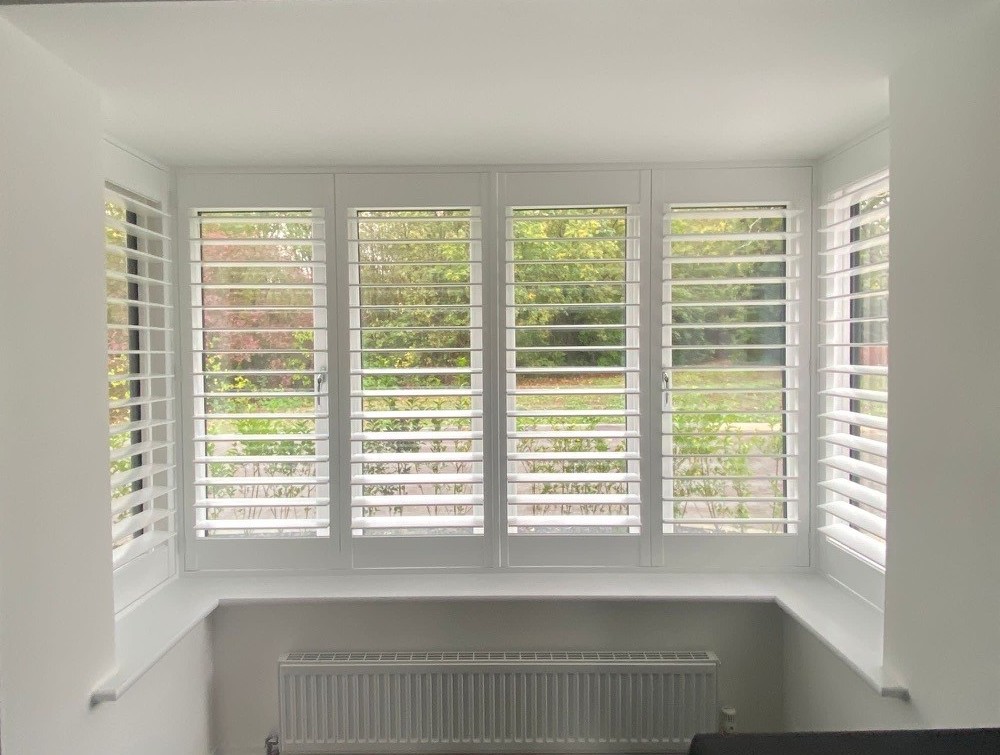
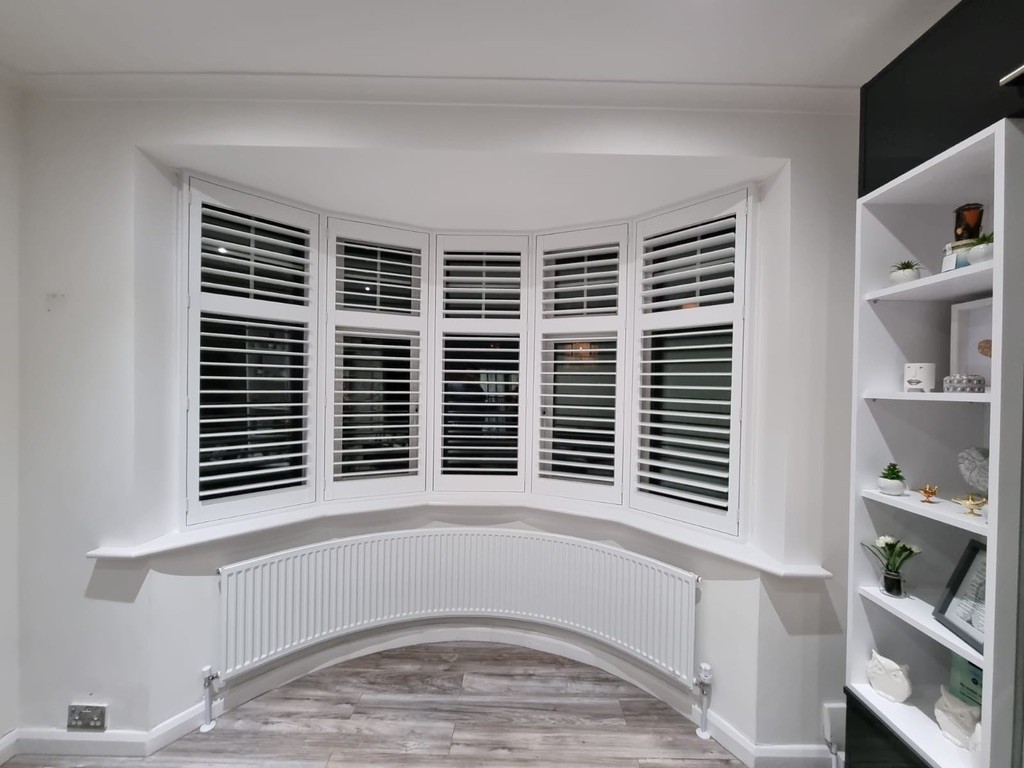
A plantation shutter louvre is a painted hardwood or composite slat, typically 47mm, 64mm, or 89mm wide, with a smooth factory-applied paint finish on all faces. When closed, the louvres present a series of flat, smooth, non-porous painted surfaces. There is no woven structure for particles to embed in, no pleat to shelter a dust mite colony, and no lining fabric that can release accumulated allergens when disturbed. Particles that settle on the louvre surface — and all horizontal surfaces in a room accumulate some dust — rest on the paint finish rather than embedding in it, and a single wipe with a damp microfibre cloth removes them completely.
The contrast with a venetian blind is instructive. Venetian blinds also have hard slat surfaces and are therefore less allergenic than fabric treatments, but they present a much larger total horizontal surface area per window than a closed shutter panel — each individual slat has two faces that accumulate dust, the ladder cords between the slats trap particles in their woven structure, and the mechanism housing at the top of the blind is a dust reservoir that is rarely cleaned. A plantation shutter with the louvres at their most open position presents far less total horizontal surface area than an equivalent venetian blind, and when closed it seals into a near-continuous panel that is simple to wipe from top to bottom in a single pass.
Our honest comparison of shutters and blinds covers the full range of blind types — venetian, roller, Roman, and vertical — against plantation shutters across durability, maintenance, light control, and allergen management. It is a useful starting point if you are currently using blinds and considering whether plantation shutters would better serve an allergy-conscious household.
Cleaning shutters versus cleaning curtains: the weekly reality
The practical difference in allergen management between curtains and shutters is most clearly seen in the cleaning frequency that each requires to maintain a low-allergen environment. Allergy UK recommends washing curtains every three to six months in the context of dust mite management — a wash cycle that requires taking the curtains down, transporting them to a machine or dry cleaner, and re-hanging them once cleaned. Between washes, disturbing the curtains by opening or closing them releases accumulated dust and mite particles directly into the room air. In a bedroom, where curtains are typically drawn and opened daily, this means a daily allergen release event at the window.
Plantation shutters require no equivalent maintenance cycle. The correct cleaning routine — described in full in our complete guide to cleaning plantation shutters — involves wiping the louvre faces with a slightly damp microfibre cloth. A full room of shutters takes three to four minutes. No specialist products are needed, there is no dismantling of the fitting, and no allergens are disturbed into the air in the process: the particles transfer directly from the louvre surface to the cloth. Wiping down shutters weekly as part of a general clean effectively eliminates dust mite habitat from the window area entirely, because the smooth surface offers no viable living environment for mites regardless of how infrequently it is cleaned.
The comparison is similarly stark with fabric Roman blinds. To clean a Roman blind properly — rather than vacuuming over the surface with a soft-brush attachment, which disturbs particles without removing them — the blind must be unhooked from its track, hand-washed or dry-cleaned, and re-fitted. Most homeowners do this annually at most. In the intervening months, every cord-pull releases a small burst of dust from the pleated folds. For an allergy household, this maintenance burden is a structural disadvantage of fabric treatments that no amount of care fully resolves.
Which shutter material is best for allergy management
All plantation shutter materials represent a substantial improvement over fabric window treatments from an allergen perspective, because the fundamental advantage — a hard, smooth, non-porous surface — applies to every specification. The differences between materials are relevant primarily for rooms where moisture is a factor, because damp fabric can support mould spore growth in addition to dust mites, and this is where material choice matters most.
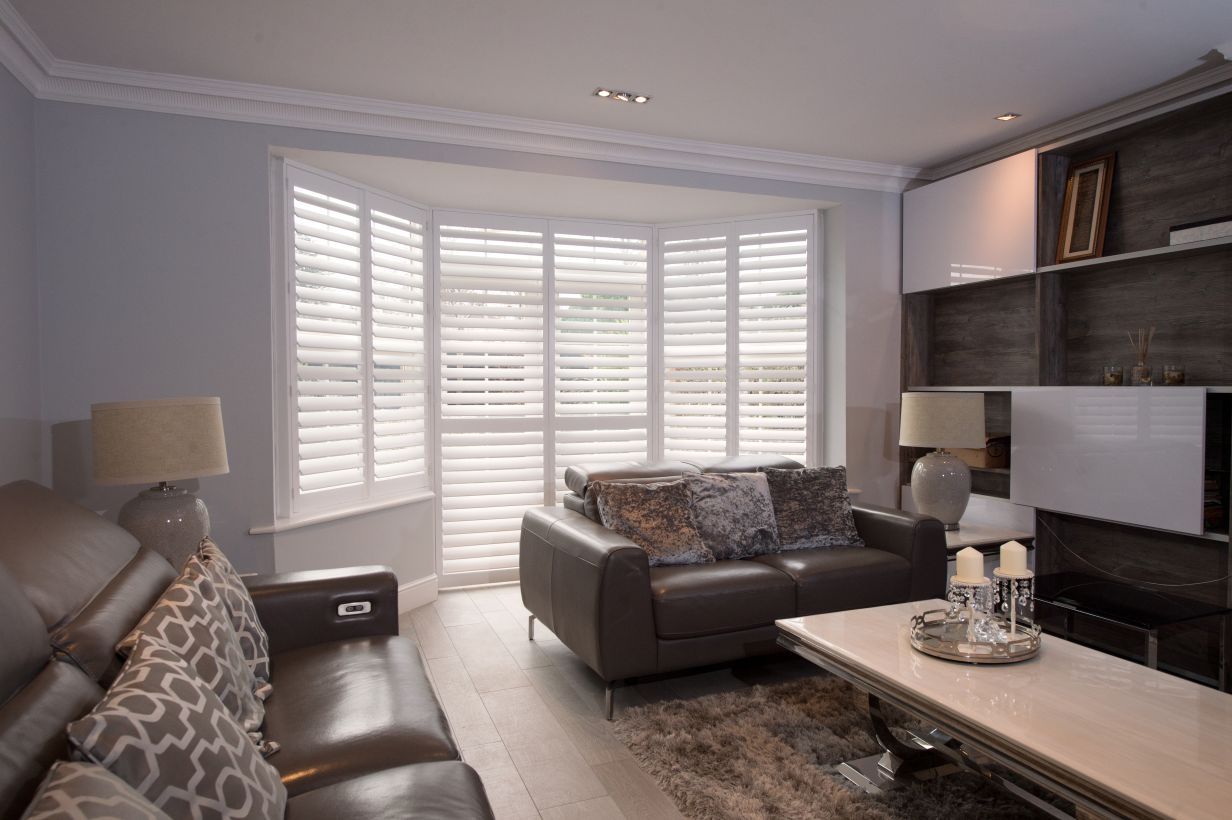
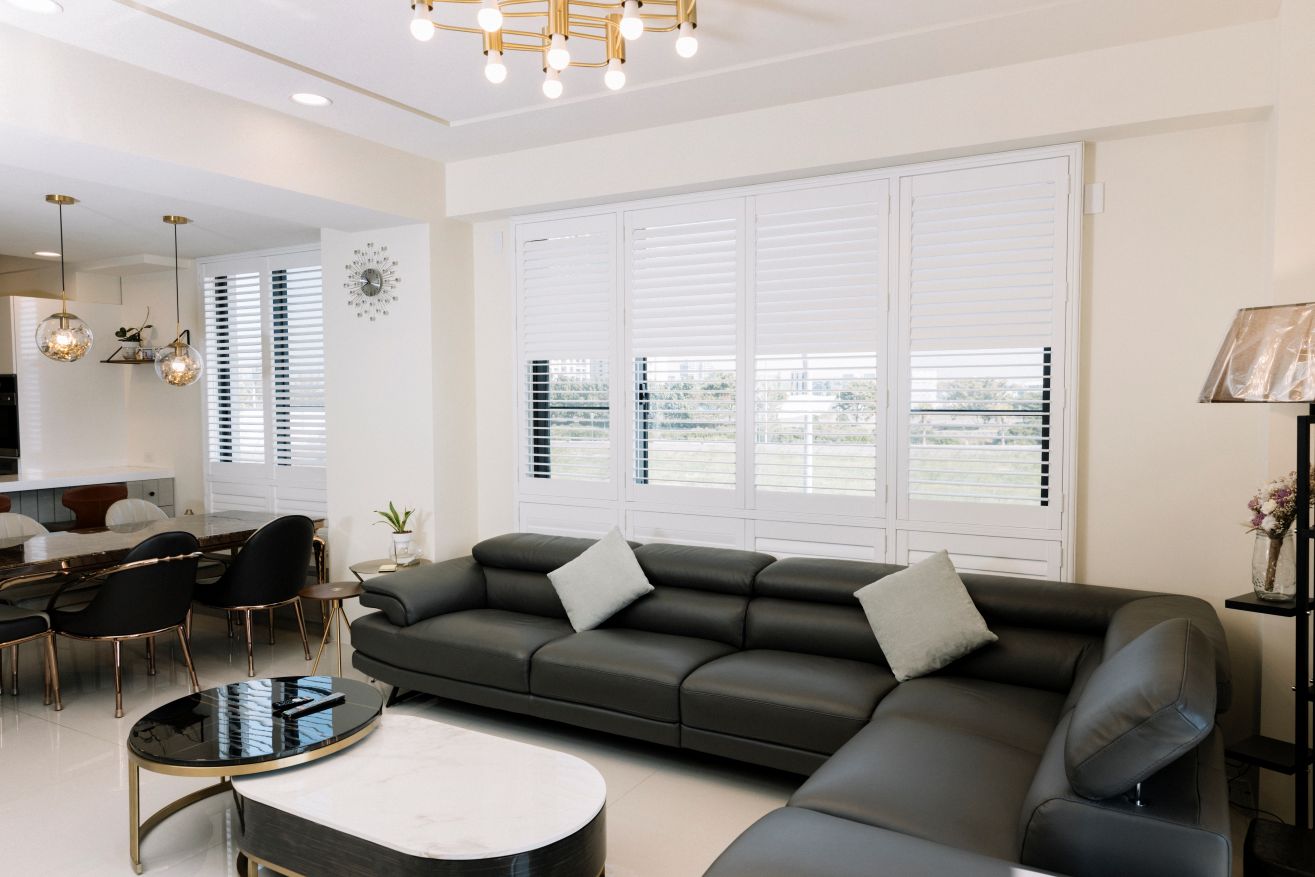
Hardwood shutters — paulownia or engineered hardwood panels with a factory paint finish — are the standard specification for living rooms and bedrooms where moisture is not a concern. The painted surface is comparable in hardness and non-porosity to painted kitchen cabinetry and wipes clean with no restriction. For the straightforward dust allergen reduction case in a dry room, hardwood is entirely adequate and is the most popular specification.
Mimeo composite shutters, built from a dense polymer-core panel, are the recommended specification for rooms where humidity fluctuates or where direct moisture contact is possible. Composite panels cannot swell, warp, or develop the micro-cracking at paint edges that can occur on wood in persistently damp conditions, and their surface hardness rating is slightly higher than standard lacquer on timber. In practical allergy terms, this means the surface remains fully wipe-clean across its entire life with no degradation. Our article on where composite shutters outperform wood covers the full durability, moisture, and maintenance comparison for allergy-relevant environments.
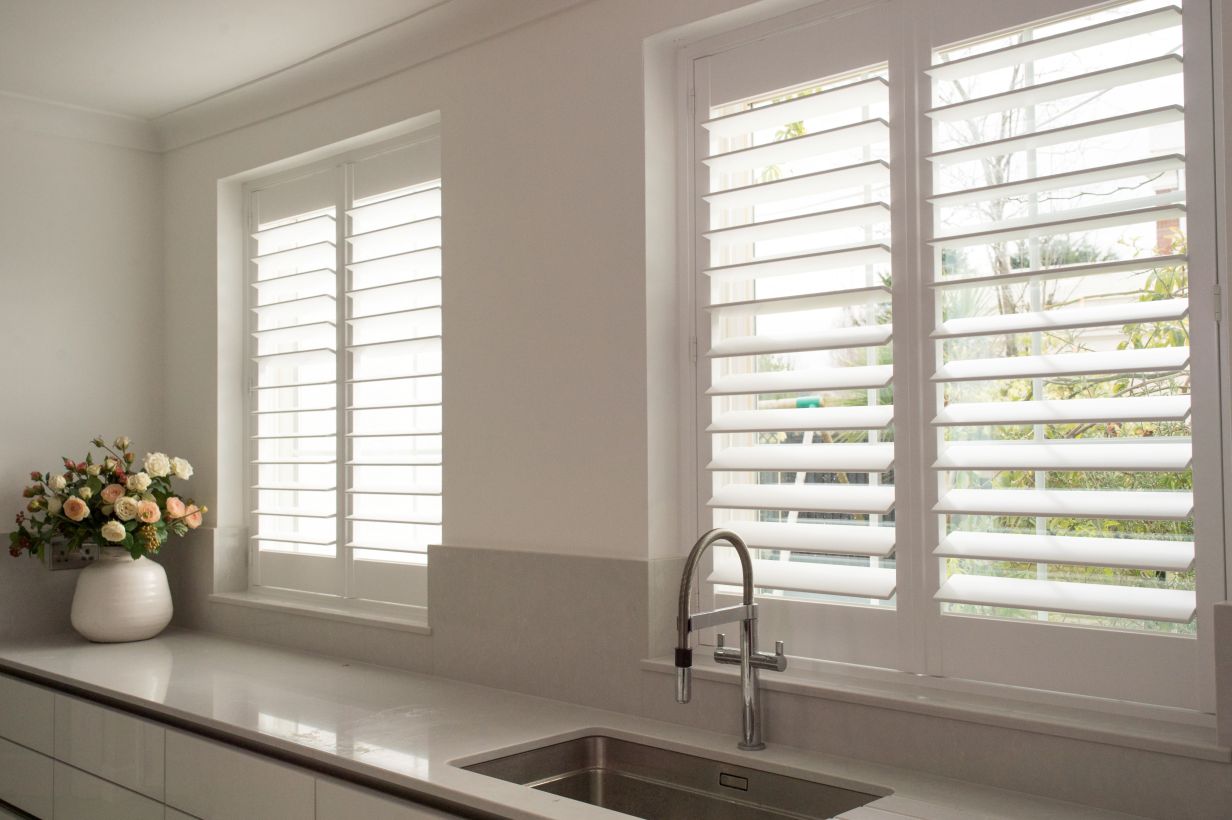
For kitchens and bathrooms — where mould spore allergy is often a secondary concern alongside dust mites — composite or aluminium specifications are the appropriate choice. Aluminium panels from our Dura range have a powder-coated surface that is entirely non-porous and unaffected by steam, condensation, or direct water contact. They are also fully anti-microbial in effect: mould spores cannot colonise a powder-coated aluminium surface under any realistic domestic condition.
Bedrooms: the highest-priority room for allergy sufferers
The bedroom is the room where allergen exposure has the greatest effect on health outcomes for allergy sufferers. An adult sleeping eight hours per night spends one third of their life in that environment; for children, sleep constitutes an even higher proportion of the day. Dust mite allergen concentrations in bedrooms are typically higher than in any other room in the home because mattresses, pillows, and duvets provide an ideal warm, humid habitat for mite colonies and are difficult to clean thoroughly. In this context, the bedroom window treatment is a meaningful and controllable variable: it is one of the few soft furnishing categories where a hard-surface alternative is readily available.
Bedroom plantation shutters eliminate the curtain allergen load from the room entirely. Replacing floor-length bedroom curtains with full-height louvred shutters removes what is often the single largest textile surface in the room apart from the bed itself. Combined with allergen-proof mattress and pillow covers, regular bedding washing at 60°C, and ventilation when the room is unoccupied, fitted shutters complete a bedroom allergen reduction programme that addresses every controllable exposure point.
Full-height louvred shutters running from sill to head are the standard bedroom specification. They provide complete window coverage, allow precise light control without exposing the interior to street views, and operate with a single tilt rod or hidden gear mechanism that adds no additional fabric or cord surface to the room. For those managing light sensitivity alongside allergies — a common pairing in migraine and asthma patients — the ability to close louvres fully and achieve near-blackout while maintaining a cleanable hard surface is a meaningful quality-of-life improvement over a blackout fabric blind.
Kitchens and bathrooms: the mould spore dimension
Dust mite allergy is the most common indoor allergen in UK homes, but mould spore allergy affects an estimated 10–15 per cent of the UK population and is a significant asthma trigger. The rooms where mould spore concentrations are highest are kitchens and bathrooms — the two rooms where humidity regularly exceeds the 70 per cent threshold above which surface mould can establish. Curtains in a kitchen or bathroom are almost always problematic: the fabric absorbs moisture during cooking and bathing, dries slowly, and in poorly ventilated rooms develops visible mould growth within months. Even without visible mould, the moisture-laden fabric presents a substrate for mould spores to adhere to and subsequently re-release into the room air.
Plantation shutters fitted in kitchens and bathrooms with composite or aluminium panels carry no equivalent risk. Our article on shutters and condensation management covers the relationship between shutter material, ventilation, and moisture in detail — the relevant point for allergy households is that a hard-surface shutter in a well-ventilated bathroom neither contributes to mould growth nor provides a reservoir from which spores can re-release. The surface wipes clean if spores settle on it, and provides no viable growth medium regardless.
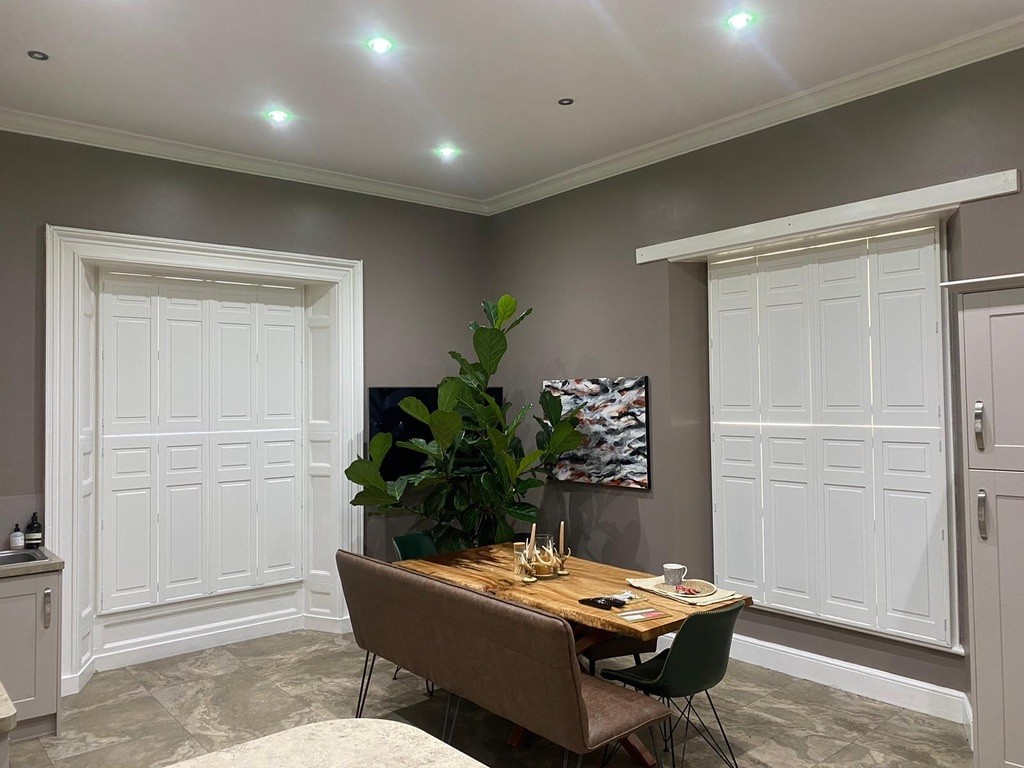
For kitchens, where grease and cooking residues compound the cleaning challenge, shutters in composite or aluminium wipe down with a mild degreasing cloth as readily as a kitchen appliance surface. The absence of fabric that absorbs grease particles — a persistent problem with kitchen curtains, which can become permanently stained and malodorous within months — makes the maintenance comparison even more pronounced than in a dry living room context.
Specifying shutters for an allergy household: the survey process
The free home survey is the right starting point for specifying shutters in an allergy-conscious household. The surveyor will assess each room — the window dimensions, the room's humidity profile, the existing window treatment and its condition — and recommend the material and panel configuration most appropriate for the household's specific allergen concerns. Composite specifications are recommended as the baseline for any household where a primary resident manages asthma or a diagnosed dust mite allergy; the additional surface hardness and moisture resilience of the composite core provides a margin of performance that hardwood, while entirely adequate, does not match.
Pricing for composite plantation shutters across a standard living room or bedroom window starts from approximately £160–£230 per square metre supply and fit. Hardwood specifications start from approximately £220–£320 per square metre. Aluminium panels for kitchens or bathrooms are priced from approximately £200–£280 per square metre depending on room type and window size. Lead times are typically four to six weeks for composite from confirmed order to installation, and six to eight weeks for hardwood. These are indicative ranges; the written quotation from the survey is fixed and specific to your windows.
Book a free home survey with Shutters Factory and a specialist will assess your windows, discuss your household's requirements, and provide a fixed written quotation at no cost or obligation. You can view our gallery of completed shutter installations across UK homes before the appointment to see how different specifications look in finished living rooms, bedrooms, and kitchens — rooms where allergy management and appearance are equally important.