Why curtains and blinds fail in pet households
The fundamental problem with fabric window treatments in pet households is that fabric is exactly what pets are drawn to interact with. Cats climb curtain fabric, using the vertical drop as a scratching surface. Dogs nose at the bottom edge of blinds when watching activity outside; a pulled-down blind is a common consequence. Roller blinds present a particular problem: the barrel mechanism is simple to displace with a paw, and the fabric roll, once snagged, can unwind or tear with minimal force. Roman blinds with their horizontal fabric folds are almost custom-designed to accumulate pet hair in the pleats.
The same pattern plays out with venetian blinds. A cat sitting on the windowsill — and virtually every cat will sit on a windowsill — pushes through the horizontal slats, bending and misaligning them permanently within a few sessions. The twisted-slat problem is familiar to any cat owner who has tried to use venetian blinds: a product rated to last ten years visually deteriorates within weeks of the first cat encounter. Net curtains fare no better; the lightweight weave catches claws on first contact and pulls permanently. For a structured comparison of how alternative window treatments perform in real UK homes, our honest shutters-versus-blinds comparison covers blind types, curtains, and shutters side by side on durability, maintenance, and light control — a useful reference if you are currently using blinds and weighing whether to switch.
Cord hazard for pets: a safety concern shared with children
Blind cords present a well-documented safety risk for children; the same risk applies directly to household pets. The UK's Child Accident Prevention Trust and the Royal Society for the Prevention of Accidents have both documented injuries caused by looped blind cords, and the hazard operates identically for small dogs, rabbits, kittens, and other household animals drawn to investigate dangling objects. A looped cord can snag around a pet's neck in the same way it can around a toddler's, and veterinary case literature has documented cord-entanglement incidents in kittens in precisely this context.
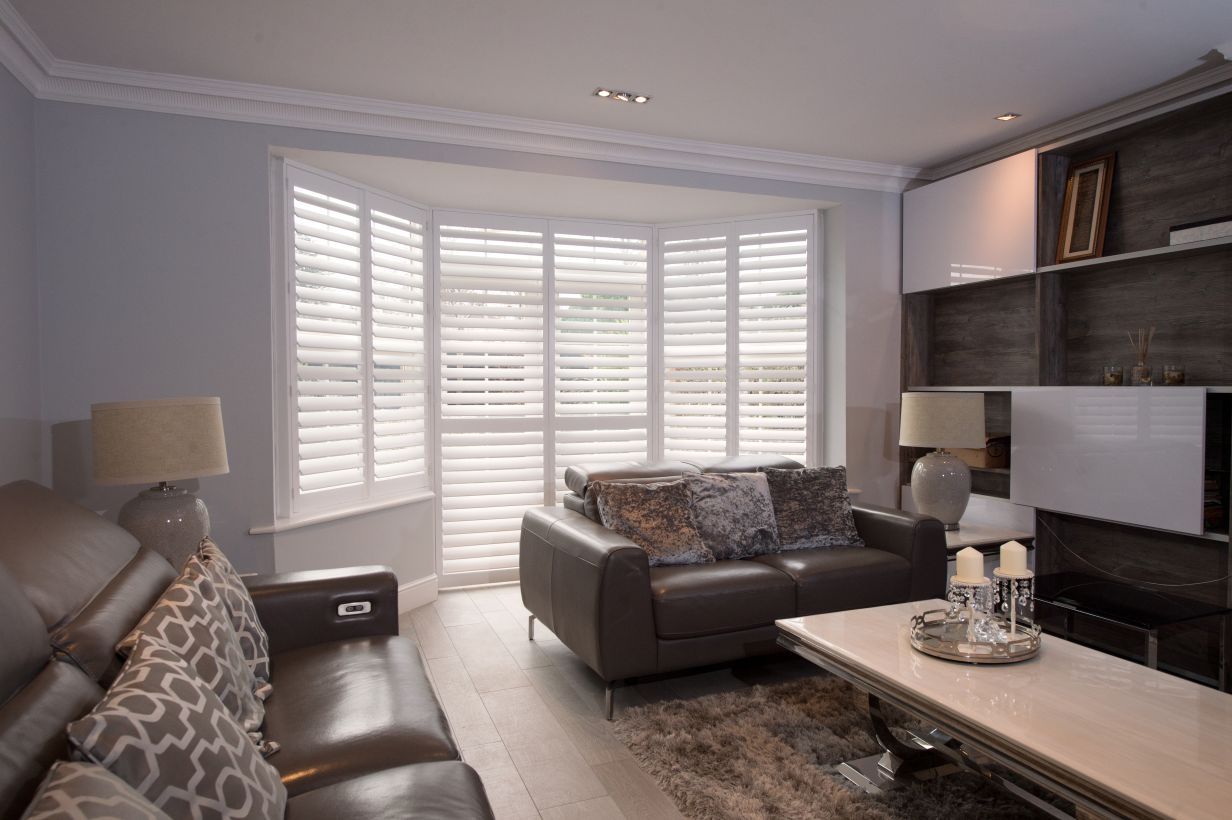
Plantation shutters eliminate the cord hazard entirely. The tilt mechanism — operated via a gear-driven hidden rod or a visible tilt rod fixed within the frame — has no free-hanging elements at any point in its operation. The panel is hinged at the frame and moves in a controlled arc within its own footprint. There is nothing to catch a paw or loop around a neck. Our guide to cord-free shutters for family homes sets out the full safety case for households with young children, and the same logic applies exactly to pets: the safest window treatment is one with no free-hanging hardware anywhere in its design.
Hard surfaces and pet hair: why cleaning is genuinely simple
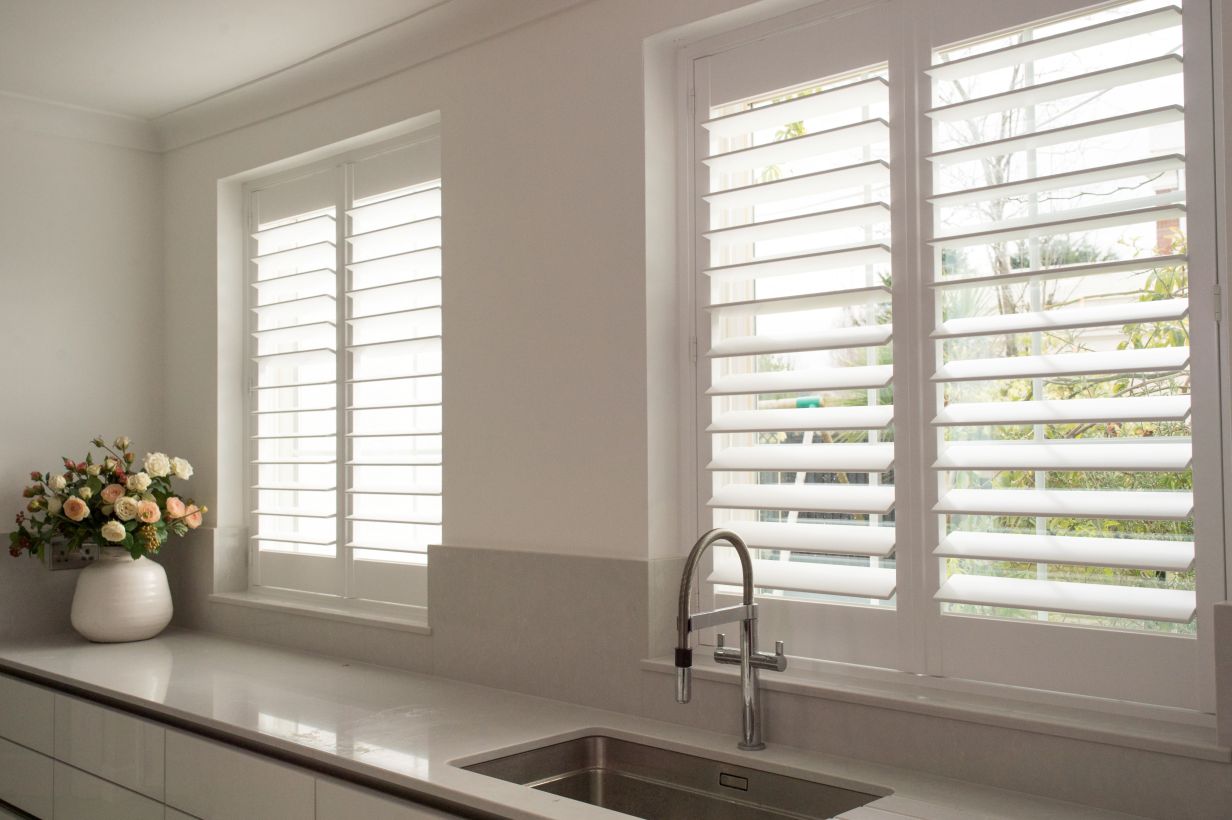
Pet hair is the maintenance challenge that most pet owners accept as unavoidable. On curtain fabric it accumulates in the weave and requires either a lint roller every few days or a full curtain wash every month — a wash cycle the fabric tolerates only a limited number of times before colour or texture degrades. On Roman blind fabric it settles into horizontal pleats and must be brushed rather than wiped. On plantation shutters, pet hair rests on the flat painted face of the louvre and comes off with a single pass of a dry microfibre cloth.
The same applies to the marks pets leave on window surfaces. Nose prints on glass transfer to whatever covering sits immediately in front of the window; muddy paw prints reach the lower portion of any treatment within reach of the floor. On fabric, these marks absorb into the material and require spot-cleaning or a full wash. On a painted shutter panel, they wipe off with a damp cloth and leave no trace. Our complete guide to cleaning plantation shutters covers the correct routine in full — the practical summary is that a set of shutters across a whole room takes three to four minutes to wipe down, and no specialist cleaning products are needed at any stage.
Material durability: what holds up to claw contact
Most pet-related shutter contact is accidental rather than deliberate: a cat brushing past as it leaves the window, or a dog's claws briefly touching the lower panel as it rises from the floor. The question of material durability matters most for these incidental contacts, and for the smaller number of households where deliberate scratching is a known pattern.
Hardwood shutters — paulownia or hardwood-core panels — are factory-painted with a lacquer finish that handles incidental claw contact without visible marking in the large majority of cases. The wood beneath is solid and the painted surface is comparable in hardness to kitchen cabinetry. Deliberate, repeated claw dragging will eventually score the paint, but this requires significantly more force and frequency than casual brushing.
Mimeo composite shutters, built from a dense polymer-core panel, offer an additional layer of resilience where deliberate cat scratching is a known concern. The composite core is harder and denser than paulownia, and the painted surface carries a higher hardness rating than typical lacquer on timber. Our article on where composite shutters outperform wood sets out the full durability, moisture resistance, and maintenance comparison — a useful read for active households where the window area receives daily contact.
Extruded powder-coated aluminium panels from our Dura range represent the most scratch-resistant specification available. Extruded aluminium is the same material used for architectural window frames and commercial shopfronts; it does not dent or mark under pet contact in any realistic household scenario. For homes with large or working breeds where the window zone is a daily interaction point, aluminium is the specification that will show no visible deterioration after ten or fifteen years of normal use.
Light, ventilation, and keeping pets comfortable
Pets have a consistent relationship with natural light that determines where they rest through the day. Cats follow patches of direct sunlight across floors and furniture; dogs often settle in sunny spots through the morning. A shutter's adjustable louvre allows the household to direct and manage daylight in a way no fixed window treatment can, providing the concentrated warmth that pets seek without overheating the room on summer afternoons.
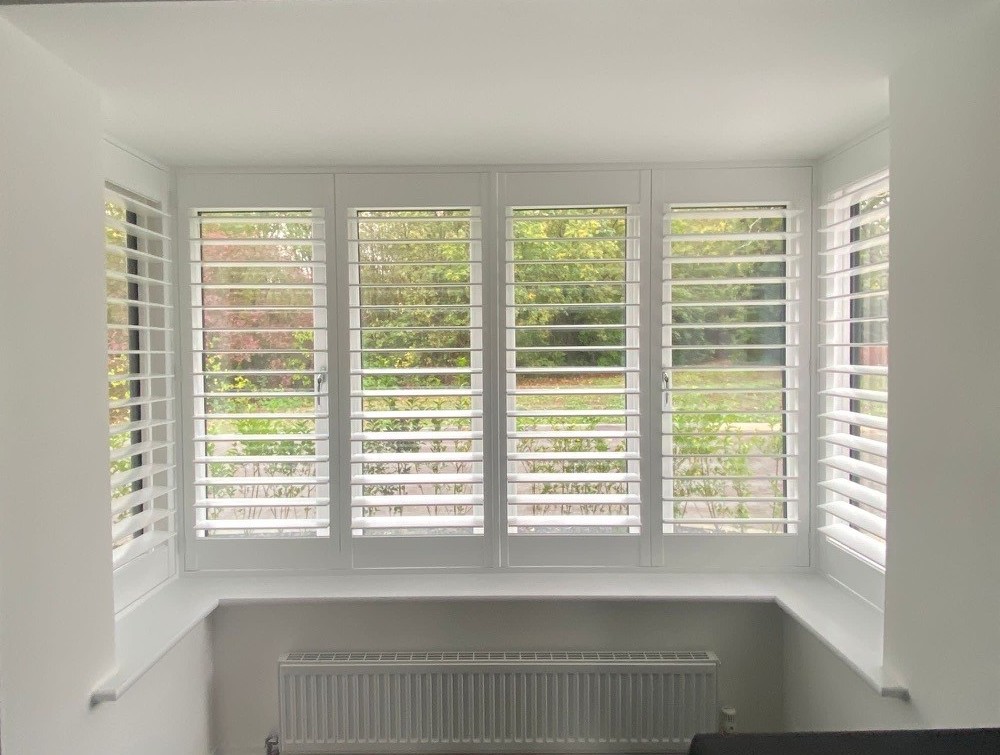
For ground-floor rear rooms facing a garden — a typical area of pet movement — single-tier louvred shutters running from sill to window head provide full solar control and are straightforward to operate as the household moves between indoors and outdoors. Louvres angled slightly downward direct light onto the floor rather than the walls, creating the lying-in-sunlight effect that many cats and dogs actively seek. Closing the louvres completely when a pet is alone gives the room full privacy without blocking airflow through any gap at the top of the frame. For the full layout options available in rooms where both people and pets use the window area, our guide to planning living room shutters covers the typical configuration choices and how they interact with furniture placement and room use.
Shutters in rented homes: durability and the deposit question
Renters with pets face a specific concern when choosing window treatments: any damage to fittings supplied by a landlord is chargeable against the security deposit. Curtains supplied with a furnished rental that are scratched or pulled by a cat represent a deposit deduction risk; roller blinds displaced by a dog are similarly chargeable. The conventional answer — avoid window treatments entirely — leaves the household with no privacy or light control.
For renters who want to invest in high-quality window treatments they can take when they leave, the durability case for shutters is particularly strong. A set of made-to-measure shutters installed in a rented property by agreement with the landlord will outlast the tenancy, and panels can sometimes be re-fitted in a subsequent property where window dimensions are close. Our guide to shutters in rental properties covers the landlord conversation in detail — including how to frame the request, what to offer, and why many landlords are receptive to tenants investing in a durable fitting that increases the property's appeal.
Specifying pet-friendly shutters: what to cover at survey
The free home survey is the right point to discuss any specific requirements arising from pets in the household. The surveyor can assess the window environment — the position of cat trees or dog beds relative to the sill, the height of paw contact on the lower panel, and the solar gain situation in south-facing rooms where a pet lying in direct afternoon sun might overheat — and recommend the louvre width, material, and panel configuration that fits the household's actual situation.
Pricing for composite shutters starts from approximately £160–£230 per square metre supply and fit, which is the baseline specification for most pet households where scratch resistance and easy cleaning are the primary concerns. Hardwood specifications start from approximately £220–£320 per square metre and suit properties where the timber aesthetic is a priority. Aluminium tracked panels for rear bifold or patio openings are priced from approximately £220–£280 per square metre depending on opening width and track configuration. Lead times are four to six weeks for composite and six to eight weeks for hardwood from confirmed order to installation. Book your free home survey with Shutters Factory and a surveyor will assess each window in context, advise on material and panel configuration, and provide a fixed written quotation. You can view completed shutters projects from UK homes across a range of property types before the appointment to get a clear sense of how different specifications look in finished rooms.