Twickenham and St Margarets: the architectural context
Twickenham and St Margarets occupy the northern bank of the Thames in the London Borough of Richmond upon Thames, with the TW1 postcode covering Twickenham town and the riverside, and TW2 the residential streets west towards Whitton and south towards Strawberry Hill. St Margarets — bounded by the River Thames to the east, the railway line to the north, St Margarets Road to the south, and Richmond Road to the west — is a distinct neighbourhood that carries its own conservation area designation and a dense concentration of late-Victorian and Edwardian terraced housing.
The architectural range across TW1 and TW2 is considerable. Along Twickenham Embankment and the lanes adjacent to the Thames — Ferry Road, Water Lane, Riverside — there are late-Georgian and early-Victorian houses with generous reveals, substantial sash windows in plain brick or stucco surrounds, and reception rooms of period proportion. The central residential grid running back from Twickenham High Street carries Victorian bay-fronted terraces built from the 1870s through to the 1900s, alongside converted Edwardian semi-detacheds on the streets towards Heath Road and London Road. St Margarets itself is defined by well-preserved Edwardian semi-detacheds and terraces on Ailsa Road, St Margarets Road, Grena Road, and Riverdale Road — streets with consistent architectural character and window reveals suited to the full range of made-to-measure louvred shutters. For the full extent of our coverage across the borough, our Richmond upon Thames installation service covers Twickenham, St Margarets, Kew, Ham, Petersham, and all surrounding postcodes within a single service area.
St Margarets conservation area: Edwardian terraces and sash windows
St Margarets was developed intensively between roughly 1895 and 1915 across the broad residential grid between the railway station and Richmond Road. The housing is overwhelmingly Edwardian semi-detached and terraced — two- and three-storey properties with wide front bays at ground and, in many examples, first-floor level, set behind short front gardens. The windows across this stock are predominantly vertical sash: original softwood sliding sashes in the earlier examples, and replacement timber or uPVC sashes in a high proportion of the stock altered during the 1980s and 1990s.
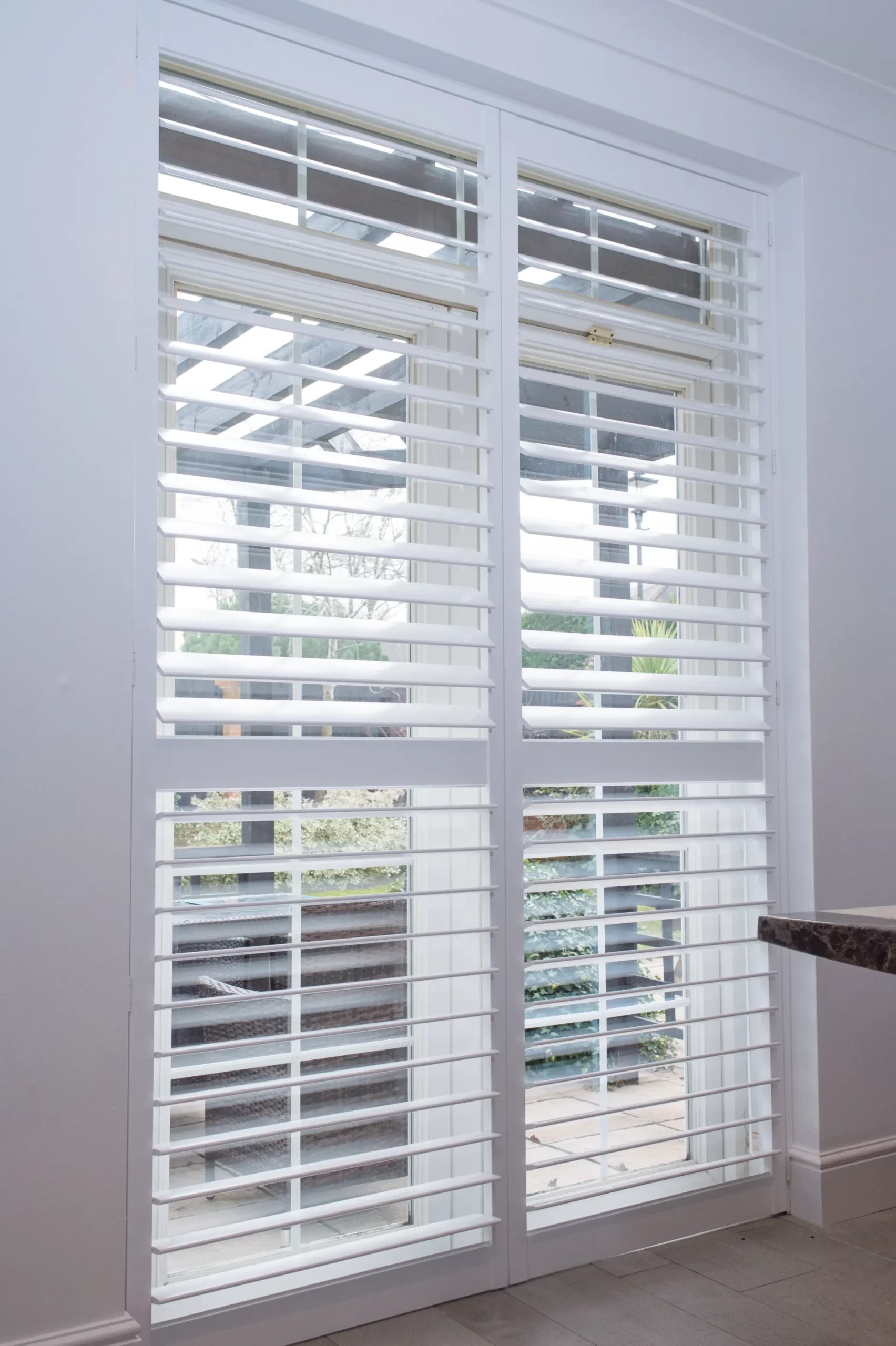
Floor-to-ceiling louvred shutters running the full height of each sash opening are the standard specification for the primary front-facing windows in St Margarets Edwardian terraces. The tall vertical proportions of an Edwardian sash — typically 1.4–1.8 metres in height and 500–700mm in width — suit a 64mm louvre well: the blade sits in correct proportion to the opening without appearing either too fine or too dominant. For properties on the busier sections of Ailsa Road or Riverdale Road, where road noise and passing footfall are daily features, the same full-height louvred installation provides a meaningful improvement in acoustic comfort over curtains without altering the visible proportions of the sash from the street. Our guide on shutters for Victorian and Edwardian period homes covers conservation area considerations and the specification choices that work best across this building type.
Victorian bay windows in Twickenham's residential streets
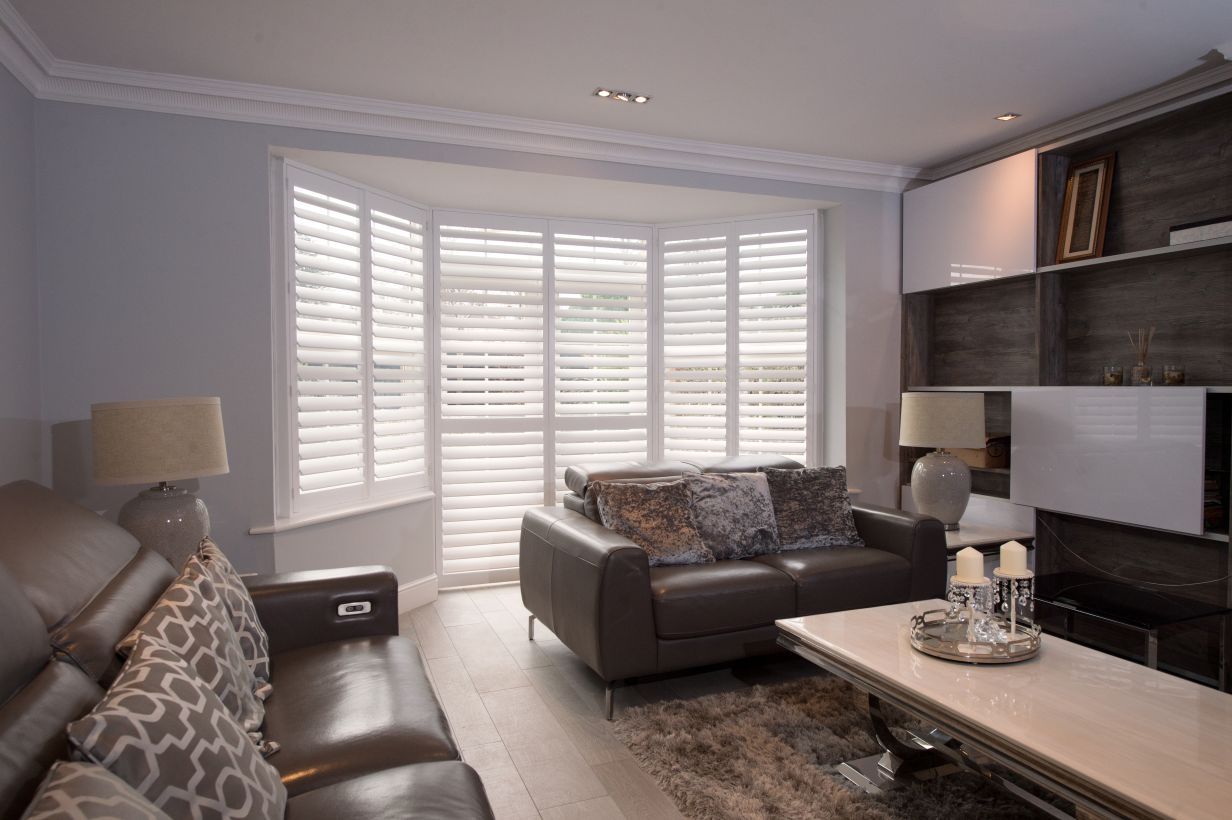
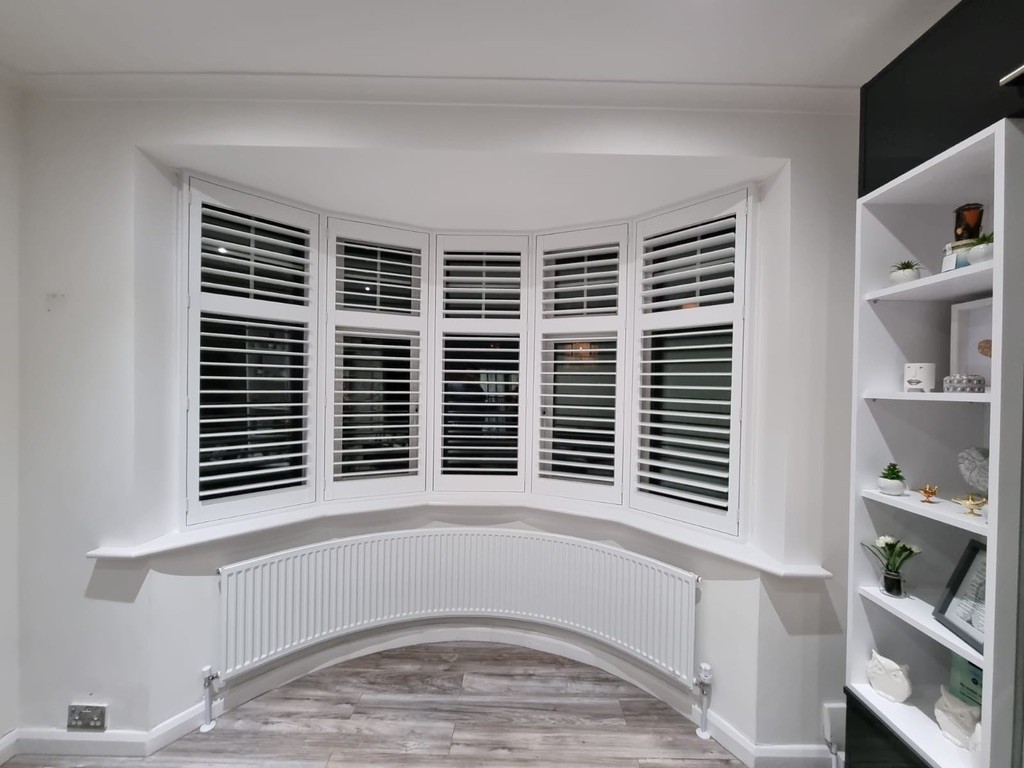
The Victorian bay-fronted terrace is the dominant housing type across the residential streets running back from Twickenham High Street towards Strawberry Hill — Percy Road, Oak Lane, and the streets off Heath Road and London Road. These properties typically have a projecting three-section bay at ground-floor level: a central face panel and two angled returns, often repeated at first-floor level on the larger examples. The projection angle at each return corner varies from property to property, reflecting slightly different site geometries across what appears from the street to be a uniform terrace run.
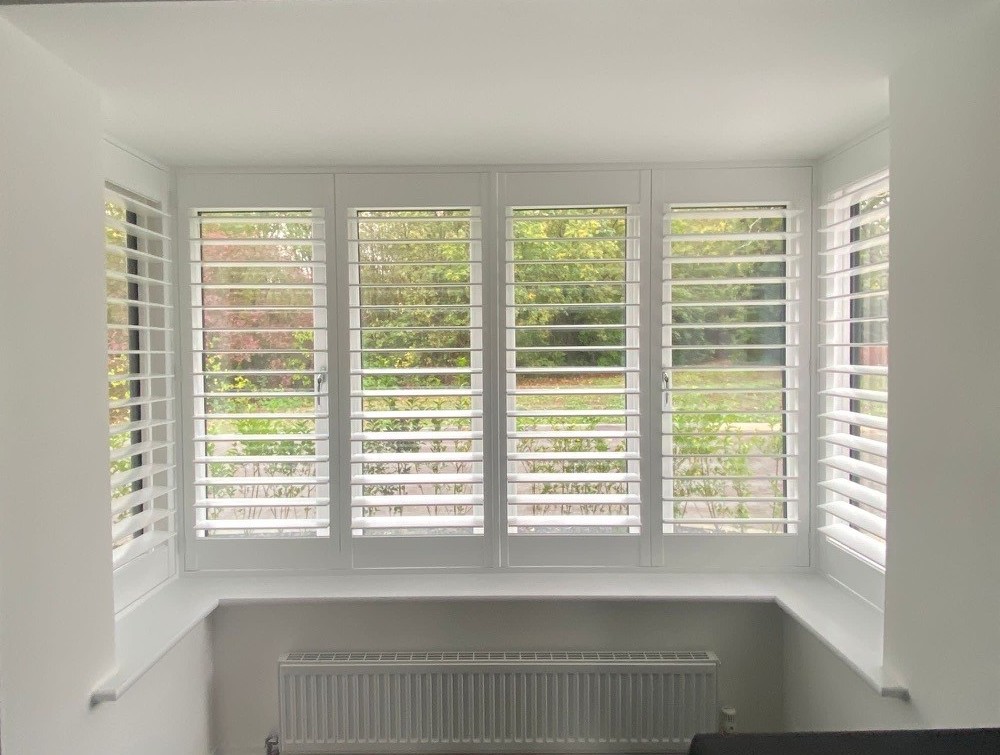
For bay window shutters in Twickenham Victorian terraces, the frame geometry must be built to the recorded angle at each corner. Shutters built to the exact geometry of each bay section with mitre-cut joints at the return angles are the specification that sits flush against the period reveal without visible gaps at the corners. Shutters Factory's survey records the projection angle digitally at each return, measures each light independently for width and height, and confirms sill and head conditions before the frame goes to manufacture. Louvre widths are matched across all three panels so the bay reads as a continuous architectural feature rather than three separate windows placed side by side. For a broader comparison of bay configurations found across south-west and west London — square-fronted, angled, and splayed bays — our article on bay window shutter styles and fitting approaches covers each type in detail.
Riverside and Georgian properties along Twickenham Embankment
The stretch of Twickenham riverside — from the junction near Eel Pie Island west along the Embankment and the lanes behind Water Lane — contains a distinct property type: pre-Victorian houses of Georgian or early-Victorian character, many facing the Thames directly or within a single street of the water. These properties have substantially deeper window reveals than Victorian terraces — typically 150–220mm of masonry depth — and the windows themselves are often of considerable height, with sash openings running to 1.6 metres or more on the principal riverside elevation.
Tall, deep-reveal windows in Twickenham's Georgian riverside properties present the most demanding specification context in TW1. The reveal depth requires a frame that sits fully within the masonry opening without bridging onto the plaster surround; the window height requires a louvre selected for proportion — typically 89mm at this scale — and a tilt mechanism that operates reliably across the full panel extent. For primary riverside rooms where light quality defines the character of the space, the ability to angle louvres precisely is critical: the same installation that provides complete privacy against a direct riverside promenade sightline admits high-quality diffused light when the louvres are set at thirty degrees from the horizontal. Top-and-bottom shutters with separately hinged upper and lower panels are also used in Georgian riverside properties where the ground-floor window faces the public footpath along the water — the lower panel blocks the direct pavement sightline while the upper section remains angled to capture the river light from above. Our guide to shutters for Richmond period homes covers the same window type and reveal depth in the comparable Georgian and Victorian stock immediately across the borough.
Choosing shutter material for TW1 and TW2 properties
Twickenham and St Margarets are not coastal postcodes, and the riverside properties on the Embankment are not typically subject to the salt-air exposure that makes aluminium the primary specification for directly sea-facing homes. For the Victorian terraces, Edwardian semi-detacheds, and Georgian riverside houses that form the majority of TW1 and TW2 housing, the material choice is between composite and hardwood.
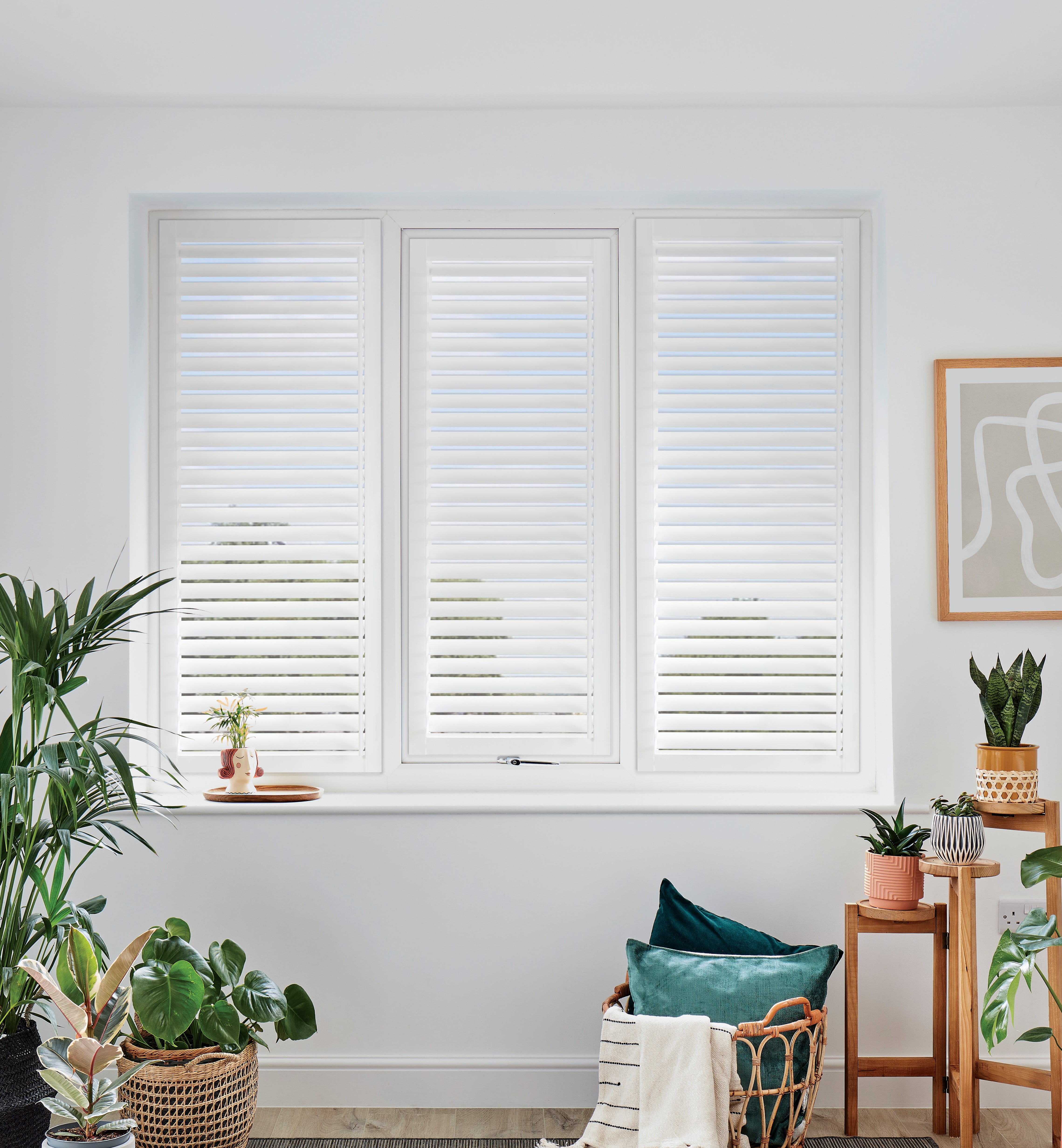
Mimeo composite shutters are the most widely specified material across Twickenham terraces and St Margarets conversion flats. Composite does not absorb atmospheric moisture from central-heating cycles, does not cup or swell seasonally, and holds a painted finish without requiring repainting over the service life. For whole-house or whole-flat installations — a three-bedroom Edwardian semi in St Margarets with bay, sash, and rear casement windows — the composite price range of £380–£580 per window supply-and-fit keeps the total cost proportionate to a multi-window project. For the Georgian riverside properties along the Embankment — where original timber floors, period fireplaces, and panelled walls establish a high material standard in the interior — Endura hardwood shutters carry the visual weight and warmth appropriate to rooms of that character. The price premium over composite — typically £550–£750 per window supply-and-fit — is most clearly justified in a Georgian reception room where the installation is expected to read as a continuation of the building's original joinery rather than a modern addition alongside it. View our project portfolio to compare how each material looks in period properties of comparable character and decide which specification suits your home before the survey visit.
2026 prices and lead times for Twickenham and St Margarets
Supply-and-fit prices in Twickenham and St Margarets in 2026 run from approximately £380–£580 per window for composite and £550–£750 per window for hardwood. These figures are all-inclusive: free home survey, made-to-measure manufacture, delivery to the property, and professional installation in a single fitting visit. Bay windows with mitred corner frames carry a premium over standard single-light windows of the same overall span — the independent sizing of each light and the precision frame joinery add to the production cost, confirmed at survey stage. Unusually tall or wide riverside windows requiring extended frame spans or non-standard louvre widths are similarly confirmed at survey before pricing is finalised.
Lead times from confirmed order to installation are four to six weeks for composite and six to eight weeks for hardwood across all TW1 and TW2 properties. The free home survey is the only visit before the installation day; the fitting team arrives with the completed shutters and installs them in a single appointment — approximately half a day for a single-room scope and a full working day for a whole-house order. Our article on shutters for Richmond upon Thames properties covers comparable pricing and lead times for the adjacent TW9 and TW10 postcodes, offering a useful benchmark for homes across the same borough.
Arranging a shutter survey in Twickenham or St Margarets
To arrange a survey for a Twickenham, St Margarets, or wider TW1/TW2 property, book a free home survey online. The survey takes approximately sixty to ninety minutes for a full-house scope or thirty minutes for a single room. Our surveyor measures every window in scope, records reveal depths and any non-standard conditions in period masonry or original timber frames, brings material and colour samples to view in the actual light of your rooms, and leaves a confirmed written quotation on the day with no obligation to proceed.
Twickenham, St Margarets, and all TW1 and TW2 postcodes are fully within our Richmond upon Thames service area — there is no call-out charge and no minimum order size. For a comparable guide to a neighbouring riverside borough, see our Kingston upon Thames shutters guide covering the adjacent TW10 and KT1 housing stock. Browse the complete range of shutter products — composite, hardwood, and aluminium — before your survey appointment so you arrive with a view of the materials you want our surveyor to bring samples of on the day.