Brixton and SW9's housing stock — what you're working with
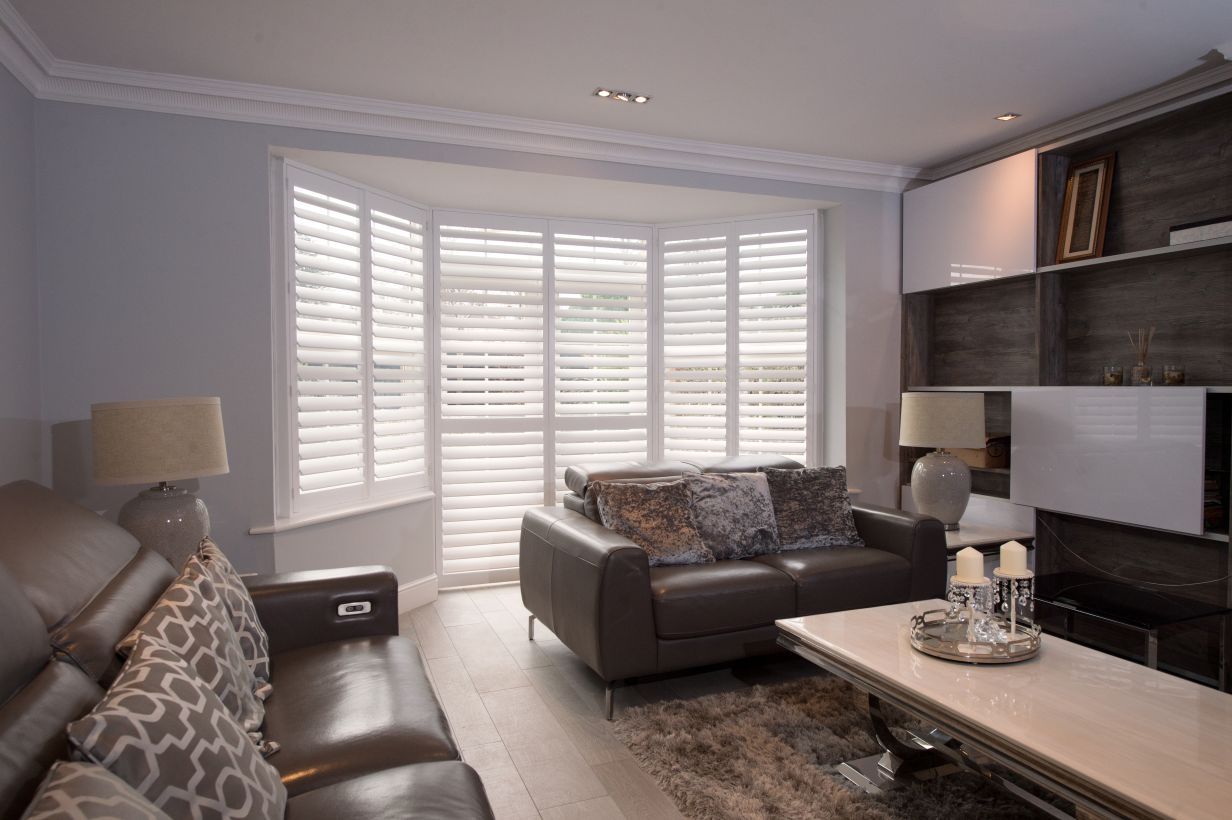
The SW9 postcode covers Brixton, Stockwell, and the streets between them within the London Borough of Lambeth, lying approximately 3–4 miles south of central London. The residential stock divides into four broad bands, each presenting a distinct shutter specification. The first and most prevalent is the Victorian terrace and semi-detached stock — the 1870s and 1880s rows along Railton Road, Coldharbour Lane, Effra Road, Brixton Water Lane, and the dense grid of residential streets running east from Brixton town centre toward Stockwell. These properties, typically three-storey bay-fronted terraces originally built as single family homes, are now almost universally converted to flats — two or three units per building, each a separate leasehold with its own internal responsibilities. Our Brixton shutters service page covers SW2, SW9, and the surrounding Lambeth postcodes and describes the full range of window types and housing formats we regularly work with across the area.
The second band is the Georgian and early-Victorian townhouse stock on and around Brixton Hill, Acre Lane, and the streets running south toward Streatham Hill — terraces from the 1820s through 1850s with taller, narrower sash windows and greater ceiling heights than the later Victorian rows. These properties are more likely to remain as whole houses or generous lateral conversions, and they are the primary candidates for hardwood shutters with colour-matched period joinery. The third band is the mansion block and garden flat stock of Stockwell and the streets between Stockwell Road and Clapham Road — 1920s and 1930s brick-and-render apartment buildings with casement rather than sash windows. The fourth is the 2000s-onward new build and conversion stock around the Brixton town centre, Brixton Village, and the Somerleyton Road regeneration, where full-height composite shutters are the standard specification. For comparison with nearby Victorian terrace housing stock and how the conversion format affects shutters specification, see our guide to shutters for Fulham Victorian terraces — Fulham shares the same 1870s–1890s terrace building patterns as Brixton.
Victorian conversions — the dominant housing type in SW9
Victorian terrace conversions are the defining residential format of SW9, and they present a specific set of practical considerations for shutter specification. The most important is that a flat within a Victorian terrace occupies one designated internal space but shares a façade, party walls, and communal areas with two or three other leaseholders. Plantation shutters are entirely internal: they are installed within the window reveal, they do not alter the external appearance of the building, and they require no coordination with other residents, no freeholder consent, and no planning application. This is a meaningful practical advantage over external window treatments — Venetian blinds on the exterior, window film, or external louvre screens all require at minimum agreement with the freeholder and often formal conservation area consent in the parts of Brixton where these protections apply. For a broader view of how shutters work in Victorian and Edwardian converted properties across London, see our guide to shutters for period homes.
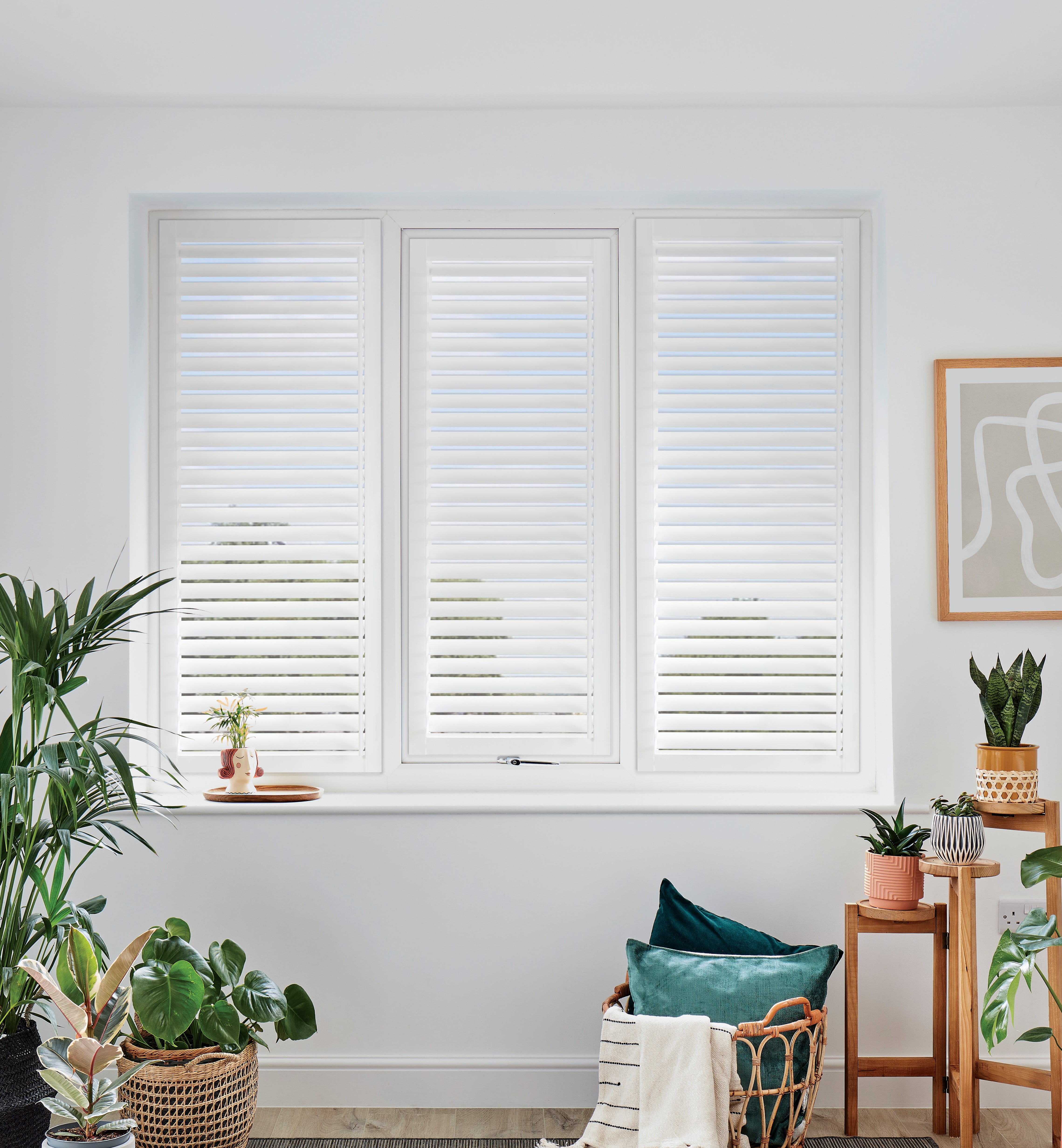
The second practical consideration is reveal geometry. Victorian sash windows in Brixton terraces carry substantial accumulated paint layers from 130–140 years of occupancy, reducing the usable reveal depth below the nominal measurement. Our surveyors measure every opening under as-found conditions: the frame specification at manufacture accounts for actual depth and any out-of-square conditions, which are common in late-Victorian Brixton rows where building settlement has introduced 5–10 mm racking across many windows. All findings are included in the fixed written quote before any order is placed — there are no surprises on installation day.
Ground-floor flats and basement conversions
Ground-floor and lower-ground (basement) flats are extremely common in Brixton's Victorian terrace stock. A three-storey terrace divided into three flats places the lowest unit partly or fully below street level, with windows that sit at pavement height or just above — meaning passers-by on a busy Brixton street can see directly into the room without either party needing to try. This is the single most common privacy problem we encounter in SW9 survey visits, and plantation shutters solve it more effectively than any alternative.
The louvred shutter handles this specific situation precisely: the louvres can be angled upward to direct incoming light toward the ceiling, admitting daylight from above while closing the sightline between the room and the pavement below. The effect is maintained when the louvres are slightly open for ventilation — a roller blind or a net curtain forces a binary choice between open (visible) or closed (dark). For basement bedrooms where light exclusion is the primary requirement alongside privacy, solid panel shutters provide complete blackout without sacrificing the clean, architecturally integrated look of a louvred shutter from the street side.
Shutter styles for Brixton and SW9 properties
Three configurations cover the large majority of Brixton and SW9 installations. The right choice depends on the floor level, the window type, and whether privacy, light control, or both are the primary driver.
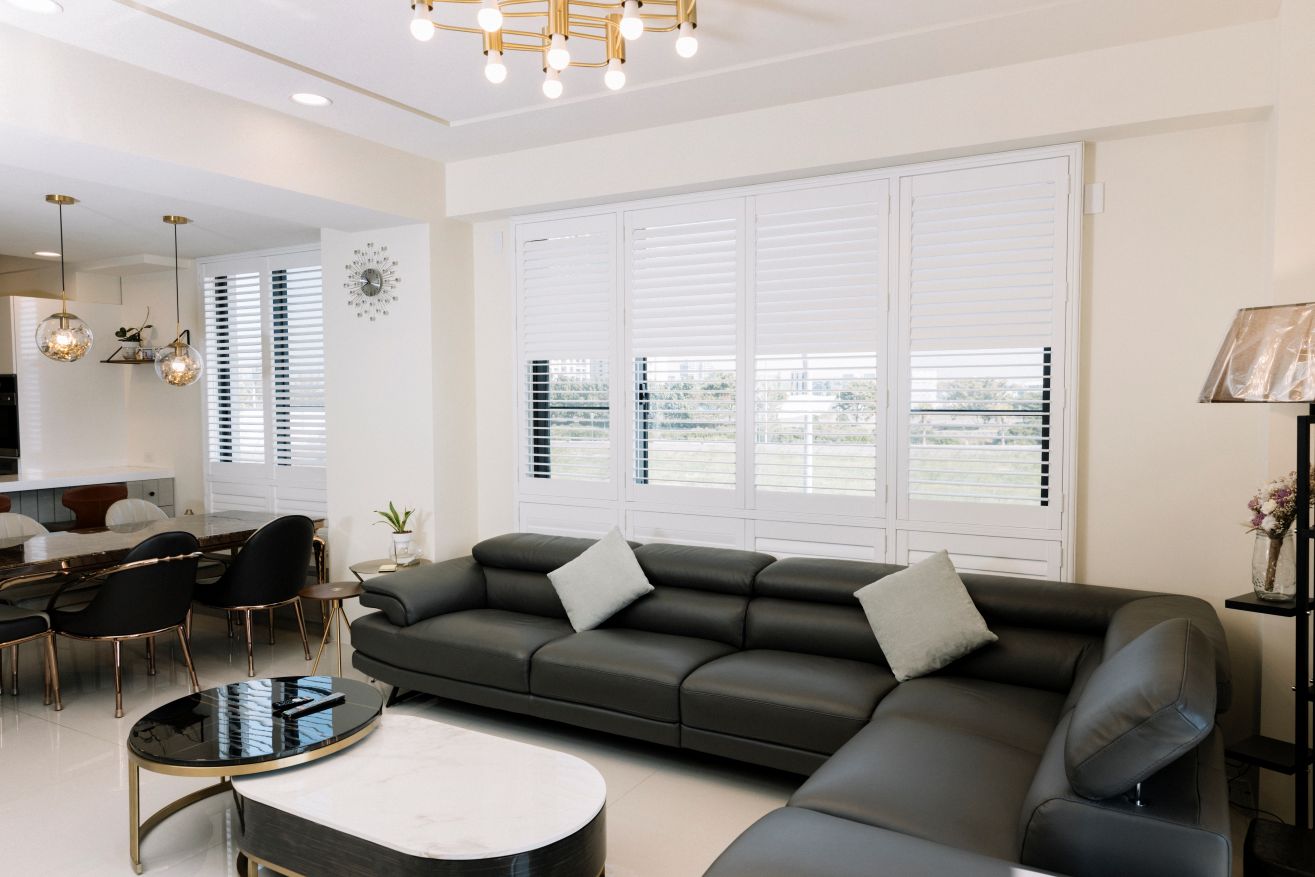
- Full height — the standard specification for first and second-floor reception rooms, upper-floor bedrooms, and any SW9 flat where the street-level privacy problem does not apply. A single panel runs from window board to head of reveal, with a mid-rail option for independent upper and lower louvre control. See full-height shutters for the full configuration detail.
- Café style — covers the lower half of the window only, leaving the upper pane fully open for light and ventilation. This is the most commonly specified configuration for ground-floor reception rooms in Brixton Victorian terrace conversions, particularly where a room faces directly onto a pavement-level street. The upper portion of the window delivers maximum natural light into what is already a lower-floor room; the lower half provides complete visual privacy from the street below. See café style shutters.
- Tier-on-tier — the best option where a ground-floor room needs full window coverage with independent upper and lower louvre control. The upper and lower panels operate separately, allowing the configuration to vary throughout the day: lower panel closed for morning privacy while the upper panel stays open for light, or both closed for complete coverage when needed. See tier-on-tier shutters for the full detail.
Material choices for Brixton and SW9 properties
Two materials cover the large majority of Brixton and SW9 installations. The right choice depends on property ownership status, room function, and the architectural character of the space.
Composite (Mimeo) is the practical default for the majority of Brixton flat conversions — kitchens, bathrooms, and all rooms where moisture resistance and wipe-clean durability are daily requirements. Mimeo composite shutters are fully waterproof, maintenance-free, and run 25–35% less per square metre than hardwood. For leaseholders in Victorian terrace conversions, composite shutters deliver the full shutters specification at a lower price point with no periodic re-painting or specialist upkeep. For renters, the Luma easy-fit range offers a self-install composite option with no drilling required — see our Luma shutters guide for renters and quick projects for the full specification. For a side-by-side analysis of where composite outperforms hardwood in conversion properties, see our Mimeo composite shutters guide.
Painted hardwood (Endura) is the right specification for the larger period reception rooms in Brixton's Georgian and early-Victorian townhouses, and for owner-occupied flats in period properties where the quality of the original interior sets the design standard. Endura hardwood shutters are factory-painted in a colour matched to existing skirting boards, door architraves, and window surrounds — giving a result that reads as an architectural continuation of the room rather than an added fitting. The weight, depth of finish, and solidity of a hardwood panel is the correct specification in a high-ceiling Georgian reception room on Brixton Hill in a way that composite cannot replicate.
Conservation areas and planning in Lambeth
The London Borough of Lambeth administers several conservation areas across the Brixton and SW9 zone. The Brixton Town Centre Conservation Area covers the commercial and civic heart around Brixton Road, Coldharbour Lane, and Electric Avenue — including the Grade II listed Brixton Market arcades. The Acre Lane Conservation Area and the Stockwell Park Conservation Area protect residential streets with high concentrations of intact Victorian and Edwardian housing. Several individual properties within these areas are Grade II listed, particularly the larger Georgian townhouses on Brixton Hill and Acre Lane.
For plantation shutters, the planning position across all Lambeth conservation areas follows the same principle that applies borough-wide across London: internal shutters do not require planning permission. They are installed within the window reveal, are not visible from the street as an external alteration, and are classified as internal furnishings rather than works to the external fabric of a listed or conservation-area property. A ground-floor flat in a Grade II listed Victorian terrace on Effra Road can receive plantation shutters without a listed building consent application, provided fixings go into window boards and reveal linings rather than original historic fabric. Leaseholders should also note that because shutters are internal, they generally do not require freeholder approval under the terms of most standard leasehold agreements — but it is always advisable to check the specific lease before ordering. For a more detailed look at shutters in the wider Brixton context, see our Brixton shutters area guide.
Realistic 2026 pricing for Brixton and SW9
Shutter prices are set by window dimensions and material choice, not by postcode. A standard Victorian sash window in SW9 costs the same to shutter as the equivalent in Wandsworth or Fulham. What adds cost in Brixton conversions is non-standard configuration: shallow reveal depths from accumulated paint build-up, bay angles on ground-floor bay-fronted terraces, and the tall narrow proportions of the Georgian townhouse sash windows on Brixton Hill. All figures below are supply-and-fit, covering survey, manufacture, frames, hardware, delivery, and installation.
- Standard flat sash window, composite: from £380 per m² supply and fit
- Standard flat sash window, painted hardwood: from £550 per m² supply and fit
- Typical single sash (approx. 0.9 m × 1.4 m), composite: from £480 total supply and fit
- Typical single sash, painted hardwood: from £630–£850 total supply and fit
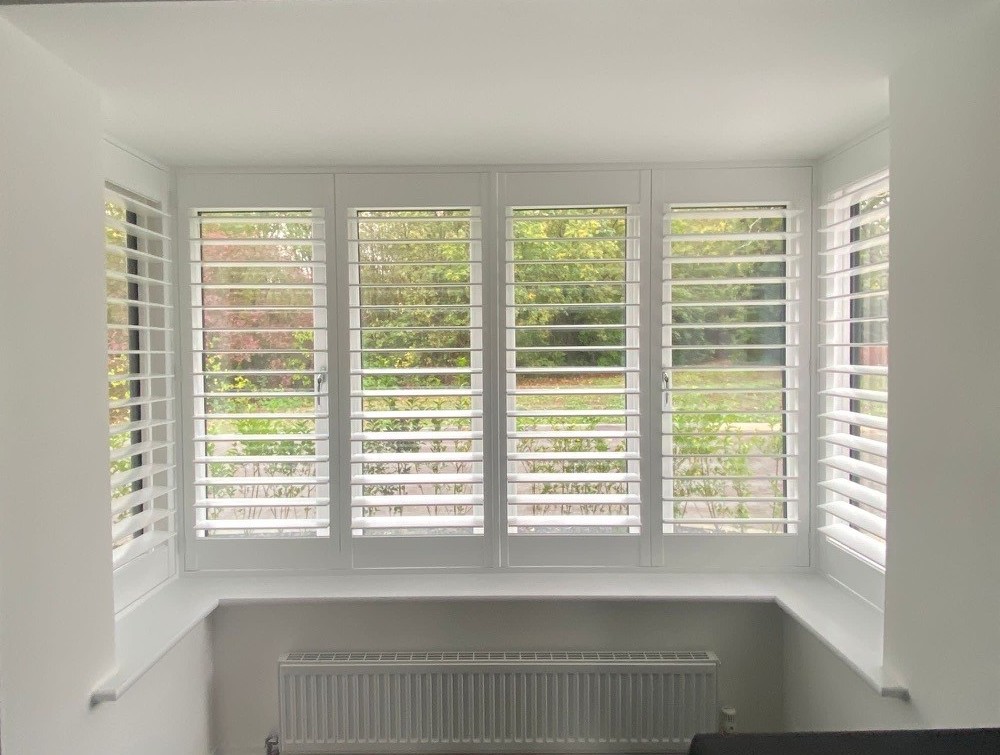
- Bay window (three panes, mitred frame), composite: from £1,250 total supply and fit
- Café style (lower half only), composite: from £320 total supply and fit
- Tier-on-tier configuration: approximately 10–15% above full-height pricing for the same window
Getting started — the Brixton and SW9 service
Shutters Factory covers all Brixton and SW9 postcodes — SW2, SW9, and the surrounding Lambeth zones — with free home surveys and no call-out charge. Visit our Brixton shutters service page to see the full coverage area, typical window types, and what to expect from the survey visit.
Browse the full product range at Shutters Factory products, or see finished installations across different room styles and window types in the shutters gallery. To get a fixed, all-in written quote for your Brixton or SW9 home, book a free home survey — we confirm pricing within 48 hours of the visit, with no obligation to proceed.