How plantation shutters are constructed — and what can go wrong
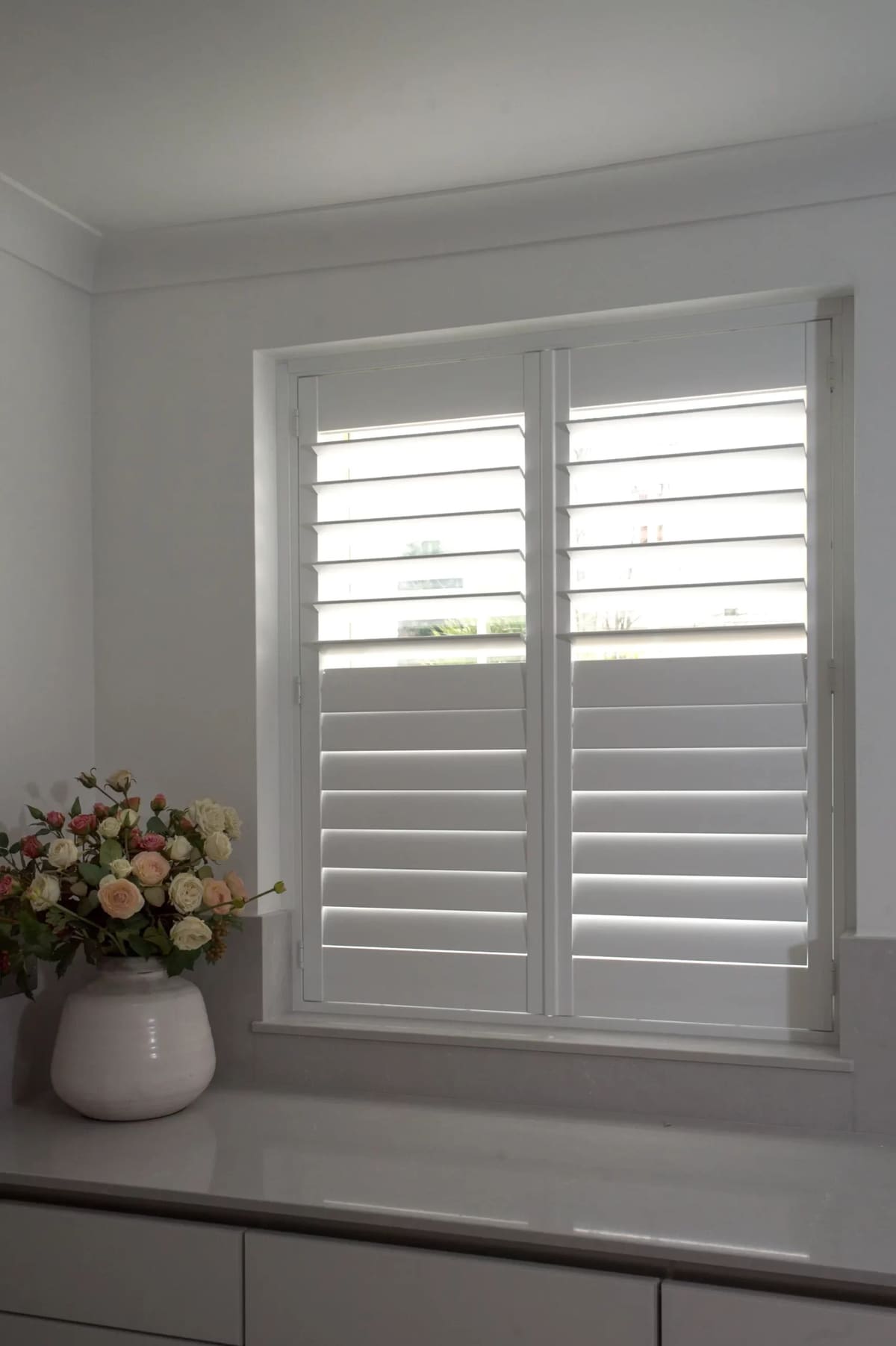
Understanding what a shutter is made of makes it much easier to identify which component has failed and how straightforward the repair is likely to be. A plantation shutter panel consists of a rectangular frame — typically two vertical stiles and a horizontal top rail and bottom rail — with a series of horizontal louvre blades mounted between them on pivot pins. A mid-rail divides the panel into upper and lower zones on tier-on-tier and split-tilt specifications. A tilt rod connects all the louvres on each zone through a vertical row of small metal brackets called staple bars, so that turning the tilt rod rotates all the blades simultaneously. The panel is hung in the window frame on a pair of hinges at the top and bottom of the stile, and a magnetic catch holds it closed at the centre.
Component failure in a well-made shutter is uncommon, but the elements most likely to need attention over a ten to twenty year lifespan are the louvre blades themselves (which can crack if struck), the staple bars (which can work loose with heavy use), and the hinges (which can sag on heavier panels if the fixing screws have lost their purchase in an older reveal). The frame itself is rarely the source of a problem unless the shutter has been wet repeatedly without drying, or has been subjected to physical impact. For a closer look at how frames, louvres, and finish coatings are manufactured to reduce failure rates, the guide to how plantation shutters are made covers the factory process from raw material to installation. To explore the full product range and specifications available across each material, browse the complete shutter product range.
The most common repair: replacing a damaged louvre blade
A louvre blade that has been cracked — most often from a sharp impact by a door handle, a child's toy, or a pulled cord on a nearby blind — is the repair request Shutters Factory receives most frequently. The good news is that a single blade can almost always be removed and replaced without disturbing the rest of the panel. The blade is held at each end by a pivot pin seated in a socket in the stile; releasing the pin — on most shutter models by pressing a small retaining tab with a flat-bladed screwdriver — allows the blade to be slid free horizontally. The staple bar connecting the damaged blade to the tilt rod is unclipped, the new blade seated in its place, the staple bar reattached, and the pivot pin pressed home. The entire operation typically takes under thirty minutes per blade.
Sourcing the correct replacement blade requires knowing three things: the shutter material, the louvre width (47 mm, 64 mm, or 89 mm are the standard UK widths), and the exact panel width, which determines the blade length. Shutters Factory holds replacement blades for current product lines. For shutters manufactured by Shutters Factory, the paint or lacquer batch reference held on the original order record is used to match the finish — a replacement blade sourced this way is indistinguishable from the undamaged blades beside it. For Mimeo composite shutters, the integral colour of the PVC compound means colour drift over time is minimal, and a replacement blade from the same product line matches reliably even several years after the original installation. For an understanding of how louvre width affects the look and function of a panel, the louvre size guide sets out the practical differences between 47 mm, 64 mm, and 89 mm blades.
Tilt rod failure and staple bar repairs
The tilt rod is the vertical bar that runs down the face of a louvred shutter panel and controls the angle of all the blades simultaneously. When a tilt rod begins to lose its ability to turn the blades evenly — some rotating less than others, or one blade sitting at a different angle to its neighbours — the cause is almost always a staple bar that has detached from the blade it connects to, or a tilt rod socket that has worn and no longer grips the connecting pin.
Refitting a staple bar is a five-minute repair: the bar clips back onto the tilt rod and the pivot pin on the blade. Replacing a worn tilt rod socket requires the tilt rod to be temporarily removed from the panel, which is more involved but still within the scope of a careful DIY repair or a straightforward service call. For shutters with an internal tilt mechanism — the hidden tilt rod specification — the internal link is accessed by removing one blade from the panel. For more detail on how tilt rod and hidden rod specifications differ in practice and maintenance, the comparison of hidden and visible tilt rod shutters covers the operational differences and servicing implications of each.
Hinge repairs and sagging panels
A plantation shutter panel that no longer sits flush against the window frame when closed, or that drags against the reveal when opened, has almost certainly developed a hinge problem. The most common cause is a fixing screw that has worked loose in the reveal substrate — MDF, plasterboard, or an older softwood lining — and can no longer hold the hinge plate firmly. The fix is usually straightforward: remove the panel, inject a small plug of resin or wood filler into the existing screw hole, allow it to cure, and re-drive the original screw into solid material. Where the reveal substrate is genuinely too soft to hold a fixing reliably, a frame-mounted alternative can be specified that distributes the load across a wider surface.
Hinge replacement is occasionally necessary when a hinge has been bent by an impact or has corroded in a humid environment. Shutters Factory shutters use standard butt hinge profiles in a range of hardware finishes — chrome, satin nickel, antique brass, and powder-coated white among them — and replacement hinges are held in stock for current product lines. For a full explanation of hinge and hardware options, including finish choices and the panel weights each specification is rated to support, the shutter hinges and hardware guide covers the full range. To see how shutters look across a range of completed installations before deciding whether to repair or upgrade, browse the customer installation photo gallery.
Sourcing replacement parts: matched vs generic
The single most important factor in a louvre or component replacement that is invisible to the eye is colour match. A replacement blade sourced from the original manufacturer's current stock will match the adjacent blades closely, because the paint batch and lacquer chemistry used on the replacement comes from the same formulation as the original. A replacement blade sourced from a third-party supplier — even one that appears identical in a photograph — is mixed to a different paint formula and will almost certainly read as a slightly different shade in natural light, particularly as the original shutters age and the finish mellows.
Shutters Factory holds replacement components for its active product ranges and can advise on the available match for older installations through the original order record. For shutters installed more than ten years ago where the original finish reference is no longer in production, the options are either a closest-available match replacement or a full panel repaint to unify the colour across the entire window. For a detailed explanation of how shutter surfaces are finished from the manufacturing stage and what repainting involves, the guide to paint finishes and lacquers explains the factory process and the options for on-site refinishing. To understand how quality and finish standards are maintained across the product range, the quality and safety commitment page sets out the standards applied at every production stage.
When repair is not economical: panel and section replacement
Most louvre and hardware repairs cost between £80 and £180 including the service call, depending on the number of components involved and the accessibility of the window. A full panel replacement — supplying and fitting a single new panel to an existing frame and track — starts at approximately £240 for a standard-sized single panel in composite or paulownia material, rising to £380 or more for wider panels in hardwood with a matching paint finish. Where the damage affects the frame stile or rail — a structural split, a severe warp, or a fixing that has pulled clean through the timber — panel replacement is almost always more economical, because the labour cost of a frame repair approaches or exceeds the cost of a new panel.
For shutters covered by the Shutters Factory guarantee, the assessment of whether a fault is a manufacturing defect — covered at no charge — or accidental damage is made by a surveyor at the repair visit. For a clear summary of what the guarantee covers, its duration, and the process for making a claim, the shutter guarantee and warranty guide explains the full terms in plain language. For shutters that are significantly older or where an upgrade to a different style makes sense alongside a repair, full-height shutters remain the most widely chosen replacement option for UK homes, offering clean light control across the full glazed area. To discuss whether a repair or upgrade is the right outcome for your specific shutters, book a free home survey — the surveyor will inspect the damage, provide a written repair quotation, and advise on upgrade options with no obligation to proceed.
Preventive care to avoid future damage
The steps that extend the life of plantation shutters and reduce the likelihood of component failure are simple and require very little time. The most important is keeping the louvre blades clean: dust that accumulates on the pivot pins and staple bar connections can work its way into the joint and cause binding that leads to the blade or tilt rod mechanism being forced and damaged over time. A gentle wipe along each blade with a slightly damp cloth — working from the hinge side of the panel toward the centre to avoid flexing the blade against its mounting — removes this dust before it becomes abrasive. For a full step-by-step cleaning method including the products safe to use on painted wood and composite surfaces, the plantation shutter cleaning guide covers frequency, technique, and the products to avoid.
Preventing physical impact is the other significant factor. In rooms where shutters are adjacent to a frequently used door, a rubber door stop positioned to prevent the door from swinging fully open is the most effective precaution. In rooms used by young children, keeping the window sill clear reduces the risk of a blade being struck. For shutters in kitchens or bathrooms where the finish is regularly exposed to steam or cleaning products, composite shutters from the Mimeo range offer a surface that tolerates these conditions considerably better than a painted timber blade — worth raising at the next survey if the current specification is hardwood.