Why material choice matters more than most buyers expect
Most people shopping for plantation shutters focus first on colour and louvre width. Material choice — often treated as a secondary consideration — is actually the most consequential decision in the order. It determines how the shutters will perform over a twenty-year service life, whether they remain stable in a humid bathroom or kitchen, and how the finish reads against period joinery or a modern interior. Each of the three principal materials — hardwood, composite, and aluminium — is genuinely best suited to specific applications. None is universally the right choice.
The confusion arises because all three materials can be finished in the same white or off-white paint colour and shaped into the same louvred panel. The differences emerge in their physical properties: how they respond to moisture, how much weight each panel carries, how the finish holds up over time, and how rigid a large panel remains across a wide span. Our separate guide on choosing between 47mm, 64mm, and 89mm louvres covers the blade-width question — which interacts with material choice in determining panel weight and visual proportion.
Hardwood shutters: authenticity, warmth, and period character
Hardwood plantation shutters are milled from dense, kiln-dried timber — typically basswood or a comparable closed-grain hardwood — and finished in a painted coating applied over a factory primer. The result is a panel with real mass that takes paint in a way closely resembling traditional joinery, ageing consistently with other painted timber in a well-maintained period interior.
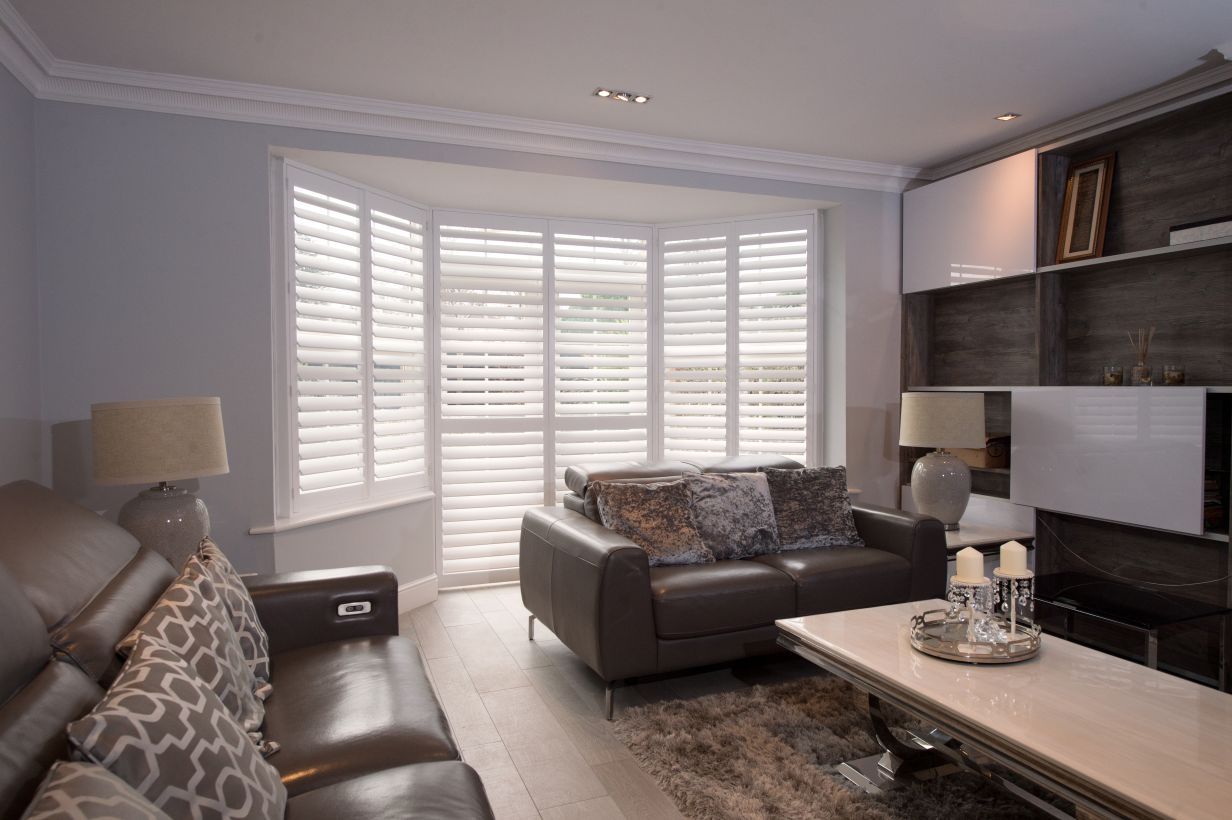
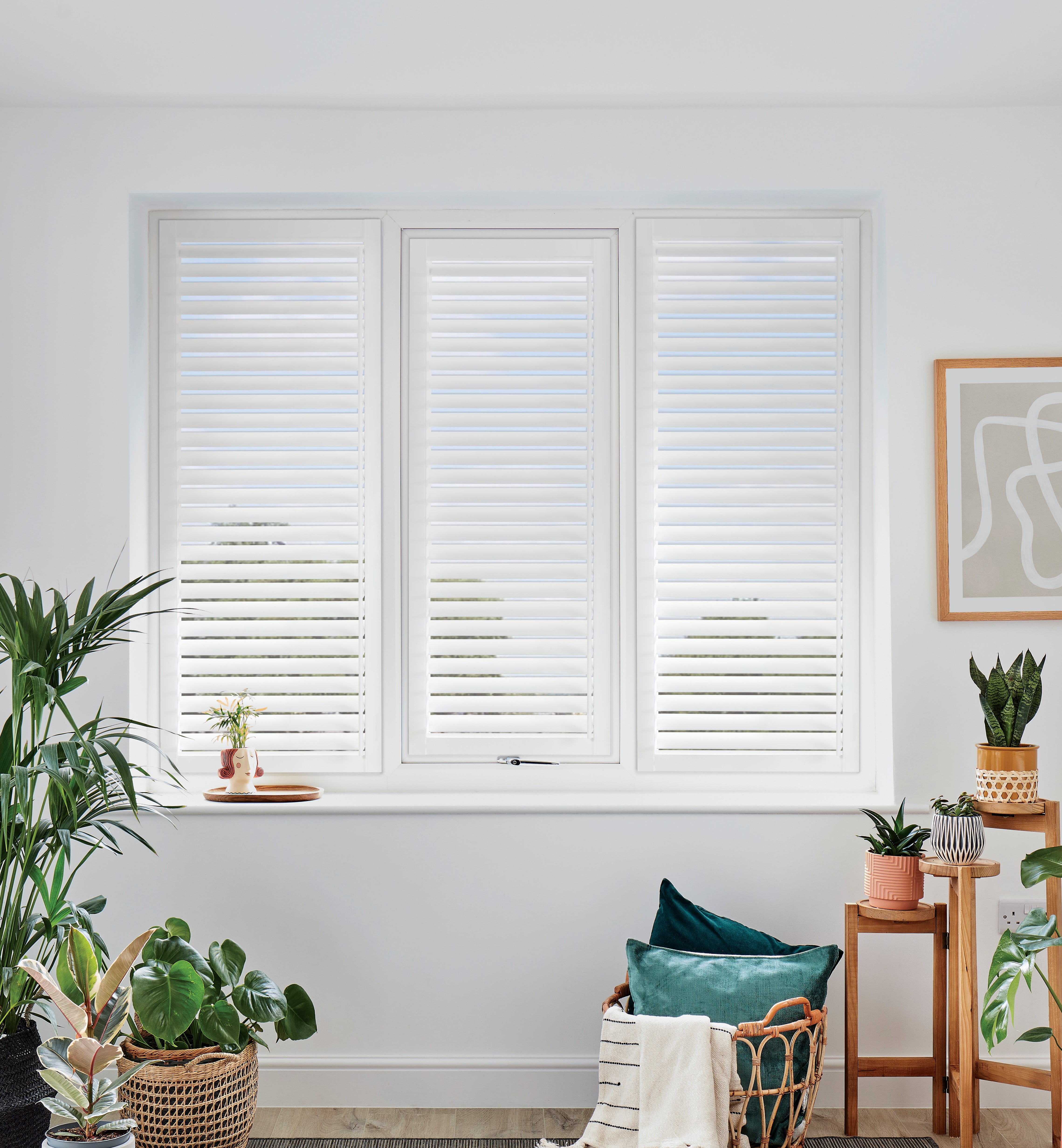
The case for hardwood is strongest in high-specification rooms and period homes. A Georgian reception room with original cornicing, timber floors, and period fireplaces establishes a material vocabulary in which painted timber is the expected choice. Endura hardwood shutters carry the visual weight and warmth appropriate to this context. Full-height louvred hardwood shutters on tall Victorian or Georgian sash windows in a living room or master bedroom are the application where hardwood consistently delivers its best result. For production quality markers to look for — timber species, kiln-drying standards, and finish specifications — the guide what to know before buying wooden plantation shutters covers the key points in detail.
Hardwood's practical limitation is moisture sensitivity. Correctly kiln-dried and well-sealed hardwood moves minimally with seasonal humidity changes, but rooms with sustained high humidity — bathrooms, poorly ventilated en-suites, kitchens directly adjacent to a hob or dishwasher — subject timber to moisture cycling it handles less reliably than composite. Hardwood lead times are six to eight weeks from confirmed order to installation.
Composite shutters: waterproof, stable, and whole-house versatile
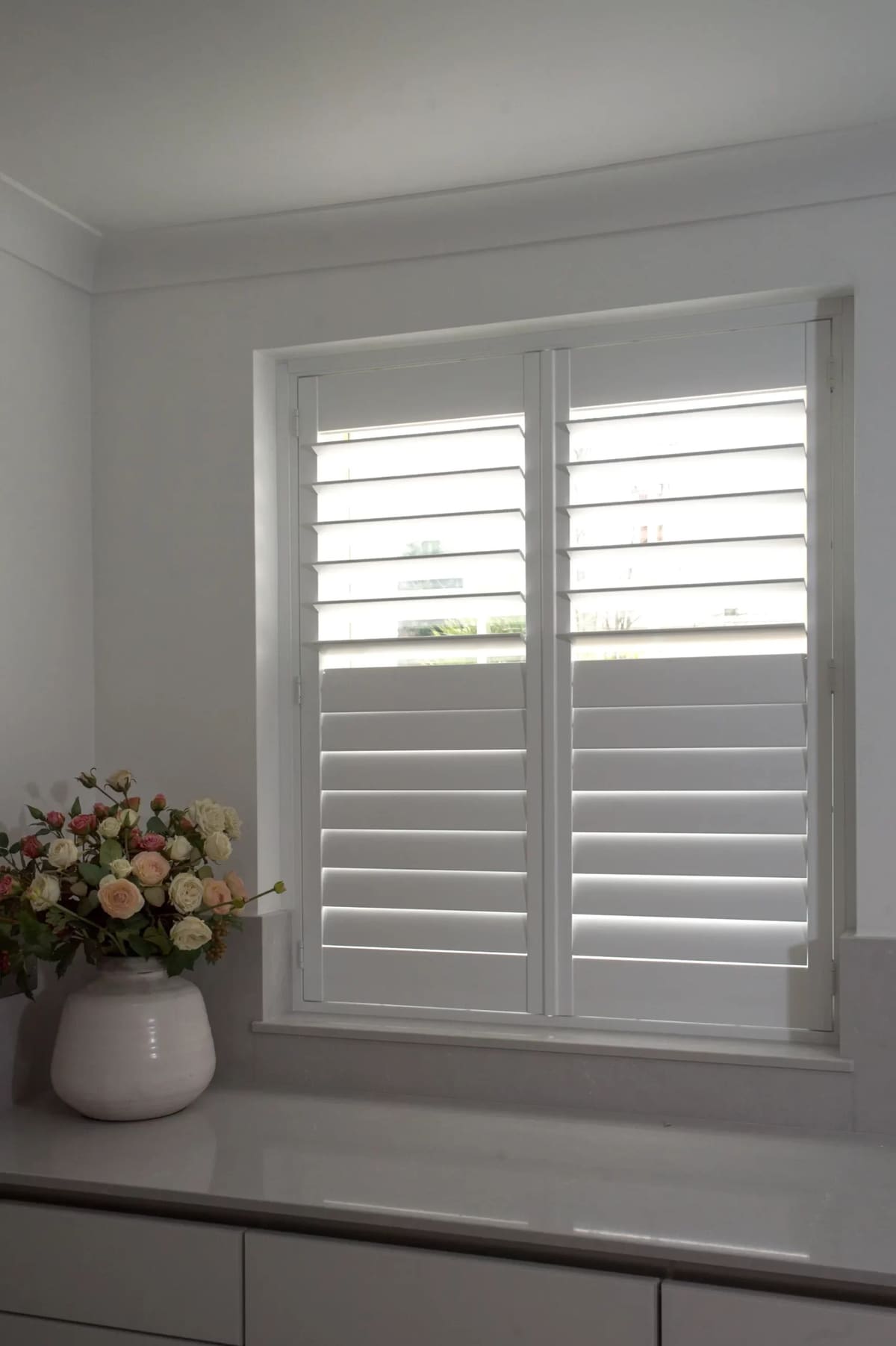
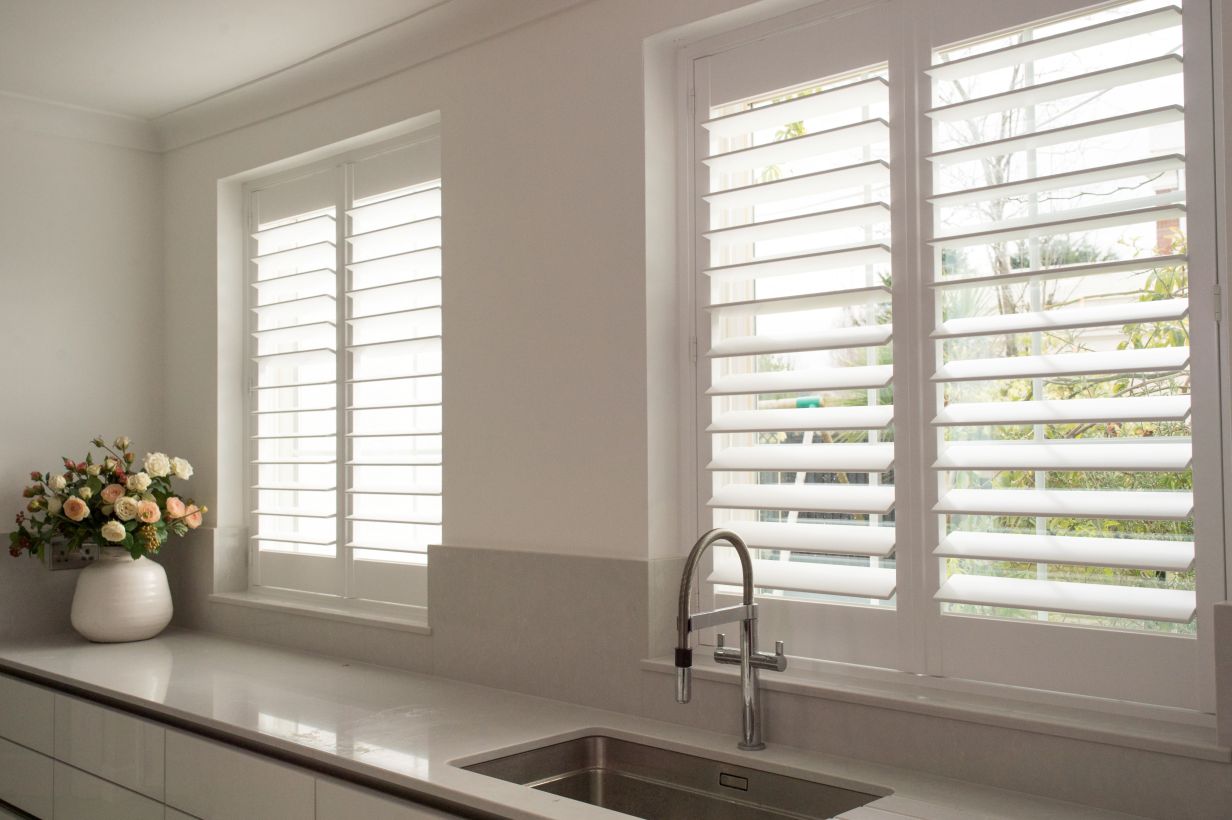
Composite shutters are manufactured from a polymer core — typically a synthetic blend moulded to the same louvred profile as a timber shutter — then finished in a factory-applied painted coating. The defining physical property is that composite does not absorb moisture. A composite panel in a steamy bathroom for ten years will not swell, cup, or lose its surface finish. This makes composite the correct specification for bathrooms, en-suites, cloakrooms, and kitchens as a matter of course.
The case for composite extends beyond wet rooms. Its dimensional stability means panels manufactured in June perform identically in January — no seasonal tightening of louvre mechanisms, no gaps opening at frame joints. This consistency, combined with the lower price relative to hardwood, makes composite the most widely specified material for whole-house installations. A homeowner fitting four bedrooms, a living room, two bathrooms, and a kitchen in one order can specify composite throughout and achieve a consistent appearance at a total cost that hardwood could not match.
Mimeo composite shutters are available in the same colour range as hardwood, with smooth, even panels and manageable weights across standard window widths. For a direct assessment of where composite outperforms hardwood in real installations, our article on where Mimeo composite beats wood covers the key scenarios side by side. The buyers' guide composite shutters: what UK buyers need to know provides context on production quality markers to look for when comparing products across suppliers. Composite lead times are four to six weeks — typically two weeks shorter than hardwood.
Aluminium shutters: strength for wide spans and demanding environments
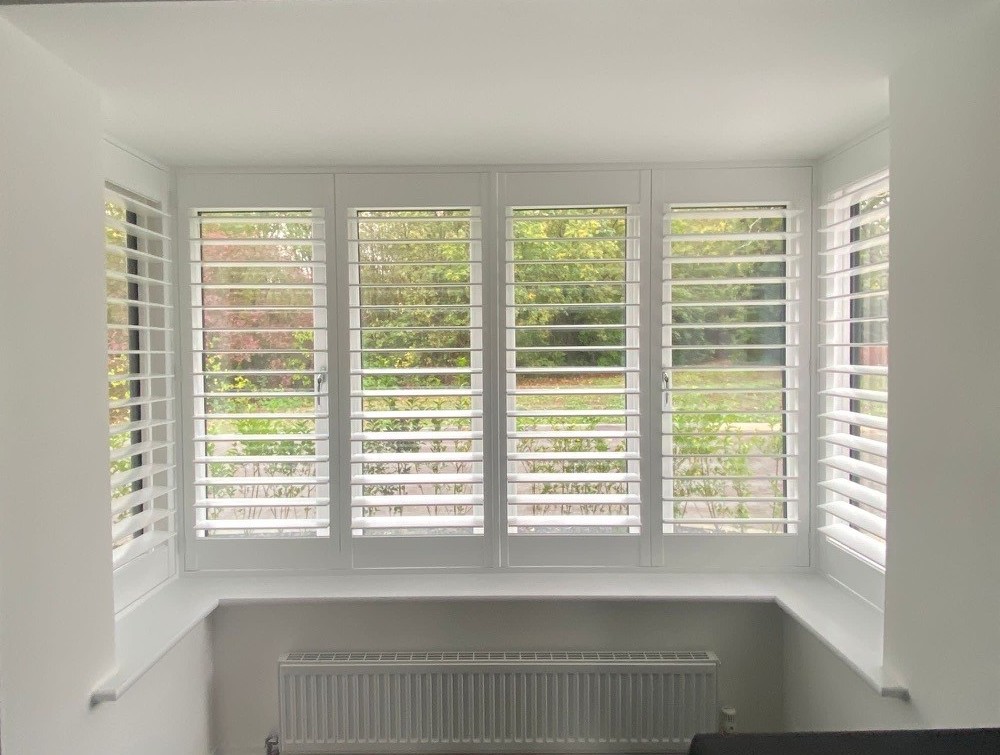
Aluminium plantation shutters occupy a different structural category from both hardwood and composite. The material's tensile strength allows louvred panels to be produced in widths that would require mid-rail supports or complex bracing in timber or polymer, making aluminium the correct specification for wide-span openings — bi-fold door systems, patio doors, floor-to-ceiling glazed screens — where a composite or hardwood panel of equivalent size would flex under its own weight.
The powder-coated finish on aluminium is factory-applied at high temperature, bonding to the metal surface at a molecular level. It is significantly more resistant to chipping, UV degradation, and the corrosive effects of salt air than any painted timber or polymer surface. For conservatories, outdoor-facing installations, and coastal properties, aluminium's finish durability is decisive. Dura aluminium shutters are produced with concealed fixings, multiple louvre sizes, and over 200 RAL powder-coat colours. Aluminium is also the standard material for tracked shutter systems across large door openings, where panels must carry their own weight along a ceiling-mounted rail over a multi-metre span without sagging.
In design terms, aluminium reads as contemporary — appropriate in a Docklands apartment, a new-build extension with bifold doors, or a conservatory with an open aspect, but not the natural choice for a Georgian drawing room. For how each material performs as a thermal barrier, the article on the thermal insulation benefits of shutters compares hardwood, composite, and aluminium across different glazing types.
Paulownia: the lightweight hardwood alternative
Paulownia is a fast-growing hardwood species that has become an established shutter material over the past decade. It is significantly lighter than basswood or ramin — up to 40% lighter by volume — making it the preferred timber for large panels in bedrooms and living rooms where panel weight would otherwise require more robust hinges or make the shutters harder to operate. Despite its low density, kiln-dried Paulownia holds milled louvre profiles accurately and accepts paint well.
Strato Paulownia shutters are available in the same painted colour range as Endura hardwood, making them a practical substitute where timber character is wanted but panel weight is a concern — very tall full-height installations, accessible rooms, or properties where panels are operated frequently. Paulownia shares hardwood's primary limitation: it is not suited to consistently humid environments. The application rules are the same as for hardwood — living rooms, bedrooms, and dry domestic spaces are appropriate; bathrooms and high-humidity kitchens are not.
Which material suits which room?
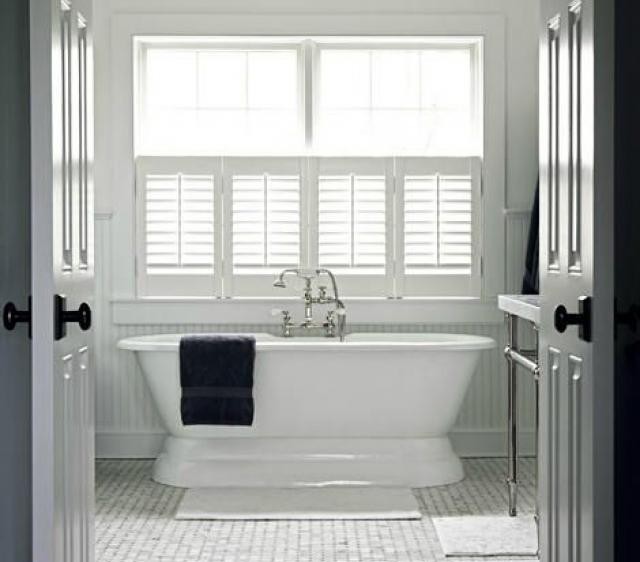
For bathrooms and en-suites, composite is the correct specification — humidity resistance is a basic requirement, not a premium feature, and no timber product should be specified in a wet room unless exceptional ventilation is present. The same logic applies to kitchens adjacent to steam-generating appliances. For living rooms, hallways, and master bedrooms in period homes where the surrounding joinery is painted timber, hardwood or Paulownia is the closest specification match and the strongest aesthetic choice. For bedrooms and living rooms in modern homes where the interior is not period in character, composite provides equivalent performance at lower cost and shorter lead time. For wide-opening bifold doors, conservatories, and any application in a coastal or outdoor-facing position, aluminium handles the combined demands of span, finish durability, and environmental exposure that timber and composite cannot.
Compare every material, finish, and configuration across our full product range before your survey appointment — the product pages include specification details and finish photography for each range. For the most accurate assessment of which material suits each specific window in your home, book a free home survey. Our surveyor brings physical samples of hardwood, composite, and aluminium and views them in the actual light of your rooms before any decision is made.
2026 prices compared: wood vs composite vs aluminium
Supply-and-fit prices in 2026 reflect the material and production costs of each range. Composite (Mimeo) is the most accessible entry point: standard window installations run from approximately £380–£580 per window, all-inclusive of the free home survey, made-to-measure manufacture, delivery, and professional installation. Hardwood (Endura) runs from £550–£750 per window on the same basis, reflecting higher material costs and a longer production cycle. Paulownia (Strato) typically sits between composite and hardwood at £480–£680 per window. Aluminium (Dura) pricing depends on span: standard window installations are comparable to Endura at £480–£700 per window, while wide-span tracked systems for bifold or patio doors carry a significant premium over per-window pricing for equivalent coverage.
Many homeowners specify composite for bathrooms, kitchens, and secondary bedrooms while reserving hardwood for principal reception rooms — achieving the closest material match where it matters most while keeping the total project cost proportionate. For a detailed assessment of the long-term return on a full installation, our article on whether plantation shutters are worth the investment addresses resale impact, running costs, and value by room type across all three materials.