How each product works — the mechanical difference
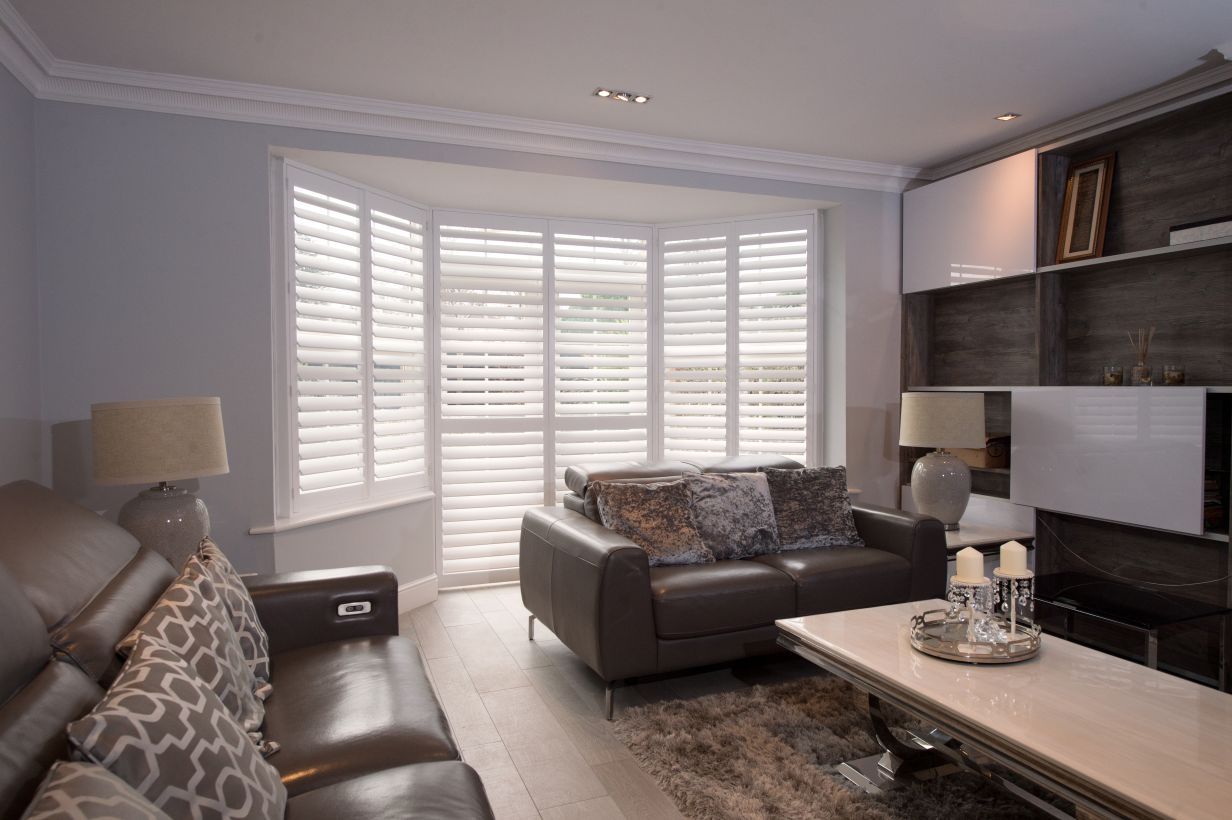
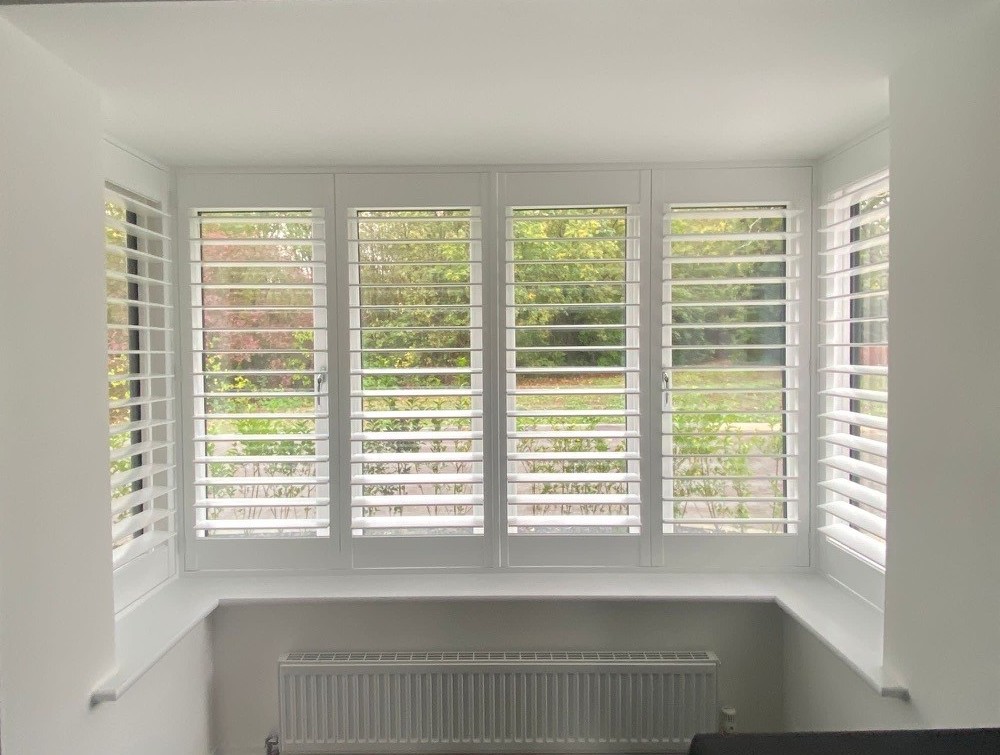
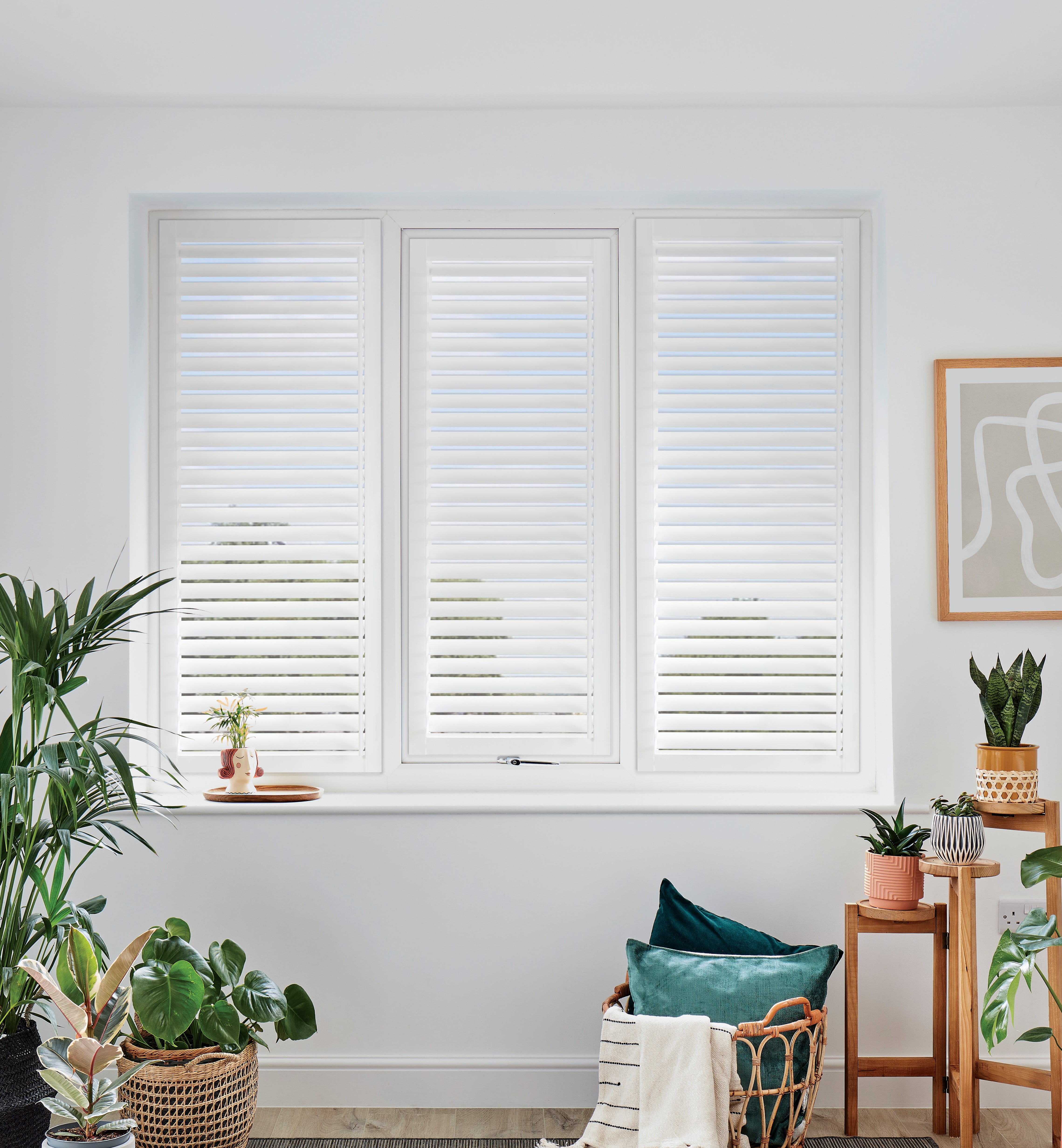
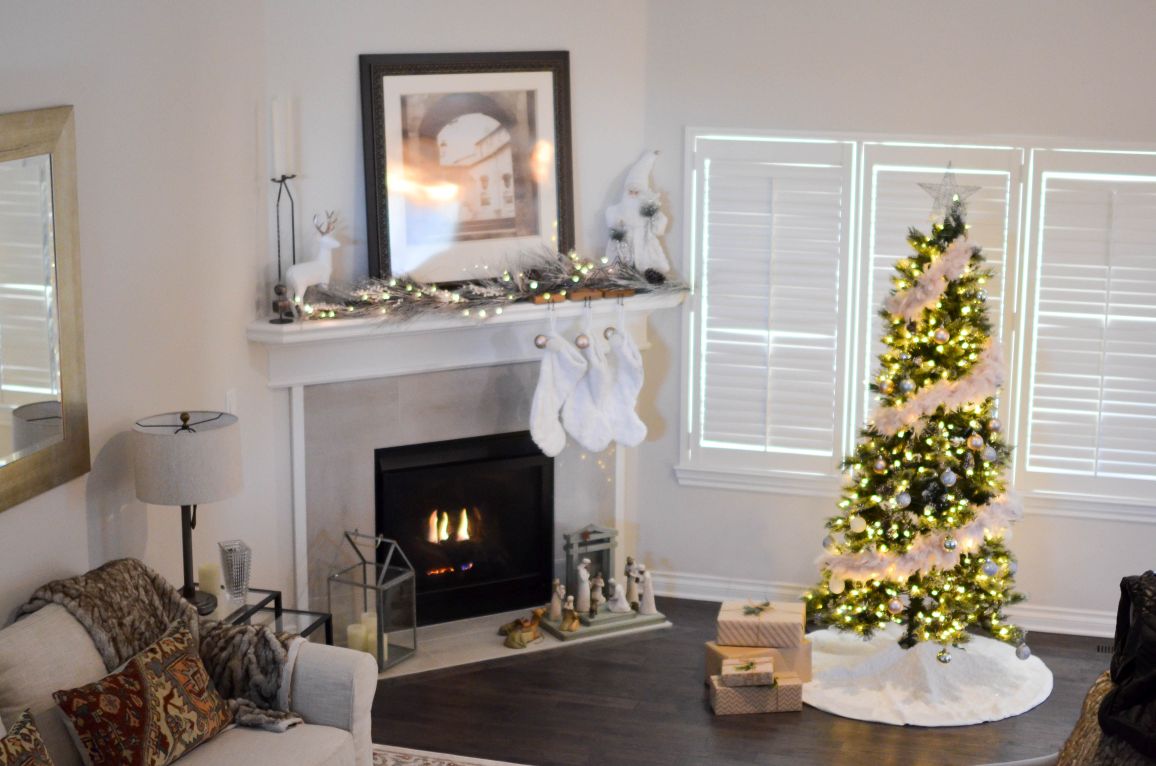
Plantation shutters are made-to-measure louvred frames — typically manufactured in composite, hardwood, or aluminium — installed permanently within or around a window reveal. A series of horizontal louvres runs the full width of the frame, controlled by a central tilt rod that adjusts all louvres simultaneously to any angle between fully open and fully closed. The frame is fitted by a professional to the exact dimensions of the window and becomes a fixed architectural feature of the room. For a full overview of how shutters compare to other window treatments across every key performance measure, the detailed shutters vs blinds comparison covers materials, maintenance, cost, and room suitability in full.
Venetian blinds consist of a series of horizontal slats — in 25mm, 35mm, or 50mm widths — suspended on a ladder cord system. A separate cord or wand tilts the slats, and a raise-and-lower cord lifts the entire blind into a stack at the top of the opening. Venetian blinds are typically hung from a bracket above the window, in front of the reveal rather than within it. They are sold in standard widths and can be trimmed to fit, but the installation is temporary: brackets are screwed into the window frame or wall above, and the blind can be unhooked and removed at any time. The mechanical difference matters enormously over time: a shutter tilt rod is a rigid component that holds position indefinitely; a venetian cord is a consumable that frays, tangles, and eventually fails — a distinction that drives most of the long-term performance differences between the two products.
Light control — what each product actually delivers
Both products offer adjustable light control through slat or louvre tilting, but they do not deliver the same result in practice. Plantation shutters use louvres that are typically 47mm, 64mm, or 89mm wide. All width options provide complete light block when closed, because the louvres overlap slightly at the edges in the closed position. Adjusting the louvres to a mid-angle — around 45 degrees — directs natural light upward toward the ceiling, filling the room with diffused daylight while blocking any direct view from street level. This level of directional control is consistent, repeatable, and requires a single motion of the tilt rod. Full-height shutter panels that span the entire window opening give the most precise light management because there is no gap between the panel and the floor, the head, or the side reveals.
Venetian blinds tilt through a similar angle range, but the mechanism is a separate operation from raising or lowering. In the first year of use, the tilt mechanism works well. As the cord wears, the slats increasingly drop toward a resting position rather than holding their set angle — particularly common with aluminium venetians in south-facing rooms that experience thermal expansion and contraction cycles daily. The result over time is a blind that can no longer be reliably held at a precise mid-angle. On a busy street-facing window, this is a meaningful loss of function that no amount of readjustment fully corrects.
Privacy — the street-level reality
Closed plantation shutters provide complete privacy. The louvres close to a position where each slat's lower edge overlaps the upper edge of the slat below: there is no view through the panel from any angle, and no light transmitted through the face. The frame sits inside the reveal with minimal gaps at the edges — a significant advantage over a blind hung in front of the opening, which necessarily leaves a gap between the blind and the wall on all four sides.
Venetian blinds, when the slats are closed, appear opaque from directly in front. But from a shallow viewing angle — the approach angle of a pedestrian on the pavement below a ground-floor window, or a neighbour looking across from a slightly elevated position — the overlap between slats creates a viewing channel that allows a partial view into the room. This effect is most pronounced with narrow 25mm aluminium venetians; wider 50mm timber versions are marginally better, but cannot match the privacy performance of a closed shutter panel. Tier-on-tier shutters with independently operated upper and lower sections take privacy management further: the lower panel can be closed while the upper half remains open, admitting light from above while blocking any street-level view entirely.
Durability and maintenance — the ten-year picture
A made-to-measure plantation shutter installed in composite or hardwood has no moving parts that will fail within a typical ownership period. The tilt rod is solid timber or metal; the hinges are fixed to the frame; the louvres do not sag or deform under normal use. Cleaning takes two to three minutes with a damp microfibre cloth wiped across each louvre — the non-porous composite surface does not hold dust or grease. The full analysis of whether plantation shutters justify their upfront cost works through the financial and durability argument in detail, including resale value evidence from UK property valuations. For the thermal dimension of the long-term case, how plantation shutters contribute to household insulation year-round covers the energy-efficiency benefits that compound quietly over the same period.
A venetian blind deteriorates from the first year. The ladder cord that spaces and supports the slats begins to loosen; the raise-cord cleats wear; individual slats accumulate small bends if anything catches them — a vacuum hose, a child's hand, a passing pet. In a kitchen or bathroom, steam and moisture cause the cord to stretch unevenly, so the blind no longer hangs level when fully lowered. Cleaning is time-consuming: each slat requires individual attention, and the cord mechanism traps dust in areas a cloth cannot reach. Most quality venetian blinds in UK households are replaced every five to eight years — an interval that becomes a recurring cost rather than a one-off purchase.
Cost — upfront, lifetime, and what remains at resale
Venetian blinds in quality timber or 50mm faux-wood composite cost approximately £80–£250 per window in materials, with professional fitting adding £50–£100 per window. A well-specified venetian for a standard UK living room window runs to around £150–£350 all-in. That is substantially less than plantation shutters, which are priced at approximately £380–£580 per window for composite supply-and-fit, all-inclusive of the free survey, manufacture, delivery, and professional fitting.
Over ten years, the gap closes. At least one replacement of the venetian blind is likely within that period — particularly in kitchens, bathrooms, or rooms with children — bringing the total to £300–£700 per window across the decade. Shutters, by contrast, are still performing after ten years without replacement or significant maintenance spend. The comparison with roller blinds follows a similar pattern; the full shutters vs roller blinds cost analysis works through the long-term arithmetic in the same way. Beyond cost, shutters have a resale dimension that blinds do not: estate agents consistently identify plantation shutters as a positive feature when valuing UK properties, and buyers pay attention to them. A set of venetian blinds contributes nothing to the property valuation; shutters are treated as a permanent fixture alongside flooring and kitchen fittings.
Room by room — where each product performs best
Living room: shutters win. The clean architectural lines of a shutter panel suit every style of UK living room, from Victorian terraces to contemporary open-plan spaces. Venetian blinds work as a functional solution but read as a temporary treatment against period cornicing and sash proportions. Kitchen: shutters win clearly. Composite panels are moisture-stable and grease-resistant; a wet cloth cleans a louvre in one pass. Venetian slats trap grease and debris between the cord and the slat surface in a way that is difficult to clean without removing the blind entirely from its brackets.
Bedroom: shutters win on light control and privacy. Closed louvres provide better edge-to-edge blackout than venetian slats, which transmit light around the ladder cord and at the blade edges. Café-style shutters covering the lower half of the window are a popular choice for street-facing bedrooms, maintaining privacy at head-height without blocking the upper portion of the window. Bathroom: shutters win clearly. High humidity degrades the ladder cord on timber and faux-wood venetians within a few years; aluminium venetians resist moisture better but still sag over time in a consistently steamy environment. Composite shutters are entirely moisture-stable with no cords to degrade. For a wider view of how different shutters perform across room types and house styles, completed shutter installations across a range of UK homes shows the full variety of configurations in real rooms.
Making the decision — a clear framework for UK buyers
Three questions settle this comparison for most UK households. First: do you own or rent? If you rent and cannot make permanent fixings, venetian blinds mount on brackets and can be removed when the tenancy ends — a practical solution for a short-term situation. For an owned property, plantation shutters are the stronger answer in almost every case once the planning horizon extends beyond two years. Second: how long do you plan to stay? If the answer is under eighteen months, venetian blinds make financial sense. If the answer is two or more years, shutters are the better investment on both a cost-per-year and a property-value basis. Third: what does the room require? If ground-floor privacy, reliable light control, or moisture resistance is a priority — requirements that apply to the majority of UK homes — shutters meet them in ways a venetian blind cannot maintain over time.
Browse the full range of made-to-measure shutter materials and configurations, then request your free home survey from Shutters Factory: your surveyor brings physical material and colour samples, measures every window in scope to the millimetre, and provides a complete supply-and-fit quotation with no obligation to proceed. The survey is the best way to see what the right specification looks like in your own rooms before any decision is made. For a broader view of how shutters stack up against the full range of blinds — roller, Roman, and cellular included — the complete honest comparison of shutters against all blind types covers every option alongside each other.