



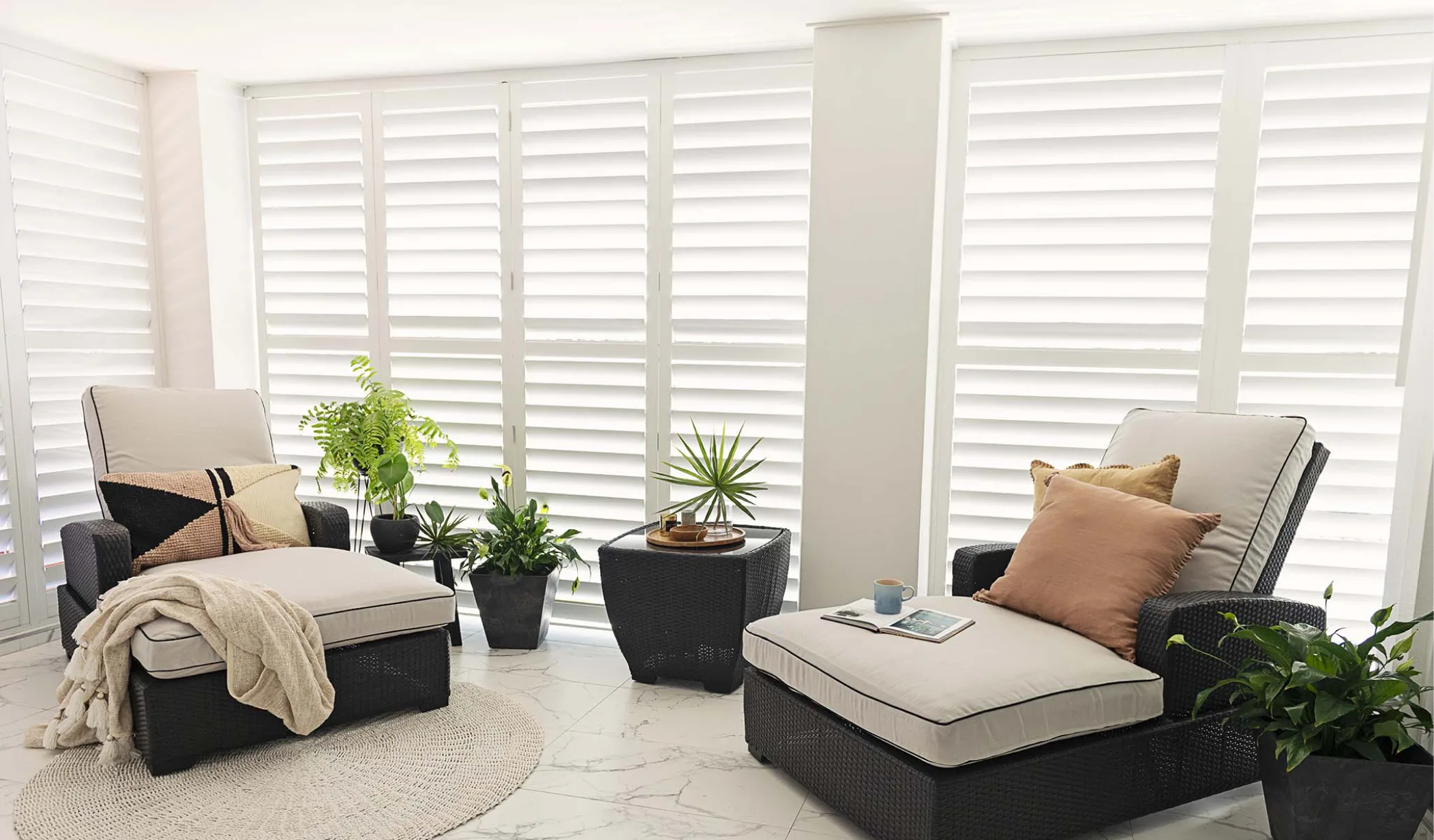
Shutters vs Blinds: Which Is Right for Your Home?
Both window treatments have their place, but they differ in longevity, light control, and the value they add to your property. Here is an honest comparison to help you decide.
Choosing between shutters and blinds is one of the most common decisions homeowners face when updating their windows. Both options can look beautiful, but they perform very differently over time. Blinds tend to be the more affordable starting point, while plantation shutters are a longer-term investment that pays back through durability, energy efficiency, and added property value.
Below we compare the two across the factors that matter most: how well they control light and privacy, how long they last, how easy they are to maintain, and what they do for your home's appearance and resale value. We have tried to be fair to both options, but where shutters genuinely outperform blinds we have said so.
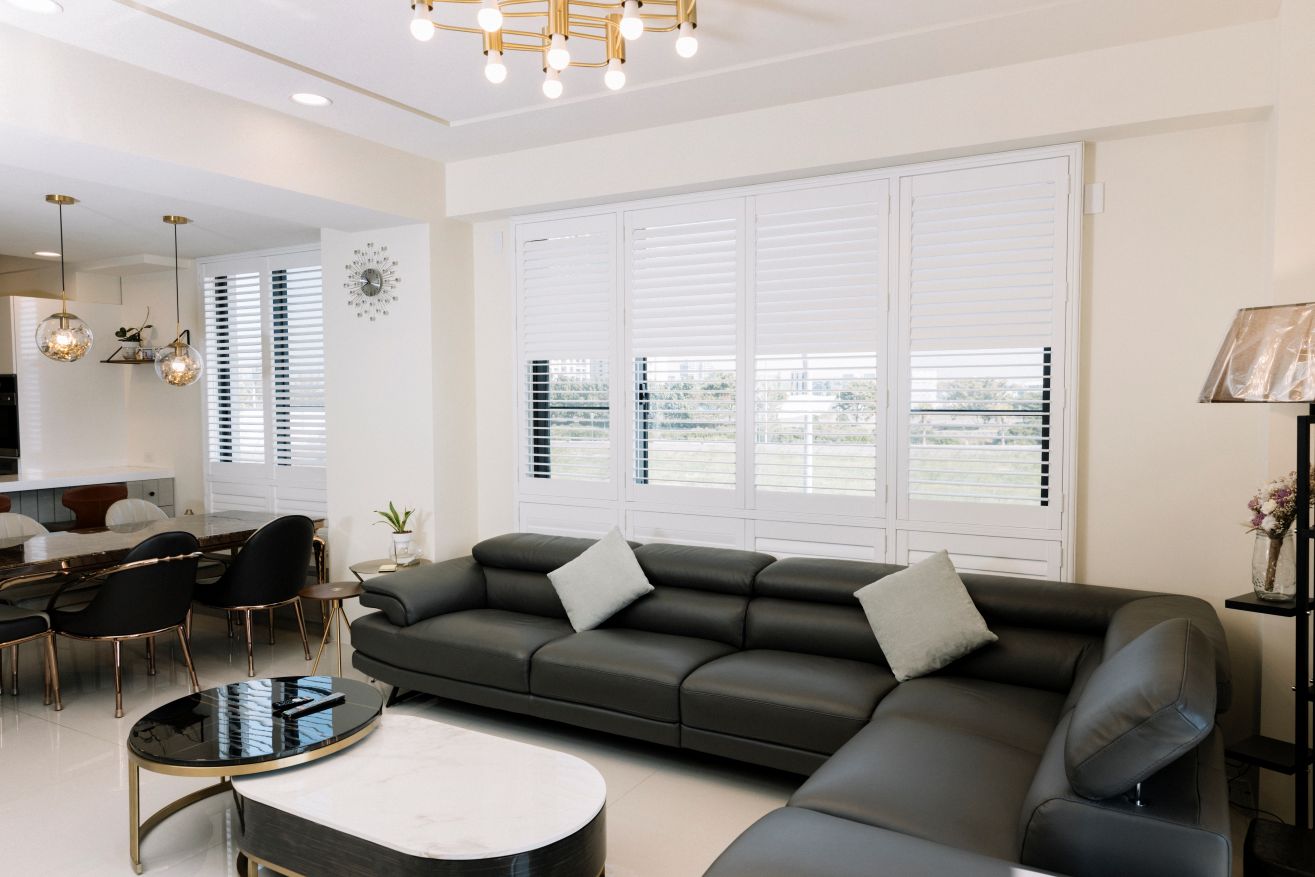
Side-by-Side Comparison
| Feature | Shutters | Blinds |
|---|---|---|
| Durability | Hardwood and composite panels last 20+ years with minimal wear. | Fabric and aluminium slats can bend, fray, or discolour within a few years. |
| Light control | Adjustable louvres tilt precisely to direct or diffuse daylight across a wide range. | Venetian and roller blinds offer on/off control but less precision at angles. |
| Privacy | Tier-on-tier and split-tilt options let you screen the lower half while keeping the top open. | Most blinds are all-or-nothing, with limited zonal privacy unless layered. |
| Insulation | Solid panels and tight-fitting frames reduce draughts and can improve thermal efficiency. | Honeycomb blinds insulate well; standard roller and venetian blinds offer little insulation. |
| Maintenance | A quick wipe with a damp cloth is all that is needed. No cords to tangle or replace. | Fabric blinds need regular vacuuming or professional cleaning. Cords can break. |
| Aesthetics | Architectural look that suits period and modern homes. Wide choice of paint and stain finishes. | Huge variety of colours and patterns, but can look less substantial on larger windows. |
| Child safety | No cords or chains, making them one of the safest window treatments for families. | Corded blinds pose a strangulation risk. Cordless options are available at extra cost. |
| Property value | Widely regarded by estate agents as adding value and kerb appeal to a property. | Generally treated as soft furnishing rather than a permanent home improvement. |
| Cost | Higher upfront cost, but long lifespan and low maintenance offset the investment over time. | Lower initial price, though replacement and cleaning costs add up over the years. |
When shutters are the better choice
Shutters tend to win on longevity and overall value. A well-made plantation shutter can last the lifetime of your home, whereas most blinds need replacing every five to ten years. If you live in a period property, shutters also restore the architectural character that was originally part of the design, particularly on sash windows and bay windows.
For families, the absence of cords and chains makes shutters one of the safest window coverings available. They are also easier to keep clean, which matters in kitchens, bathrooms, and children's rooms where surfaces need regular wiping. Waterproof composite and aluminium shutters handle humidity without warping or staining, something fabric blinds simply cannot do.
When blinds might suit you
Blinds have their strengths too. If budget is your primary concern and you need to cover a large number of windows quickly, roller or venetian blinds offer a practical solution at a lower price point. Blackout roller blinds are also popular in bedrooms where total darkness is the priority, though solid-panel shutters achieve the same result with greater durability.
For renters who cannot make permanent changes, easy-fit or tension-mounted blinds may be the simpler option. However, our Luma Easy-Fit shutters offer a similar no-drill installation for those who prefer the look and feel of plantation shutters without permanent fixings.
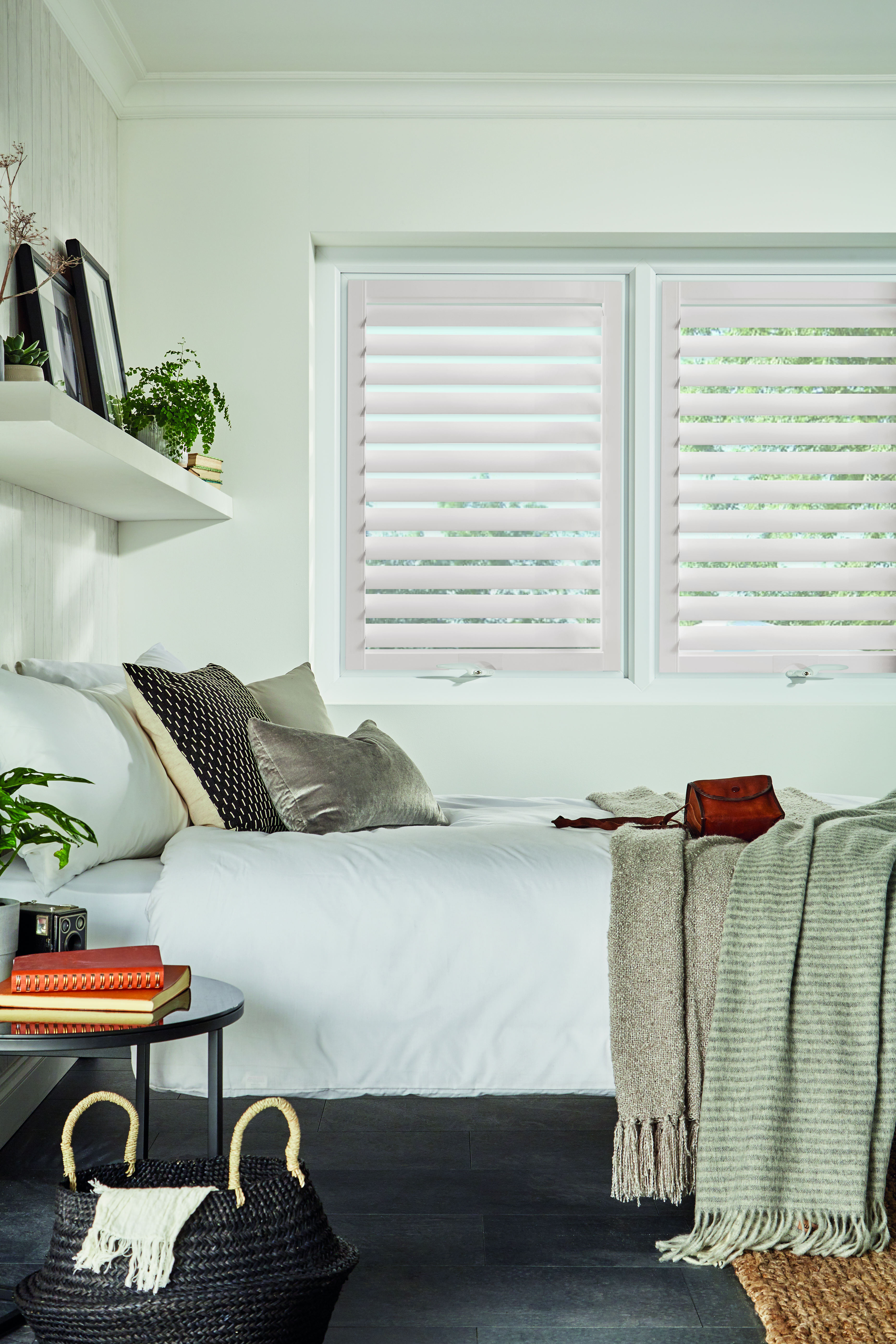
The bottom line
If you are looking for a window treatment that lasts, adds value to your property, and gives you precise control over light and privacy, shutters are the stronger investment. They cost more upfront, but their durability and low maintenance mean you are unlikely to replace them. Many of our customers tell us they wish they had chosen shutters sooner.
The best way to decide is to see shutters in your own home. Book a free survey and we will bring samples, measure your windows, and give you an honest quote so you can compare the true cost of both options.
Shutters vs blinds: making the right choice
Key considerations when deciding between shutters and blinds for your windows.
The choice between shutters and blinds often comes down to how long you plan to stay in your home and how much you value low maintenance. Shutters are a permanent improvement that estate agents regularly highlight during valuations, while blinds are treated as removable soft furnishings.
Light control is another deciding factor. Plantation shutter louvres tilt through a wide arc, letting you fine-tune the angle of daylight entering the room. Blinds tend to offer a more binary open-or-closed approach, especially roller and vertical styles.
Book Your Free Home Survey
No-obligation quote in just 60 seconds.