Shutters and roller blinds: what they actually are
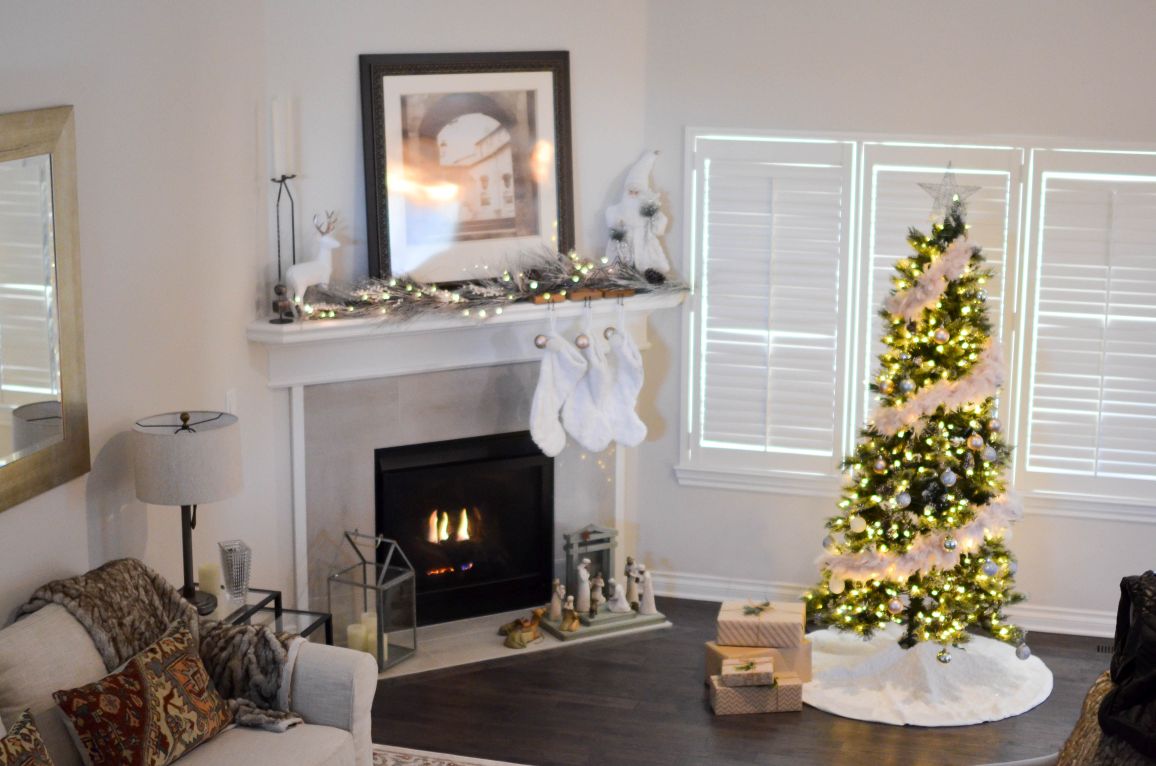
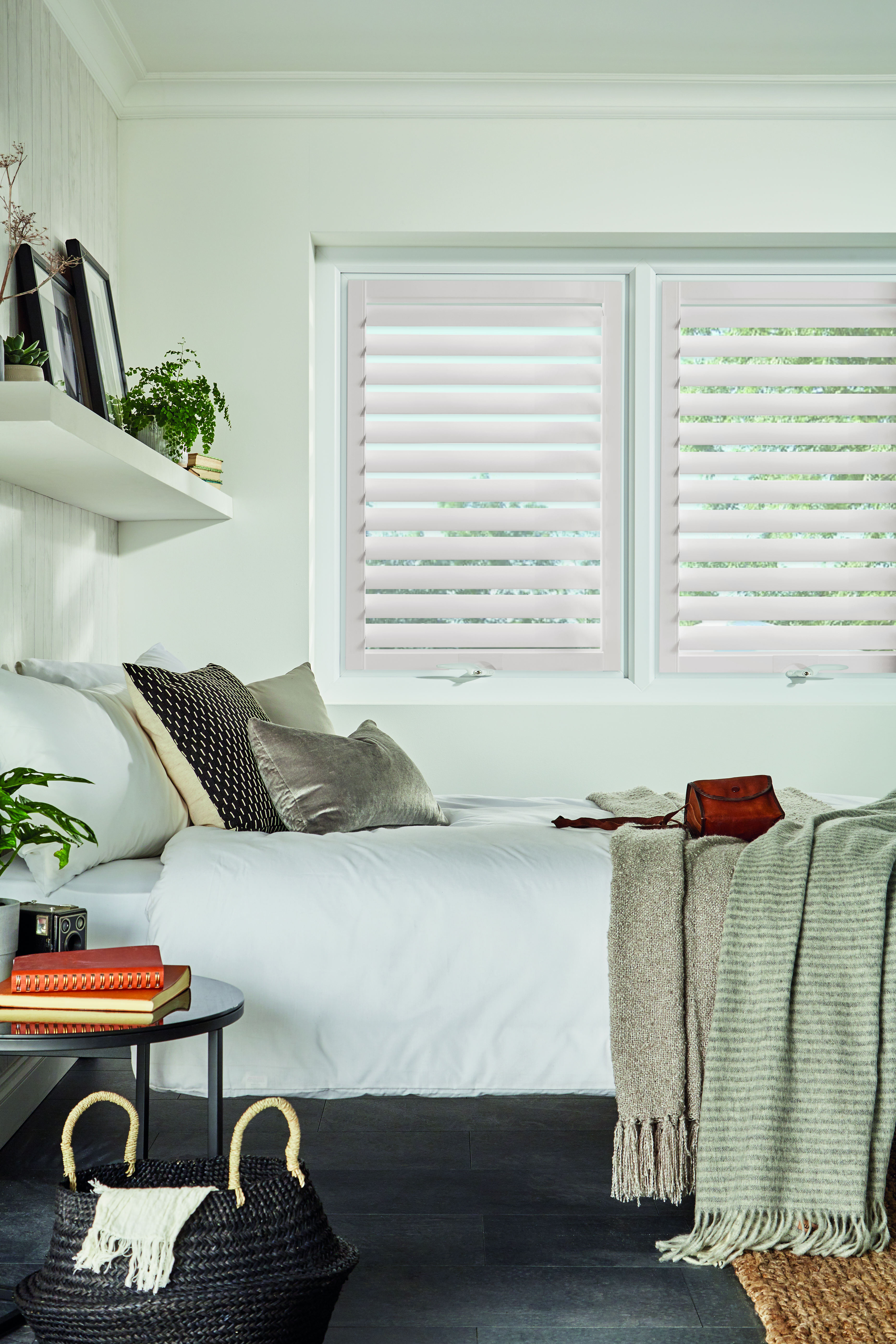
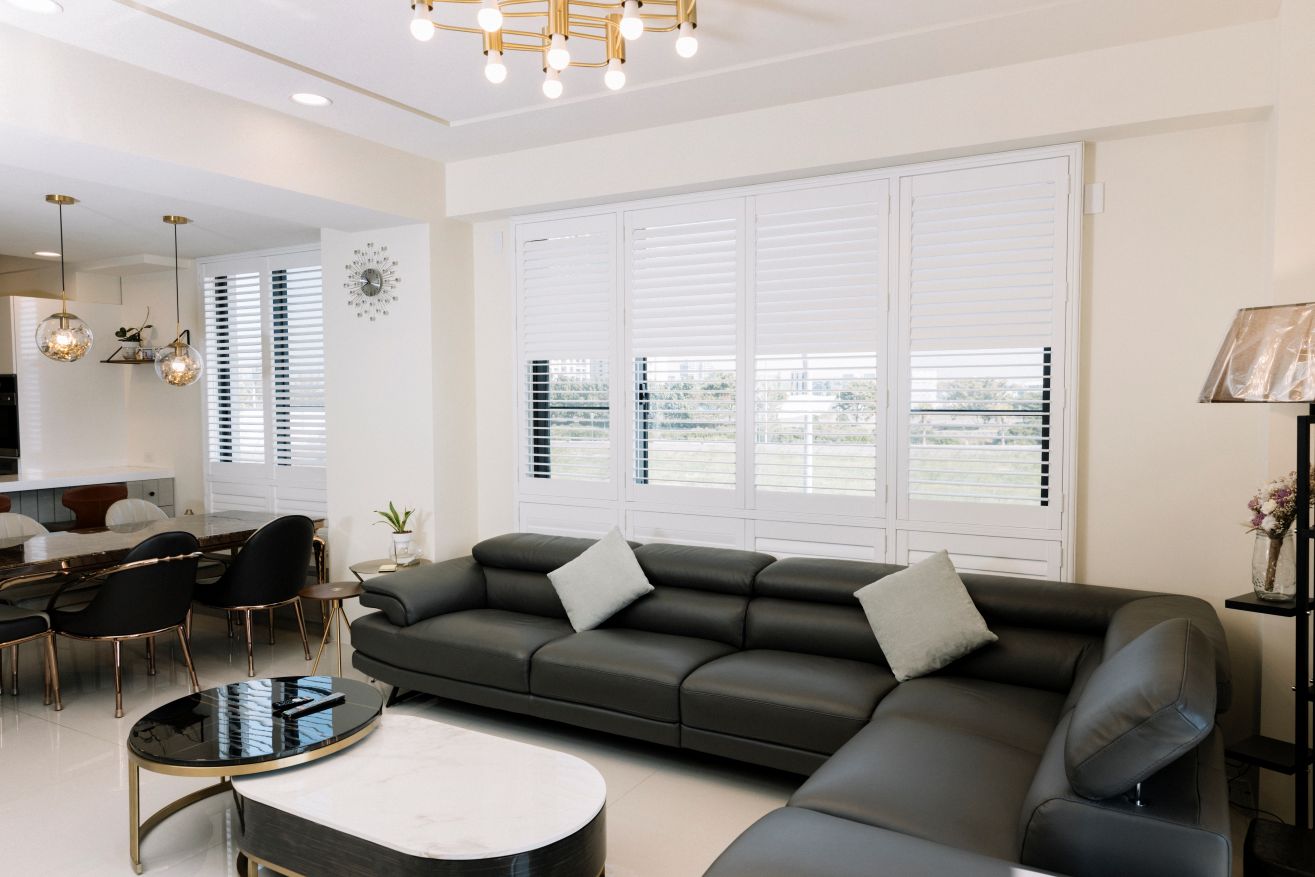
Plantation shutters are rigid panel-and-frame structures, made to the exact size of each window opening, mounted within the existing window reveal. The panels are hinged to the frame and fold back to open the window entirely; when closed, adjustable louvres — typically 47mm, 64mm, or 89mm wide — can be tilted from fully open to fully shut, giving continuous control over light direction and privacy. The panels are factory-painted hardwood, moisture-resistant composite, or aluminium, and the finish matches or exceeds professional decorating. Whole-window louvred panels covering the opening in a single unbroken tier are the most commonly specified configuration across UK homes, though wider sash windows and ground-floor front rooms regularly use other configurations such as tier-on-tier or café style.
Roller blinds are a retractable fabric roll mounted above the window on a bracket inside the reveal or above it on the wall. A spring-loaded or chain-operated mechanism rolls the fabric up or down. The fabric is the product: polyester or natural-fibre weaves in translucent, dim-out, or blackout constructions, available in hundreds of colours and patterns. Motorised roller blinds replace the chain with an electric motor, adding remote or smart-home control, but the fundamental product — fabric that drops in front of the glass — remains unchanged. The essential distinction is permanence: a shutter is a structural fixture; a roller blind is a textile.
Light control: louvres versus fabric
The adjustable louvre is shutters' defining advantage over every other window treatment, including roller blinds. With a shutter, you can position louvres at any point between fully open and fully shut — angling them upward to send diffused light toward the ceiling, downward to cut direct sun at eye level, or part-closed to filter light through the slats without blocking it entirely. The result is a continuous spectrum of light quality, not a binary open-or-closed state. Our shutters-versus-blinds product comparison covers the full range of window covering categories, but louvre adjustment is the clearest single advantage shutters hold over any fabric alternative.
Roller blinds work on a different logic. The fabric either rolls up, admitting full daylight, or deploys to some point between the header and the sill. A translucent fabric diffuses light softly but allows silhouetting from outside at night — when interior lighting outweighs the street, the blind acts as a diffusing screen that makes movement inside clearly visible. A blackout fabric eliminates silhouetting but also eliminates daylight entirely when the blind is down. There is no position at which a roller blind simultaneously provides privacy and natural daylight — the two objectives are mutually exclusive within the same fabric. For rooms where you need both at once, shutters are the only effective single-product solution.
Privacy: what each product actually delivers
A translucent or dim-out roller blind provides daytime privacy against a brighter street — but in the evening, when interior lighting is stronger than the street, the silhouetting problem appears. A blackout blind solves this, but only by making the window fully opaque. The compromise is unavoidable.
Shutter louvres block sightlines at any angle regardless of relative indoor and outdoor brightness, because the geometry of the closed slats prevents any direct line of view into the room. More usefully, shutters split into independent upper and lower sections let you manage different privacy zones within the same window simultaneously: lower panels closed to block the pavement sightline, upper panels tilted open to admit daylight from above. This configuration cannot be replicated with a single roller blind and would require two separate blinds on the same window — with complicated mounting and an awkward visual result — to approximate.
Durability and maintenance over time
Factory-painted shutter panels — whether hardwood, composite, or aluminium — clean with a damp cloth. The painted surface is the same type used on kitchen cabinetry: hard, washable, and resistant to grease, steam, and cooking vapour. There is no fabric to fade in UV light, no mechanism to lose spring tension, and no annual professional cleaning required. A correctly installed shutter should remain in the same condition after 25 years. The full maintenance routine is covered in our complete guide to cleaning and maintaining plantation shutters — it amounts to a few minutes every few months.
Roller blind fabric fades visibly on south-facing windows within three to five years, particularly in blackout weaves where UV degradation shows as colour shift and mechanical stiffening of the fabric. The chain or spring mechanism degrades under regular use; most roller blinds need full replacement within eight to twelve years. A quality roller blind at £180 replaced twice over 25 years costs £360 plus fitting; the shutter installed once over the same period costs nothing more after installation. The long-term financial case is covered in detail in our cost and value analysis for plantation shutters.
Thermal performance and condensation management
Closed shutter panels create a physical air gap between the glass surface and the room interior, reducing cold radiation from glazing in winter and cutting heat ingress through south-facing glass in summer. This effect is most pronounced in period properties with original single glazing or draughty sash windows, where cold bridging is significant. For listed buildings where glazing replacement is restricted, interior shutters are one of very few improvements that meaningfully reduce heat loss at the window without modifying the original frame. The measured gains across different window types are covered in how shutters reduce heat loss in UK homes.
Roller blinds can trap a small amount of warm air when the fabric reaches the sill, but the seal at the sides is imperfect and the fabric itself has negligible insulation value. Condensation management also differs markedly: a shutter panel dries in seconds with a cloth; a roller blind absorbing repeated condensation at the base of a cold north-facing window risks mould growth in the fabric weave over a UK winter, particularly in kitchens and bathrooms. Composite shutters guaranteed against moisture damage are unaffected by condensation, steam, or elevated humidity, and are the standard material specification for bathroom and kitchen installations across all product ranges.
UK prices in 2026: what each product costs
Roller blind prices span a wide range. A basic chain-operated blind from a home improvement retailer costs £20–£50; a quality made-to-measure dim-out or blackout blind runs £80–£250 supply only, or £150–£350 fitted per window. Motorised roller blinds start at around £300 per window fitted, rising to £600 or more for large openings with smart-home integration. A quality roller blind installation across a ten-window UK home typically costs £2,500–£5,000.
Plantation shutters are priced per square metre of glazed area, supply and fit. Composite shutters start from approximately £350–£400 per m²; hardwood shutters from £550–£620 per m²; aluminium tracked systems for bi-fold or patio doors from £650–£800 per m². A typical bedroom window of approximately 1.0m² fitted with composite shutters costs £350–£450. A whole-house installation across a four-bedroom period property typically runs from £5,500 to £9,000. Our room-by-room guide to shutters versus curtains includes pricing context for each scenario. Explore all shutter products and specifications online before committing to a survey.
Which is better by room?
The right choice varies by room, and many UK homeowners use both products in the same property — shutters in principal spaces and bathrooms, roller blinds in secondary rooms where budget is the priority.
- Living room: Shutters win on light control and long-term aesthetics. Louvred panels in a period front room look architecturally integrated; a roller blind reads as temporary. Roller blinds suit contemporary open-plan rooms where a deliberately minimal look is the priority.
- Bedroom: Both can achieve effective light exclusion. A quality blackout roller blind is considerably cheaper. Solid panel shutters with a flush louvre-free face produce near-complete blackout without the edge light bleed common to roller blind fabric. On south-facing windows, shutters outlast blackout fabric significantly.
- Kitchen and bathroom: Composite or aluminium shutters win outright. PVC roller blinds are a common budget solution, but the fabric and mechanism are vulnerable to persistent steam; composite shutters wipe clean, resist moisture throughout their construction, and carry no mould risk.
- Home office: Shutters win for monitor glare management. Louvres angled upward direct diffused light to the ceiling and eliminate direct glare without darkening the room; a roller blind is either fully raised, causing glare, or fully lowered, making the room too dark.
- Conservatory: Shutters on vertical glazing panels — particularly in composite or aluminium — outperform roller blinds for heat management, UV resistance, and ease of maintenance in a high-exposure environment.
Who should choose shutters, and who should choose roller blinds
Roller blinds are the practical choice when the property is rented and a permanent fixture is not possible; when budget does not stretch to shutters; when the priority is a fabric texture complementing soft furnishings; or when a short-term solution is needed during a longer renovation. They are a well-understood, widely available product and the right choice within those parameters.
Plantation shutters are the right choice when you own the property and intend to stay; when windows are in kitchens, bathrooms, or conservatories where fabric degrades; when bay windows or non-rectangular openings make standard blinds look awkward; or when you want a window treatment that adds demonstrable value to the property at resale. Browse our completed UK shutter projects across every room type to see the finished result before making a decision. Arrange a free home survey to receive a room-by-room written quote with physical product samples on the day and no obligation to proceed.