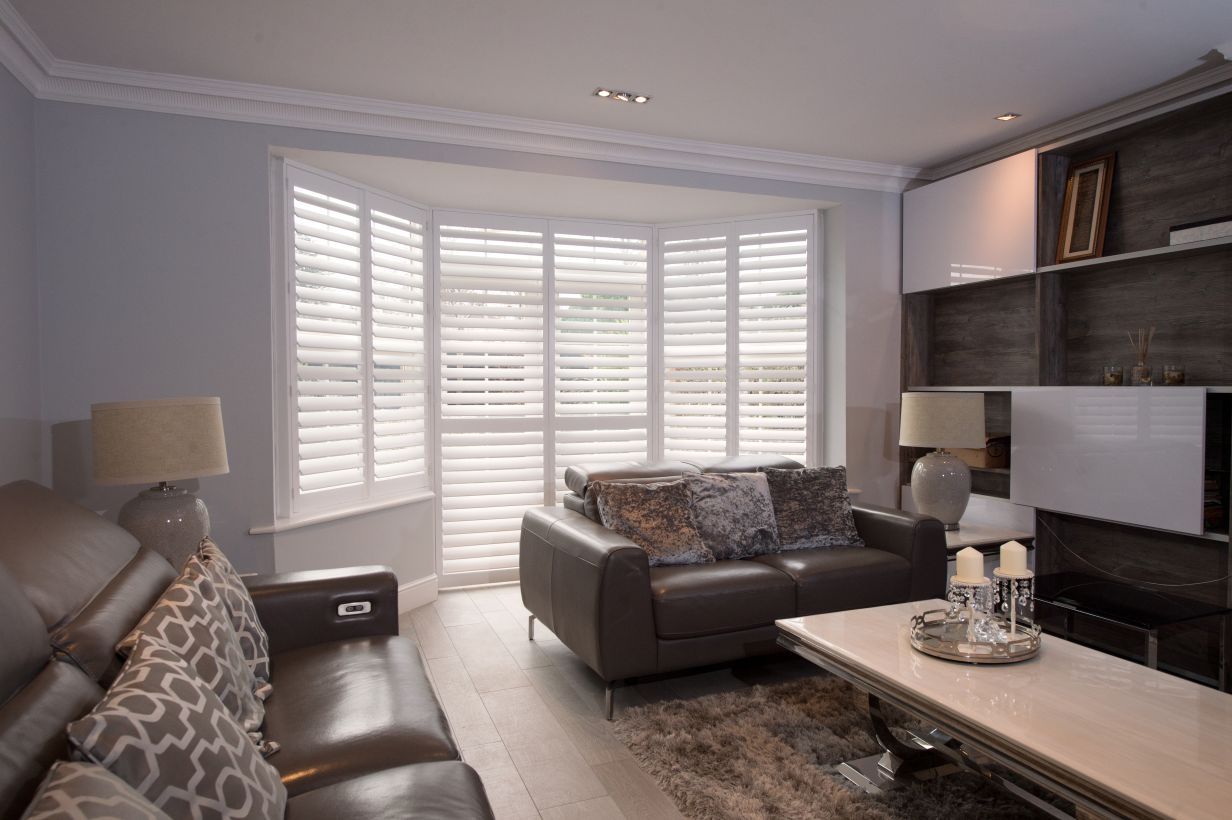
Why the comparison matters — and what it is actually about
The shutters vs curtains question is less about personal preference and more about what each window treatment actually does well. Curtains are a fabric solution: they hang from a pole or track, gather light, and provide privacy when drawn. Plantation shutters are a fitted architectural solution: they are installed within the window reveal, they open and close like cabinet doors, and they allow precise louvre control — you can admit light without losing privacy, direct it toward the ceiling, or close completely. The mechanical distinction matters because the rooms where shutters outperform curtains are precisely those where fitting, durability, and light precision count most — kitchens, bathrooms, bay-fronted living rooms, and period homes where the internal joinery sets the standard. The rooms where curtains hold their own are those where fabric softness and a non-mechanical aesthetic are actively wanted.
This guide works through the principal rooms in a UK home and gives a clear answer for each. For a broader independent comparison covering roller and Venetian blinds as well, see our auto-blog honest comparison of shutters versus blinds — the same analytical framework applies across all the main window treatment options.
Living rooms: shutters nearly always win
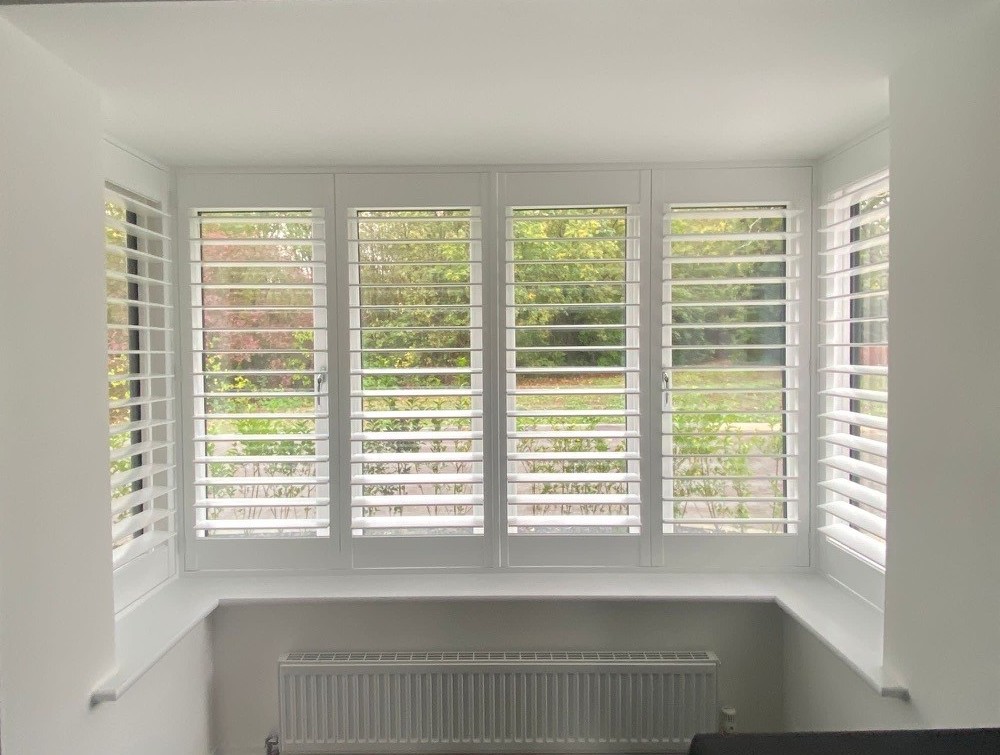
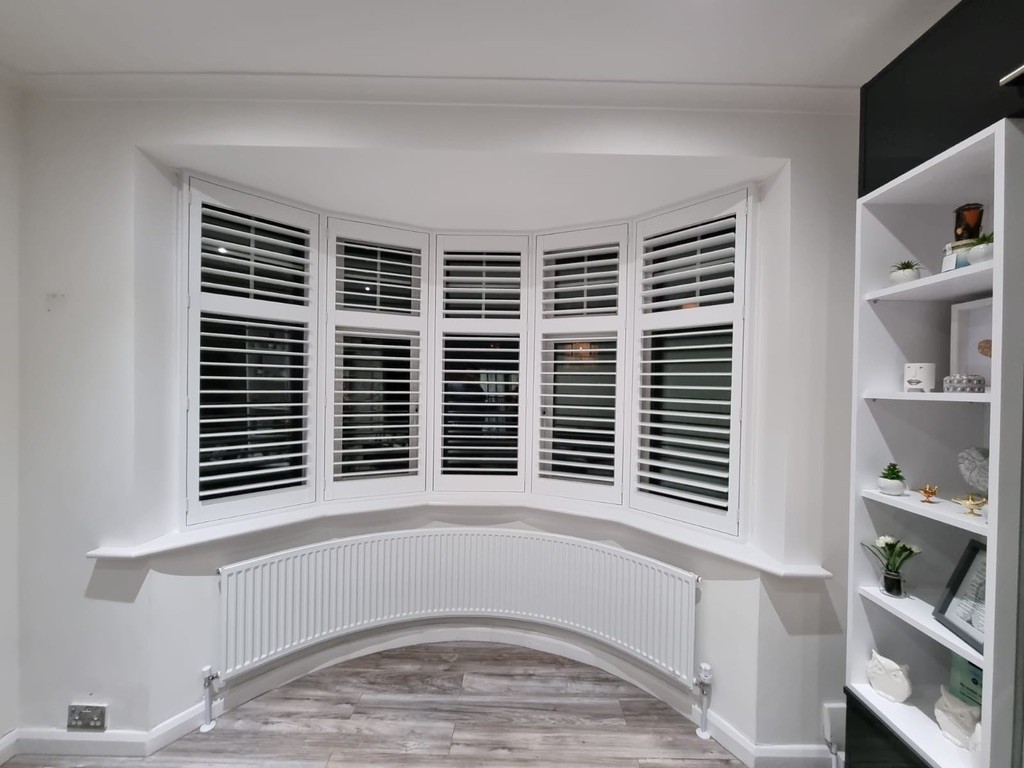
The living room is where the shutters vs curtains comparison is most debated — and where shutters have the most decisive technical advantage. A bay-fronted living room in a Victorian or Edwardian terrace, the dominant housing format across most of inner London, involves a three-panel bay with deep reveals, a complex sill arrangement, and a window that faces the street. Curtaining a bay window well costs as much as shuttering it: a bespoke bay pole, custom-made curtain panels at the correct return widths, and a blackout lining that prevents light leakage at the edges all add up. The result is a treatment that draws well and provides privacy when closed, but offers no intermediate position — the louvre angle that admits afternoon light while maintaining street-level privacy is simply not possible with fabric.
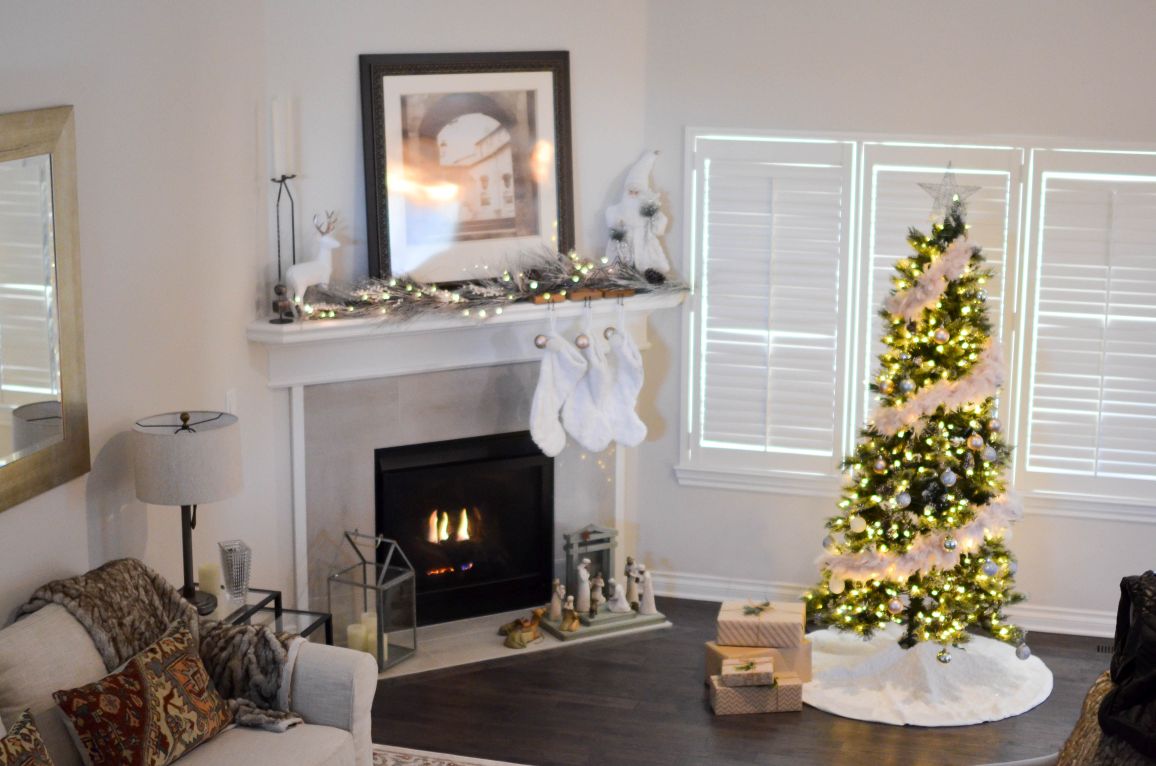
For living rooms, full-height shutters provide the architectural outcome: panels that close flush with the reveal, louvres that angle precisely for light management throughout the day, and a frame that reads as part of the room's joinery rather than something hanging in front of it. The living room shutters page covers louvre sizes, mid-rail options, and the configuration decisions specific to UK living room formats. For design ideas across a range of living room styles and property types, our living room shutters design guide illustrates the full range of approaches.
Bedrooms: the blackout question decides it
Bedrooms are where the curtains case is strongest. A lined blackout curtain in a main bedroom provides a level of light exclusion that a standard louvred shutter cannot match — the gaps around a closed louvre panel, even when fully shut, admit some residual light around the frame perimeter. This is a genuine functional difference worth acknowledging honestly, not a marketing caveat.
There are three ways to address it with shutters. The first is solid panel shutters — panels with no louvres at all, fitted with solid timber or composite boards that close flush to the frame and provide near-complete light exclusion. These are the direct shutter equivalent of a blackout curtain and a practical substitute in any bedroom where total darkness is the requirement. The second is tier-on-tier shutters: independent upper and lower panels that let you close the lower half for privacy while leaving the upper half open for morning light — and close both sections completely for maximum darkness at night. The third is a louvred shutter combined with a recessed blackout blind fitted within the reveal behind the shutter frame, which gives total darkness on demand without sacrificing the daytime precision of the louvre. The bedroom shutters page covers all configuration options for main bedrooms and children's rooms. For families, plantation shutters also eliminate the window-blind cord strangulation risk highlighted in UK child safety guidance — our auto-blog child-safe shutters guide covers this in full.
Kitchens and bathrooms: shutters are the clear practical answer
Kitchens and bathrooms are where the comparison becomes straightforward. Fabric curtains in a kitchen absorb cooking grease, condensation, and steam, and require regular removal and washing. In a bathroom, curtain fabric positioned near a shower or bath will mildew within months regardless of ventilation. A roller blind is more practical than curtains in these rooms, but PVC-coated fabric is visually limited, difficult to clean around the mechanism and cassette, and still subject to moisture ingress at the fittings.
Mimeo composite shutters are fully waterproof, wipeable with a damp cloth, and resistant to the steam, grease, and condensation that kitchens and bathrooms generate daily. The louvre design means you can ventilate the room through an open window while maintaining privacy — a functional combination that a curtain or roller blind cannot replicate. The kitchen shutters page covers heat and steam resistance, louvre sizing for different kitchen window formats, and the practical decisions that distinguish a kitchen installation from a living room one. Café style shutters — which cover the lower half of the window only and leave the upper sash fully open for light and ventilation — are particularly effective in kitchen and dining room contexts where natural light is wanted without full street-level exposure.
Period homes: where shutters match the architecture
In Victorian and Edwardian period homes — the dominant housing type across most of inner and south London — plantation shutters have an architectural logic that curtains do not. The window reveal depths, the sash window proportions, the quality of surrounding joinery, and the depth of the original sills all point toward a fitted, structural window treatment rather than a hanging fabric panel. A full-height louvred shutter fitted into a Victorian sash window reads as an architectural continuation of the room's joinery — consistent with the skirting boards, door architraves, and cornice detail that define the quality of the period interior. A curtain in the same window introduces a different material plane that competes with the period features rather than supporting them.
For painted hardwood shutters factory-matched to existing joinery colours, the Endura hardwood shutters page covers the full specification. For a broader guide to shutters across Victorian and Edwardian housing stock, our auto-blog guide to shutters for period homes covers the architectural and planning considerations in detail. The auto-blog Victorian homes period style guide goes deeper on matching original features and the historical context for fitted shutters in British domestic architecture.
Cost and maintenance: the ten-year comparison
The upfront cost comparison between plantation shutters and a good-quality curtain installation is less one-sided than it first appears. A bespoke curtain solution for a bay window living room — custom poles, hand-sewn panels, blackout lining, and professional fitting — costs £600–£1,500 or more for a single window, comparable with a composite shutter installation for the same opening. Over a ten-year period, the comparison shifts decisively in shutters' favour: curtains fade, require dry cleaning two or three times a year, and need re-making as they wear. A well-fitted composite or hardwood shutter requires no maintenance beyond occasional dusting and carries a manufacturer's warranty of five to ten years.
The cleaning maintenance difference is meaningful in daily use. A full set of shutters across a living room or bedroom requires a wipe-down with a dry or slightly damp cloth, taking two to three minutes per window. Our guide to cleaning plantation shutters properly covers the correct approach for louvres, frames, and hinges across all materials. Supply-and-fit prices start from £380 per m² for composite and £550 per m² for painted hardwood. Browse the full range at Shutters Factory products, explore finished installations in the shutters gallery, and book a free home survey for a fixed written quote within 48 hours of the visit. For a wider cost and lifestyle comparison, see the auto-blog shutters vs curtains UK comparison.
Room-by-room verdict
The verdict across a typical UK home is consistent: shutters win in every room where function, durability, and light control are the primary criteria. Curtains retain a genuine role in rooms where fabric softness or a layered aesthetic is the explicit design intention — but in most residential contexts that is a secondary consideration rather than the primary one. The summary below gives the practical recommendation for each room type.
- Living room — shutters win: bay windows, precise louvre light management, and street-level privacy without expensive bespoke bay poles or heavy fabric
- Kitchen — shutters win: composite shutters are waterproof, grease-resistant, and wipe-clean in under two minutes
- Bathroom — shutters win: moisture resistance and ventilation control; no mildew risk, no cassette failures
- Main bedroom — depends on blackout requirement: solid panel shutters or louvred shutters with a recessed blackout blind for full darkness; louvred shutters alone for most households where partial darkness is sufficient
- Children's bedroom — shutters win: cord-free design removes safety risk, robust construction survives daily use, and solid panel option provides genuine blackout for infants and young children
- Period property throughout — shutters win: architectural continuity with the room's original joinery is not achievable with curtains on a pole
- Rental property — shutters possible: Luma easy-fit shutters clip into the frame without drilling and remove without leaving marks, making them a practical option even without landlord permission for fixed fittings