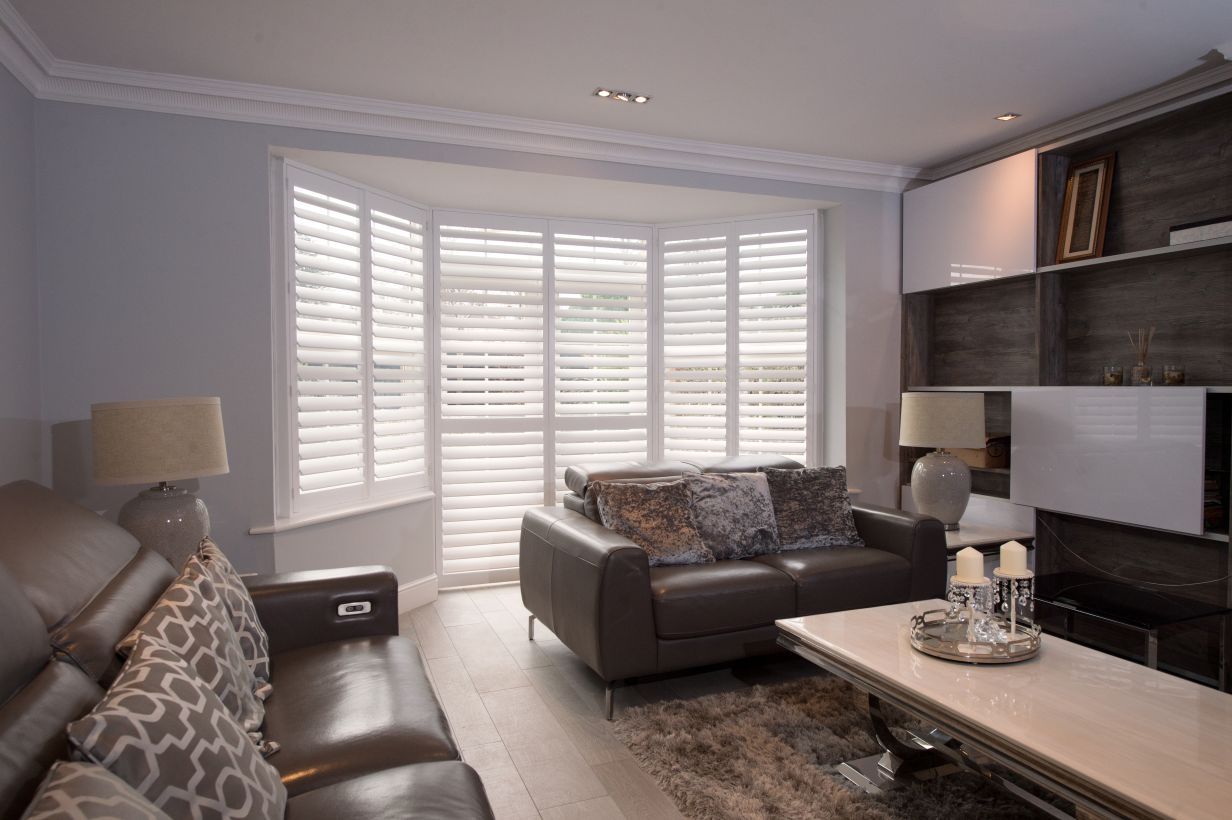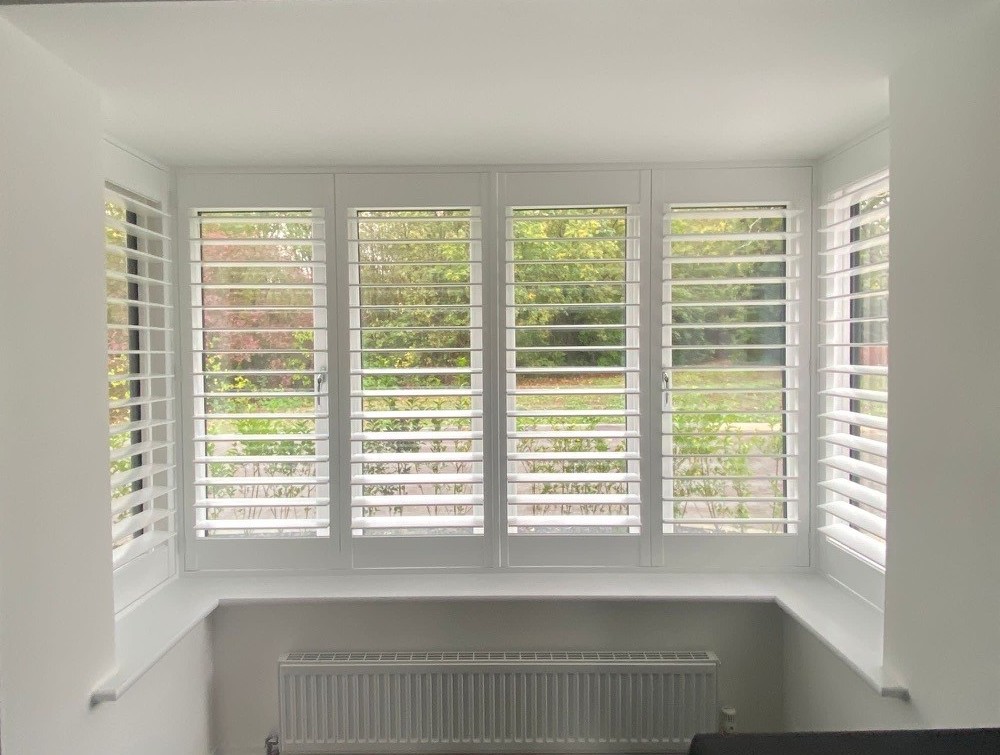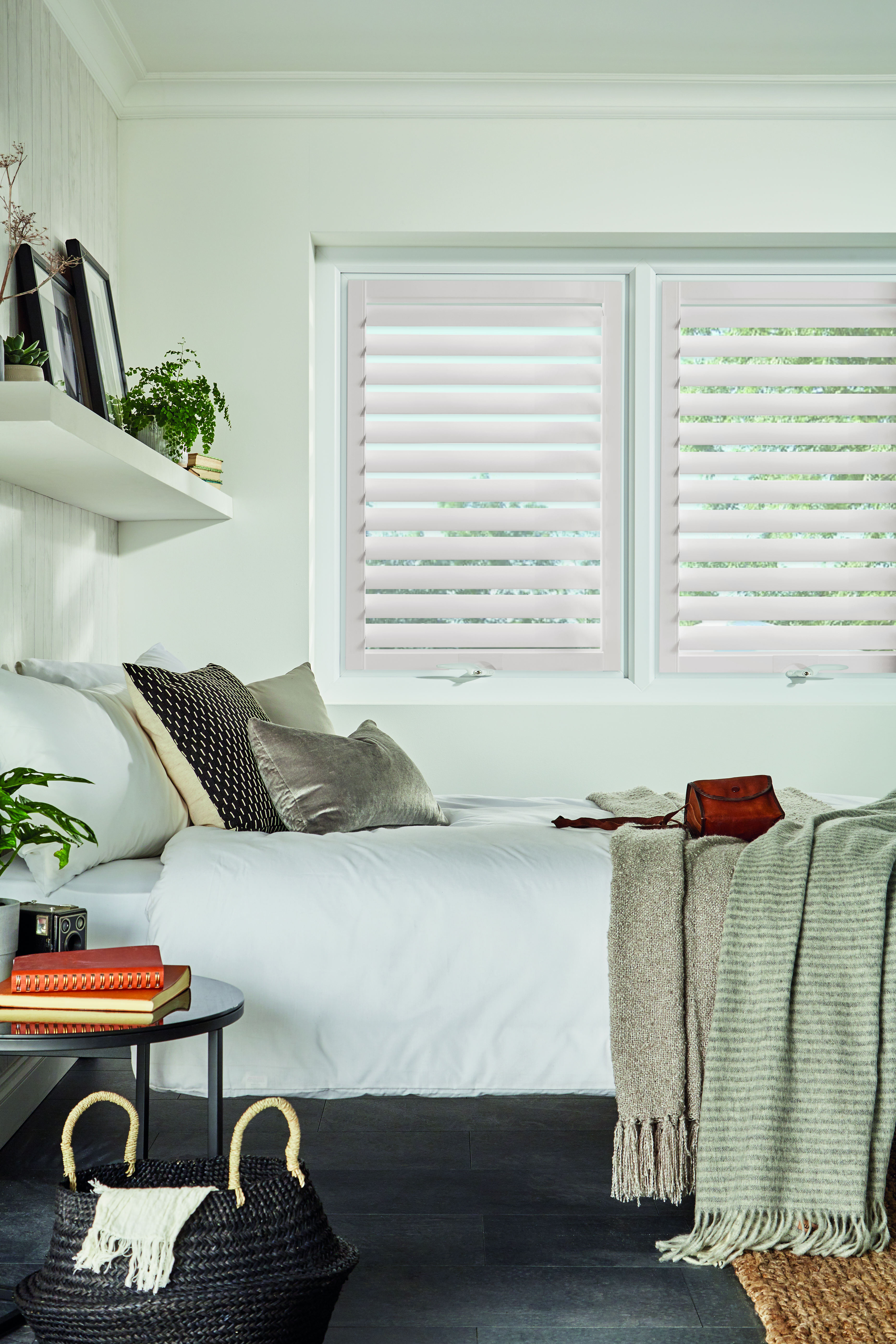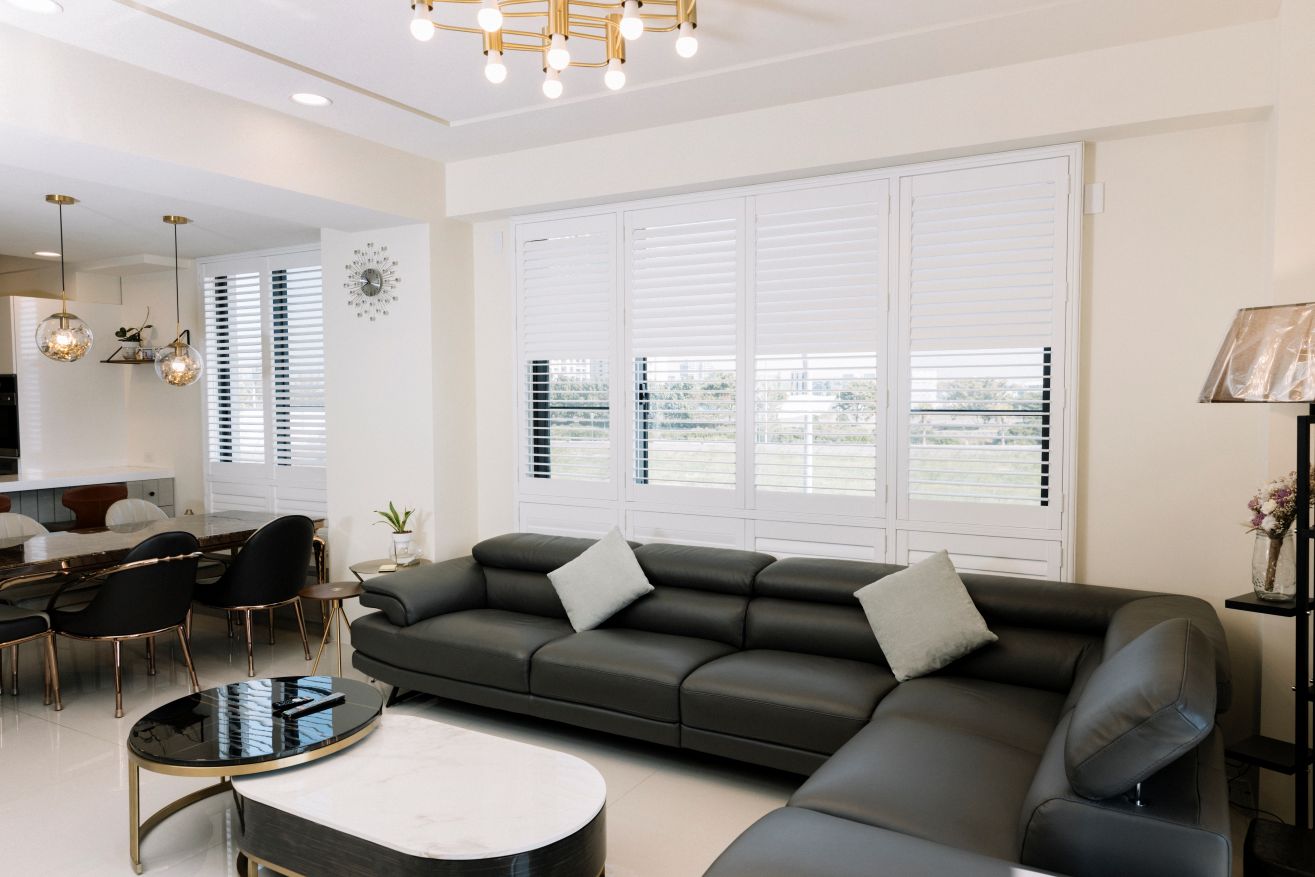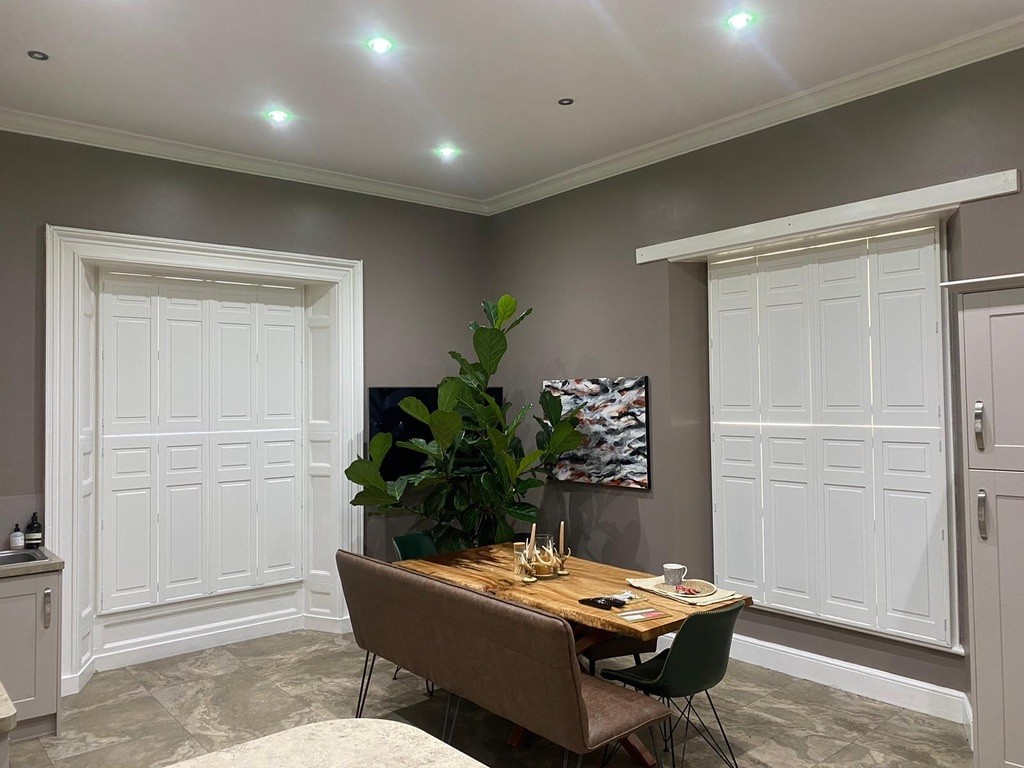
How tier on tier shutters work
Unlike full height shutters where panels open as one unit, tier on tier shutters have two separate sets of panels — top and bottom — each on its own hinges. You can fold back the top panels to let in daylight while keeping the bottom closed for street-level privacy, or open both tiers for full access to the window.
This independent operation is what makes tier on tier shutters the top choice for Victorian and Edwardian homes with sash windows throughout.
Benefits for period properties
Sash windows were designed to ventilate from both top and bottom. Tier on tier shutters respect that design intent — you can drop the top sash for airflow while the top shutter tier folds neatly to the sides. The bottom tier stays closed for privacy.
This combination of ventilation and privacy is hard to achieve with full height shutters or any type of blind.
Choosing materials for tier on tier
Hardwood and Paulownia are the most popular materials for tier on tier shutters because they suit the character of period homes. Composite is an option for ground-floor rooms exposed to condensation. Your surveyor will recommend the best material after assessing each window.
Book your free survey
Tier on tier shutters require careful measurement — each tier must align perfectly when closed and fold cleanly when open. Book a free home survey to discuss options and get a transparent quote with professional installation.