Wimbledon’s architecture — what shutter buyers actually face
Wimbledon is not architecturally uniform. The SW19 postcode contains three distinct residential areas with very different building stock, and each brings its own window challenges.
Wimbledon Village and the Hill are dominated by large detached and semi-detached Victorian and Edwardian houses — wide bay fronts, tall double-hung sash windows, and generous reveals that take shutters very well. These are properties where the quality of the window treatment matters, both for appearance and for the significant heat loss that comes with large, often single-glazed or early-double-glazed openings.
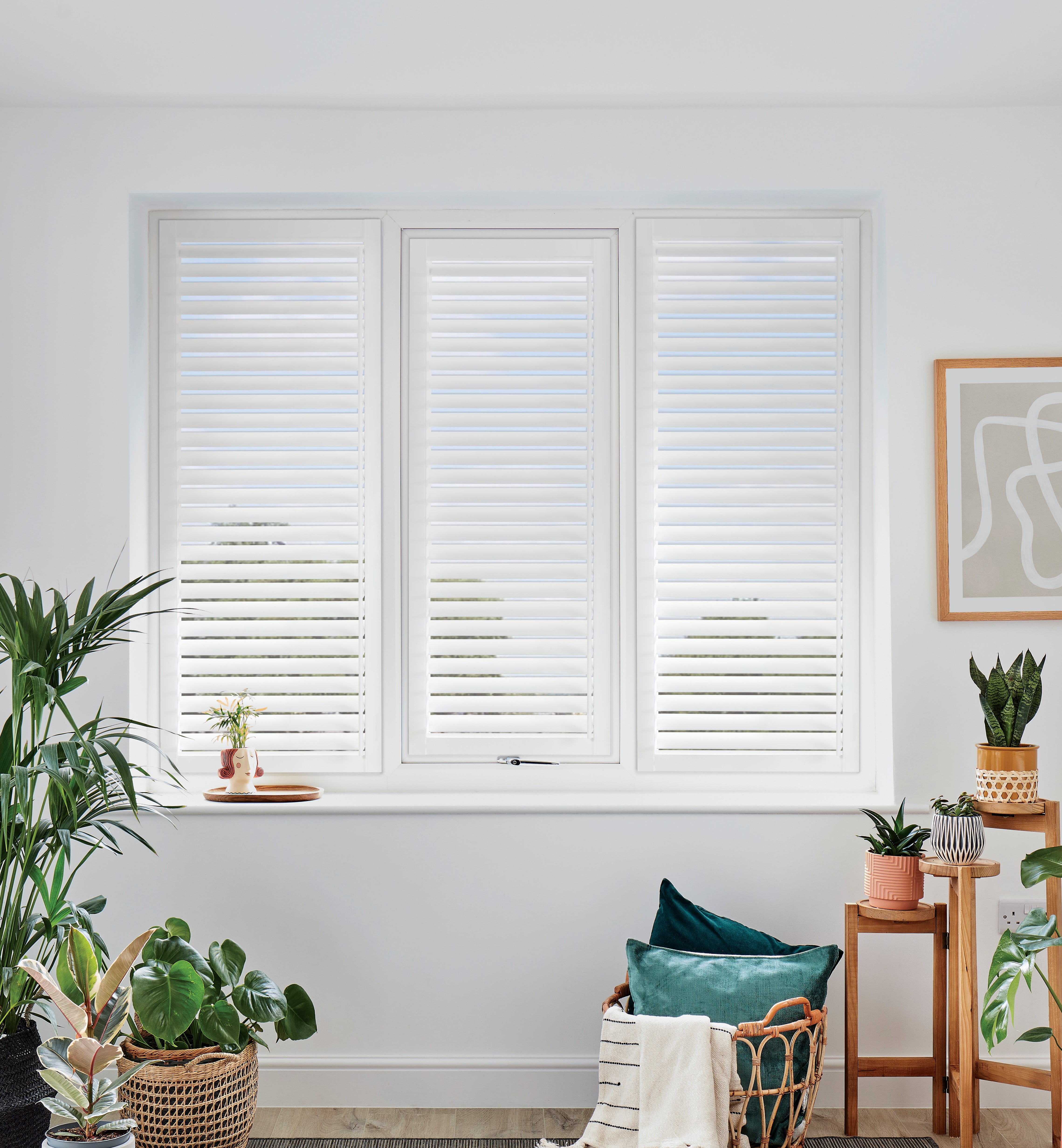
Wimbledon Town and the streets around the Broadway contain a mix of 1930s to 1960s semis, mid-century purpose-built flats, and more recent apartment developments. These homes often have casement rather than sash windows, shallower reveals, and less architectural detail — they suit a cleaner, more contemporary shutter specification.
Wimbledon Park, between the Hill and Southfields, is largely Edwardian and inter-war terracing — compact fronts, three windows across, and bay windows that have often been extended over the decades. This is the area where full-height shutters on a projecting bay are most commonly requested.
For a broader picture of how window type affects shutter choice in London period properties, see our guide to shutters for Victorian and Edwardian homes.
The shutter styles that suit Wimbledon homes
Four styles account for the majority of what we install across SW19. The right choice depends on the window type, the room, and whether the priority is privacy, light control, or period character.
- Full height — the default for Wimbledon Victorian and Edwardian living rooms, dining rooms, and front-of-house windows. One continuous panel per side, with an optional mid-rail to split louvre tilt above and below. Works on tall sash windows and wide casements alike. See full-height shutters.
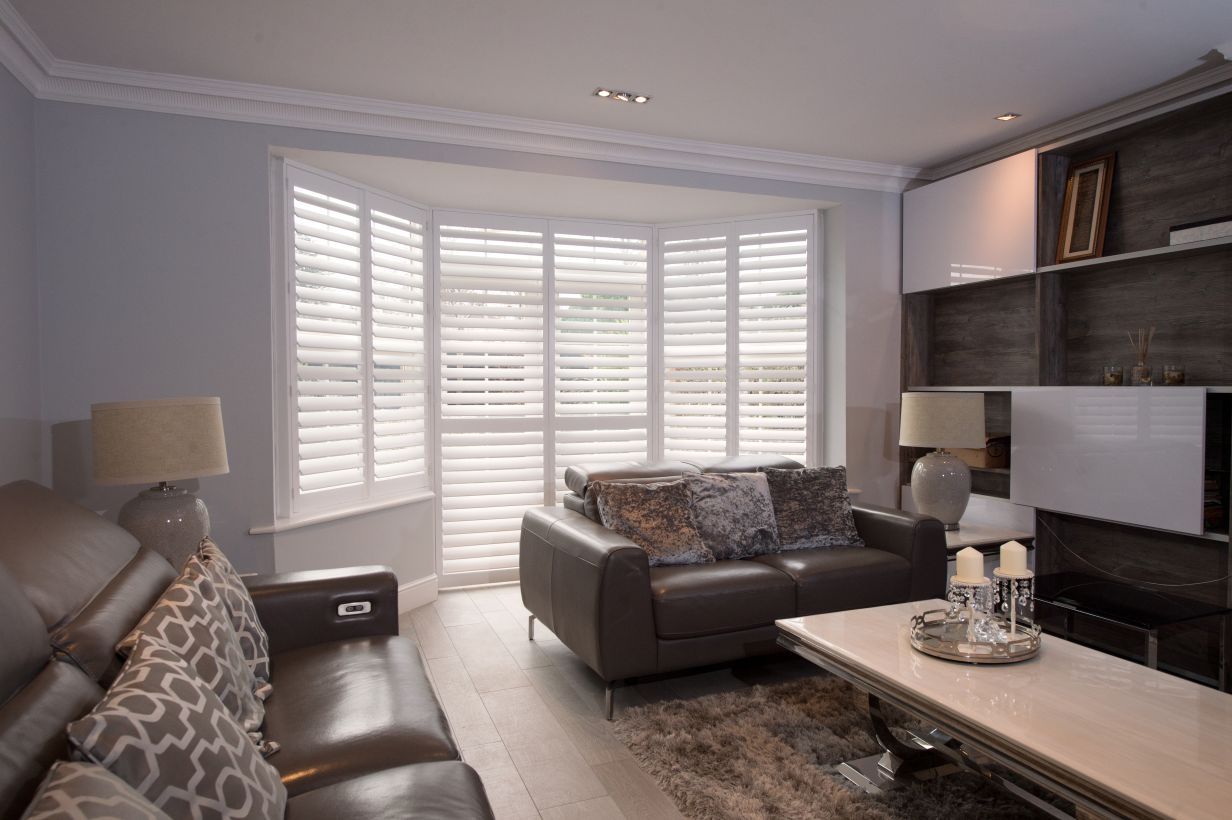
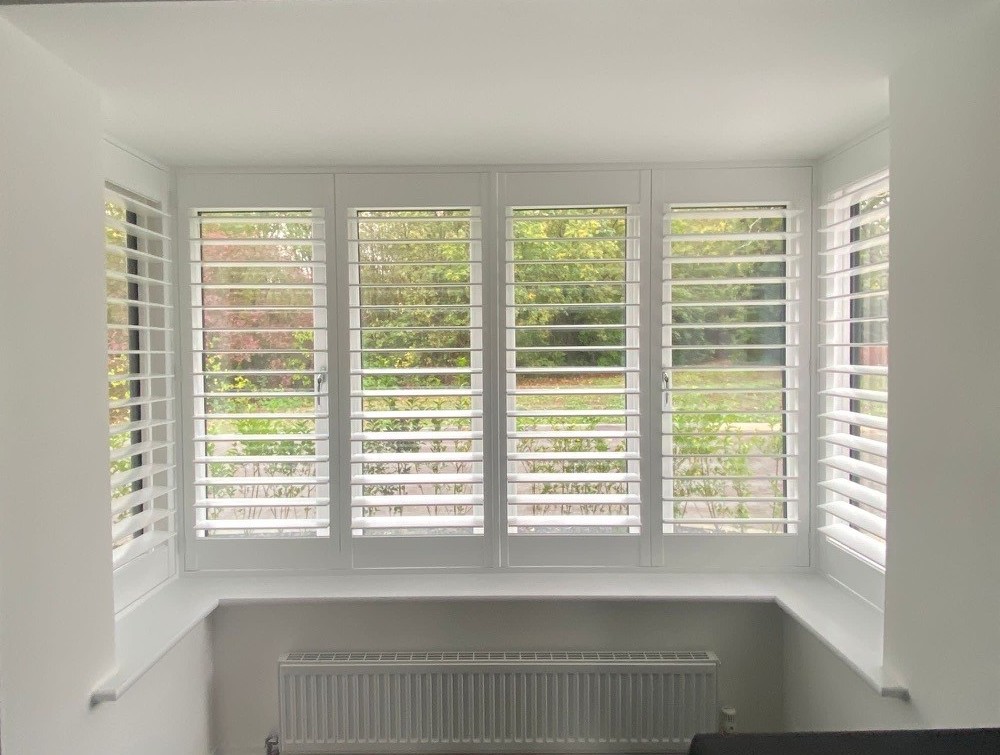
- Bay window shutters — very common in Wimbledon Park and on the larger Wimbledon Hill streets. Mitred frames at each angle give a built-in architectural look rather than three separate shutters squeezed together. See bay window shutters for fitting details.
- Tier-on-tier — popular in first-floor Wimbledon bedrooms facing the street, and in ground-floor rooms where you want privacy below but maximum light above. The two halves open independently. See tier-on-tier shutters.
- Café style — the right call for ground-floor rooms close to a busy pavement in Wimbledon Town or along Wimbledon Hill Road. Covers the bottom half only, preserving privacy without blocking the sky. See café style shutters.
Choosing the right material for your Wimbledon property
Wimbledon’s varied building stock means there is no single default material — the right choice depends on the room, the building type, and how the property is used.
Painted hardwood (Endura) is the first choice for Wimbledon Hill and Village period homes. Endura wood shutters accept a custom paint match, so you can align them precisely to existing skirting boards, architraves, and window surrounds — important in period rooms where shutters become part of the interior architecture rather than an addition to it. For a large detached Victorian house with deep reveals and generous window proportions, hardwood has a weight and substance that other materials do not replicate.
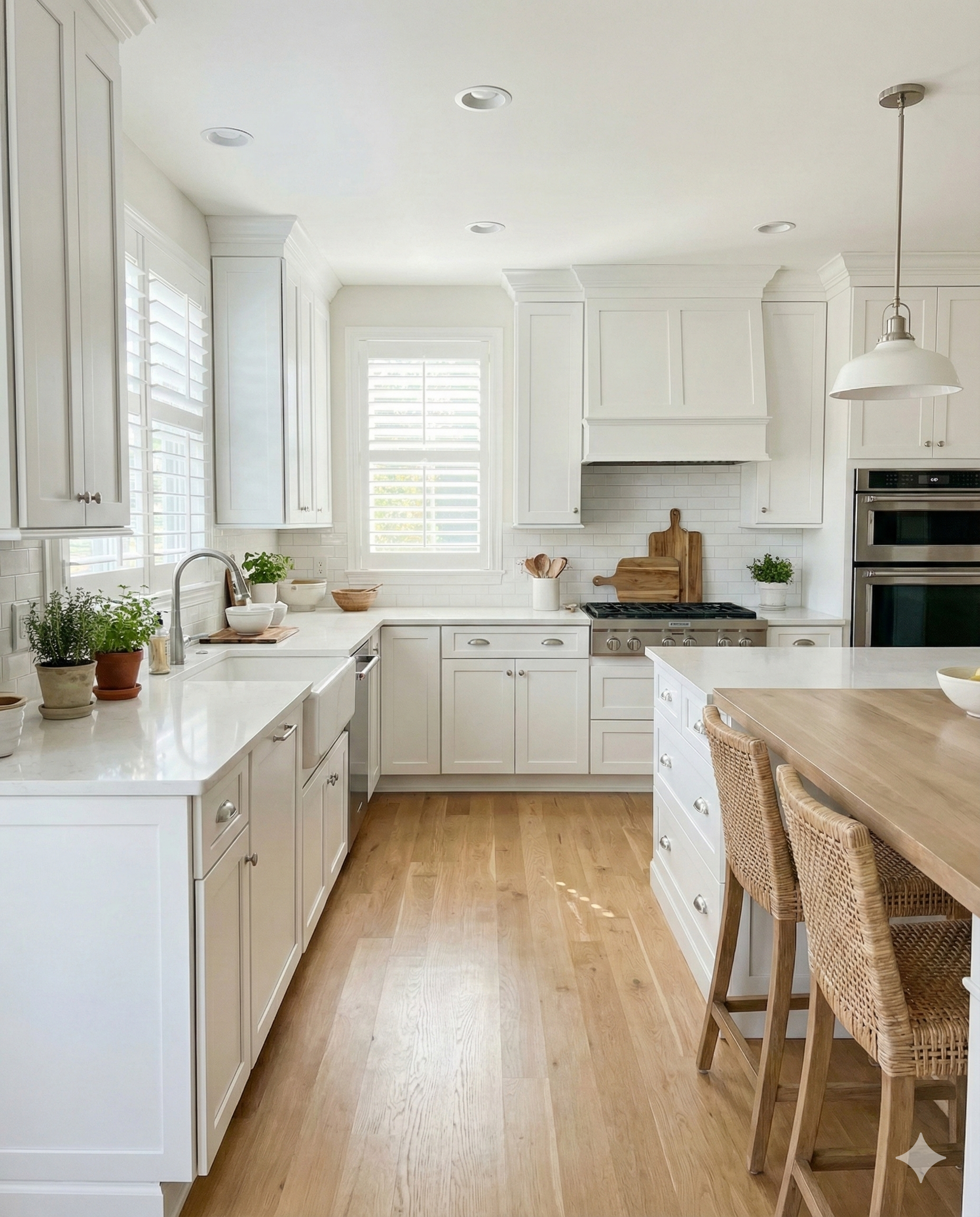
Composite (Mimeo) is the practical choice for Wimbledon apartment kitchens, bathrooms, and any room with condensation — common in period flats that have been sub-divided and have variable ventilation. Mimeo composite shutters are completely waterproof, wipe down easily, and cost less than hardwood — a meaningful difference when an apartment has five or six windows to dress. Composite is also the sensible material for Wimbledon rental properties where long-term durability matters more than precise colour matching.
Aluminium (Dura) suits the modern apartments around Wimbledon Broadway, and any home with wide bi-fold or sliding patio doors. Dura aluminium shutters span panels up to 1.2 m without sagging and work on tracked systems for openings that exceed what hinged hardwood panels can cover. For more on this use case, see our guide to shutters for new-build and modern homes.
Shutter costs in Wimbledon — realistic 2026 pricing
Shutter prices are driven by window dimensions and material choice, not by postcode. A standard 1.1 m × 1.3 m sash window in Wimbledon costs the same as the equivalent in Kingston or Streatham. What does add cost is window complexity — bay angles, deep period reveals, and the wide-span glazing on modern Wimbledon developments.
- Standard flat sash window, composite: from £380 per m² supply and fit
- Standard flat sash window, painted hardwood: from £550 per m² supply and fit
- Bay window (three panes, mitred frame), composite: from £1,200 total supply and fit
- Bay window (three panes, mitred frame), hardwood: from £1,600–£2,100 total supply and fit
- Wide casement or bi-fold opening, tracked aluminium: from £450 per m² supply and fit
- Shaped or arched tops (seen on the larger Wimbledon Hill villas): from £560 per m²
Lead times — survey to installation in Wimbledon
All Shutters Factory products are UK-manufactured, which gives predictable lead times rather than the uncertainty of imported panels. Once you approve your quote, manufacture begins immediately.
Typical Wimbledon lead times: composite shutters are ready and installed within 4–6 weeks of the survey; painted hardwood takes 6–8 weeks; shaped or arched shutters (occasional on large Wimbledon Hill properties) need 8–10 weeks; tracked aluminium for wide patio or bi-fold openings runs 6–8 weeks.
Installation itself is usually a single half-day for a standard Wimbledon terrace or semi — two or three windows in a living room typically takes three to four hours. For a detailed walkthrough of the full process, see our step-by-step guide to shutter installation. For a national pricing breakdown, see our complete guide to window shutter prices in 2026.
How the Wimbledon survey works
A survey is the only reliable starting point for shutter pricing. Measurements taken over the phone or from photographs produce frames that do not fit and quotes that change at delivery.
At the Wimbledon survey, we measure every opening, check reveal depth and any obstructions (radiator pipes, architraves, window boards), confirm frame-mounting options for each window type, and photograph everything. For period Wimbledon homes, we also check whether window frames have been repainted repeatedly — thick paint layers reduce reveal depth and affect frame sizing.
You receive a fixed written quote within 48 hours covering panels, frames, hardware, delivery, and installation. Nothing is added later. For a full picture of what a London survey covers from booking to handover, see our plantation shutters in London guide. For more on what our Wimbledon service specifically covers, including the Village and Town postcodes, the earlier area overview at shutters in Wimbledon Village and Town is worth reading.
Getting started — the Wimbledon service
Shutters Factory covers all of Wimbledon and the surrounding south-west London postcodes — SW19, SW20, SW17, and into Merton and New Malden — with free surveys and no call-out charge. Our Wimbledon shutters service page sets out the full coverage area and what to expect from the visit.
Browse the full range at Shutters Factory products before your survey. It helps to have a material preference in mind — hardwood for a period front room, composite for a kitchen or bathroom, aluminium for wide or bi-fold openings — although the surveyor will also make a recommendation based on your room conditions.
To get a fixed, all-in quote for your Wimbledon home, book your free home survey. We confirm pricing within 48 hours of the visit with no obligation to proceed.