What sets Surrey property apart for shutter installations
Surrey is one of the most architecturally varied counties in the south-east of England. Within a short distance of the M25 you move from the densely settled commuter towns of the western corridor — Guildford, Woking, Camberley — to the deep Surrey Hills villages of Shere, Abinger Hammer, Betchworth, and Albury, where the dominant building form is the 17th- and 18th-century cottage: low-set casement windows, original timber framing, and modest window openings set deep into thick flint or brick walls. Further east, Reigate, Redhill, and Oxted have generous quantities of Victorian and Edwardian housing built during the late-19th and early-20th century railway expansion — terraces, semis, and larger detached houses with bay fronts and sash windows functionally very similar to inner London period stock. Between these layers sits a significant inventory of Georgian farmhouses, Victorian rectories, arts-and-crafts manor houses, and inter-war country houses, many of them in or near designated conservation areas.
What the county's housing stock almost universally shares is the benefit of deep window reveals: whether in an 18th-century cottage wall of 500mm masonry or a Victorian terrace with 130mm reveals, these are exactly the conditions inside-mounted shutter frames are designed for. There is no single specification that covers all Surrey properties — the right style and material depends on the property era, window type, room function, and any heritage constraints. Our Surrey plantation shutter fitting and survey service covers the full county, from commuter belt towns to the more rural Surrey Hills villages.
Listed buildings and conservation areas: the rules for interior shutters
A significant proportion of Surrey's most desirable village properties are either Listed Buildings or sit within designated conservation areas. The Surrey Hills Area of Outstanding Natural Beauty encompasses dozens of villages — Shere, Gomshall, Hambledon, Chiddingfold — where historic cottage character is protected at a planning level. The instinctive concern for homeowners in these areas is whether fitting shutters might require consent or fall foul of heritage restrictions. The answer turns on a critical distinction: exterior alterations to a listed building or a conservation area property — replacing windows, changing facade materials, extending outward — require planning consent. Interior window fittings do not.
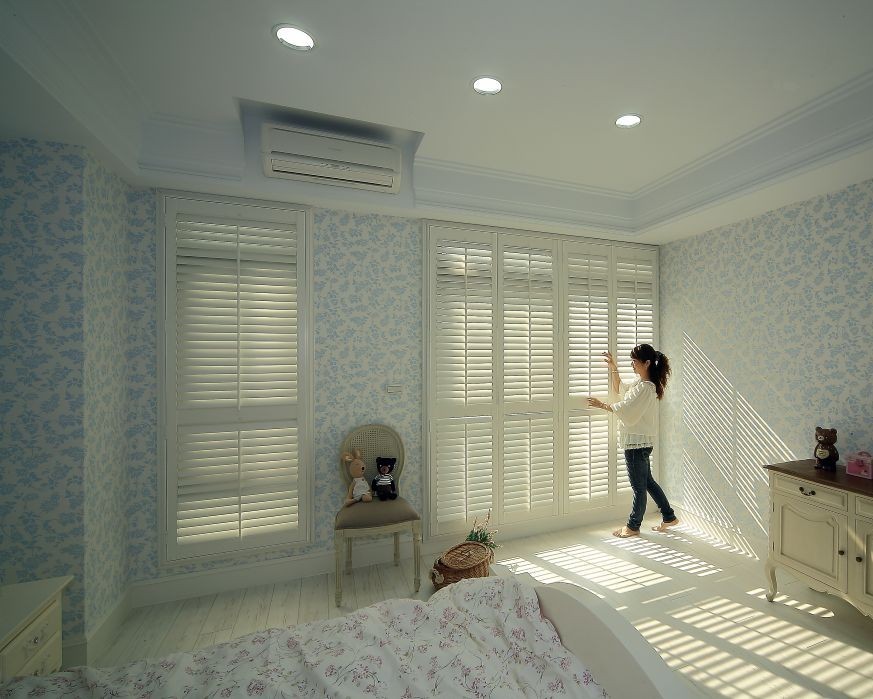
Plantation shutters are installed entirely within the existing window reveal. They make no change to the external appearance of the building, do not modify the window frame or glazing, and in virtually all cases require no planning permission in a conservation area and no listed building consent. For Grade I or Grade II* listed properties — the most sensitive categories — it is always worth confirming with your local authority, particularly if the shutters would be attached to original historic fabric. But in the vast majority of Surrey listed buildings and conservation area properties, interior shutters present no regulatory barrier whatsoever. Our detailed guide to shutters and planning permission in the UK covers the full position for conservation areas and listed building designations.
Cottage windows and casement styles: café and full-height options
The defining window form of the Surrey Hills village cottage is the low-set casement: a relatively small opening, often between 500mm and 900mm tall, set near the bottom of a thick masonry wall and designed to maximise light at ground level without compromising structural mass above. These windows differ fundamentally from the tall sash windows of Victorian town housing, and they call for a different shutter approach. A full-height louvred panel in a 600mm-tall cottage casement can feel heavy and disproportionate — café-style shutters covering the lower two-thirds of the opening typically suit the scale and cottage character better, providing pavement-level privacy while leaving the upper portion open to sky and garden views.
For cottage properties with taller windows — 1,000mm and above, which are common in later Georgian and early Victorian rural builds — louvred shutters spanning the full window height are the most appropriate specification: simple in operation, proportioned well to taller openings, and available in any painted finish to complement period interior colour schemes. Where window proportions sit between these two cases, the survey is the right opportunity to hold panel configurations physically in the reveal and confirm which looks and operates best in context. The breadth of finished shutter installations across different rural and period property types can be seen in our gallery of completed shutter projects.
Bay windows and sash windows in Surrey Victorian and Edwardian stock
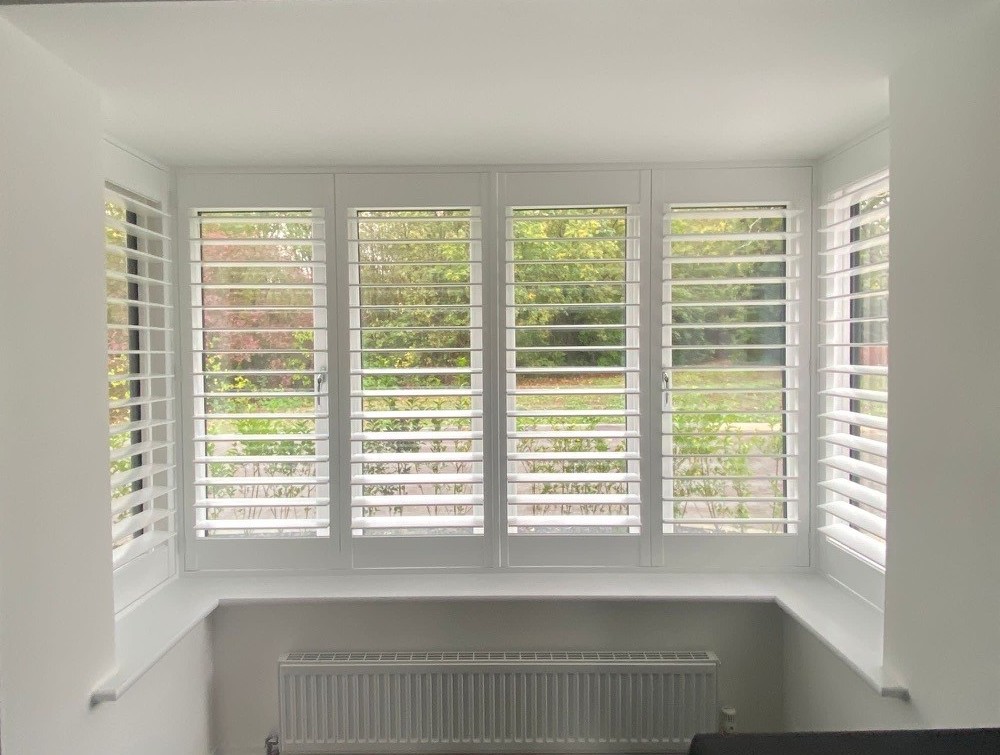
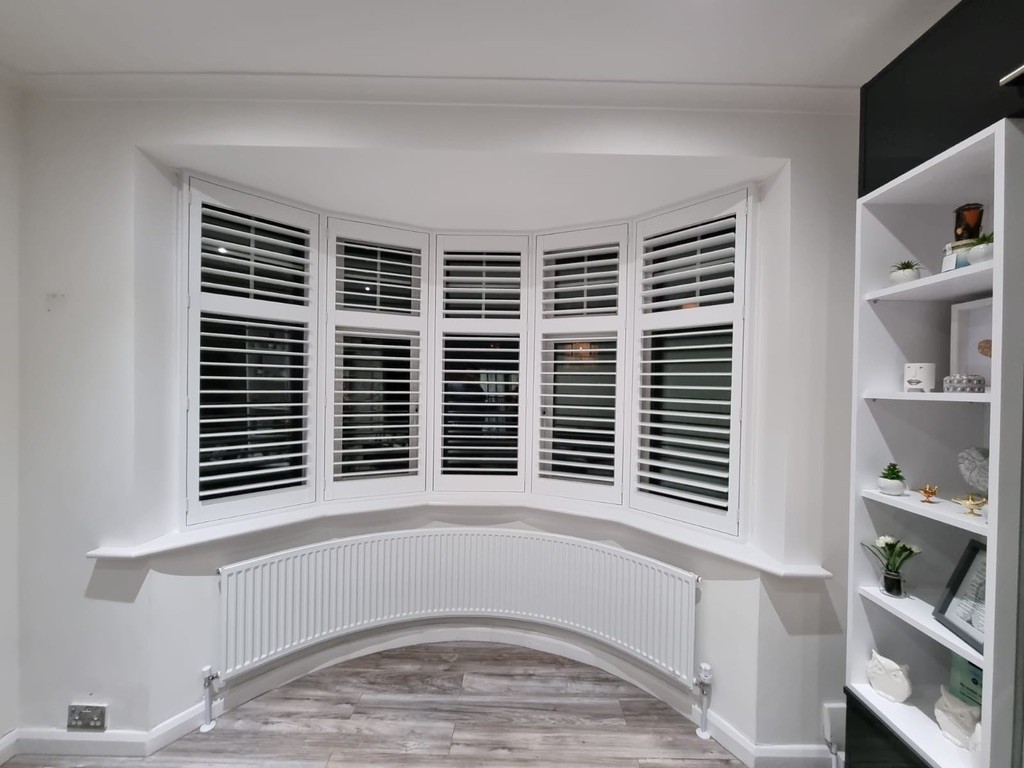
Away from the Surrey Hills villages, the commuter towns of the county — Guildford's Stoughton and Park Barn districts, the Edwardian streets of Reigate, Oxted, Dorking town centre, and Epsom — have extensive Victorian and Edwardian terraced and semi-detached housing. The window forms here are closely related to those in inner London: the ground-floor projecting bay, typically with two or three lights and angled returns, and the double-hung sash window on upper floors and in rear-aspect rooms. Both types benefit from the same made-to-measure approach that applies in London — off-the-shelf panels leave gaps at bay angles and are never quite right for the proportions of a Victorian sash. Shutters shaped and framed to the exact angles of a Surrey period bay are templated during the survey visit, with frames manufactured to match the bay geometry precisely.
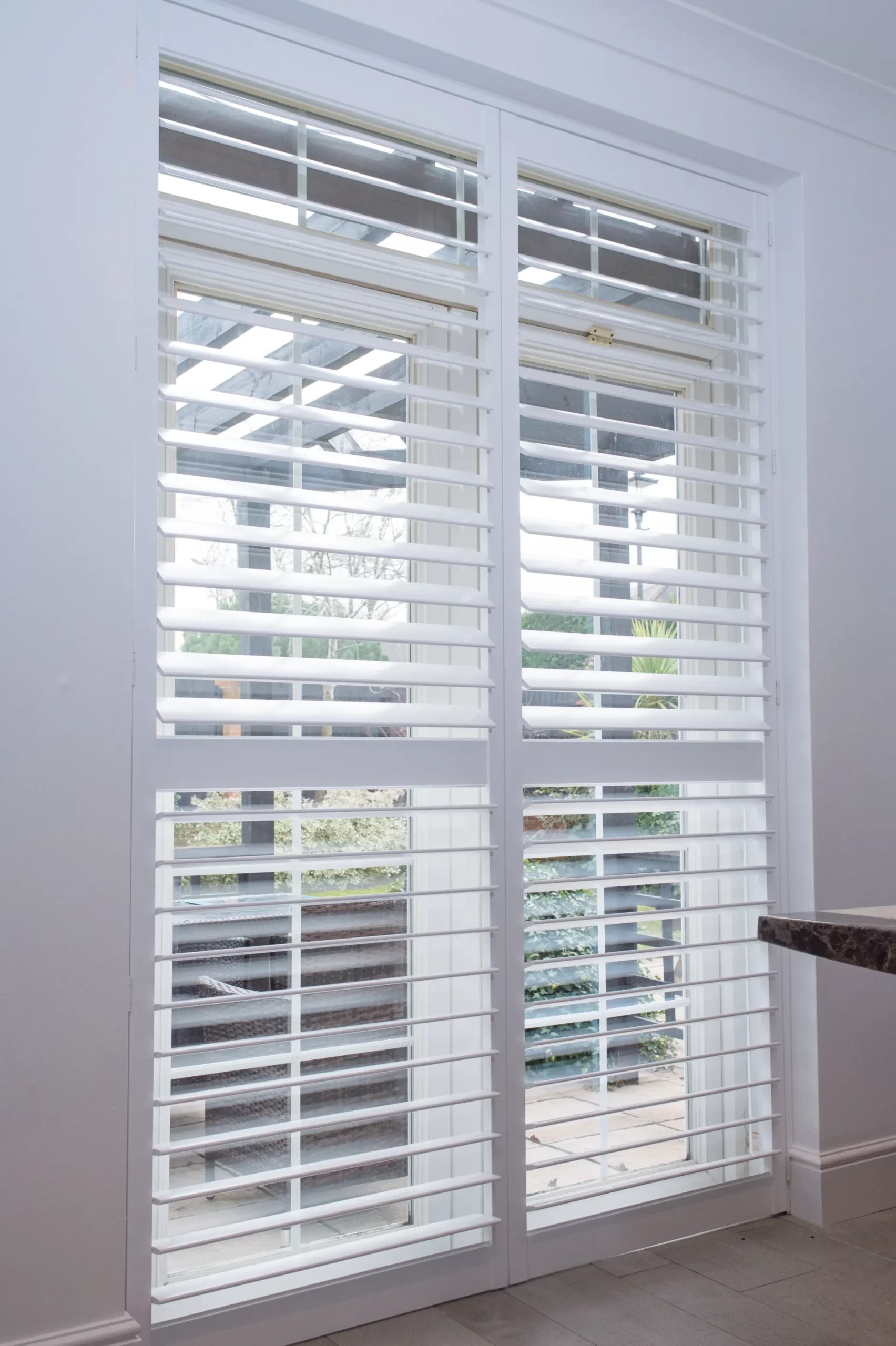
For sash windows, the choice between full-height and tier-on-tier depends on floor level and privacy context. Front-facing ground-floor sashes in a Surrey town street typically benefit from shutters with independently operated upper and lower sections, allowing the lower panels to block the street sightline while the upper section admits daylight from above. Our detailed article on bay window shutter styles and how they are fitted covers the range of bay configurations found in Surrey period housing and the options available for each.
Material selection: hardwood, composite, and aluminium for Surrey homes
The material question in a Surrey period property follows the same logic as in London, but the relative weighting shifts slightly. In a Surrey Hills listed cottage with original lime plaster walls and exposed timber beams, the surface quality of Endura hardwood shutters — factory-painted in any Farrow & Ball or RAL colour — is the appropriate specification for principal reception rooms. The material weight, paint finish, and joinery precision of the Endura range sit convincingly alongside period interior detailing in a way that lighter composite products do not fully replicate at close inspection. For kitchens, utility rooms, boot rooms, and bathrooms — spaces common in rural properties and that carry more daily moisture — Mimeo moisture-resistant composite shutters are the correct choice: guaranteed against warping or cracking in humid conditions and straightforward to wipe clean after use.
For larger Surrey country houses with orangeries, rear garden rooms, or bi-fold door extensions, the full range of shutter materials may be used across the same property. Ground-floor reception rooms: hardwood. Kitchen extension with bi-fold doors: composite or aluminium tracked. Boot room and utility: composite. Most whole-house Surrey installations cover three or four different room specifications; the survey is the right moment to confirm the appropriate product for each space. See the complete Shutters Factory product range to compare specifications before your survey appointment.
Thermal performance: a genuine benefit for older rural properties
Country homes and village properties present a thermal challenge that urban housing typically does not. Single-glazed casements — still common in listed and early-19th-century rural properties that have retained original glass — provide almost no resistance to winter heat loss. Even double-glazed sash and casement windows in older frames can develop draughts at the meeting rail and perimeter over time. Plantation shutters add a meaningful thermal barrier when closed: the panel body itself, combined with the air gap between the closed shutter and the window, reduces heat loss through the glazed area and can noticeably cut draughts from around the frame. This is not a substitute for secondary glazing or window replacement in the most thermally deficient cases, but for properties that cannot or choose not to replace original glazing, shutters provide a practical and aesthetically sympathetic partial solution. Our article on the thermal and insulation benefits of plantation shutters covers the performance data and how closed shutters compare to blinds and curtains on a winter night.
The acoustic benefit follows from the same physics. Surrey country lanes carry less traffic noise than London streets, but a converted farmhouse on a rural road or a cottage near a popular Surrey Hills walking route can receive meaningful foot and vehicle traffic. A closed shutter does not provide the same acoustic reduction as specialist secondary glazing, but the panel mass and the trapped air layer reduce transmitted noise relative to an uncovered window — a secondary benefit frequently mentioned by Surrey homeowners after installation. Our broader guide to plantation shutters across the Surrey county area covers the full range of property types and configurations fitted across GU, RH, KT, and CR postcodes.
2026 prices, lead times, and booking a Surrey survey
Supply and fit pricing across the Surrey catchment follows the same per-m² structure as London installations. Mimeo composite shutters start from approximately £350–£400 per m² supply and fit. A typical Victorian bay window of approximately 2.0m² is in the range of £850–£1,000 for composite, rising to £1,100–£1,350 for Endura hardwood. A cottage casement window of approximately 0.5m² costs typically £200–£280 for composite café-style or full-height shutters, rising to £300–£380 for hardwood. A full installation across a four-bedroom Surrey period house — ground-floor bay, two front sash windows, and four cottage or secondary windows — typically runs from approximately £4,500 to £8,000 depending on product selection, window count, and whether tracked systems for large openings are included.
Lead times from confirmed order to installation are four to six weeks for both composite and hardwood ranges across all Surrey postcodes. The survey takes approximately 45–60 minutes for a standard property; larger country houses or those with multiple outbuildings or extensions may run to 90 minutes. The surveyor brings physical product samples and confirms the complete room-by-room price on the day with no obligation to proceed. Book a free home survey to receive an exact written quote for your Surrey village or country property.