Muswell Hill and Highgate: the north London housing character
Muswell Hill and Highgate sit side by side along a north London ridge above Archway and Finsbury Park, sharing views across the city and a density of period housing stock that makes both areas compelling for plantation shutter installations. Muswell Hill — centred on N10 and the avenues around Alexandra Park Road, Tetherdown, and Pages Lane — is predominantly Edwardian, its broad tree-lined streets built out between roughly 1898 and 1914 in the characteristic form of the large bay-fronted semi: rendered or pebble-dashed frontages, three or four bedrooms, projecting ground-floor bays, and tall double-hung sash windows above. Highgate is older and more varied: The Grove and Highgate West Hill have Georgian town houses dating to the 18th century; the streets south of Highgate Village and around Cholmeley Park are tightly built Victorian terraces; and the larger detached properties along Bishops Avenue and The Bishops Avenue are predominantly Edwardian or inter-war.
What these two neighbourhoods share is period reveals built deep enough for inside-mounted shutter frames, timber windows whose proportions suit louvred panels, and in many properties the original shutter boxes — built-in recesses where folding shutters once sat before interior decorating fashions changed. For homeowners in both areas, the question is rarely whether shutters will look right — they invariably do — but which style, material, and configuration suits the specific window type and room. For further context on shutter installations across this part of north London, our dedicated north London Muswell Hill guide covers the N10 catchment's most common window types and installation patterns in detail.
Edwardian bay windows: the defining installation in Muswell Hill
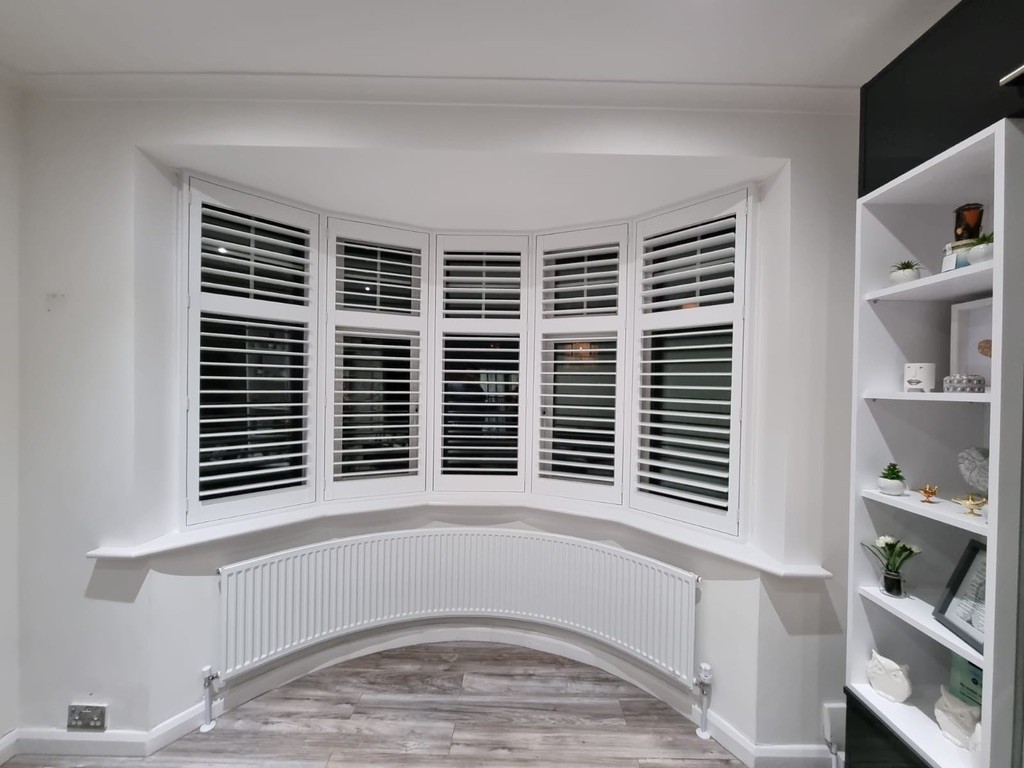
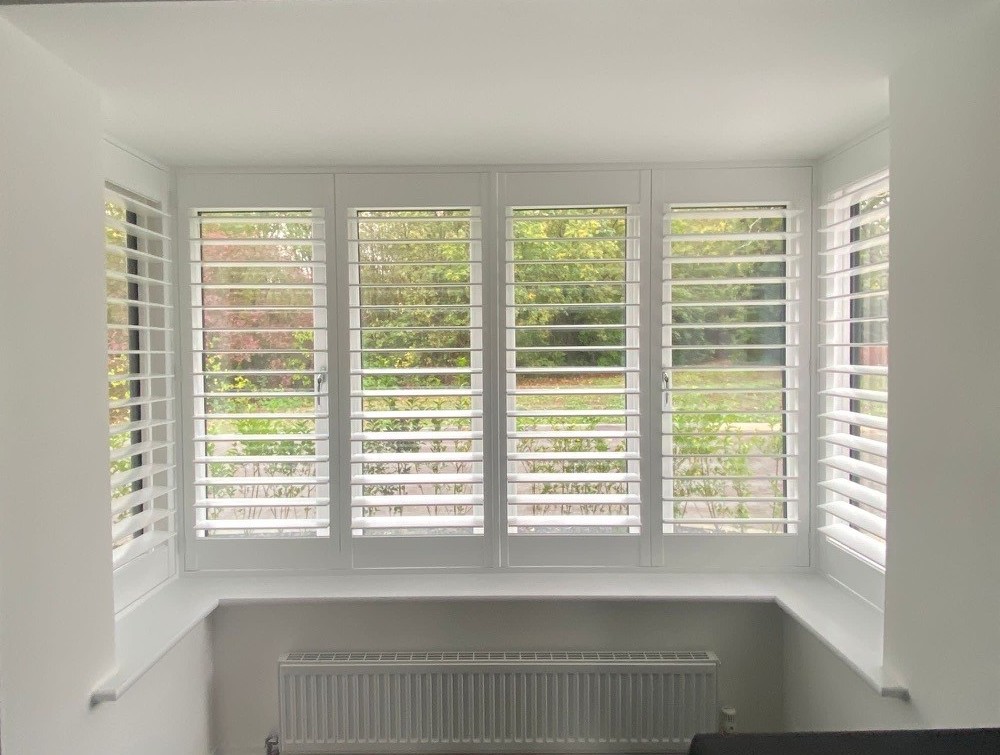
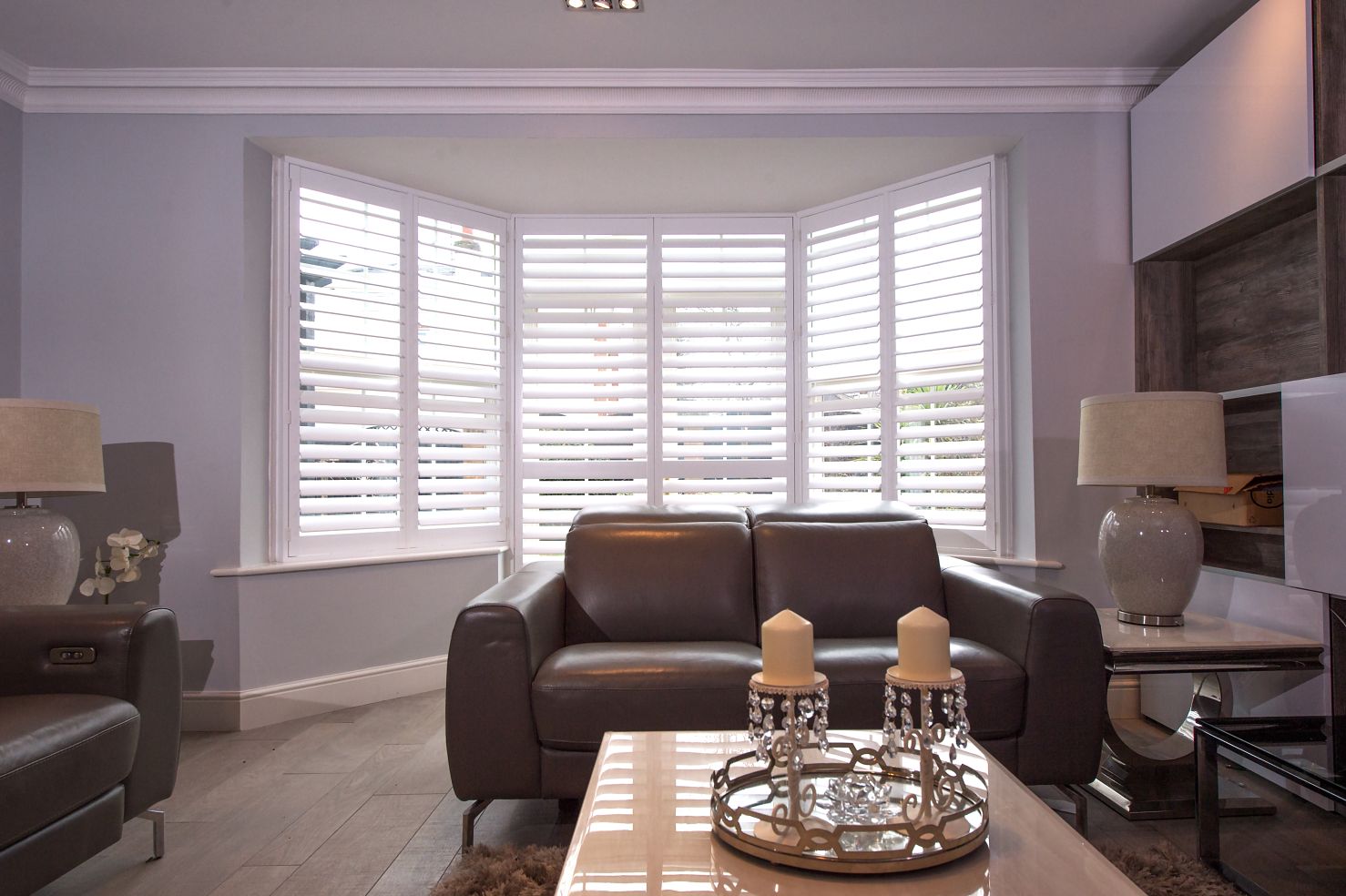
The ground-floor bay window is the most common and most architecturally significant window in Muswell Hill properties. The typical Edwardian bay in this area is a three-section arrangement — a central window flanked by two angled return lights — projecting forward from the main wall face at angles of roughly 45 degrees. The bay usually runs from near floor level to the underside of the bay roof, creating an opening of between 2.0m and 2.8m wide and 1.4m to 1.8m tall depending on the property. The wider-fronted semis on streets like Muswell Road, Grand Avenue, and Onslow Gardens have bays that cover a substantial proportion of the ground-floor facade.
Off-the-shelf shutters cannot be used in these openings — standard panels built for rectangular casements leave gaps at the angled corners that undermine both the appearance and the light-blocking performance. Shutters shaped to follow the angles of an Edwardian bay require on-site templating during the survey visit: the surveyor measures each light's width, the bay depth and projection, and the precise angle at each corner. The frames are manufactured with mitred joints at those angles so adjacent panels align cleanly and the installation reads as architecturally integrated rather than applied. For a detailed breakdown of how bay window shutters are measured and what fitting options are available across different bay configurations, see our guide to bay window shutter styles and fitting tips.
Sash windows and independently operated shutters
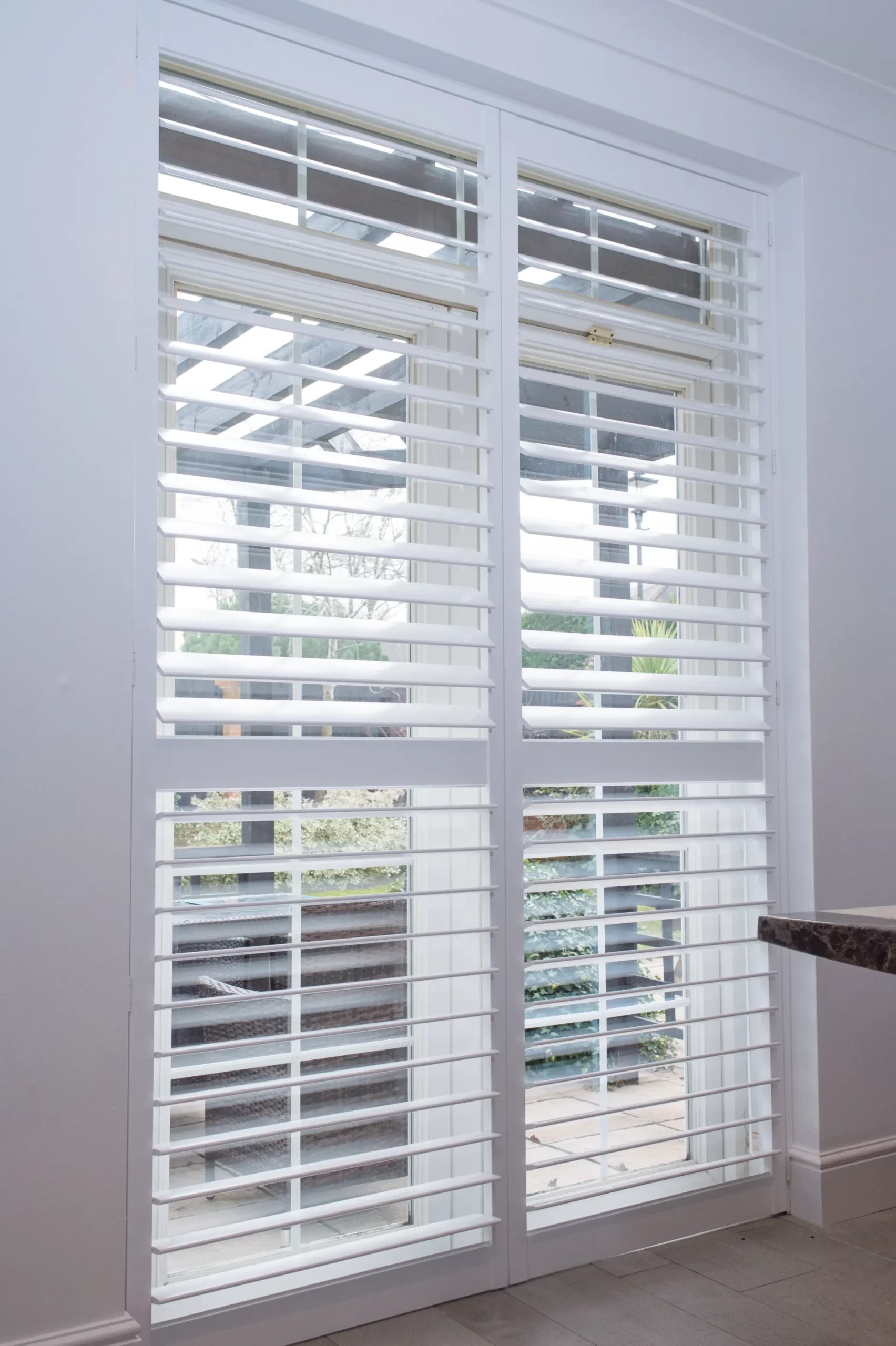
Away from the ground-floor bays, both Muswell Hill and Highgate properties are characterised by the double-hung sash window: tall, vertically proportioned, typically between 1,200mm and 1,800mm in height, set into reveals of 90mm to 140mm depth. These windows appear in first-floor bedrooms, front reception rooms in Highgate terraces, and throughout the upper floors of Edwardian semis across both postcodes. They are the classic application for shutters with independently operated upper and lower panels: the horizontal split falls at approximately the sash meeting rail, and the two halves open and close entirely independently.
The practical value of independent control on a street-facing north London sash is straightforward. Close the lower panels to block the pavement-level sightline from pedestrians and passing traffic; leave the upper panels angled open to admit daylight from above. The room stays bright while privacy at eye level is maintained throughout the day — a result that a single-tier panel with a mid-rail approaches but does not fully replicate. For rear-aspect sash windows, or for first-floor bedrooms where privacy pressure is lighter, louvred panels that run from sill to head in a single uninterrupted tier are the simpler, slightly less expensive specification and proportioned well to these tall windows. The survey is the right moment to confirm which format suits each room — the surveyor demonstrates both configurations with physical product samples in your own home.
Material selection: hardwood for period rooms, composite elsewhere
The material question in Muswell Hill and Highgate homes almost always resolves along the same lines: Endura hardwood shutters for principal reception rooms and main bedrooms in period properties where the material complements original cornicing, picture rails, and painted joinery; Mimeo composite shutters for bathrooms, kitchens, and secondary rooms where moisture resistance and a lower per-m² cost are the priority.
Hardwood shutters in a painted finish carry a surface quality and material weight that composite does not fully replicate at close inspection. In a first-floor Highgate drawing room with original plasterwork and a period fireplace, the choice of hardwood shutters is consistent with the level of finish that surrounds them. Mimeo composite — moisture-resistant, dimensionally stable, guaranteed against warping in wet environments — is the correct specification for kitchens and bathrooms in the same property, where the daily moisture cycle would stress any unpainted timber product over time. Most whole-house installations across N10 and N6 use both: hardwood for the rooms where material quality is most visible, composite throughout the functional spaces. Our guide to shutters in Victorian and Edwardian period homes works through this material choice in depth and covers how to match specification to property era.
Highgate conservation areas: what they mean for interior shutters
Highgate Village, Fitzroy Park, and Cholmeley Park are all designated conservation areas, and a significant portion of the wider N6 residential streets fall within these or adjacent designations. For homeowners in these areas, external alterations — replacing windows, changing facade materials, adding structures — require permitted development checks and often formal planning consent. Interior window treatments are an entirely different matter: plantation shutters fitted inside the existing window reveals make no visible change to the external appearance of the building and require no planning permission in any conservation area.
This distinction is routinely misunderstood. Homeowners told they cannot alter their windows sometimes assume the restriction extends to interior fittings; it does not. The shutters are installed within the reveal, invisible from the street, and do not modify the glazing, frame, or external building fabric. For Grade II listed properties around Highgate Village and on Swains Lane, interior fittings that do not physically attach to the listed fabric do not typically require listed building consent — though confirming this with your local authority before ordering is always advisable. Our detailed article on whether shutters need planning permission in the UK covers the full position for listed buildings and conservation areas.
2026 prices, lead times, and getting started
Supply and fit pricing across the Muswell Hill and Highgate catchment follows the standard London per-m² structure. Mimeo composite shutters start from approximately £350–£400 per m² supply and fit. A typical ground-floor three-section bay window totalling around 2.5m² is in the range of £1,050–£1,250 for composite, rising to £1,400–£1,700 for Endura hardwood in the same bay. A first-floor bedroom sash window of approximately 0.9m² costs typically £360–£450 for composite, £500–£620 for hardwood. A full installation across a four-bedroom Muswell Hill Edwardian semi — ground-floor bay, three front sash windows, and two rear windows — runs from approximately £4,500 to £7,500 depending on product choice and panel count.
Lead times from confirmed order to installation are four to six weeks for both composite and hardwood ranges. The survey takes 45 minutes to one hour for a standard N10 or N6 semi, and the surveyor confirms the price on the day before you make any commitment. Book a free home survey to receive a room-by-room written quote and a confirmed lead time for your specific windows and property. Visit our dedicated Muswell Hill shutters page for further details on coverage, typical installations, and the service across the N10 catchment. Browse our portfolio of shutters installed across north London period homes to see bay window, sash, and Edwardian property installations before the survey visit.