Why landlords choose shutters over blinds and curtains
The typical rental property window treatment — a roller blind or a set of curtains — lasts two to four years in a tenanted property before requiring replacement. Fabric fades, mechanisms break, and the general wear of multiple occupants accelerates deterioration. The cumulative cost of replacing window treatments across a portfolio of two or three properties every few years is not trivial, and the administrative burden of sourcing, ordering, and installing replacements between tenancies adds time as well as money.
Plantation shutters remove this cycle. The louvred panel mechanism is straightforward — blades rotate on mortise-and-tenon joints, and the hinged panels fold on heavy-duty knuckle hinges — with no fabric, no spring mechanism, and no cord to fray. A correctly specified and installed shutter installation requires no maintenance beyond wiping with a damp cloth, and the components that do eventually wear — the staple pins holding the louvre blades — are replaceable rather than requiring a full panel replacement. A realistically specified composite or hardwood shutter fitted in a rental property today should still be in service when the property is next remortgaged or sold. For a broader overview of the investment argument, the landlord shutter investment overview sets out the durability and rental-yield case across different property types.
There is also a presentation benefit that is increasingly significant on listing platforms. A window with a well-fitted plantation shutter photographs in a way that a blind or curtain cannot replicate: the parallel lines of the louvres add visual structure to a room, the white finish reflects light, and the overall impression reads as quality. This matters directly in platforms where photographs drive the decision to enquire, and indirectly in the class of tenant the property attracts.
The Luma Easy Fit option for tenanted properties
The most common landlord objection to plantation shutters is the permanent fixing: a made-to-measure installation requires screws driven into the window reveal or surrounding masonry, which means access is needed to a vacant property and, in some circumstances, freeholder or management company consent. Neither condition applies to the Luma easy-fit system.
Luma tension-fit shutters are manufactured to standard window sizes and clip into the reveal without any drilling or permanent fixings. The mounting frame is held in place by a spring-tension mechanism that applies outward pressure to the head and sides of the reveal — the same principle as a tension curtain rod — and the shutter panels click into the frame and operate identically to a permanently installed shutter. When a tenancy ends or the landlord decides to change specification, the Luma frame pulls out cleanly, leaving no screw holes, no anchor points, and no marks on the plasterwork.
For landlords, this means Luma shutters can be fitted in a tenanted property without requiring vacant possession, without managing a trades visit while a tenant is in residence, and without any structural impact on the building fabric. The cord-free operation satisfies child safety legislation without modification. The wipe-clean surface handles the cleaning habits of any tenant. The available colour — white — is the neutral choice that suits any subsequent decor change. For the full specification of the Luma system, including the configurations available and how the tension mechanism is adjusted, our guide to Luma for renters and quick-install projects covers the fitting process in detail.
Made-to-measure shutters for vacant and HMO properties
Where a landlord has access to a vacant property between tenancies, or is specifying shutters before the first let, made-to-measure is the better long-term option. The permanent frame is fitted precisely to the window reveal with no gaps at the edges, the range of styles and materials is wider, and the resulting installation is indistinguishable from an owner-occupied home — which matters both aesthetically and in terms of rental valuation.
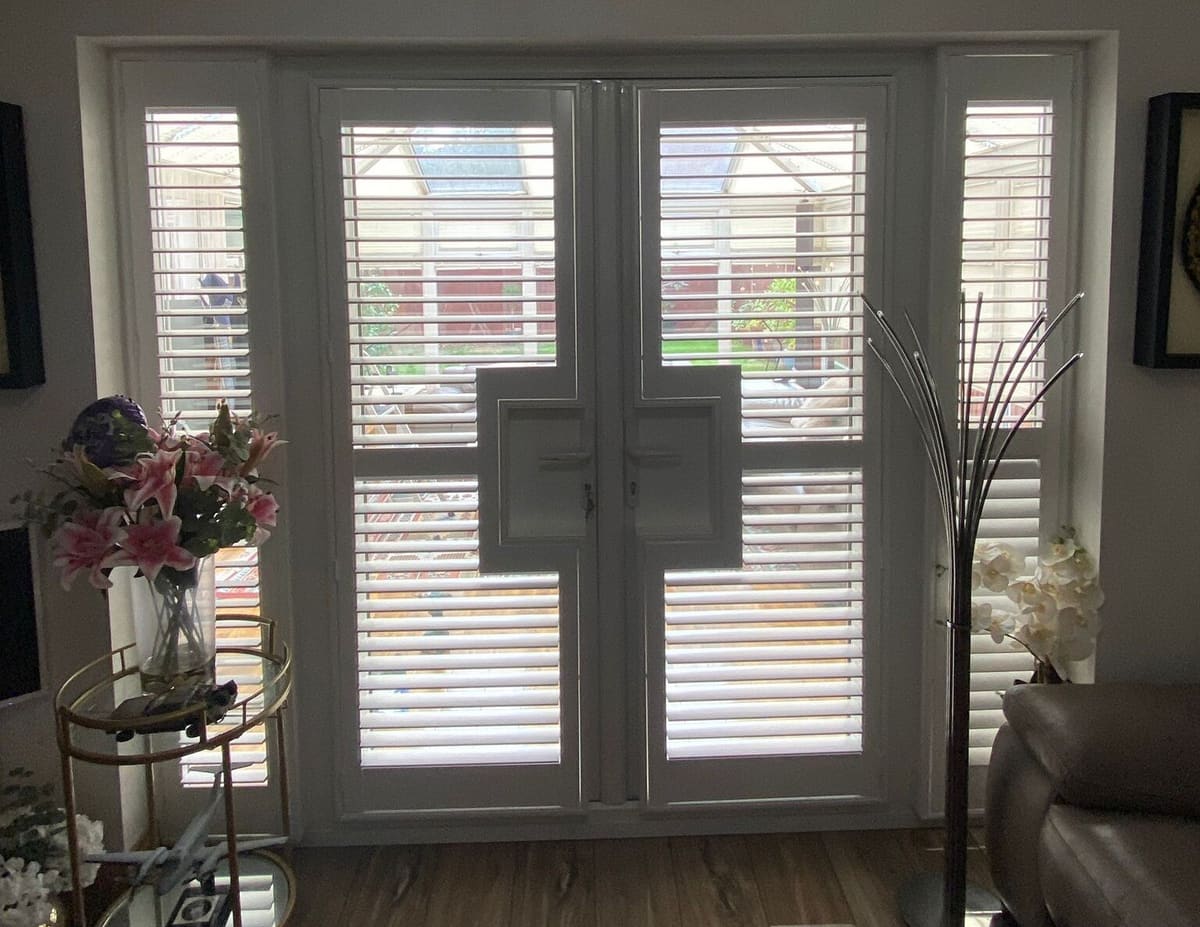
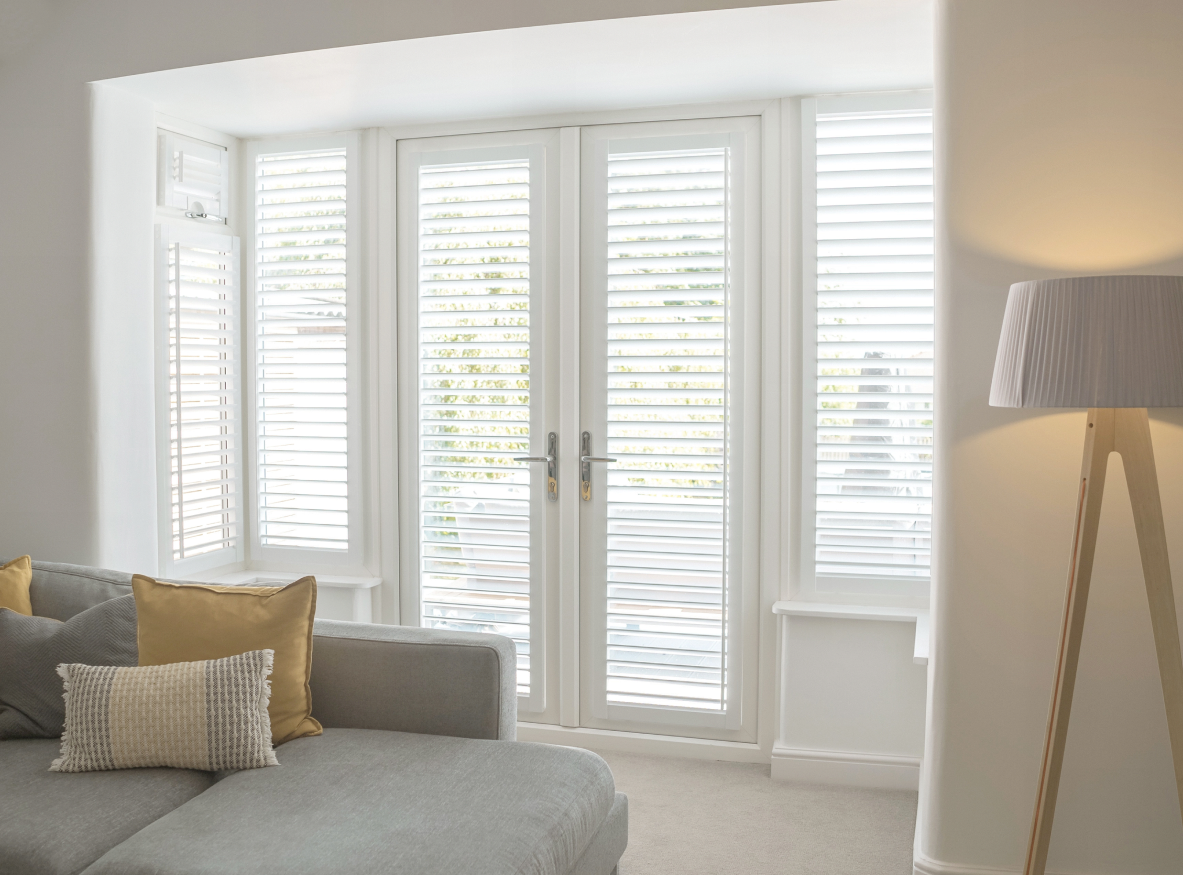
Full-height plantation shutters covering the entire window from floor to sill are the standard choice for living rooms and principal bedrooms in rental properties. They provide maximum light control and privacy, look proportionally correct in both period terraces and new-build flats, and are the style that features in listing photographs with the greatest frequency. The louvres can be tilted to provide ventilation and filtered daylight without opening the panel — a practical feature for ground-floor front rooms where security and privacy must be balanced.
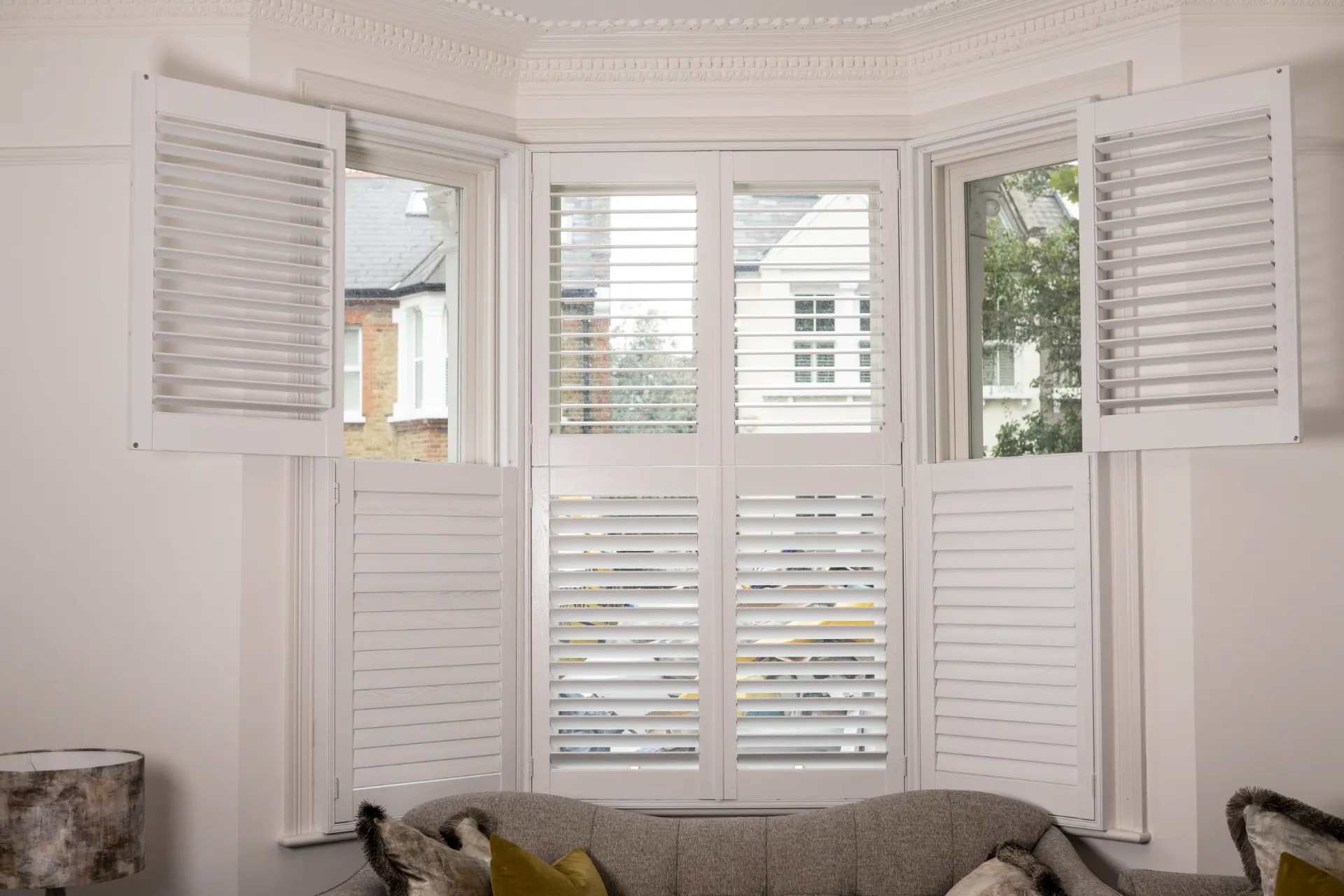
For street-facing ground-floor rooms in period terraces, café-style shutters that cover only the lower sash are worth considering. They provide privacy at eye level from the pavement without blocking sky light from the upper sash — preserving brightness in naturally dark front rooms while still meeting the privacy expectations of tenants. HMO landlords often specify café-style shutters in ground-floor shared living rooms for exactly this reason.
Multi-occupancy and HMO properties benefit from plantation shutters more than almost any other property type. The higher footfall accelerates the wear on every surface, and the frequency of room turnovers increases the number of times window treatments must look presentable for viewings. A plantation shutter installed at the start of an HMO's operating life will, in most cases, still be in first-rate condition when the HMO licence comes up for renewal five years later — without a single replacement cycle.
Material selection for rental properties
The material choice for a rental property should be governed by the room's moisture exposure and the realistic cleaning demands of a tenanted space, rather than purely by aesthetics.
Mimeo composite shutters, fully waterproof and constructed from a cellular PVC compound, are the first-choice material for rental bathrooms, kitchens, and utility rooms. Composite panels do not absorb moisture, do not swell or warp in steam-heavy environments, and can be wiped with any household cleaning product without damaging the surface. The integral colour runs through the panel cross-section, so a minor knock or scuff does not reveal a contrasting substrate beneath — particularly relevant in properties where tenants may not report minor damage immediately. Composite supply-and-fit prices from approximately £320 per m² in 2026, with a four-to-six-week lead time from survey to installation.
For living rooms and principal bedrooms, a composite or paulownia hardwood shutter is the practical rental choice. Paulownia — the timber used in the Strato range — is lightweight, takes paint well, and is dimensionally stable enough to perform consistently across the heating and ventilation cycles of a tenanted property. Endura hardwood shutters start from approximately £480 per m² and are the premium option where the property commands a higher rental and the finish quality needs to match the surrounding specification.
Whichever material is chosen, specifying the same product throughout the property creates a coherent look that lets photographic and in-person marketing land cleanly. Mixing material types by room is technically workable but can create colour or finish inconsistencies at the product boundary — an issue that matters more in a viewing context than in an owner-occupied home.
Realistic pricing for a rental portfolio in 2026
Luma easy-fit shutters cost approximately £200–£350 per window fully fitted, reflecting their standard-size format and the simplified installation process. For a two-bedroom flat with four or five standard windows, a Luma specification across all rooms costs in the region of £900–£1,750 supply and fit — achievable in a single visit with no building works required.
Made-to-measure composite shutters (Mimeo) for a typical rental living room window of 1.2 m² would cost approximately £384 supply and fit at the 2026 headline rate. A made-to-measure bedroom window of 0.8 m² works out at approximately £256. For a two-bedroom flat with living room, kitchen, and two bathrooms, a full composite specification — the most common rental choice — typically falls between £2,400 and £3,800 depending on window count and sizes, a figure that includes survey, manufacture, delivery, and installation with no hidden extras.
For planning purposes, allow a four-to-six-week lead time from survey to installation for made-to-measure composite shutters and two-to-three weeks for Luma. If the property needs to be let before shutters can be installed, it is generally better to delay the Luma order until the tenant is in place — the non-drilling system handles an occupied property without complication — rather than rushing a made-to-measure order with a tight timeline. Our guide to shutter lead times and the ordering timeline explains what drives each stage of the process and where time can be recovered.
Specification tips for buy-to-let and HMO landlords
Stick to white or off-white finishes across all rooms and all properties in the portfolio. White remains the most photographable neutral, is universally acceptable to tenants, and avoids the situation where a custom RAL colour that suits one occupant's decor looks wrong when the room is redecorated by the next. The standard white or off-white lacquer used across all Shutters Factory product ranges is consistent enough that panels ordered in separate batches match reliably — useful when a landlord adds windows to a portfolio incrementally.
Order the same louvre size throughout each property. The 64 mm louvre blade is the most versatile size for rental use: wide enough to read as a premium specification and to allow good light transmission when open, but not so large that it looks disproportionate in smaller rooms. Mixing 47 mm and 89 mm louvres in the same property creates a visual inconsistency that is immediately apparent in listing photographs.
Request that the surveyor note the panel configuration for each window in writing — the number of panels, the hinge direction, and the louvre size — so that if a panel is damaged and needs replacement years later, the original specification can be matched exactly without re-surveying. This documentation step adds nothing to the cost but eliminates the risk of a mismatched replacement panel.
For inspiration on how shutters look installed across living rooms, bedrooms, and kitchens in residential and rental properties, see completed installations across different property types in the project gallery. The gallery shows a wide range of rooms, window sizes, and shutter styles, including examples in the period terraces and converted flats that make up the majority of the UK rental stock.
Arranging a survey for a rental property
The survey process for a rental property is identical to that for an owner-occupied home: a specialist visits the property, measures every window, brings physical colour and louvre samples, and discusses the specification requirements for each room. The resulting quote is fixed, itemised by window, and includes everything from manufacture through to installation — no variation orders, no hidden extras.
If the property is tenanted, the surveyor can work around the tenant's schedule — early evening and weekend slots are available. If the property is vacant and on the market, the survey can be booked ahead of the let to allow the shutter order to be placed as soon as the property is back under management, with installation timed to coincide with the tenant moving in.
For landlords managing a portfolio of properties, surveys can be batched: two or three properties visited in a single day to minimise time off site. The surveyor will provide a separate itemised quote for each property, which can be ordered individually or together depending on the landlord's cash flow and scheduling requirements. To arrange a survey at your rental property, book a free home survey at a time that suits your schedule — there is no obligation to proceed, and pricing is confirmed in writing within 48 hours of the visit.