How opportunist burglars assess a target
Most residential burglary is opportunistic rather than planned. Research into offender behaviour consistently shows that the decision to attempt a break-in is made within seconds of approaching a property, and that visibility into the home is a primary factor in that assessment. A home whose windows reveal a television, a laptop, a bicycle in the hallway, or evidence that no one is currently present gives a potential intruder the information they need to make a low-risk calculation. Standard curtains drawn at night solve part of the problem but reveal occupancy patterns — lit windows at 11pm and dark windows at 8pm tells a story. Vertical blinds and roller blinds can be shifted to assess a room from outside. Shutters with closed louvres eliminate the problem entirely: they reveal nothing of the room interior regardless of the light condition inside or out, and their consistent appearance discloses no reliable pattern of presence or absence.
The Office for National Statistics records that around a third of domestic burglaries in England and Wales occur when the property appears unoccupied, and that the ground-floor front and rear windows are the most commonly assessed entry points. Any window treatment that removes the visual information that enables this assessment is a direct contribution to burglary prevention — not as a substitute for physical security at the entry point, but as the earlier layer that prevents the approach from being made in the first place.
The visibility deterrent: what closed louvres prevent
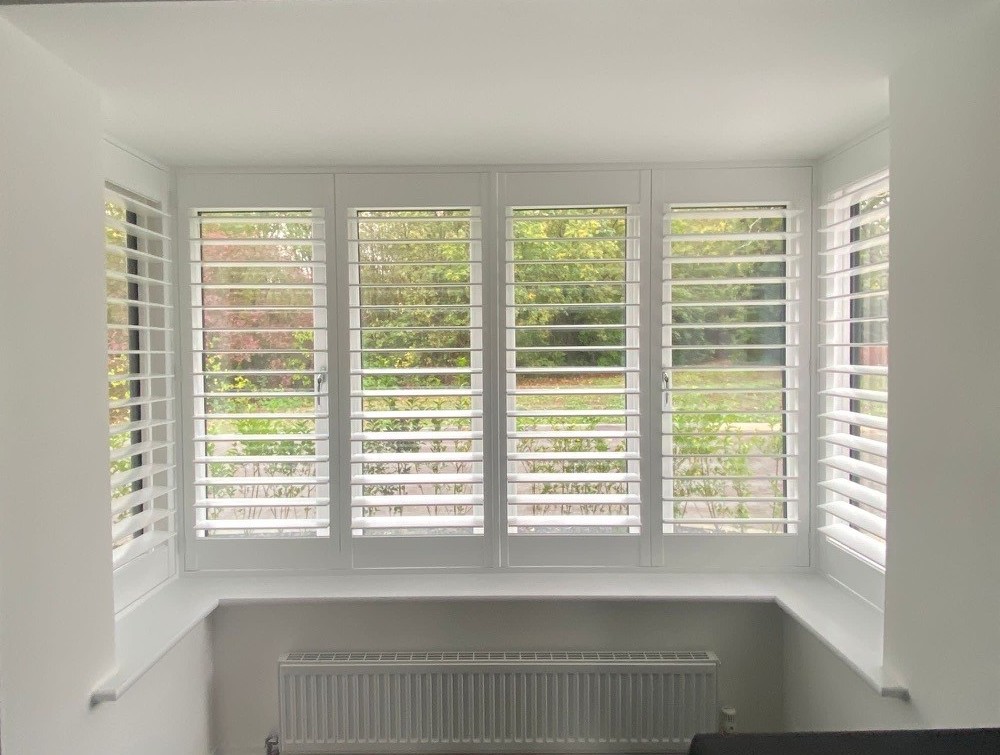
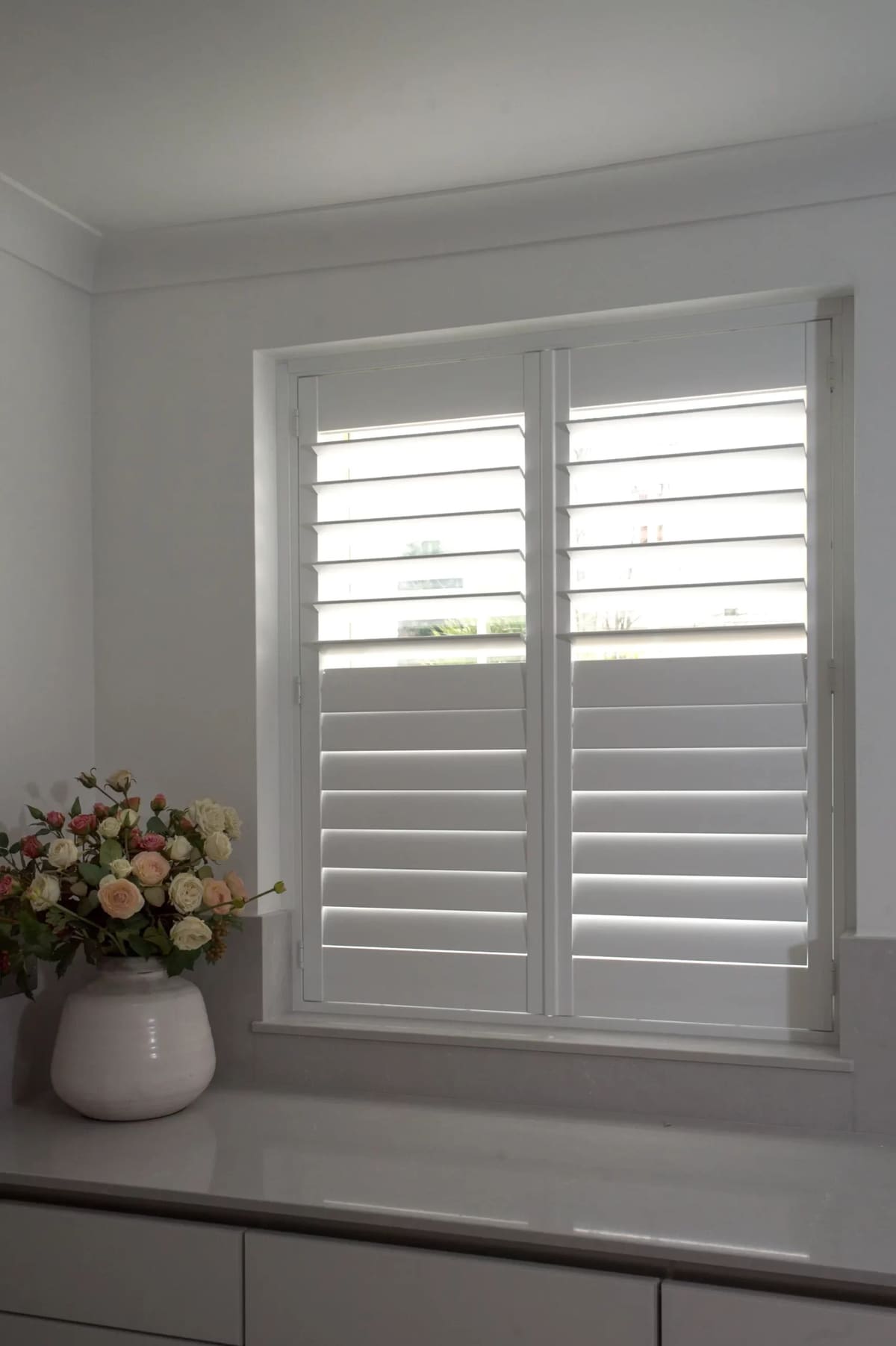
A closed louvred shutter panel directs all horizontal sightlines upward at an angle that exits the panel above the line of sight from street level. Standing at a window from outside — even pressing your face against the glass — reveals only the ceiling of the room interior, not the floor, the furniture, or the occupants. This is the defining privacy characteristic of plantation shutters that curtains, blinds, and most other window treatments cannot replicate. A standard Roman blind retains a gap at the sides; roller blinds rarely fit the full width of the reveal without light leakage; voile and net curtains soften and diffuse the view but do not block it completely. A well-fitted shutter with panels flush to the reveal and louvres angled correctly provides a consistent, adjustable visual barrier that the homeowner controls precisely from inside.
For front-facing rooms at ground level — the most commonly assessed entry point — this visual barrier removes the primary information an opportunist relies on. Our article on the best shutter options for maximum home privacy sets out the full ranking of configurations by privacy performance, including how different louvre sizes and panel types compare for street-facing applications.
Shutters versus other window treatments on security
The comparison between shutters and alternative window treatments on security terms reduces to a single variable: how completely and consistently does the treatment eliminate the line of sight from outside? Curtains solve the problem at night when drawn but are typically left open during the day, and their pattern of opening and closing discloses the household's rhythms. Blinds — whether roller, Roman, or venetian — provide partial privacy when fully lowered but retain side gaps and rarely span the full window reveal. None of these treatments add any physical barrier at the window: they hang freely and can be displaced by anyone opening the window from below. Plantation shutters are fitted into the reveal itself and held in place by a hinge or frame mechanism — they cannot be displaced from outside without force, and their physical presence adds a layer of resistance to entry that fabric treatments do not provide.
A detailed comparison of shutters against the full range of blind types covers privacy and security differences alongside light control, maintenance, and cost — a useful reference if you are currently using blinds and weighing whether shutters represent a meaningful improvement for your home.
Which shutter styles offer the strongest privacy and deterrent effect
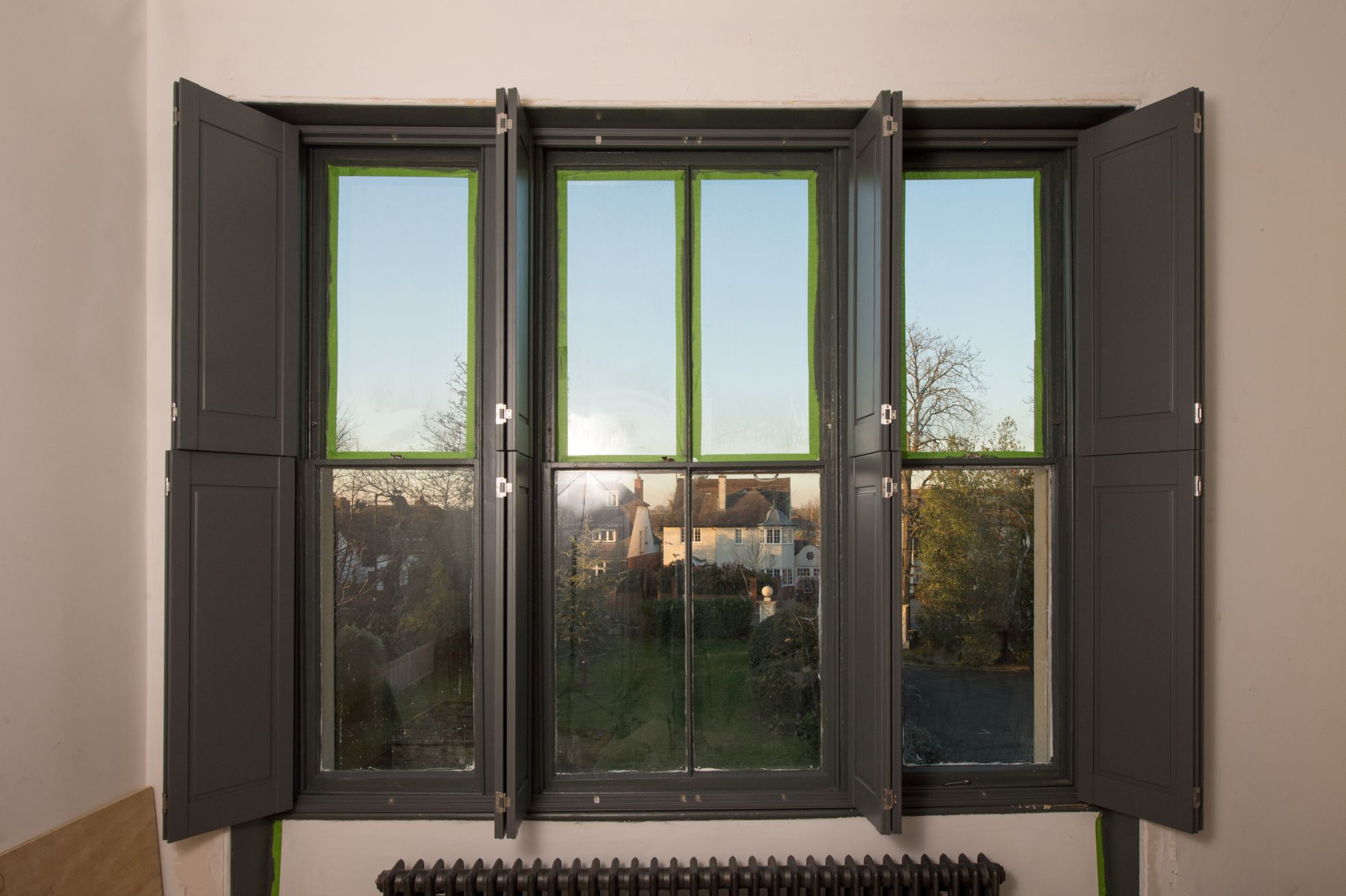
Louvre-free solid panel shutters provide the highest level of privacy of any shutter configuration. With no aperture in the panel face, a solid shutter creates complete visual opacity and a continuous physical surface across the window opening — equivalent to a closed interior shutter of the traditional kind found in Georgian townhouses. They are most commonly specified for street-facing bedrooms, home offices with sensitive screen content, and any ground-floor room where total privacy at all hours is the requirement. Our detailed article on the complete performance case for solid panel shutters covers the blackout, insulation, and privacy benefits in depth, including the specification choices that maximise all three simultaneously.
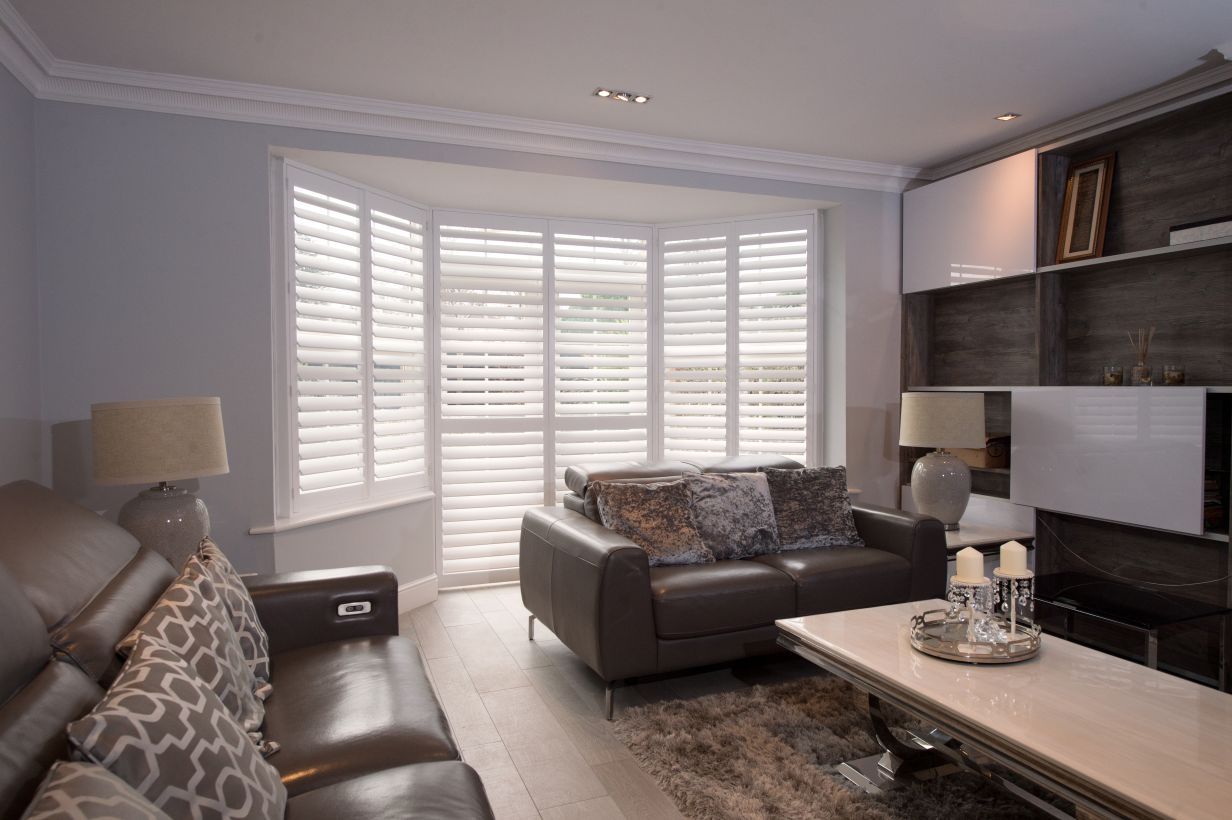
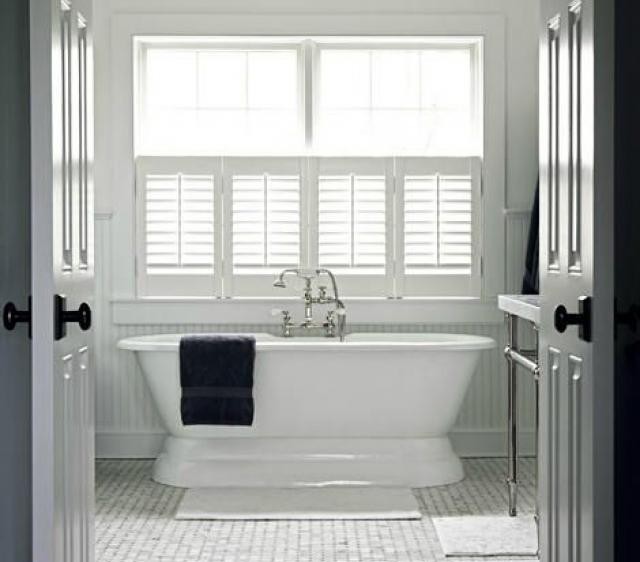
For most living rooms and bedrooms, shutters spanning the complete window height from sill to head provide the best privacy-to-light-control trade-off. Closed louvres eliminate the view from outside while angled louvres admit diffused daylight from above; opening the panel gives an unobstructed view when privacy is not the immediate concern. Ground-floor front-facing windows benefit most from the lower-panel-only configuration, where the shutter covers the lower portion of the window — the portion most visible from pavement level — while leaving the upper sash open for light and air. This is a particularly effective layout for Victorian and Edwardian ground-floor sitting rooms, where the sill is often at or below standing head height for passers-by.
Physical resistance: frame fit and material choice
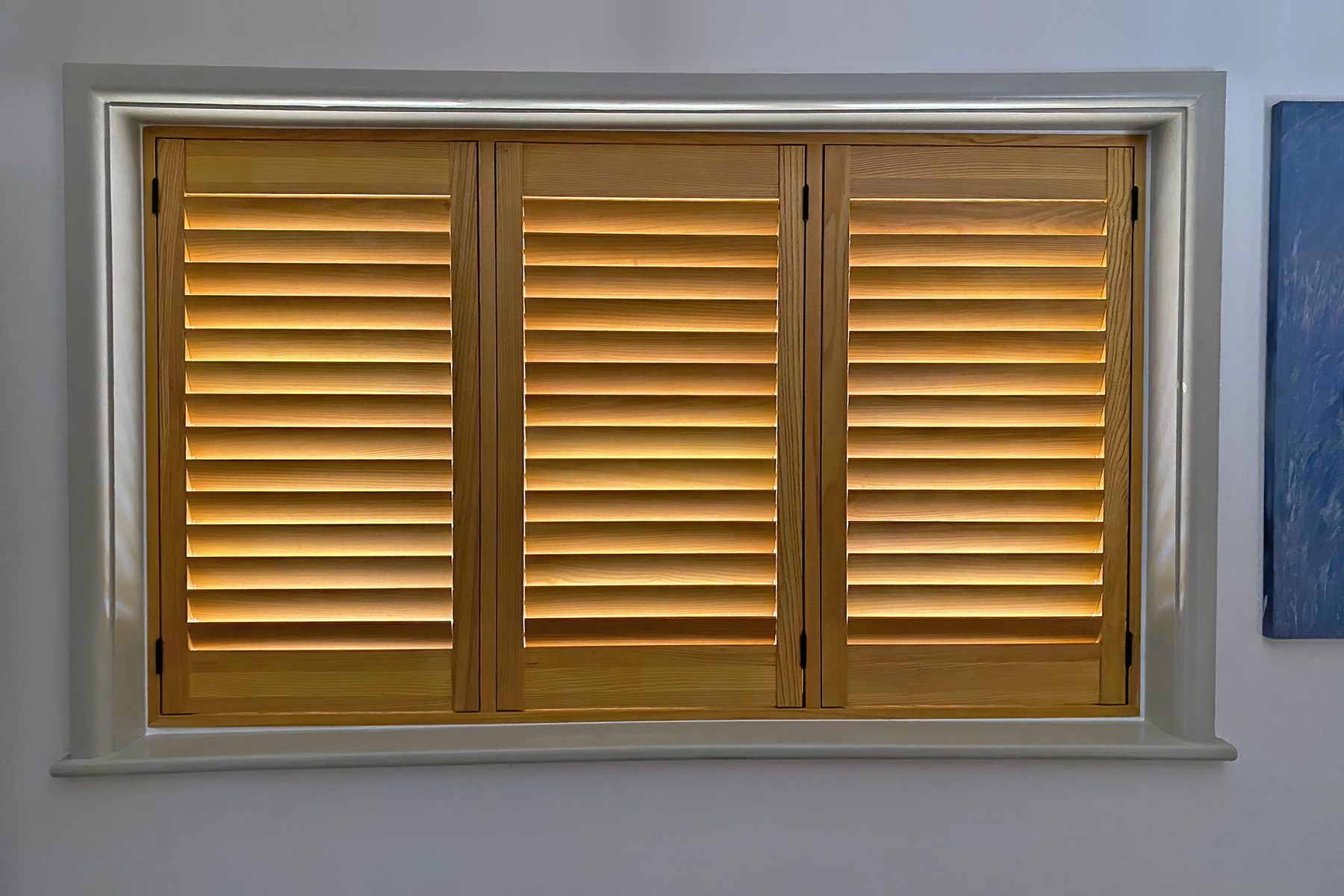
Privacy and deterrence are the primary security contributions of plantation shutters; physical resistance to forced entry is a secondary one, but worth understanding. A well-fitted hardwood or composite shutter frame within a window reveal adds mass and resistance to the window opening that is absent with a free-hanging curtain or blind. Extruded aluminium shutter panels are the most physically resistant of any domestic shutter material, with a panel rigidity that makes them substantially harder to deform or displace than timber or composite equivalents of the same geometry. For first-floor and ground-floor windows where forced entry is a specific concern, an aluminium panel specification adds a meaningful physical deterrent layer beyond the privacy benefit alone.
The frame-to-reveal fit of a made-to-measure shutter is equally relevant. Off-the-shelf shutters fitted with side gaps and a loose frame offer far less physical resistance than a shutter manufactured to the exact dimensions of the reveal and installed with a close-fitting frame. Composite shutters manufactured to exact reveal dimensions provide a tight, gapless frame fit that is both visually cleaner and structurally more resistant than a loose-fitting alternative. Made-to-measure supply-and-fit is therefore the appropriate route for any homeowner whose primary concern is security: the precise frame fit is a functional requirement, not just an aesthetic preference.
Combining shutters with a wider home security strategy
Plantation shutters are one element of a layered home security approach. The most effective strategy combines privacy at the window with visible deterrence outside — security lighting, a doorbell camera, and clear sight lines from the road to the front door — and with physical security at the entry point: five-lever deadlocks, window locks, and reinforced door frames. Shutters contribute the privacy layer: they prevent the visual reconnaissance that precedes most opportunist burglaries and add physical resistance at the window face. Motorised shutters with smart-home scheduling extend this capability: programmed opening and closing simulates occupancy when the household is away, maintaining the appearance of a lived-in property at times when the home would otherwise appear empty. Occupancy simulation is one of the most practically effective deterrence tools available, and costs nothing to run once the motorisation hardware is installed.
Properties in urban areas where rear-garden access is possible — mid-terrace houses with shared side access, ground-floor flats with communal gardens — benefit particularly from rear-window shutters that prevent visibility from outside the building perimeter as well as from the street. Our guide to shutter specification for flats and apartments covers the security and privacy considerations specific to multi-occupancy buildings, where communal areas and shared access points create a different risk profile from a detached house.
Survey, specification, and next steps
The right shutter specification for security depends on the room's orientation, the window type, and the specific privacy concern — whether street-facing visibility, rear-garden exposure, or internal room privacy is the priority. A free home survey assesses each window in context and recommends the configuration — solid panel, full-height louvred, or lower-panel-only — and material — composite, hardwood, or aluminium — that best fits the combination. Pricing for full-height composite shutters, which address the majority of privacy and security concerns for standard UK windows, ranges from approximately £160–£230 per square metre supply and fit. Solid panel composite shutters for complete visual opacity range from approximately £180–£260 per square metre, and aluminium panel specifications for maximum physical resistance from approximately £200–£290 per square metre. Lead times from confirmed order to installation are four to six weeks for composite and six to eight weeks for hardwood.
Arrange a free no-obligation home survey with Shutters Factory and a surveyor will assess every window, discuss the specific privacy and security concerns for each room, and provide a fixed supply-and-fit quotation. Before your appointment, explore the complete range of shutter materials and styles to understand which specification fits your window type and security requirement before samples arrive at your door.