Essex property: a county of towns, suburbs, and villages
Essex is one of the most architecturally diverse counties in the south-east of England. Within its borders you find everything from the ancient timber-framed market towns of the north — Saffron Walden, Thaxted, Coggeshall, Dedham — to the mid-20th-century planned new towns of Harlow and Basildon; from the affluent commuter belt of Epping Forest, Brentwood, and Ingatestone to the long coastal strip running from Southend-on-Sea through the Blackwater Estuary to Mersea Island, Frinton-on-Sea, and Walton-on-the-Naze. No single shutter specification covers all of Essex — the right style and material depends on the property era, window type, coastal exposure, and any heritage designation that applies to the site.
What the county's period housing stock shares, however, is the same practical advantage that makes London period properties ideal for shutters: deep window reveals. Whether set in the 500mm masonry wall of a 16th-century Essex farmhouse or the 130mm brick facing of a late-Victorian terrace in Chelmsford, deep reveals allow inside-mounted shutter frames to sit flush and cleanly within the existing window opening. Our Essex shutter survey and fitting service covers all postcode areas across the county, from the CM and CO postcodes of central and north Essex to SS and IG on the southern borders.
Victorian and Edwardian terraces in Essex market towns
The market towns of Essex hold some of the most complete Victorian and Edwardian residential streetscapes outside London. Chelmsford's Moulsham Street conservation area, the Victorian terraces of Colchester's Lexden Road and New Town district, Brentwood's network of late-19th-century semis, and the Edwardian streets of Saffron Walden and Braintree all feature housing stock closely related to inner London period properties: two- or three-storey red-brick terraces with projecting ground-floor bays, double-hung sash windows on upper floors, and window reveals of 120–150mm that provide ideal conditions for inside-mounted shutter frames.
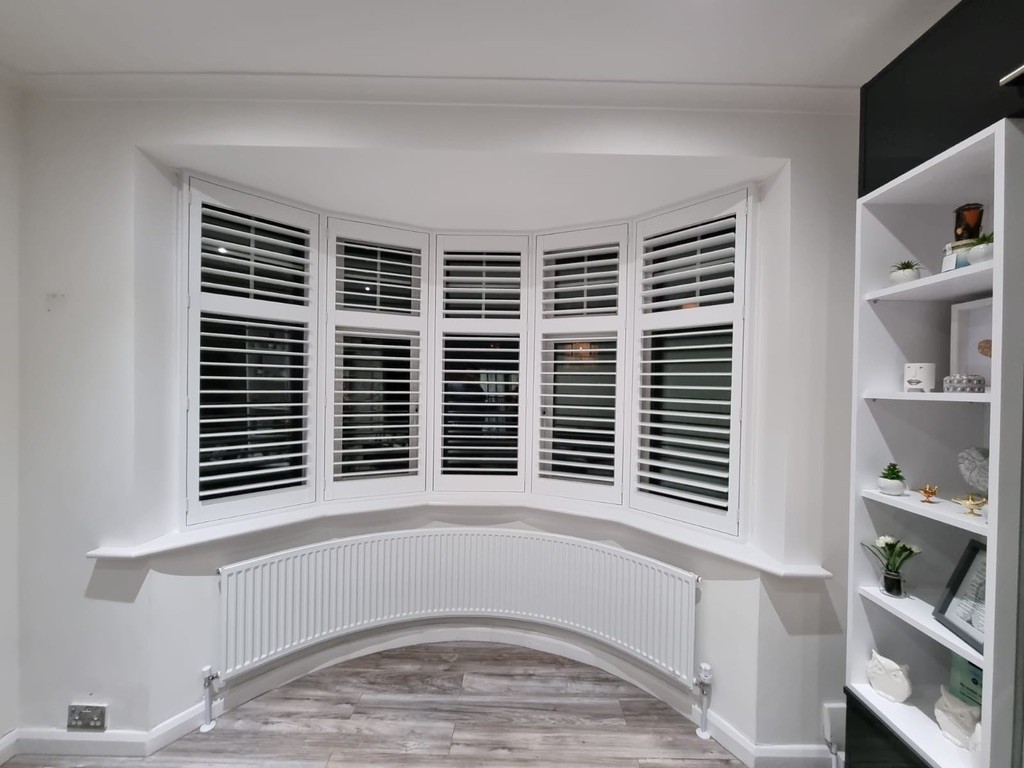
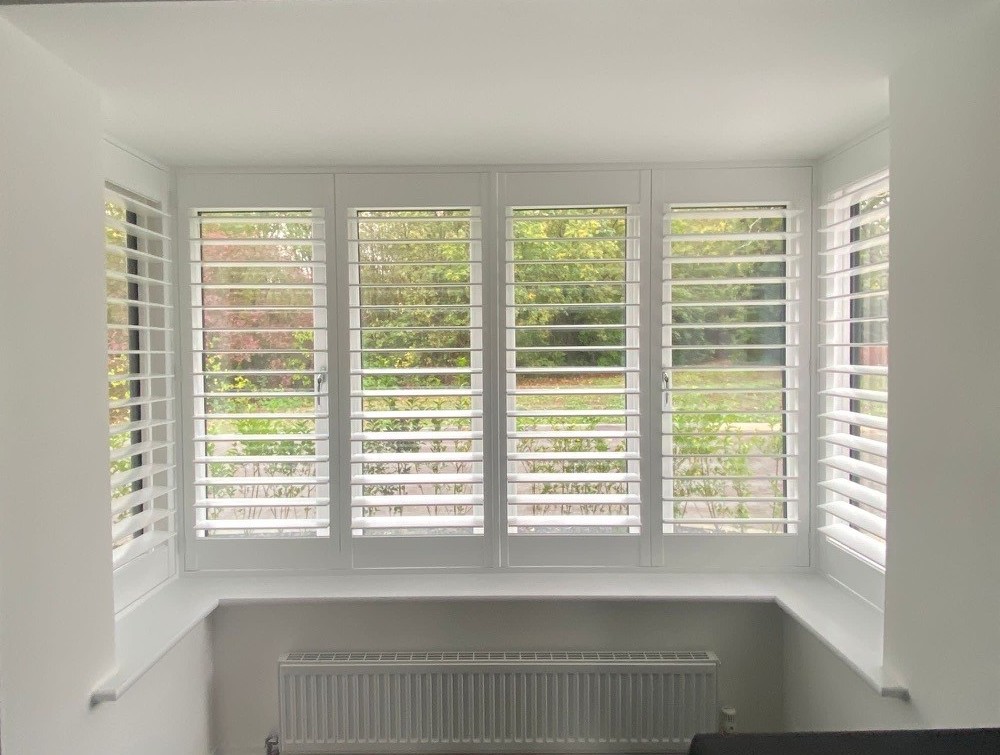
The ground-floor bay window is the most architecturally significant shutter installation in a Victorian Essex terrace. A two- or three-light angled bay requires panels shaped and framed precisely to the bay's projection angles, measured in detail during the survey visit. Off-the-shelf panels built for rectangular openings cannot fill angled corners without visible gaps — made-to-measure frames are not optional for a bay. For upper-floor sash windows, shutters with independently operated upper and lower sections allow the lower panels to block street-level sightlines while the upper section admits daylight from above. Our broader guide to plantation shutters for Victorian and Edwardian period homes covers the full range of window types and configurations common to this era of British housing.
New-build estates and modern homes: Harlow, Basildon, and Braintree
Essex has a significant inventory of post-war and planned housing: Harlow, designated a New Town in 1947, Basildon (1949), and the large modern estates on the edges of Braintree, Witham, and Maldon. These homes differ fundamentally from period stock in their window design: flush-framed windows set close to the external wall face, with reveals typically 50–80mm deep rather than the 120–150mm of a Victorian terrace, and window formats that frequently run wider and shallower than their period equivalents — a horizontal proportion common in 1970s and 1980s housing and in contemporary new builds from the 2000s onward.
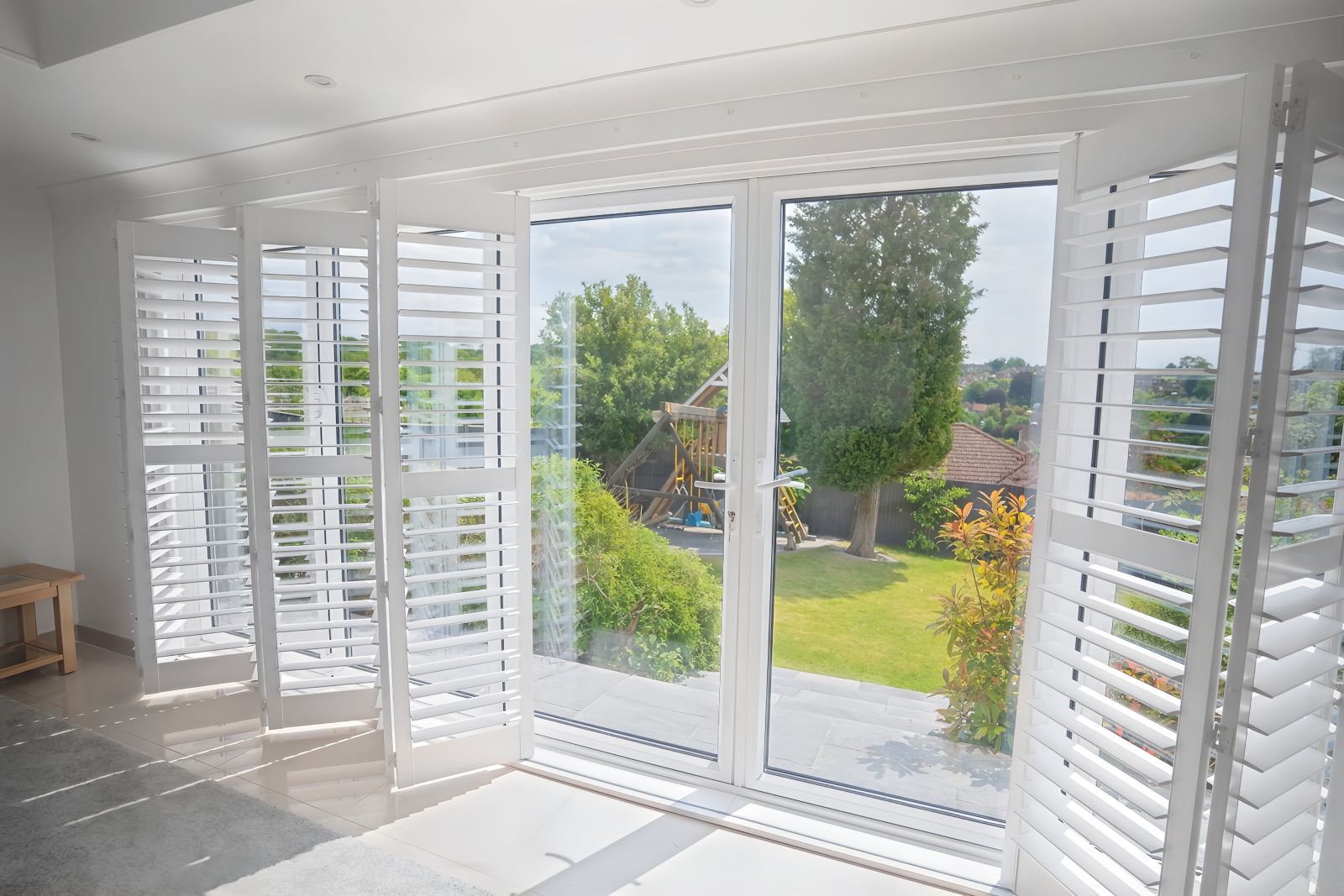
Louvred panels sized to the full window height are the standard specification for modern-home windows across Essex: clean in appearance, straightforward in operation, and available with 47mm, 64mm, or 89mm louvres depending on window width and the desired balance of light, privacy, and view. For larger window formats — sliding patio doors or bi-fold openings common in contemporary extensions throughout Harlow and Basildon — a sliding track system running on an overhead aluminium rail allows the full glazed opening to be covered without the structural constraints of door-hung hinged panels. Our project portfolio of completed shutter installations includes modern-home examples across a range of window formats and reveals, and is a useful reference before booking a survey.
Rural cottages and village conservation areas
The villages of north and west Essex contain some of the finest pre-industrial building stock in England. The timber-framed houses of Finchingfield, Thaxted, Coggeshall, and the Dedham Vale villages — Great Dedham, Stratford St Mary, Langham — are predominantly 15th- to 18th-century in construction, with low-set casement windows set deep into lime-rendered or weatherboarded walls. Window openings in this building form are often small: 500–800mm tall, designed to admit light at working height rather than maximise glazed area.
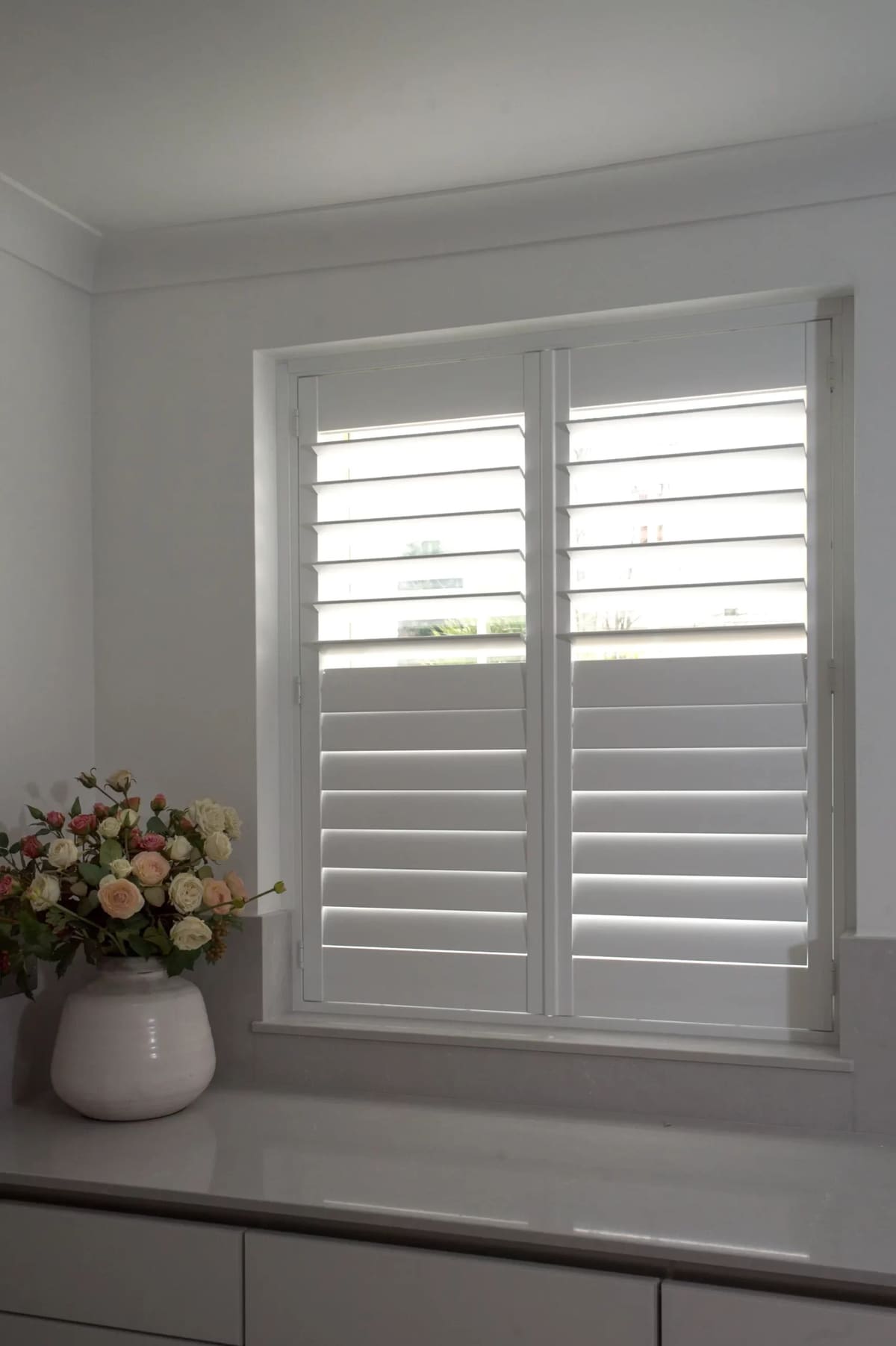
Shutters covering the lower portion of the window — café-style panels fitted to the bottom two-thirds of the opening — are typically the most sympathetic choice for cottage casements: they provide privacy at eye-level without blocking the sky and garden view that makes small village rooms feel open. For taller cottage windows of 1,000mm and above, single-tier louvred panels running from sill to head suit the proportions and are simpler to operate. The majority of Essex village conservation areas and listed properties allow interior shutters without planning permission or listed building consent; our article on shutters and planning permission in the UK covers the precise rules for listed buildings and conservation areas.
Coastal Essex: moisture, salt air, and material choice
The Essex coast — from Southend-on-Sea north through the Blackwater Estuary to Mersea Island, Brightlingsea, Frinton-on-Sea, and Walton-on-the-Naze — presents a specific installation environment that makes material selection more critical than almost any other variable in the county. Salt-laden air, higher year-round relative humidity, and frequent condensation on north-facing glass in winter all create conditions that stress unpainted timber surfaces over time. Even factory-painted solid wood shutters, if moisture is allowed to accumulate at frames or louvre edges, can develop surface degradation faster in a coastal setting than the same product installed 40 miles inland.
The correct material specification for a coastal Essex installation is a moisture-resistant composite: Mimeo shutters use a composite core guaranteed not to warp, crack, or swell in domestic humidity conditions, including the elevated levels typical of properties within two or three miles of tidal water. The Mimeo range is factory-painted in over 30 colours and provides the same louvre and panel dimensions as the hardwood range. For period properties on the Southend seafront, in Mersea Island bungalows, or in the Edwardian town houses of Frinton's conservation area, Mimeo composite shutters deliver the aesthetic result of a painted wood shutter without the maintenance commitment a coastal environment demands. Our article on the professional shutter fitting service across Essex postcodes covers the practicalities of booking a coastal survey and installation visit.
Material selection across Essex property types
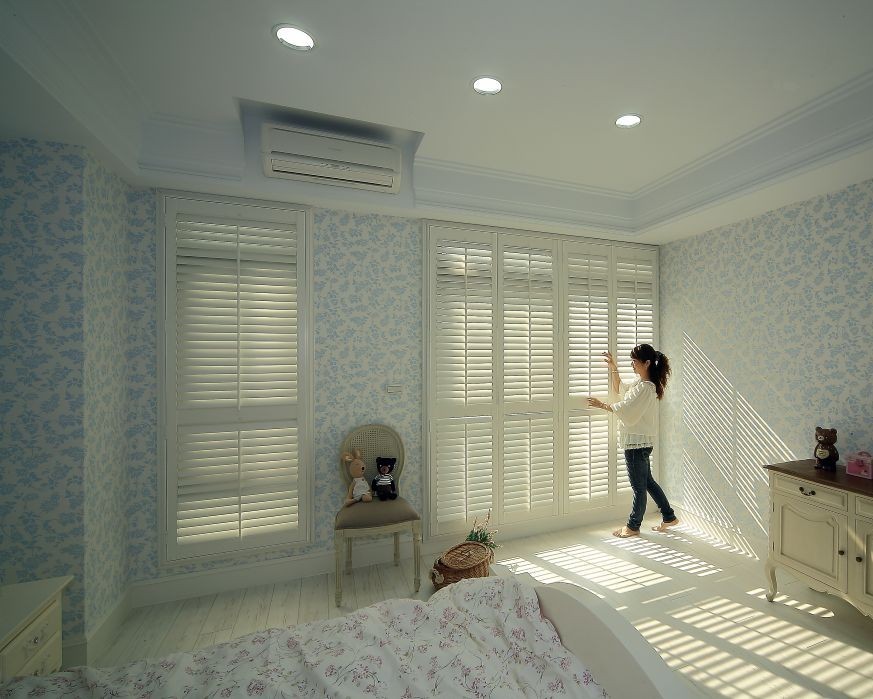
Essex installations frequently involve more than one material within the same property. Principal reception rooms in a period home — sitting rooms, dining rooms, main bedrooms — where the interior finish is high and surface quality is visible at close range, are the appropriate setting for Endura hardwood shutters in a factory-applied painted finish. The material weight, louvre edges, and paint quality of the Endura range sit convincingly alongside original cornices, picture rails, and period skirting. For kitchens, bathrooms, utility rooms, and any coastal rooms where long-term moisture exposure is a factor, Mimeo composite shutters are the correct specification.
A typical four-bedroom Victorian terrace in Chelmsford or Colchester might use Endura hardwood throughout the ground-floor reception rooms and principal bedroom, with Mimeo composite shutters in the bathroom, en suite, and kitchen. A coastal bungalow in Mersea Island or Frinton would typically use Mimeo throughout — including the sitting room — given the salt-air environment. New-build homes across the county suit composite shutters in all rooms: the flat contemporary internal finishes of a modern home do not present the same surface-quality argument that makes hardwood compelling in a period interior. Our guide to shutters for period Victorian and Edwardian properties explores the full material and style decision-making process for the most common Essex period house types.
2026 prices, lead times, and booking an Essex survey
Supply and fit pricing across Essex follows the same per-m² structure used throughout the Shutters Factory service area. Mimeo composite shutters start from approximately £350–£400 per m². A Victorian bay window of approximately 2.0m² is in the range of £900–£1,100 for composite shutters, rising to £1,150–£1,400 for Endura hardwood. A cottage casement of approximately 0.5m² typically costs £210–£290 for composite and £300–£380 for hardwood. A whole-house installation across a four-bedroom Victorian terrace in Chelmsford or Colchester — ground-floor bay, two front sash windows, and four secondary rooms — typically runs from £4,500 to £8,500 depending on product selection and window count.
Lead times from confirmed order to installation are four to six weeks for both composite and hardwood ranges across all Essex postcodes. The free home survey takes approximately 45–60 minutes for a typical property; larger homes with bi-fold extensions or multi-room specifications may run to 90 minutes. The surveyor brings physical product samples and confirms a complete room-by-room written quotation on the day with no obligation to proceed. Our dedicated Essex shutters service and survey page covers the full range of postcode areas served. For pricing context across comparable county-wide installations, our recently published guide to shutters for Surrey villages and country homes offers a useful 2026 benchmark. Book a free home survey to receive an exact written quote for your Essex property.