Dulwich's housing stock — what you're working with
Dulwich sits across the SE21 and SE22 postcodes in south London, within the London Borough of Southwark and, for the southern reaches of West Dulwich, touching the Lewisham boundary. The residential stock divides into three geographically and architecturally distinct zones, each presenting a different starting point for a shutter specification. The first is Dulwich Village and the wider Dulwich Estate — the historic core managed by the Dulwich Estate trustees, with detached and semi-detached Victorian and Georgian properties on Dulwich Village itself, College Road, and the roads surrounding Dulwich Park and Dulwich College. These are among the largest and most architecturally distinctive homes in south-east London, and the primary market for painted hardwood shutters with colour-matched period joinery. Our Dulwich shutters service page covers SE21, SE22, and the surrounding Southwark postcodes and describes the full range of window types and property ages we regularly work across the area. For a broader introduction to shutters in south London, see our Dulwich south London shutters guide.
The second zone is East Dulwich — SE22 and the dense Victorian terrace stock along and around Lordship Lane, Peckham Rye, Crystal Palace Road, and Barry Road. These are the classic late-Victorian bay-fronted terraces of the 1870s through 1890s: three-storey rows now frequently occupied by families who have moved out of inner London for space, school catchments, and the particular character of the Lordship Lane neighbourhood. The third zone is West Dulwich — larger Edwardian and late-Victorian semi-detached houses on the roads around West Dulwich station, Croxted Road, and Rosendale Road, which attract the same family demographic seeking generous room proportions, large gardens, and proximity to the independent schools that define Dulwich's national reputation. For guidance on how plantation shutters work across the wider category of Victorian and Edwardian period homes, see our period homes shutters guide.
Victorian terraces in East Dulwich — SE22 and the Lordship Lane stock
East Dulwich's Victorian terrace stock shares the building pattern common to south London rows of the 1870s–1890s: three-storey bay-fronted terraces with vertical sliding sash windows, substantial cornices and architraves, and window reveals deep enough to accommodate plantation shutters without structural preparation. The key variable in SE22 is occupancy: some properties remain as single-family houses across three floors; many have been converted to two leasehold flats. Both formats are straightforward shutter projects — the family house typically requires a whole-house specification across six to ten windows, while the conversion flat requires two to four windows in a single unit.
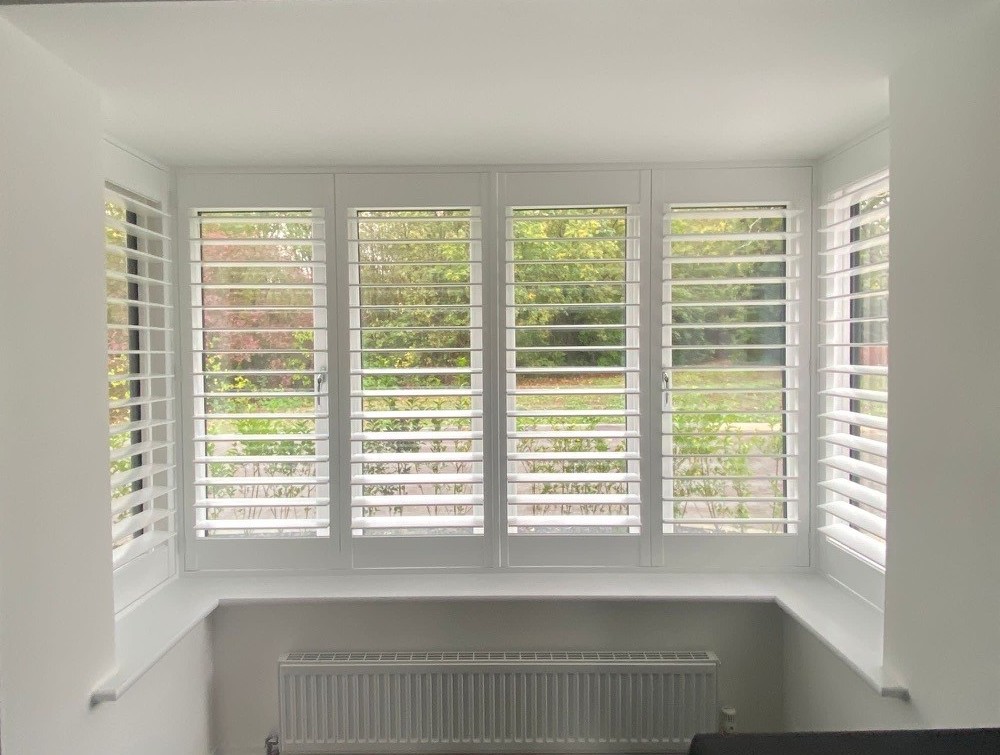
For whole-house Victorian terrace projects in East Dulwich, a unified full-height specification across all principal rooms delivers a consistent architectural result — matching louvre width, paint colour, and hardware throughout the property. Living rooms and dining rooms benefit from larger louvres (89 mm) that maximise light transmission when open; bedrooms often suit the mid-rail option for independent upper and lower louvre control. Bay-fronted windows are extremely common across SE22 — the three-panel bay on a ground-floor Victorian terrace is one of the most frequent configurations we install across the area. For kitchens and bathrooms, Mimeo composite shutters are the practical default: fully waterproof, wipe-clean, and priced 25–35% below hardwood for the rooms that take the most daily use. For detailed advice on bay configurations, see our bay window shutters fitting guide.
Dulwich Village, the Estate covenant, and conservation area planning
The Dulwich Village Conservation Area covers the historic core — Dulwich Village between Gallery Road and Court Lane, together with several adjacent streets within the Dulwich Estate management boundary. The conservation area contains a high concentration of Grade II listed buildings: Georgian and early-Victorian terraces on Dulwich Village itself, and larger detached Victorian and Queen Anne-style properties on College Road and Burbage Road. These properties are subject to both Southwark's statutory conservation area controls and the Dulwich Estate's own covenant system, which restricts external alterations to buildings within its management remit.
Plantation shutters are entirely unaffected by either layer of restriction. Internal shutters are classified as internal furnishings: they are fitted within the window reveal, make no change to the external appearance of any window, and are not visible from outside the building. They do not require planning permission, listed building consent, or Dulwich Estate approval. A Grade II listed Georgian property on Dulwich Village can receive plantation shutters without any consent application, provided fixings go into window boards and reveal linings rather than original historic fabric. For owners of Dulwich Estate properties subject to covenant restrictions, the same principle applies: shutters are interior furnishings, not external alterations, and fall entirely outside the scope of the Estate's external appearance covenants.
Family homes: shutters room by room
Dulwich's residential character is predominantly family-driven — proximity to Dulwich College, James Allen's Girls' School, Alleyn's School, and several well-regarded primary schools means the housing stock is largely occupied by families with children across multiple ages. The practical demands of a family home differ from those of a single-occupancy flat in ways that consistently favour plantation shutters: durability, wipe-clean surfaces, cord-free operation, and the ability to specify a different configuration for each room according to its function.
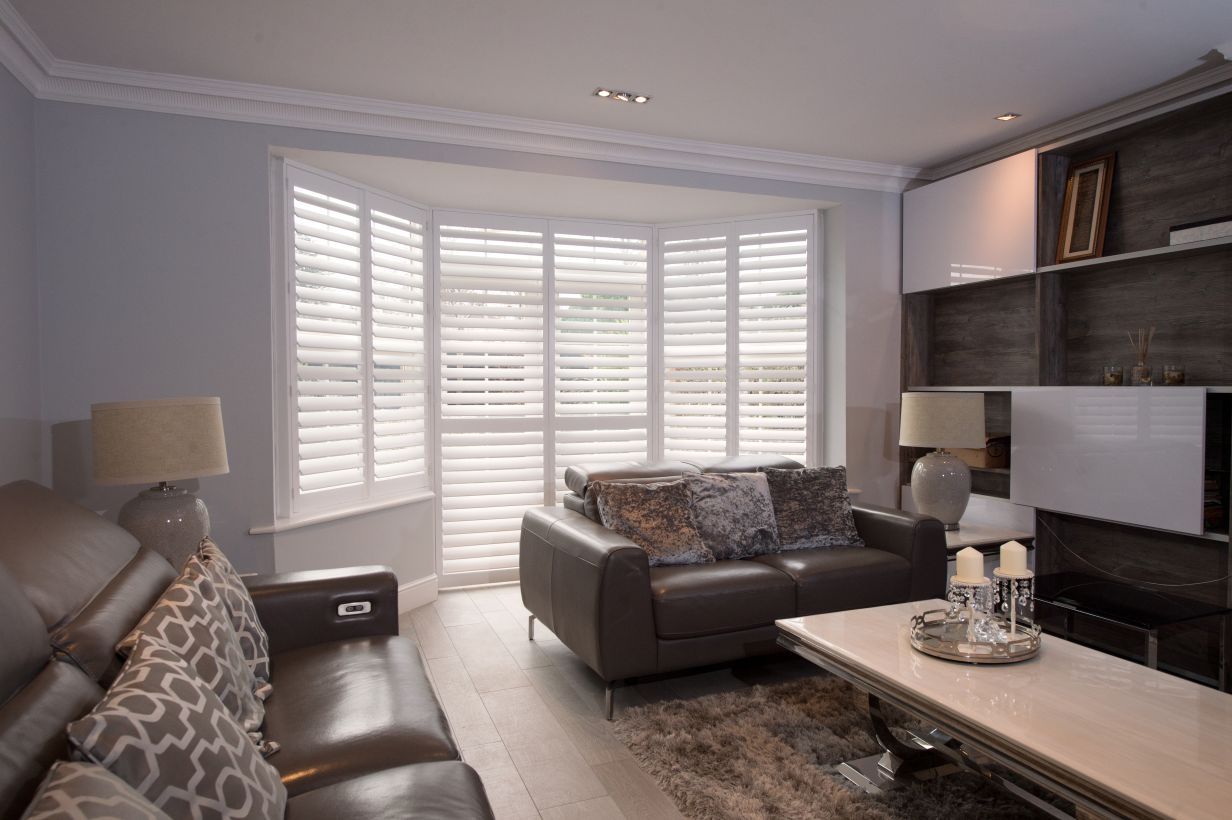
Living rooms in Dulwich family houses benefit from full-height louvred shutters that provide precise light management throughout the day without the maintenance overhead of curtains or blinds. A pair of full-height panels on a large Victorian bay-fronted living room window can be angled for morning light, closed against afternoon glare, and fully open for evenings. The living room shutters page covers configuration options in full. For design ideas and how shutters work in different living room settings, see our living room shutters design guide.
Children's bedrooms are where the durability advantage of shutters is most tangible. Blinds and curtains in actively used children's rooms are regularly damaged — cords pulled, fabric stained, tracks broken. Plantation shutters are structurally robust: the frame is fixed into the reveal, the louvres are hinged on a continuous tilt rod, and there are no cords or hanging fabrics. The cord-free design also removes the window-blind cord strangulation risk identified in UK safety guidance. The bedroom shutters page covers light-control and privacy configurations for all bedroom types. For kitchens — which in a Dulwich family home see intensive daily use — the kitchen shutters page covers the waterproof specification in full.
Shutter styles for Dulwich properties
Four configurations cover the large majority of Dulwich installations. The right choice depends on the window format, the floor level, and the primary functional requirement of the room.
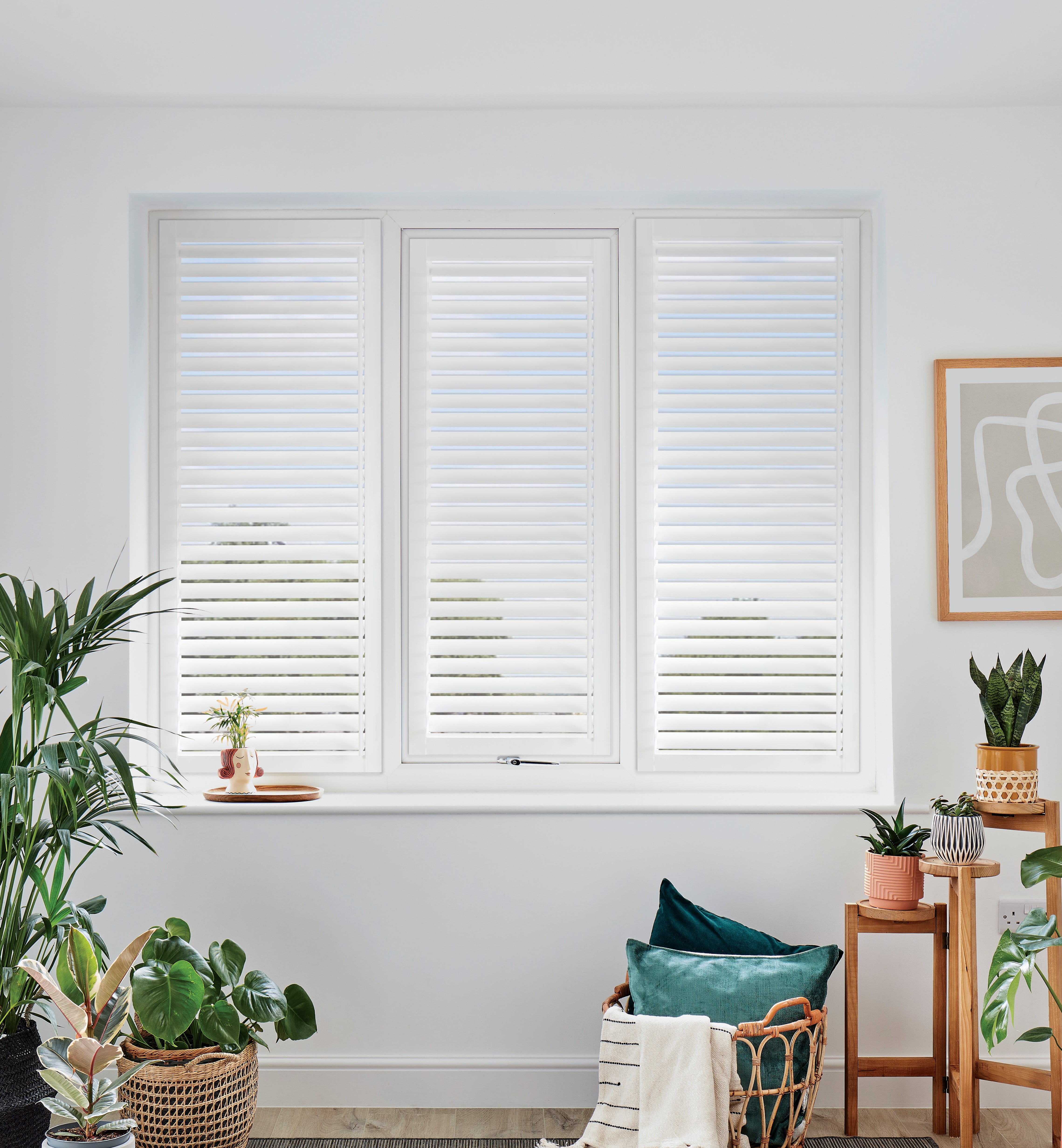
- Full height — the standard specification for reception rooms and upper-floor bedrooms. A single panel runs from window board to head of reveal, with a mid-rail option for independent upper and lower louvre control. See full-height shutters for configuration detail.
- Bay window — the bay-fronted Victorian terrace is the defining window type of SE22, and a mitred bay frame gives the installation a bespoke architectural finish. Three panels joined at the exact bay angles with precision-mitred frames deliver both aesthetic and function. See bay window shutters for the full range of bay configurations.
- Tier-on-tier — independent upper and lower panels for windows where full coverage is needed but both sections need to operate separately. Particularly useful for ground-floor reception rooms in East Dulwich terraces that face directly onto a street. See tier-on-tier shutters.
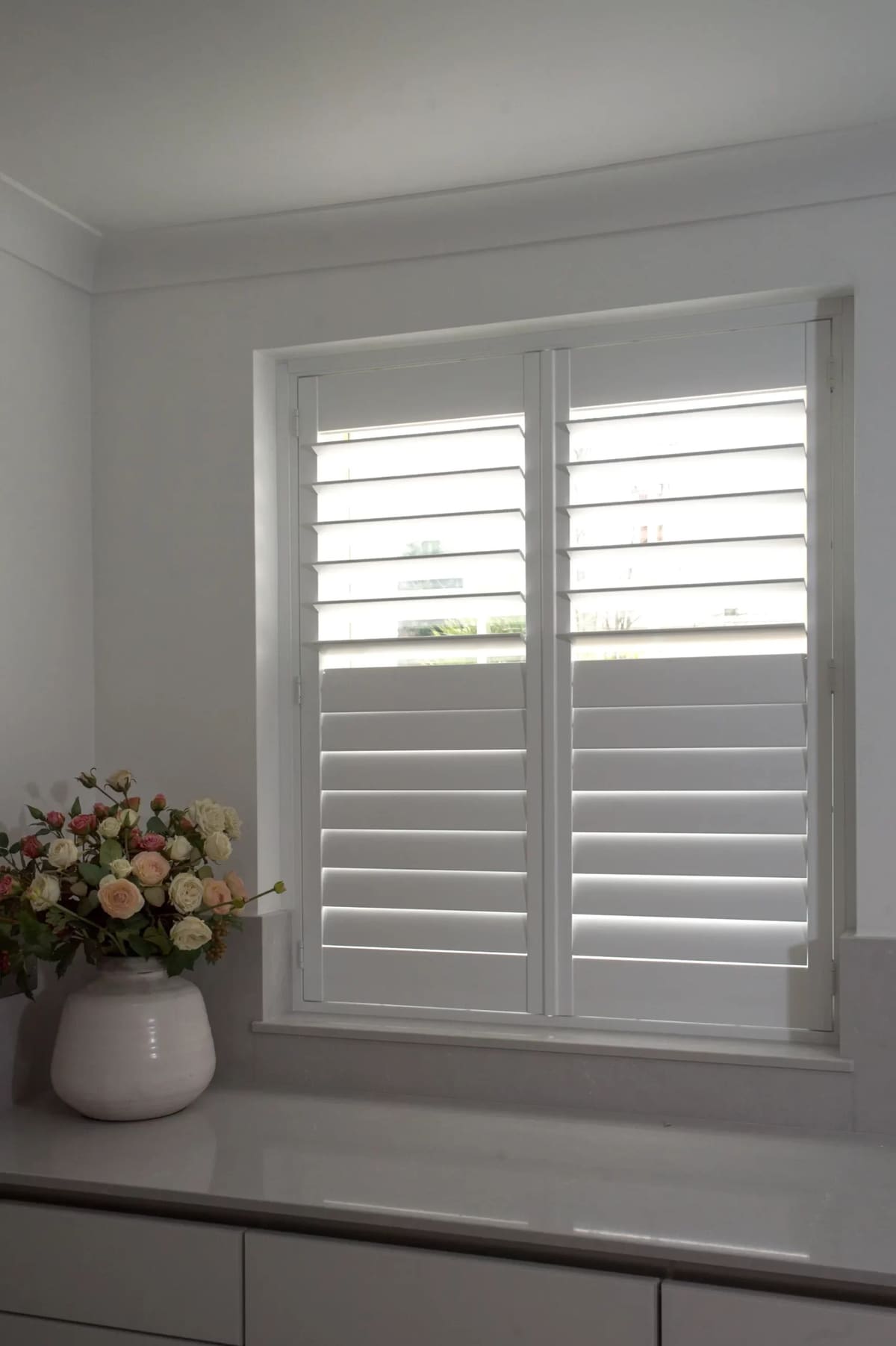
- Café style — covers the lower half of the window only, leaving the upper pane fully open for light. A useful configuration for ground-floor kitchens and dining rooms in East Dulwich Victorian terraces where street-side privacy is needed without sacrificing natural light. See café style shutters.
Material choices for Dulwich family homes
Two materials handle the vast majority of Dulwich installations. The selection follows a straightforward principle: composite for functional rooms and where moisture resistance is a daily requirement; hardwood for the principal reception rooms and any space where the architectural quality of the original interior sets the standard.
Composite (Mimeo) — the practical default for Dulwich kitchens, bathrooms, utility rooms, and children's rooms. Mimeo composite shutters are fully waterproof, maintenance-free, and 25–35% less per square metre than hardwood. For whole-house East Dulwich terrace specifications, a blended approach — hardwood in the formal living spaces, composite in the functional rooms — keeps the overall project cost manageable without compromising where it matters.
Painted hardwood (Endura) — the right specification for the principal reception rooms in Dulwich Village period properties, the large double-reception rooms of West Dulwich Edwardian semis, and any room where the quality of the original interior joinery makes composite feel inconsistent with the setting. Endura hardwood shutters are factory-painted to match existing skirting boards, door architraves, and window surrounds — a result that reads as an architectural continuation of the room. In a high-ceiling Edwardian reception room in West Dulwich with original cornices, picture rails, and hardwood floors, the weight, depth, and solidity of a painted hardwood panel is the correct specification.
Realistic 2026 pricing and getting started
Shutter prices are set by window dimensions and material choice, not by postcode. A standard Victorian sash in East Dulwich costs the same to shutter as the equivalent window in Brixton, Wandsworth, or Fulham. What distinguishes Dulwich projects is scope: a whole-house specification across a family Victorian terrace or Edwardian semi involves six to ten windows and sits in a different budget bracket from a single-room installation. All figures below are supply-and-fit, covering survey, manufacture, frames, hardware, delivery, and installation.
Shutters Factory covers SE21, SE22, and SE24 — Dulwich Village, East Dulwich, West Dulwich, and Herne Hill — with free home surveys and no call-out charge. Browse the full range at Shutters Factory products, or explore finished installations in the shutters gallery. To get a fixed, all-in written quote for your Dulwich home, book a free home survey — we confirm pricing within 48 hours of the visit, with no obligation to proceed.
- Standard Victorian sash window, composite: from £380 per m² supply and fit
- Standard Victorian sash window, painted hardwood: from £550 per m² supply and fit
- Typical single sash (approx. 0.9 m × 1.4 m), composite: from £480 total supply and fit
- Typical single sash, painted hardwood: from £630–£850 total supply and fit
- Bay window (three panes, mitred frame), composite: from £1,250 total supply and fit
- Bay window, painted hardwood: from £1,600–£2,200 total supply and fit
- Whole-house Victorian terrace (6–8 windows), composite: from £3,200 total supply and fit
- Tier-on-tier: approximately 10–15% above full-height pricing for the same window
- Lead times: 4–6 weeks composite, 6–8 weeks painted hardwood from confirmed order to installation