Chiswick's architectural character: Bedford Park to Turnham Green
Chiswick and the W4 postcode occupy a broad stretch of West London between the M4 corridor and the Thames, running from Chiswick High Road and Turnham Green in the north to the river at Chiswick Mall in the south. The architectural range is wider than any single image of 'Chiswick' captures. Bedford Park — developed from 1875 as the first garden suburb in England — is defined by its distinctive red-brick Queen Anne Revival terraces and semi-detacheds designed by Richard Norman Shaw and his associates: wide casement windows, prominent gables, and decorative tile-hung panels that anticipate the Arts and Crafts movement. Moving east towards Turnham Green station and the streets behind Chiswick High Road — Heathfield Terrace, Acton Lane, Fauconberg Road, Devonshire Road — the stock shifts to conventional Victorian bay-fronted terraces of the 1870–1900 period, closely related to the housing found across Hammersmith, Ealing, and Hounslow. Further south, the streets approaching Strand-on-the-Green and Chiswick Mall carry a mix of Georgian cottages and merchant houses from the 17th and 18th centuries, some of which are individually listed.
The consequence for shutter specification is a wider-than-usual range of window types within a single postcode. A Bedford Park Queen Anne terrace has wide casement windows with relatively shallow reveals and a horizontal proportion markedly different from the tall, narrow Georgian sash typical of Hampstead or Chelsea. A Turnham Green Victorian bay-fronted terrace has a three-light projecting bay at ground level with mitred corners and independently sized panels. A converted Georgian cottage on Chiswick Mall has deep masonry reveals, settled frames, and non-standard window sizes that can only be confirmed at a professional survey. For the wider context of our installation coverage in West London, our Ealing and West London shutter survey and fitting service explains area coverage, lead times, and the full property-type range across W4 and its immediate neighbours.
Bay windows in Victorian Chiswick terraces
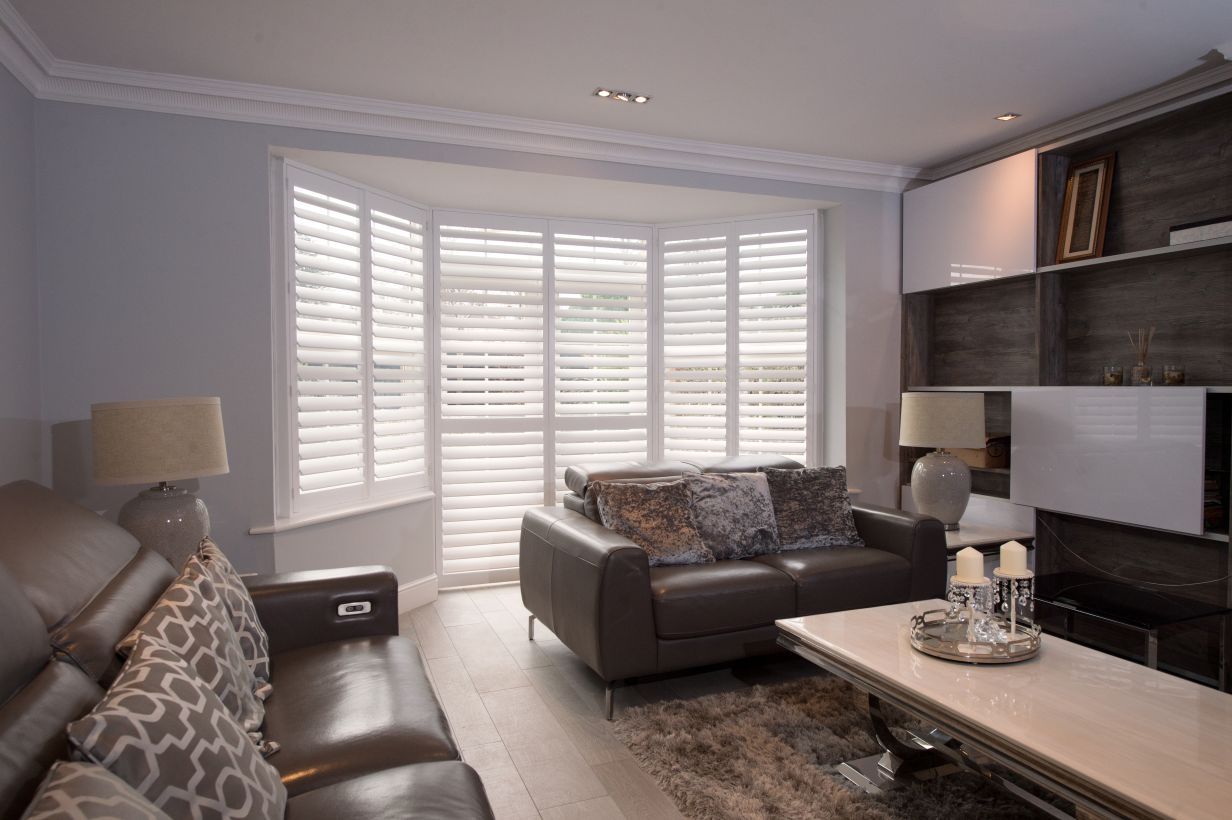
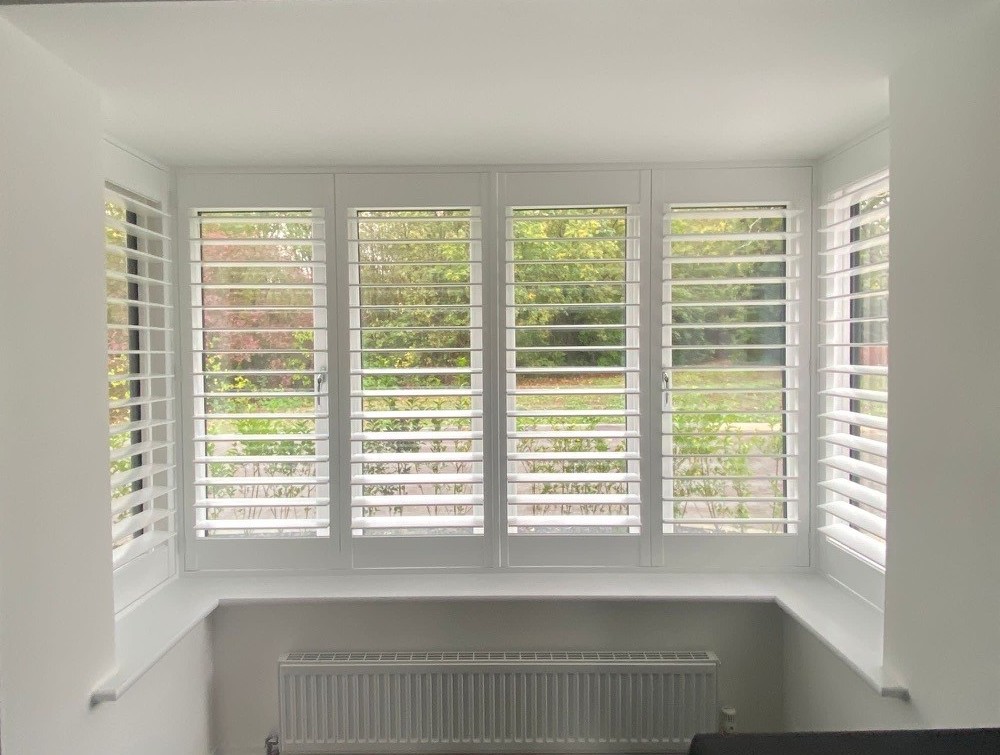
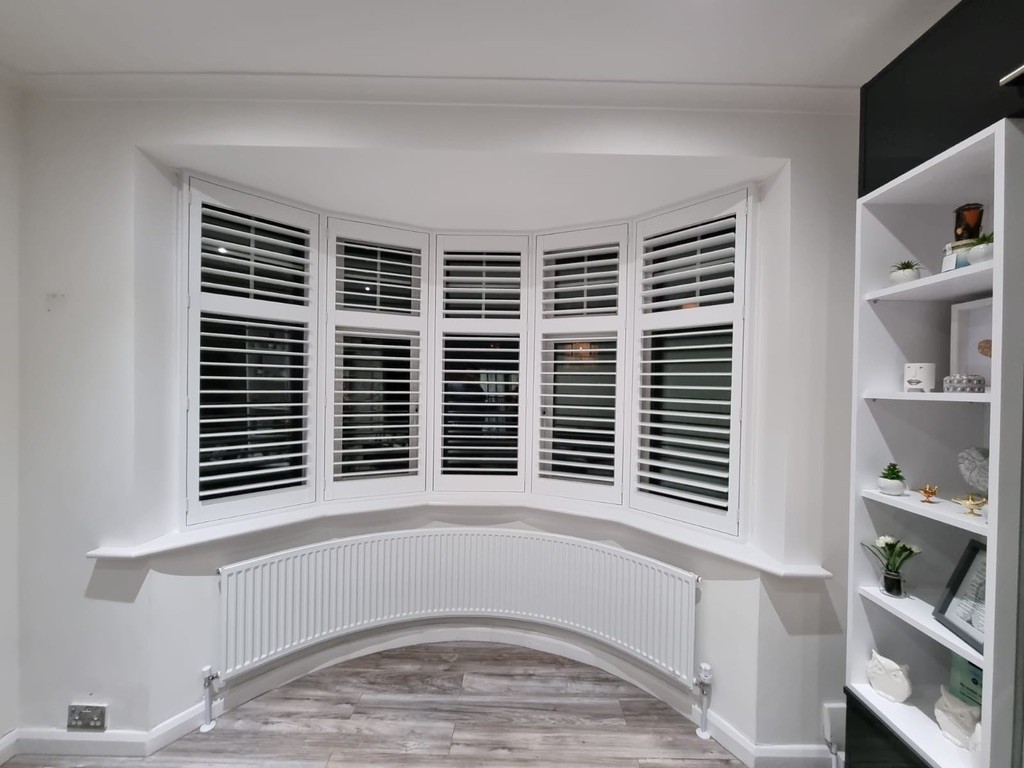
The most common shutter specification challenge in W4's Turnham Green and High Road residential streets is the ground-floor bay. Victorian terraces built across Chiswick between 1870 and 1905 carry a projecting three-section bay at ground level — a central face and two angled returns set above a tiled front path. The angle at each return varies from house to house, reflecting the slightly different frontage geometries of adjacent terraces on the same street. This variation matters significantly for shutter specification: a frame angle cut even a few degrees off from the actual bay geometry leaves visible gaps at the return corners and produces an installation that sits uneasily against the period architecture it is meant to complement.
Shutters designed to fit projecting bays address this directly. Shutters Factory's survey for a bay-window installation records the angle at each corner precisely using a digital protractor, measures each light's width and height independently, and confirms the overall projection depth and sill conditions. These measurements go directly to our manufacturing facility, where frames are produced with mitre-cut joints at the exact recorded angles. The louvre widths are matched across all three sections so the bay reads as a single continuous architectural feature. Our guide on bay window shutter styles and fitting tips covers the full range of bay configurations found across London period properties — square-fronted, angled, and curved — and explains the fitting considerations for each.
Bedford Park: casement windows and the Arts and Crafts context
Bedford Park's window stock is architecturally unusual for a Victorian suburb. The Queen Anne Revival houses designed by Shaw and the later additions by other architects in the same idiom use wide casement windows in grouped arrangements — typically two or three lights under a single head, set within a relatively shallow reveal in red brick or tile-hung walls. These are horizontally proportioned openings in contrast to the tall, narrow vertical emphasis of Georgian and early Victorian sash windows. The majority of Bedford Park properties within the conservation area are in multiple-occupancy or have undergone alterations, but a significant number retain original or sympathetically restored casement arrangements.
For wide casement windows in Bedford Park, louvred panels that run the full height of the window opening in a single section or in two vertical panels are the standard specification. The horizontal proportion of many Bedford Park casements suits the 64mm louvre well — the blade size is compatible with window openings in the 500–800mm height range typical of the lower floor. For wider grouped casement arrangements across multiple lights, the survey determines whether a single unbroken frame or separate framed units per light produces the better architectural result. The conservation area designation covering most of Bedford Park does not, in normal circumstances, preclude internal shutter installation: shutters fitted inside the reveal are not visible from the street and do not constitute a material alteration to the building's external appearance. Our broader guide on shutters for period and Victorian homes addresses conservation area considerations and the material choices that work best in Arts and Crafts and Queen Anne Revival interiors.
Lower-ground conversions and privacy in Chiswick High Road streets
The streets immediately behind and adjacent to Chiswick High Road — Heathfield Terrace, Turnham Green Terrace, and the residential cuts between the High Road and Chiswick Common — include a proportion of Victorian terrace housing divided into conversions, including lower-ground and ground-floor flats with windows at or close to pavement level. These properties face the most acute privacy challenge in the W4 postcode: a front-room window directly overlooking a footpath, often at less than three metres from the boundary.
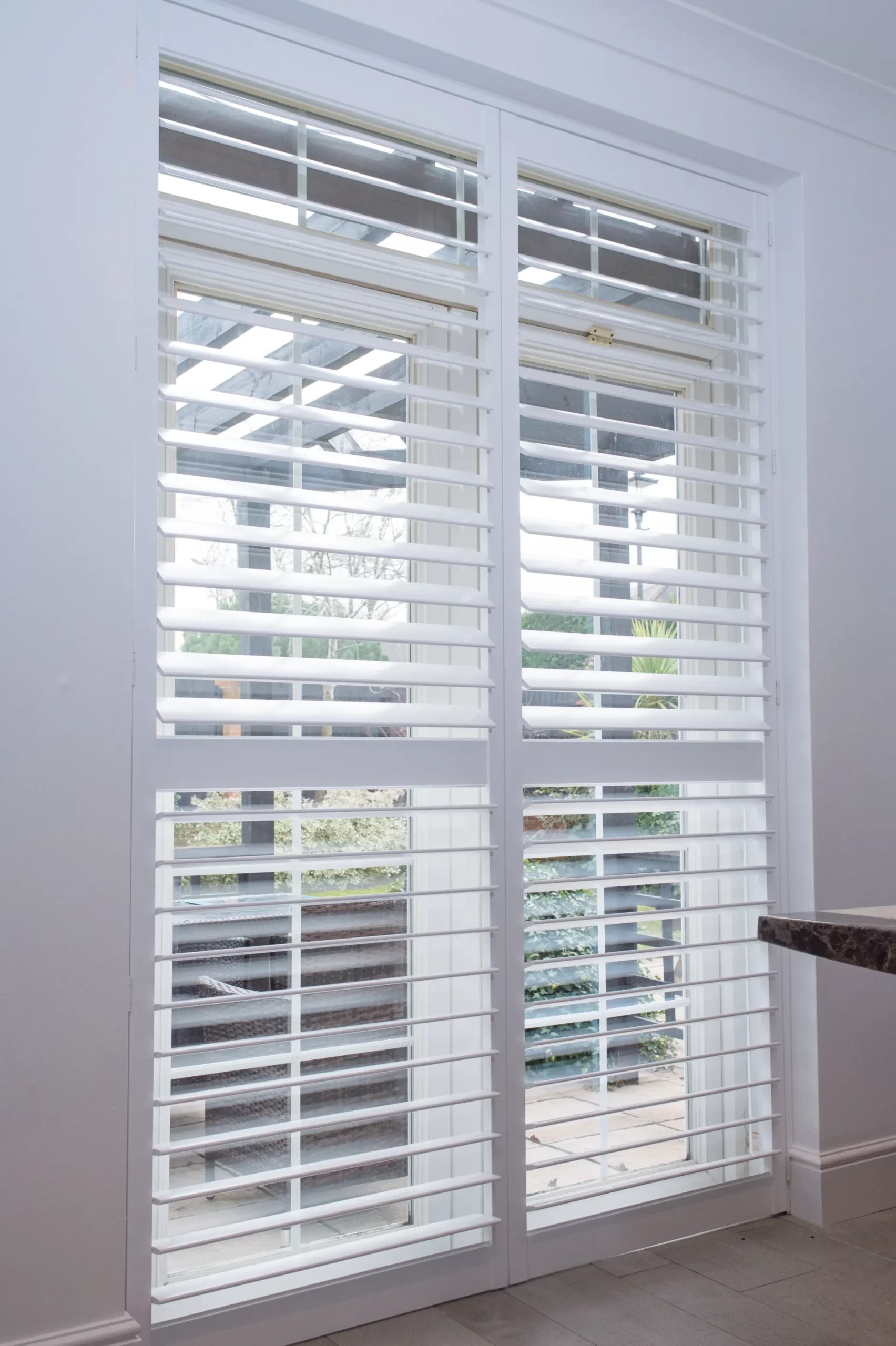
Plantation shutters address lower-ground privacy effectively because the louvres can be angled to block horizontal sightlines from pavement level while admitting light from oblique angles above. Shutters with separately hinged upper and lower sections are the most flexible solution for a lower-ground front window: the lower section is kept at or near closed during the day to prevent a direct view from the footpath, while the upper section is angled independently to admit sky light from above the sightline. This produces a naturally lit room during the day without requiring net curtains or privacy film. Our recent article on shutters for Ealing family homes covers the same lower-ground conversion challenge in comparable adjacent West London housing stock, with reference to the window types and layouts common across W4 and W5 terraces.
Choosing shutter material for Chiswick period properties
W4 is not a coastal postcode and does not face the elevated humidity or salt-air conditions that make aluminium the primary specification for seaside or river-exposed properties. For the Victorian, Edwardian, and Arts and Crafts residential stock that forms the majority of Chiswick's housing, the material choice is between composite and hardwood, based on durability, visual finish, and installation budget.
Mimeo composite shutters are the most frequently specified material across Chiswick conversions, Victorian terraces, and Edwardian semi-detacheds. Composite shutters do not absorb moisture from central-heating cycles, do not cup or swell seasonally, and hold a painted finish reliably over the installation's service life. For whole-flat or whole-house installations across the range of window types typical of a W4 Victorian terrace — ground-floor bay, upper-floor sash, rear casement — composite at £380–£580 per window supply-and-fit makes the total cost manageable without reducing the quality of the result. For Bedford Park's Queen Anne Revival interiors — where original timber features, decorative fireplaces, and high-quality joinery set the material standard — Endura hardwood shutters carry a visual weight and warmth that composite does not replicate. The premium over composite — typically £550–£750 per window supply-and-fit — is most clearly justified in spaces where the existing interior detail rewards a natural timber finish. See completed shutter installations in comparable West London period homes in our gallery to compare how each material reads in different room and property contexts.
2026 prices and lead times for Chiswick and W4
Supply-and-fit prices in Chiswick and the W4 postcode in 2026 run from approximately £380–£580 per window for composite and £550–£750 per window for hardwood. These figures are all-inclusive: free home survey, made-to-measure manufacture, delivery to the property, and professional installation in a single fitting appointment. Bay windows with three lights and mitred corner frames carry a cost premium over single windows of the same total span — the additional frame joinery and independent panel sizing per light add to the production cost, confirmed at survey. Our guide to shutters for Hammersmith and W6 properties covers comparable pricing for the adjacent postcode, where the same Victorian and Edwardian terrace stock produces very similar specification requirements.
Lead times from confirmed order to installation are four to six weeks for composite and six to eight weeks for hardwood. The survey is typically the only property visit before the fitting appointment; the installation team arrives with the completed shutters and fits them in a single appointment — half a day for a single-room scope and a full day for a whole-house order across multiple rooms and window types.
Arranging a shutter survey in Chiswick
To arrange a shutter survey for a Chiswick, Bedford Park, Strand-on-the-Green, or Grove Park property, book a free home survey online. The survey takes approximately sixty to ninety minutes for a full-house scope or thirty minutes for a single room. Our surveyor measures every window in scope, records reveal depths and any non-standard conditions specific to older properties, brings material and colour samples to view in the actual light of your home, and leaves a written quotation with no obligation to proceed.
Chiswick and the W4 postcode are within our standard West London service area. We cover the full range of property types across the postcode — Bedford Park period houses, Turnham Green Victorian terraces, Edwardian semi-detacheds in Grove Park, and riverside conversions near Chiswick Mall. Browse the full range of styles and configurations at Shutters Factory products before your survey appointment to identify the styles and materials that suit your home.