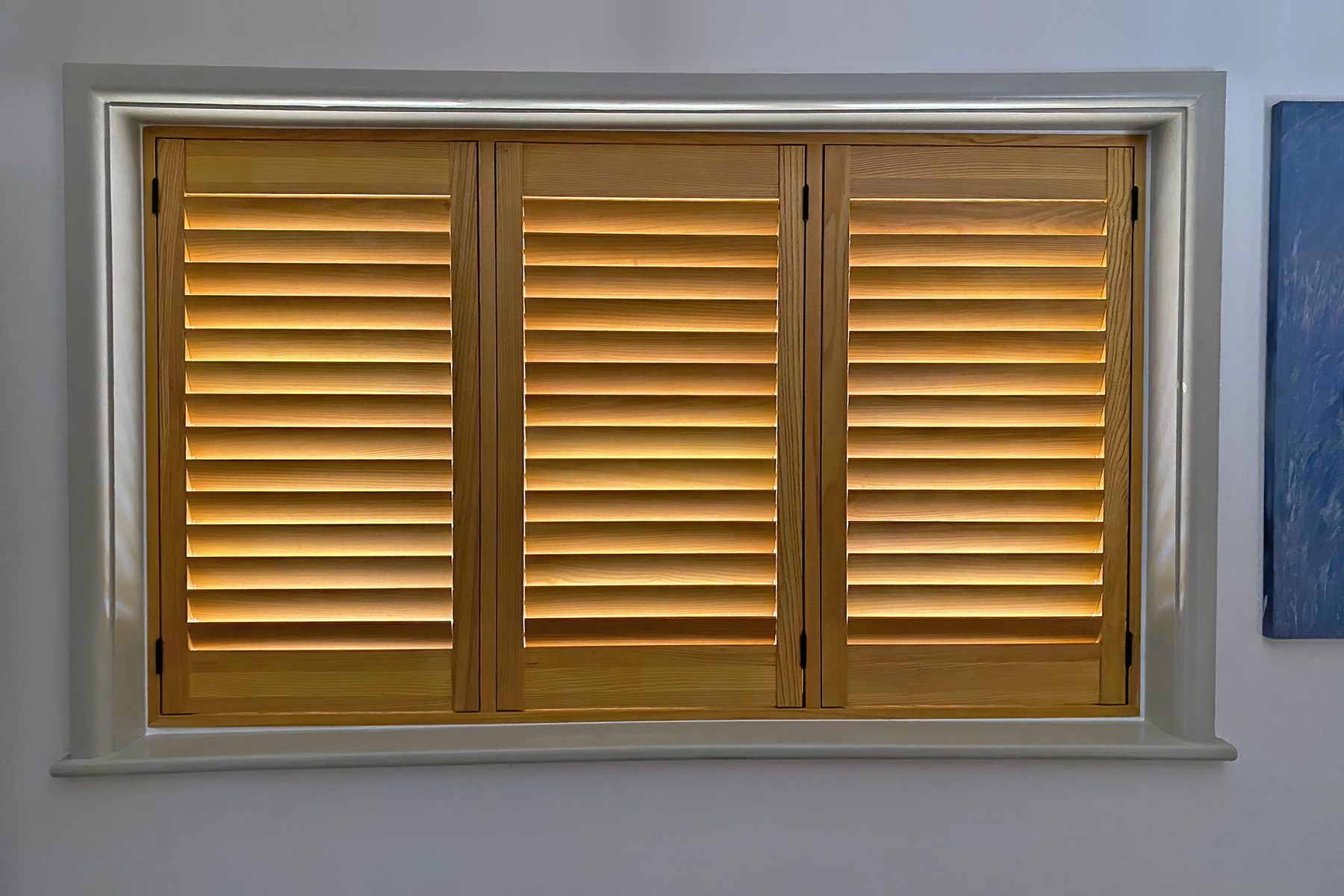
Battersea: Victorian terraces alongside a transformed riverside
Battersea — running roughly from the Thames at Chelsea Bridge south to Clapham Junction, and from Wandsworth Road west to Queenstown Road — is one of inner south London's most varied neighbourhoods. The residential character of SW11 divides broadly into two layers. The first, and older, is the network of Victorian and Edwardian streets that form the majority of the postcode: the terraced and semi-detached houses of Battersea Rise, the grid of streets around Northcote Road and Lavender Hill, the well-preserved workers' housing of the Shaftesbury Park Estate, and the larger villas in the streets between Battersea Park and the river. These properties share the defining characteristics of London Victorian housing stock: bay fronts, tall sash windows, deep window reveals, and external proportions that were built for the kind of fitted window treatment plantation shutters provide.
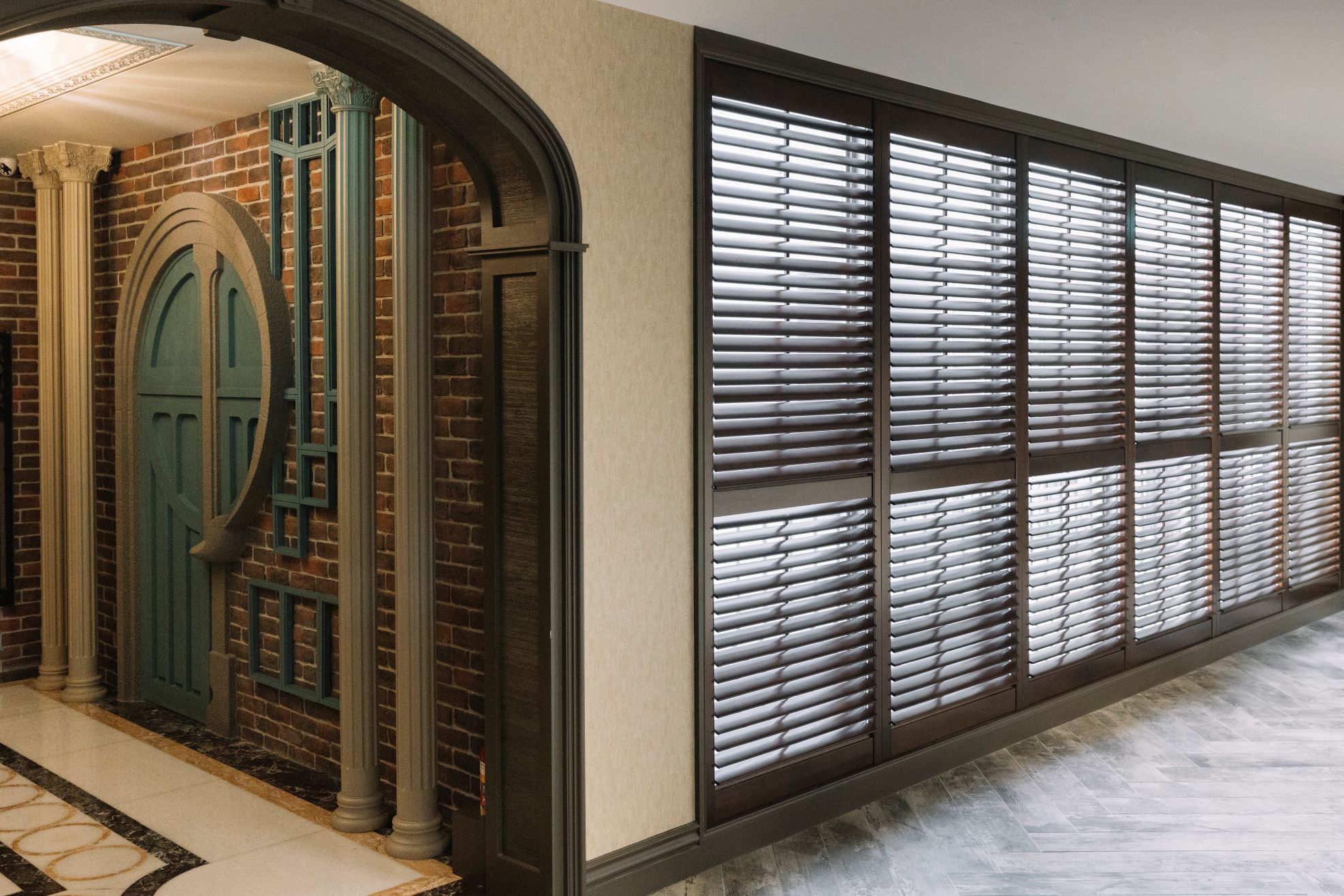
The second layer is the Power Station district — the transformation of the Battersea Power Station site and the surrounding Nine Elms corridor into a high-density residential, commercial, and cultural quarter. The apartments in this area — Circus West Village, Electric Boulevard, the Power Station building itself, and the towers along the Northern Line Extension route — are contemporary in character, with high-specification interiors, significant glazing areas, and in many units floor-to-ceiling windows or bi-fold balcony doors that call for an entirely different shutter specification from the period terrace two streets away. For context on how shutter installations compare across the wider borough, our guide to shutters for Wandsworth townhouses and conversions covers the surrounding SW18 and Wandsworth Town catchment.
Bay windows and sash windows in SW11's period stock
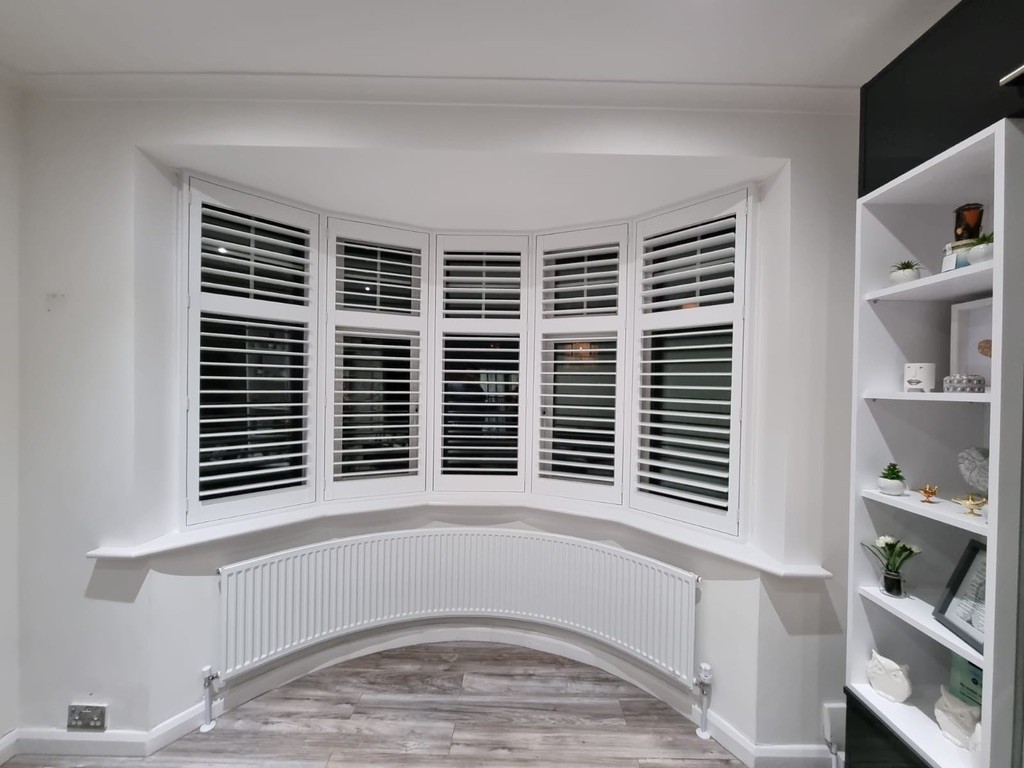
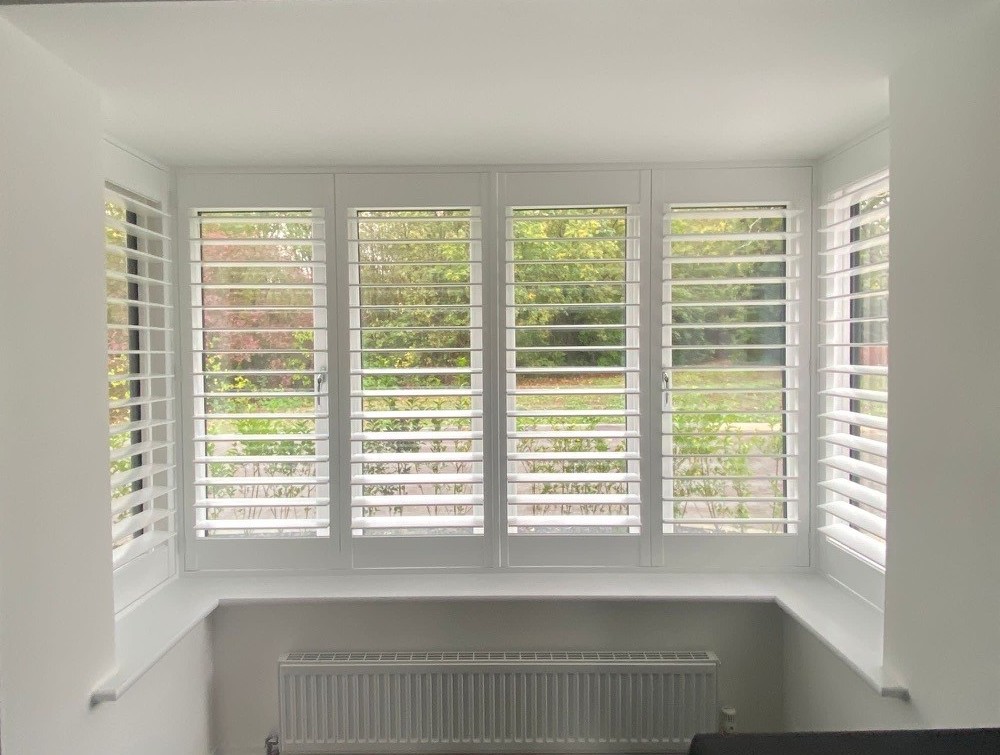
The ground-floor bay window is the most visible and architecturally significant window type on the typical Victorian terrace in SW11. In streets around Battersea Rise, Battersea High Street, and the grids east of Clapham Junction, the standard form is a two- or three-light bay projecting from the ground-floor front elevation, often rising from close to ground level to the underside of the bay roof — an opening of 1.8m to 2.4m wide and 1.2m to 1.6m tall. These bays are almost always angled, with the central light parallel to the main wall face and the two flanking lights set at 30–45 degrees to it.
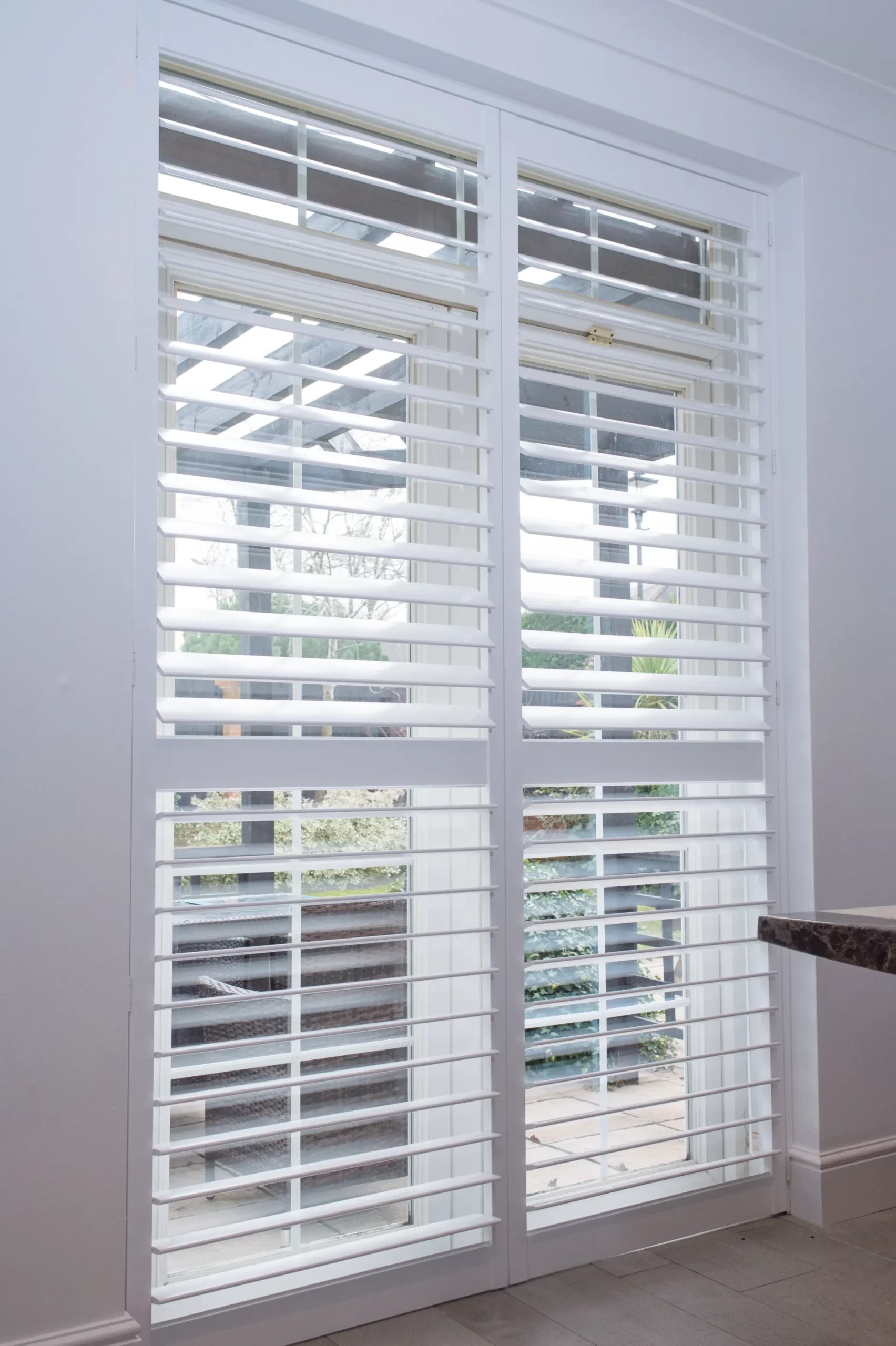
Off-the-shelf shutters built for rectangular openings cannot accommodate these angled corners without unsightly gaps. Plantation shutters built for angled bay fronts require on-site templating during the survey: each light is measured individually, the bay projection and corner angles are recorded precisely, and the frames are manufactured with mitred joints so adjacent panels meet cleanly. Above the bays, the characteristic upper-floor window is the double-hung sash: vertically proportioned, typically 1,200mm to 1,600mm tall, set into reveals of 100mm to 130mm depth. For a street-facing bedroom sash, shutters with independently-operated upper and lower sections are often the most practical choice: the lower section is kept closed to block pavement-level sightlines while the upper section is angled to admit daylight from above. For rear-facing sash windows with lower privacy pressure, louvred panels fitted in a single unbroken tier are simpler to operate and marginally less expensive. Our dedicated guide to Battersea shutters from the riverside to the high street covers the full range of SW11 window types and how different shutter configurations suit each one.
Power Station district apartments: tracked systems and full-height panels
The residential apartments of the Power Station development — from the converted turbine hall units to the new-build towers of Circus West and Nine Elms — have glazing areas that bear little resemblance to the Victorian terrace a few streets south. Ground-floor and podium-level units typically have floor-to-ceiling windows across the entire living wall; upper-floor units face the river or the development's public realm with panoramic views that owners want to enjoy without surrendering privacy once interior lights come on after dark.
The standard solution for large sliding or bi-fold door openings — which can run from 2.5m to 4.0m wide — is a tracked shutter system: individual panels running on an overhead aluminium rail, allowing the full opening to be covered without the structural constraints of a door-hung hinged panel. For standard-sized bedroom and bathroom windows within the same apartment, full-height hinged panels are the correct specification: quieter in operation, requiring less hardware, and proportioned appropriately to narrower openings. Our dedicated Battersea shutters page covers both the Power Station district and the wider SW11 catchment with details of common configurations installed in this area.
Material selection: composite, hardwood, and aluminium for Battersea homes
The material choice for a Battersea installation is largely driven by property type and room. For the Victorian and Edwardian terraces of SW11, the standard specification follows a familiar logic: Endura hardwood shutters for principal reception rooms and main bedrooms where the quality of the original interior — cornices, picture rails, painted skirting boards — makes composite feel inconsistent with the setting. Factory-painted Endura panels are available in any RAL or Farrow & Ball colour, allowing precise matching to existing joinery in a period interior. The Mimeo moisture-resistant range is the right specification for bathrooms, kitchens, and secondary rooms where daily humidity cycles would stress any unsealed timber product over time. Most whole-house SW11 terrace installations use both materials: hardwood where surface quality is most visible, composite throughout the functional spaces.
For the Power Station district apartments, proximity to the Thames is a factor. Riverside and high-rise environments carry higher ambient humidity than inland south London locations, and condensation on south-facing glass is more pronounced close to the water. Mimeo composite shutters are moisture-resistant throughout their construction — not just at the surface — and are guaranteed against warping and cracking in domestic conditions. For tracked systems spanning bi-fold or sliding door openings, Dura aluminium shutters provide the most structurally rigid panel at large spans: the aluminium core is dimensionally stable, unaffected by humidity or temperature cycling, and available in configurations that handle spans above 3.5m without deflection. Browse the full range of shutter products and materials to compare specifications before your survey.
Conservation areas in Battersea: what this means for shutters
Several streets within SW11 fall within designated conservation areas — the Shaftesbury Park Estate is a particularly well-preserved example, and there are further designations around Battersea Park and the riverside streets. Homeowners in these areas are sometimes cautious about window-related alterations, particularly where previous external works required consent. The important distinction is between external alterations — replacing windows, changing facade materials, adding outbuildings — which may require consent in a conservation area, and interior window fittings, which do not.
Plantation shutters are installed within the existing window reveals. They make no change to the external appearance of the building — the frame, glazing, and facade materials are left entirely untouched — and require no planning permission in any conservation area within SW11. For properties on the Shaftesbury Park Estate that carry a local listing, interior fittings that do not physically alter the listed fabric do not typically require listed building consent. Confirming this with your local authority before ordering is always advisable for listed buildings. Our article on whether shutters require planning permission in the UK covers the full position for conservation areas and listed building designations across London.
2026 prices, lead times, and next steps in SW11 and Nine Elms
Supply and fit pricing for Battersea follows the standard London per-m² structure. Mimeo composite shutters start from approximately £350–£400 per m² supply and fit. A typical ground-floor Victorian bay window totalling around 2.0m² is in the range of £850–£1,000 for composite, rising to £1,100–£1,350 for Endura hardwood in the same bay. A first-floor sash window of approximately 0.9m² costs typically £360–£450 for composite and £500–£620 for hardwood. A complete installation across a three-bedroom SW11 Victorian terrace — ground-floor bay, two front sash windows, and two rear windows — typically runs from approximately £4,000 to £6,500 depending on product selection and panel count.
For Power Station district apartments, tracked shutters carry a premium above the standard hinged rate. A living room bi-fold door opening of 3.0m² fitted with Dura aluminium tracked shutters is typically £1,600–£2,000. A two-bedroom apartment with standard windows throughout typically runs from £2,500 to £4,000 in composite. Lead times from confirmed order to installation are four to six weeks across all standard products. See finished installations from across south and south-west London in our completed project portfolio, and read about shutter fitting across the wider Wandsworth Borough in our Wandsworth local survey and fitting guide. To receive a room-by-room written quote with a confirmed lead time for your specific windows, book a free home survey in Battersea — the surveyor confirms pricing on the day with physical product samples and no obligation to proceed.