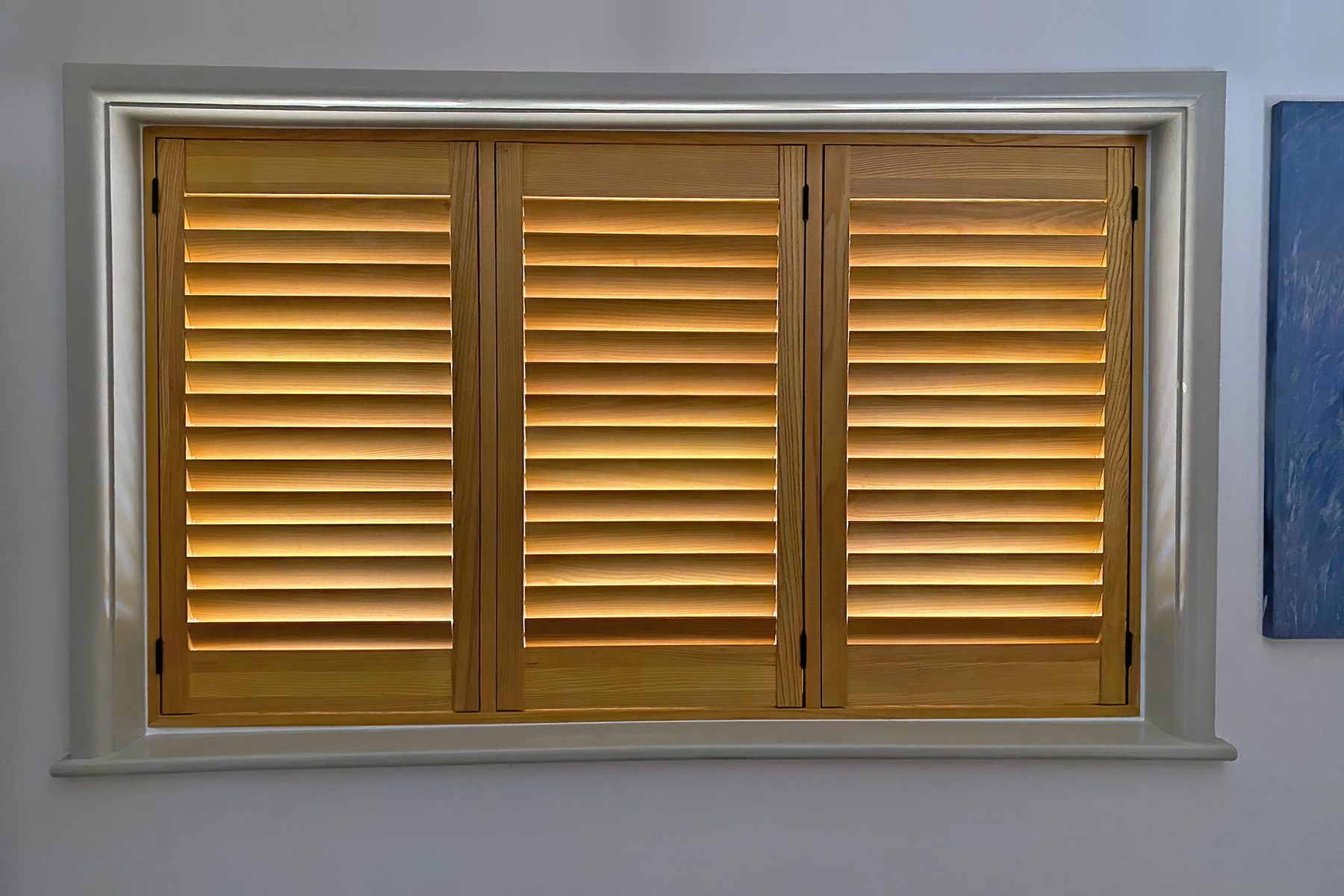
Why made-to-measure shutter lead times are different from off-the-shelf products
Plantation shutters are manufactured to the exact millimetre dimensions of your windows after a professional survey has confirmed every measurement. A standard louvred panel in a Victorian sash opening, a shaped section in a curved arch head, or a tracked panel system spanning a wide bifold door — each is cut, assembled, primed, painted, and quality-checked to fit a single recorded set of window dimensions. That process cannot be compressed below a certain minimum without compromising the precision that makes made-to-measure shutters fit correctly. A panel delivered to the wrong size cannot be adjusted on site; it must be remade. The lead times reputable UK shutter companies quote reflect this manufacturing reality.
Understanding the stages between survey and installation — and knowing what to confirm at each one — significantly reduces the risk of delay and ensures the timeline you are given is the one that holds. For a complete account of what the end-to-end service includes from the first survey visit to the fitter's handover, what the supply-and-fit service covers at every stage sets out the full process in detail. Exploring the full made-to-measure product range before your survey appointment helps you arrive with a clear specification preference, which shortens the time between survey completion and confirmed order.
The full ordering timeline: from survey to installation day
The lead-time clock starts the moment you confirm your order — not when you make your first enquiry, and not when your free survey takes place. The survey is a separate, no-obligation appointment. Once the surveyor provides your written quotation and you decide to proceed, you agree the specification (material, louvre width, colour) and pay the deposit. That is day zero of the manufacturing timeline.
From day zero, the process runs as follows. Within twenty-four to forty-eight hours, your measurement data and specification sheet are converted into a production order. The order enters the manufacturing queue, where panels are cut to size, assembled, primed, and painted through the production cycle relevant to your chosen material. Finished panels then go through a quality inspection — checking louvre fit, paint consistency, frame geometry, and panel operation — before being packed for delivery. A confirmed delivery and installation date is arranged with you directly. On the day itself, the fitter brings every panel, installs each frame and shutter to the recorded dimensions, adjusts louvre tension and hinge alignment, and confirms full operation before leaving. For a detailed account of what happens on the day, the full installation process from fitter arrival to handover covers every step in sequence.
The free home survey is the stage that determines everything downstream — dimensions, specification, and colour are all confirmed in your rooms against physical samples. What your free home survey involves and how to prepare for it explains what the surveyor records, what samples they bring, and what decisions are made at the visit. Arriving with clear priorities shortens the appointment and reduces the risk of post-order changes that can pause the production clock.
Composite shutters: the fastest made-to-measure option (four to six weeks)
Composite is the fastest made-to-measure shutter material in the UK. Moisture-stable composite panels that perform reliably in any room type — from a steamy en-suite to a south-facing living room — are produced from a polymer core moulded to the required louvre profile and finished in a factory-applied paint coating. The production cycle does not include the kiln-drying, seasoning, or multi-stage machining that timber requires, and dimensional tolerances are held more consistently through the manufacturing run. The result is a reliable four-to-six-week window from confirmed order to installation, with the shorter end typical for standard rectangular single-room orders and the longer end more common for whole-house projects spanning multiple window types and configurations.
Composite's shorter lead time makes it the most practical choice when there is a fixed deadline — a property sale, a rental changeover, a renovation with a confirmed completion date. For a full breakdown of supply-and-fit prices by material in 2026 — composite runs from approximately £380–£580 per window, all-inclusive of the free survey, manufacture, delivery, and professional installation — supply-and-fit prices across all shutter materials for 2026 provides per-window ranges with a clear explanation of what each figure includes.
Hardwood and Paulownia: why timber takes six to eight weeks
Hardwood plantation shutters require a longer production cycle because kiln-dried timber moves through several additional processing stages that composite bypasses. Hardwood billets must be kiln-dried to a precise moisture content before machining — a step that cannot be accelerated without risking the dimensional stability of the finished panel. Once dried, the timber is machined to louvre profiles, assembled using mortise-and-tenon or dowelled construction, primed, and painted through a multi-coat system with defined curing time between each coat. Finished panels then pass through the same quality inspection as composite before packing and delivery scheduling. The total manufacturing cycle is six to eight weeks from confirmed order in standard configurations.
Endura hardwood shutters designed for period and high-specification interiors are available across the full colour range. Paulownia shutters — including the Strato range — share the same six-to-eight-week timeline. The practical implication is that a hardwood order confirmed at the start of the month will typically install in the seventh or eighth week. For homeowners coordinating around a renovation schedule, house move, or fixed decoration programme, this window must be factored into the programme before other trade bookings are made.
The most effective way to keep hardwood lead times at the shorter end of the range is to submit clear, complete survey data without triggering post-survey queries. If a dimension recorded at the visit requires clarification before production can begin — an ambiguous reveal depth, an unusual bay angle, a shaped opening without a template — the order pauses while the measurement is re-confirmed, typically adding one to two weeks. For a precise account of how professional window measurement eliminates the most common sources of dimension error, how accurate window measurement works and why it matters for made-to-measure shutters explains the techniques your surveyor uses and the checks built into the process.
Aluminium shutters: standard configurations and tracked systems
Aluminium shutters run four to six weeks from confirmed order for standard window configurations — broadly comparable to composite. The powder-coat finishing process differs from painted polymer or timber: it uses an electrostatic application cured at high temperature, which bonds the colour to the metal surface at a molecular level. Standard louvred aluminium panels in a single powder-coat colour and conventional frame specification move through production consistently within the four-to-six-week range.
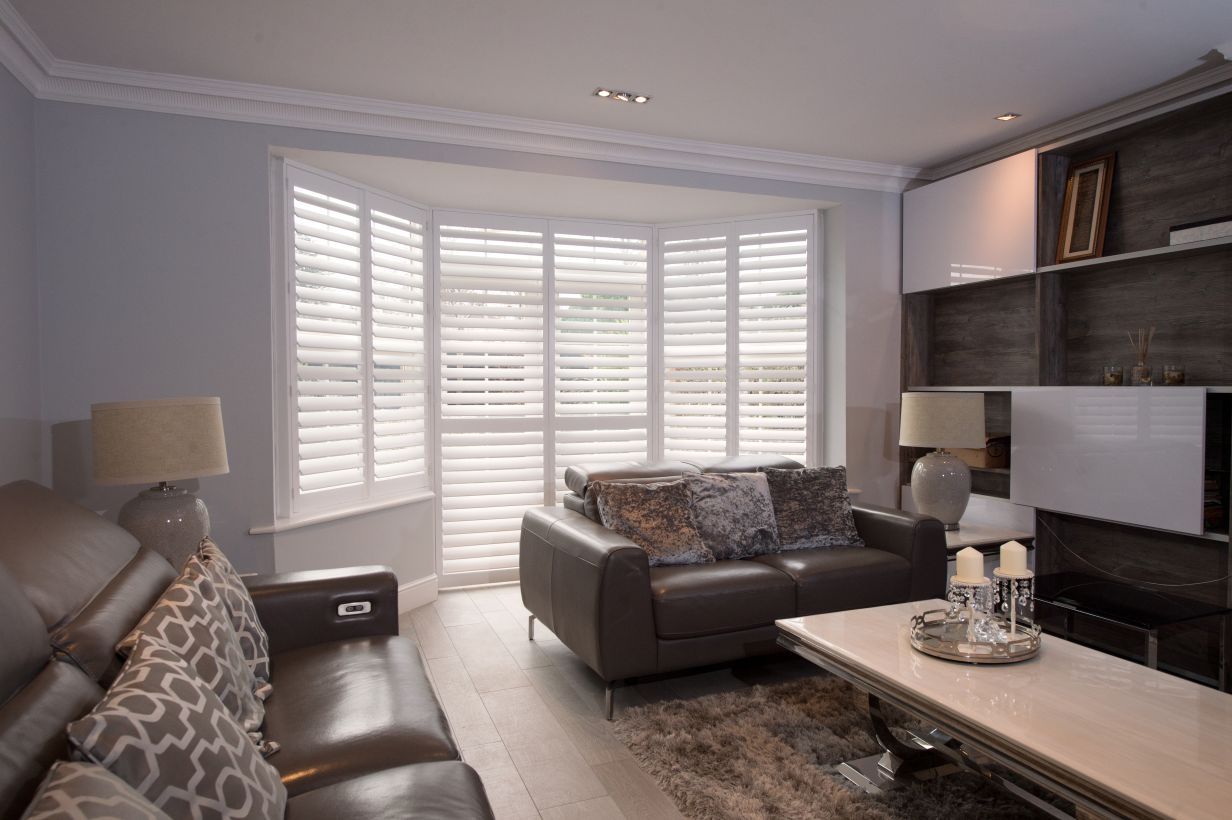
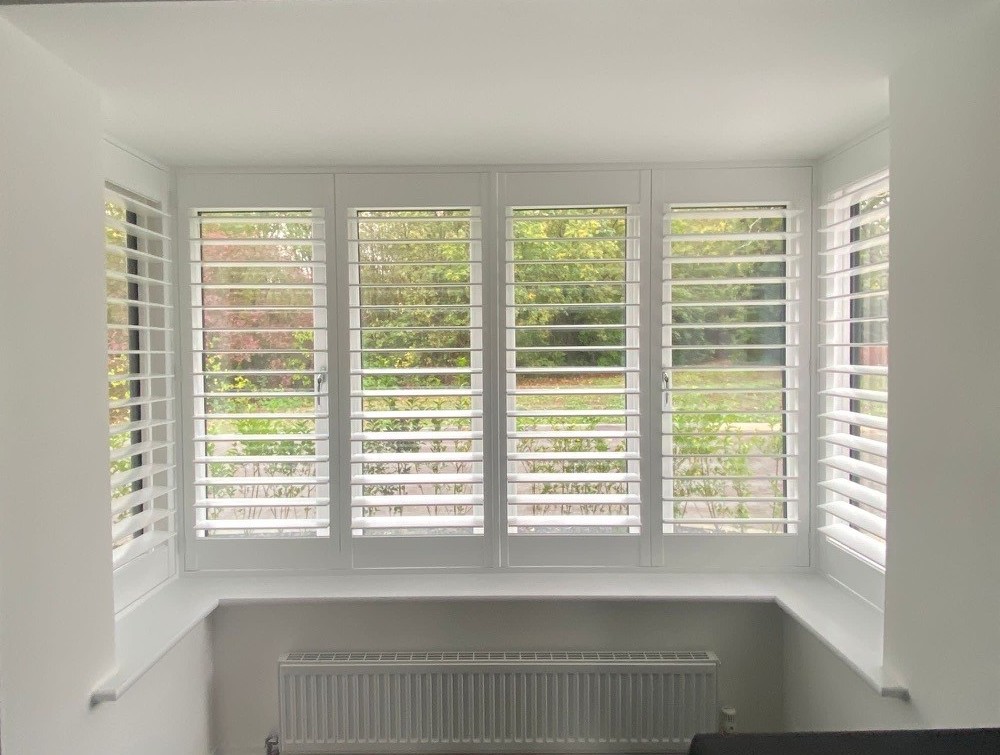
The timeline extends for tracked aluminium systems fitted across wide openings — bifold doors, patio doors, floor-to-ceiling glazed screens — where each panel must be produced to precise dimensions and the tracking hardware must be configured to a specific head reveal. Complex tracked orders can run to six to eight weeks depending on span, panel count, and track specification. For anyone planning a tracked installation across a large door opening, the eight-week maximum is the safer planning assumption. For context on how shutters are specified and fitted across bay windows and wide configurations — including the dimensional considerations that affect production scheduling — how shutters are fitted across bay and wide window openings covers the key specification decisions.
Planning your installation around realistic lead times
The single most reliable approach is to book your free survey at the earliest opportunity and confirm the order as soon as the quotation is agreed. Many homeowners delay the survey while waiting for a decoration to be completed or a room to be cleared — but the survey can take place with a note to hold manufacture until a specified ready date, and early measurement data is still valuable for planning. The six-to-eight-week hardwood window means an order confirmed at the start of September will typically install in late October — a schedule that catches many homeowners short if they have assumed a faster turnaround.
If your timeline is genuinely constrained, composite is the material to specify. The four-to-six-week lead time provides the most flexibility, and composite performs consistently across every room type, so it can be specified throughout the property without compromise. For rooms where a non-made-to-measure option is genuinely appropriate — a rental property, or a standard window where speed is the priority over a custom fit — Luma easy-fit shutters for faster, renter-friendly installations is worth reviewing as an alternative to the full made-to-measure timeline.
For sequencing with other trades, the practical rule is: shutters are fitted after plastering and painting are complete, and before any final floor sanding or polishing that would require the fitter's access to be restricted. The fitter needs clear access to each window reveal, and fitting leaves minor fixing points that most homeowners cover with filler and a paint touch-up with the room colour. Shutters do not need to precede carpets or hard flooring, but coordinating the fitting date before final floor treatments is common on larger renovation projects. The ten questions to ask before choosing a shutter company includes specific guidance on realistic lead-time commitments and what to ask for in writing before placing an order.
Common causes of delay — and how to avoid them
The most frequent cause of lead-time extension is post-survey specification queries rather than the manufacturing process itself. If a dimension recorded at the survey visit requires clarification before production can begin — an ambiguous reveal depth, an unusual bay angle that was estimated rather than directly measured, a shaped opening where a template was not taken — the order pauses while the discrepancy is resolved. A thorough survey that records all required data at a single visit eliminates this risk. Asking your company specifically how they handle non-standard openings before booking the survey is a reliable indicator of how comprehensively they manage complex windows.
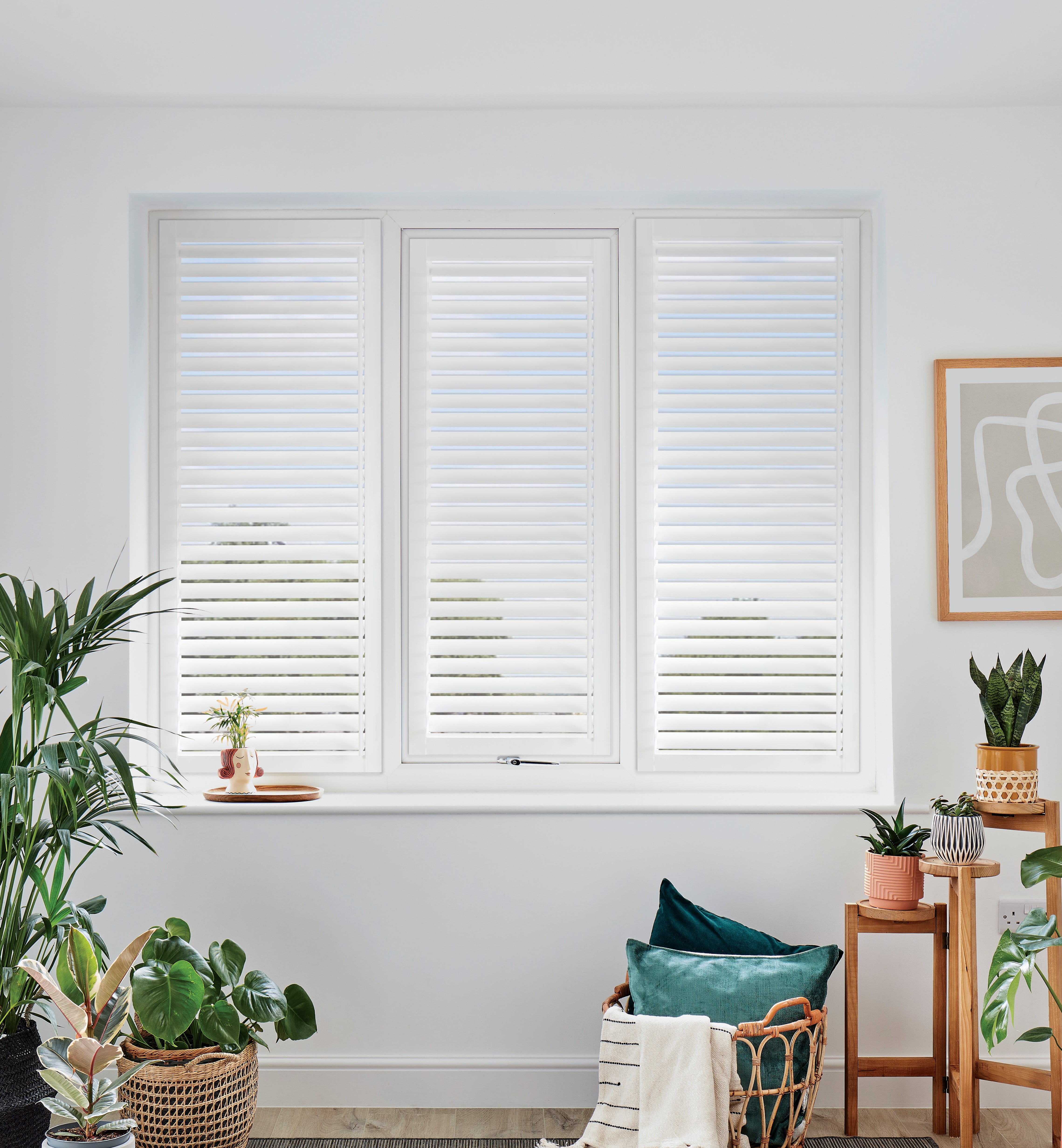
A second common cause is post-order specification changes. Changing a colour after the order has entered production, swapping a louvre size, or adding a window not included in the original order all introduce reprocessing time that extends the confirmed timeline. Treat the specification agreed at the survey as final before confirming the order. Reviewing louvred panels running the full height of your window against other configurations — tier-on-tier, café-style, tracked — during the survey visit rather than after the order is placed helps confirm the right choice before any commitment is made.
Finally, delivery and access issues on installation day — a fitter unable to park near the property, rooms not cleared, or a building with restricted entry at the required time — do not delay manufacture but do require rescheduling the fitting appointment. Depending on fitter availability, this can add days or weeks to the practical timeline. Confirming access details with your installation team in advance of the fitting booking avoids this entirely. To establish the full timeline for your specific windows, book a free home survey with Shutters Factory — your surveyor confirms your specification, records every dimension to the millimetre, and agrees a realistic supply-and-fit schedule at the end of the appointment with no obligation to proceed.