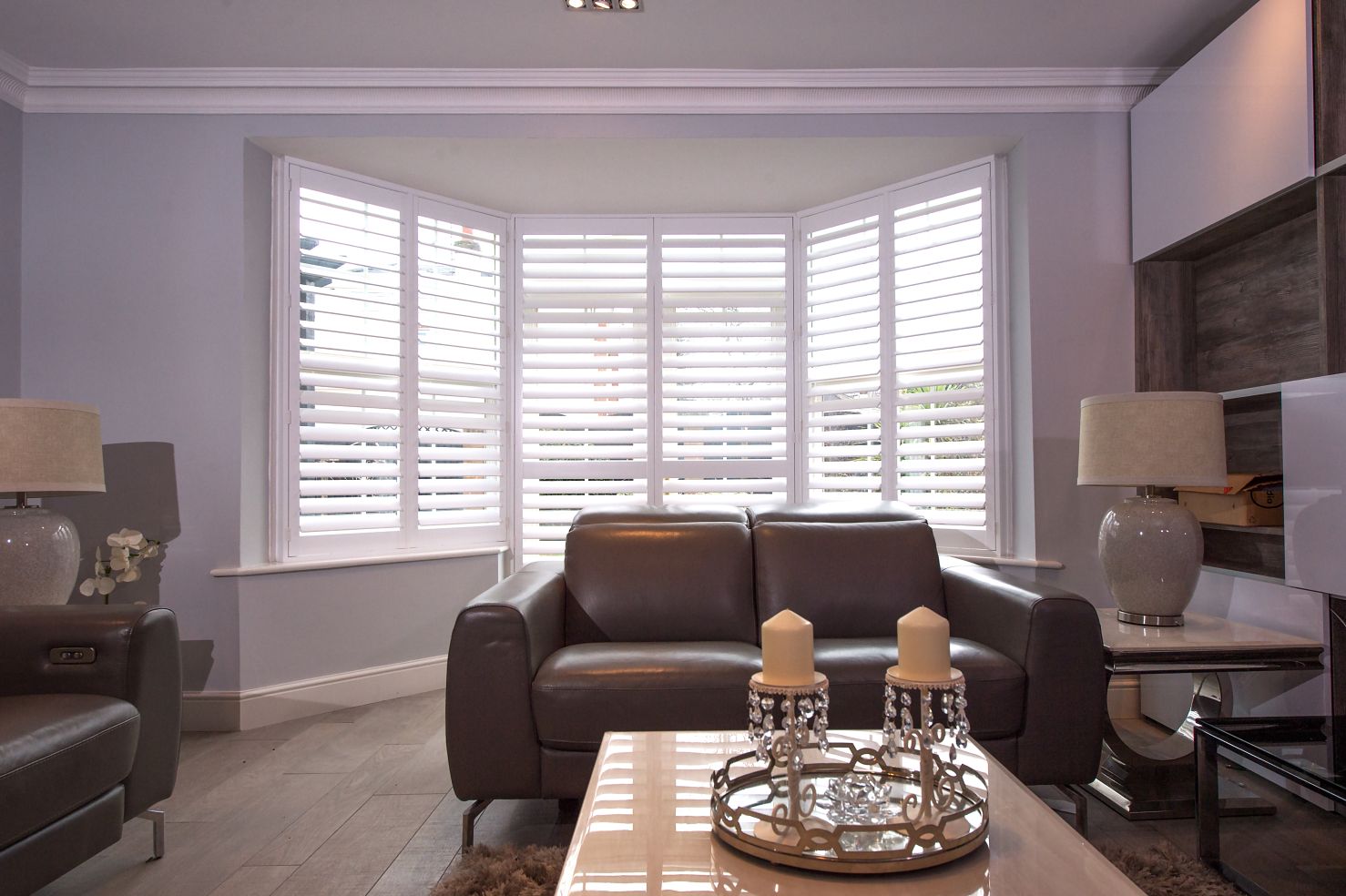
Why bay windows are a special case
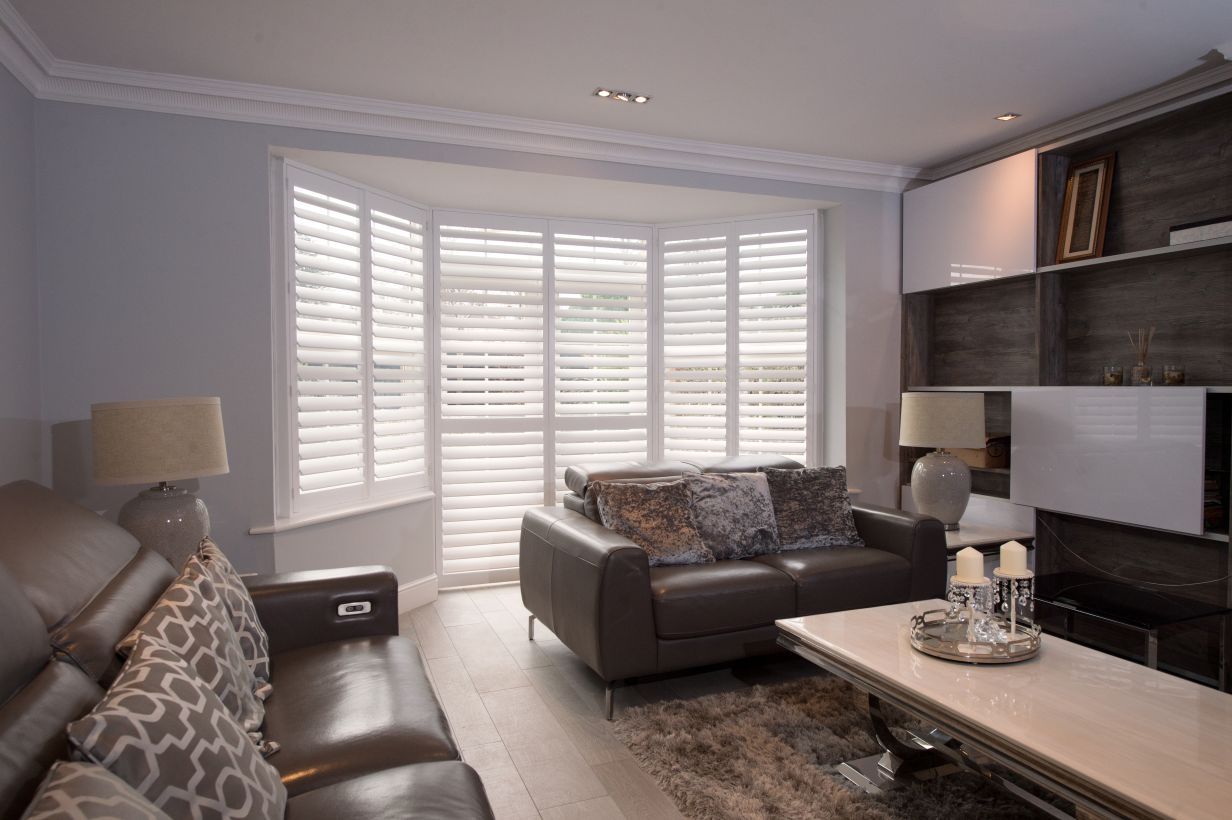
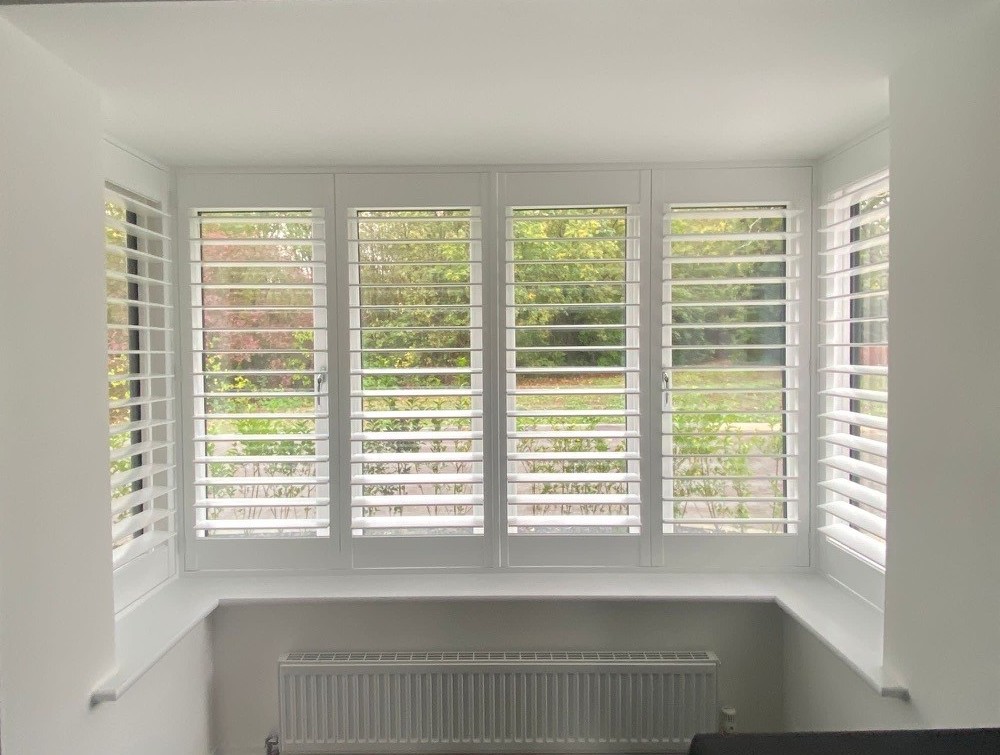
A bay window is not one window — it is three (or more) windows joined at angles. That changes everything: each panel has to follow the angle of the wall, the joints between sections need to look intentional, and the hardware has to cope with frames that meet at 90, 135, or even custom angles.
Off-the-shelf shutters almost never work in a bay. They are built for square openings and leave ugly gaps at the corners. Made-to-measure bay window shutters are templated on site so each panel is sized for its exact opening and angle.
The three styles that suit UK bays
Most UK bay windows fall into one of three layouts: square bay (90°), splay bay (135°), or box bay. The right shutter style depends on which one you have.
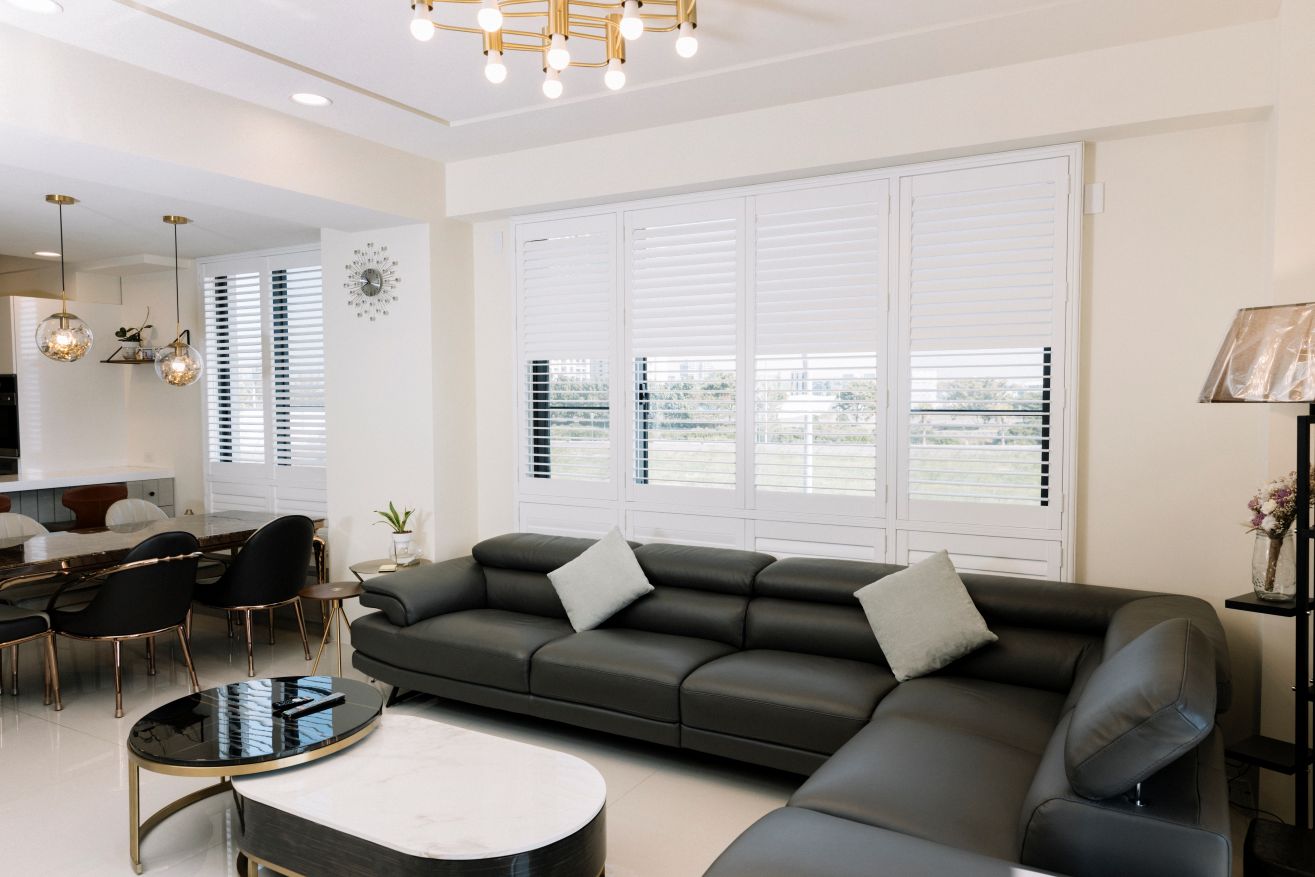
- Full height — one tall panel per window. Best for living rooms and front-of-house bays where you want a clean, traditional look. See full height shutters.
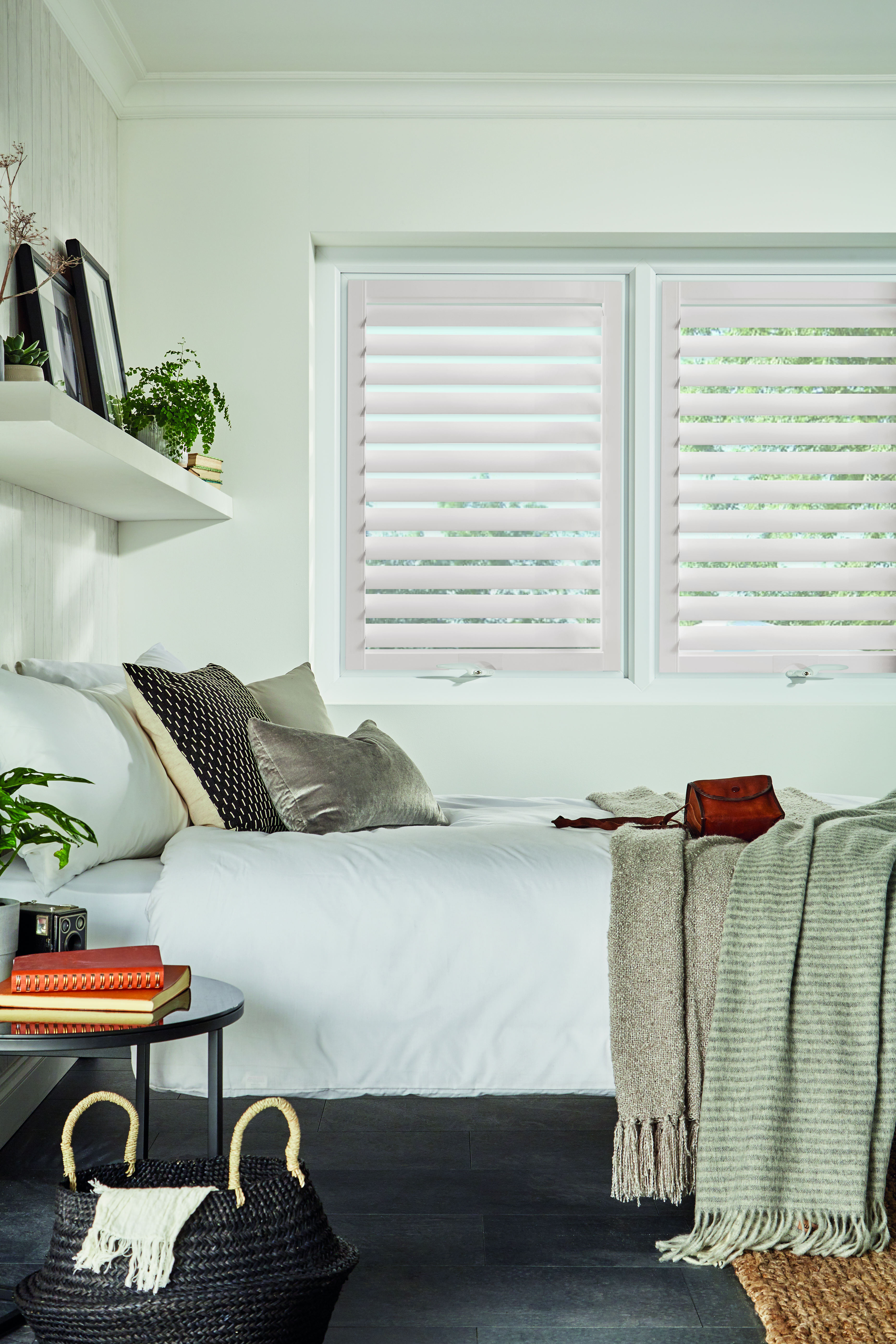
- Tier-on-tier — separate top and bottom panels that open independently. Useful in bedrooms where you want privacy below and light above. See tier-on-tier shutters.
- Café style — covers only the bottom half. Suits ground-floor bays facing the street where privacy matters but you still want light. See café style shutters.
Mitre joints vs butt joints — what actually matters
Where two shutter frames meet at an angle, the joint can be cut two ways. A mitre joint cuts both frames at half the angle so they meet in a clean V — it looks neat and hides the join. A butt joint runs one frame straight up to the other, leaving a visible step.
Mitre joints cost a little more because they take longer to template and manufacture, but on a bay window the difference is huge — a mitred bay looks built-in, a butt-jointed bay looks like three separate shutters squeezed together.
How much do bay window shutters cost in the UK?
Bay windows take more work than a flat window of the same total width, so prices sit slightly above the standard range.
For a typical 3-window splay bay (around 2.4 m wide x 1.4 m tall, roughly 3.4 m²), expect:
- Composite (waterproof): from £1,300 supply and fit
- Painted hardwood: £1,700–£2,200 supply and fit
- Aluminium: from £2,400 supply and fit
- Add roughly 10–15% for box bays or unusual angles
Common mistakes to avoid
Bay windows are where DIY measurements go wrong most often. The three problems we see again and again on remedial jobs:
- Wrong angle reading. Most bays are not exactly 90° or 135° — a half-degree off shows as a visible gap. A proper survey uses a digital angle finder, not a guess.
- Frames that fight the radiator. Bay windows often have a radiator below. The frame depth has to clear it, or the panels jam when you try to fold them.
- Cheap hinges. Bay panels carry more weight per metre than flat windows. Budget hardware develops a rattle within a year. Stick to ranges with stainless or solid brass hinges.
Material choice for a bay
For most UK bays, painted hardwood (Endura) is the default — it takes paint beautifully and matches period skirting and architrave. In bays that get condensation (kitchens, bathrooms, single-glazed bays), composite (Mimeo) is the safer call because it does not warp.
For very wide bays where panels exceed 900 mm, aluminium (Dura) handles the span without sagging — the same applies to bays in coastal or high-humidity locations.
How to get a fair quote
A good bay window quote should always include: an on-site survey with angle measurements, a clear note on whether joints are mitred or butted, the material grade and warranty, all hardware (frames, hinges, magnets), delivery, and installation — not just the panels.
If a quote is dramatically cheaper than others, check whether they are quoting flat-window prices and assuming you will accept butt joints. Ask the question explicitly before you sign.
Want a transparent number for your specific bay? Book a free survey and you will get a fixed, all-in price within 48 hours.