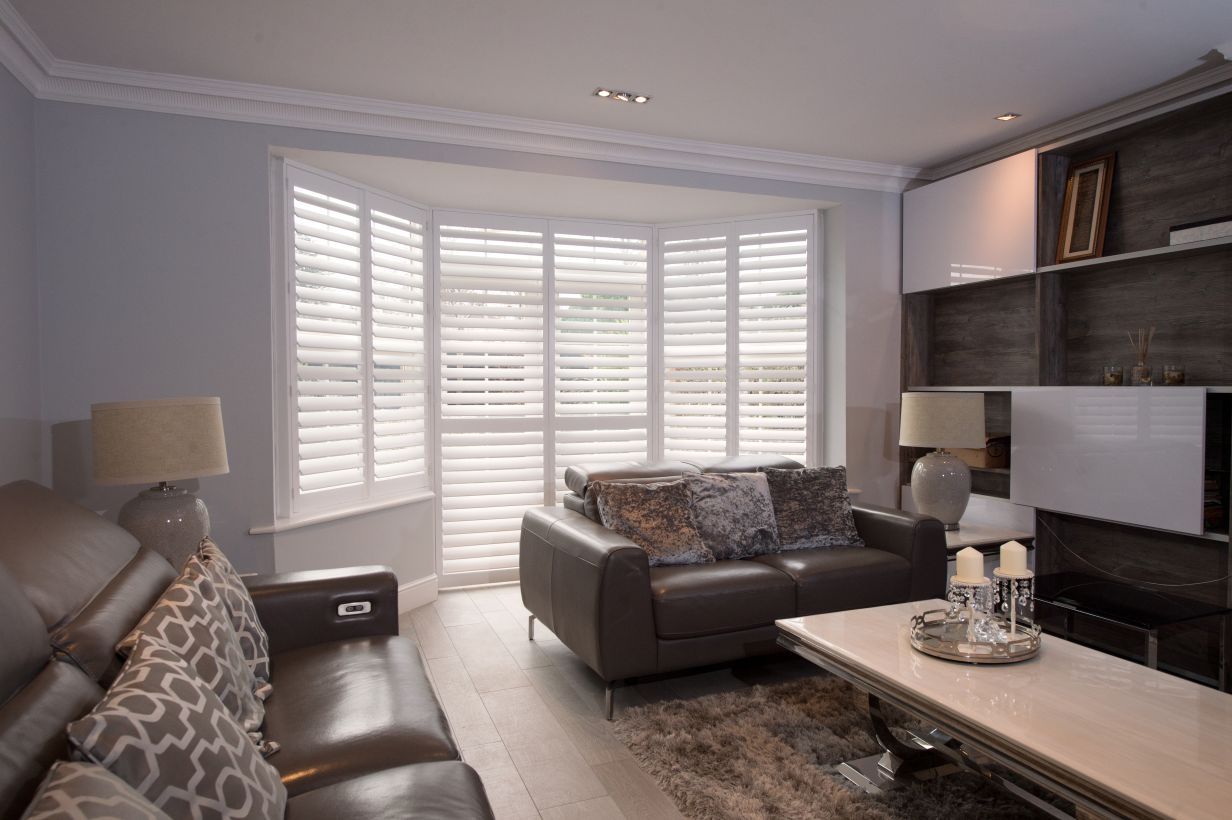
The compromise to get right
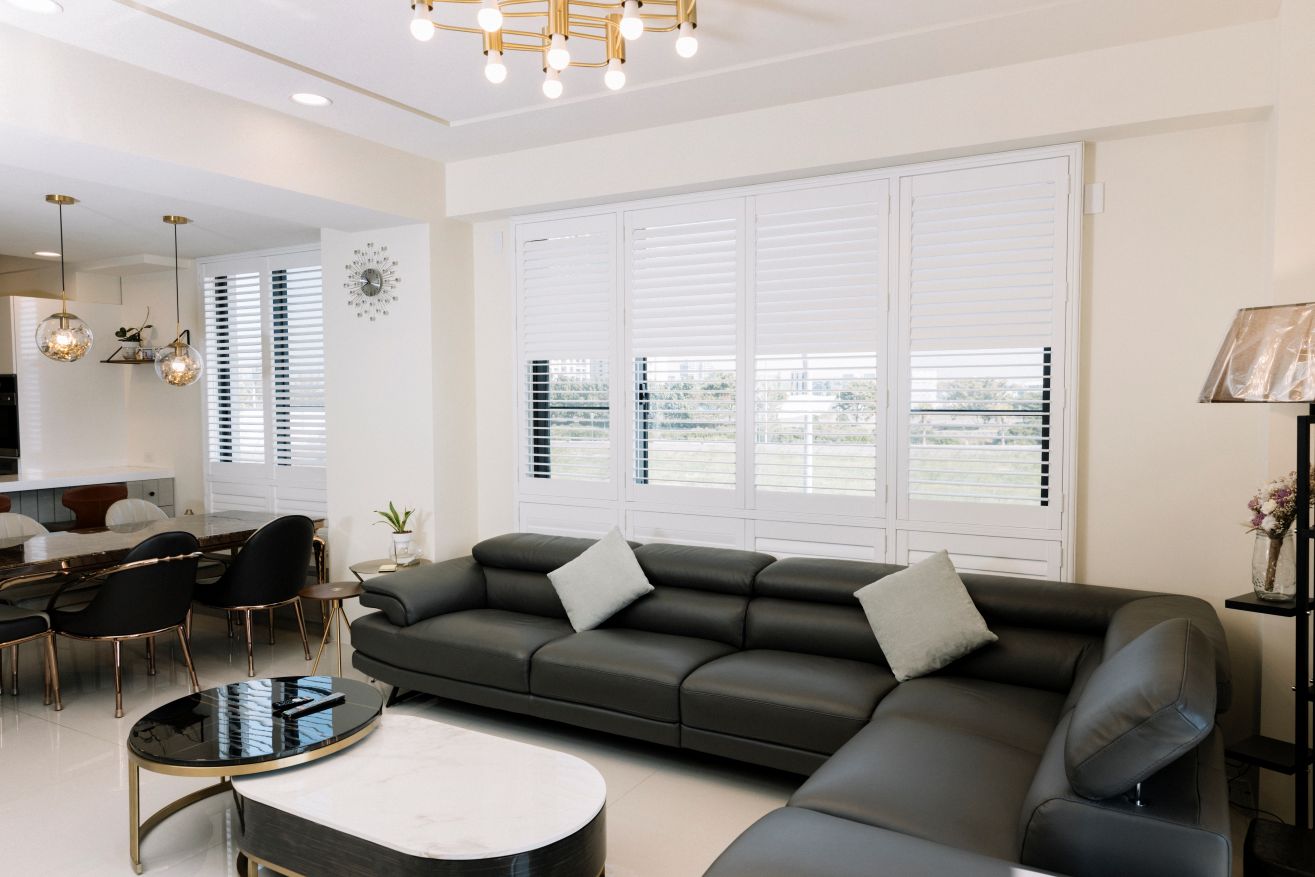
Living rooms ask shutters to do two opposing jobs: keep the room private and bright at the same time. The settings that maximise privacy block the view; the settings that maximise the view eliminate privacy. Good shutters give you the in-between settings cleanly.
See living room shutters for examples across UK home styles.
Louvre size matters more than you think
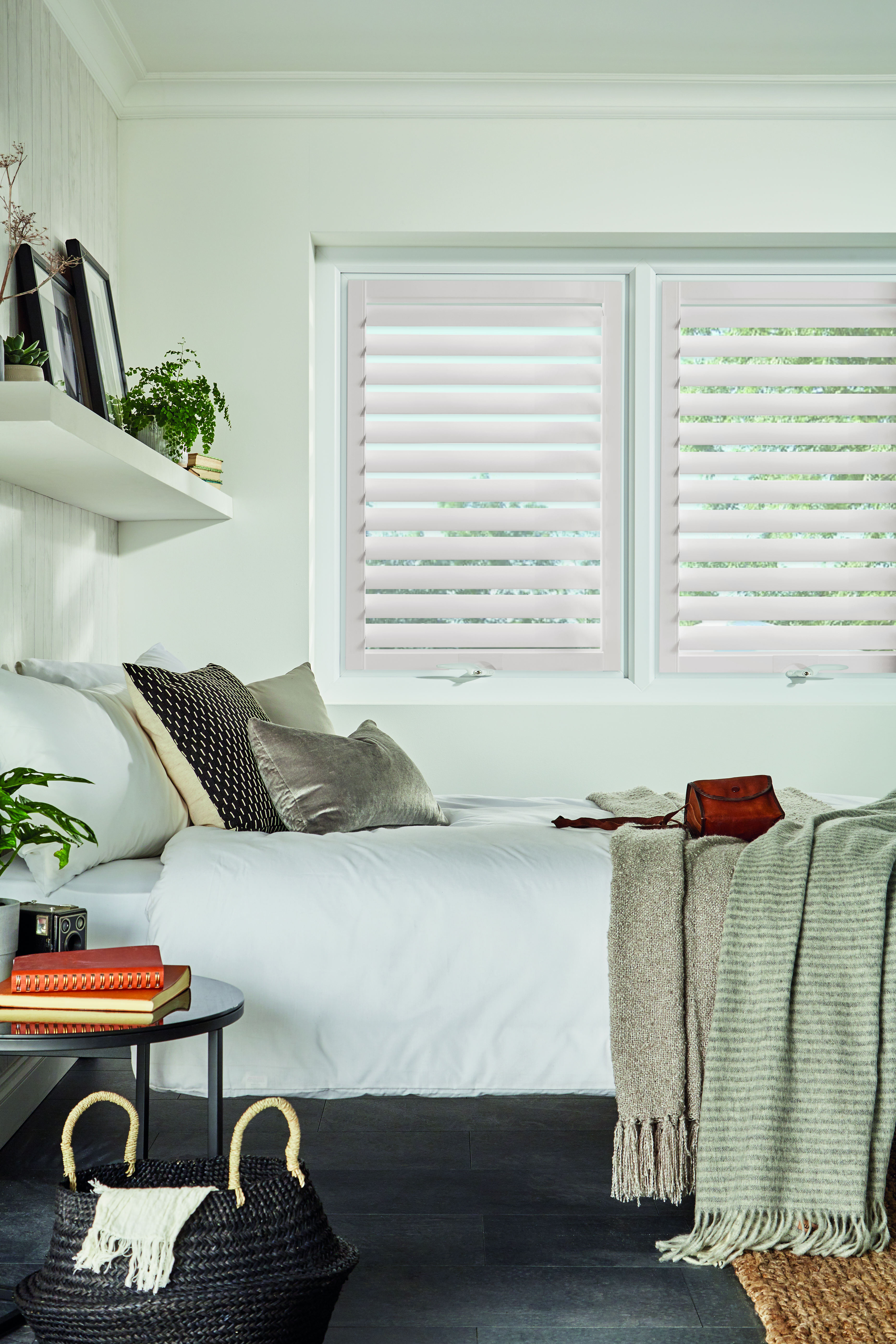
Louvre width affects the view more than any other choice you make:
- 63 mm louvres: traditional, small windows, period homes. Tighter view when open.
- 76 mm louvres: the UK standard for living rooms — balances view and tradition.
- 89 mm louvres: wider view, more modern look. Good for newer homes.
- 114 mm louvres: the biggest. Maximum view, but can feel out of place in period rooms.
Hidden tilt rods change the look
A traditional shutter has a visible centre tilt rod running down the middle of the panel. A hidden tilt rod uses a magnetic mechanism inside the panel — same function, no visible bar.
For modern living rooms, hidden tilt rods give a cleaner, more architectural look. For period rooms, the traditional centre rod often suits better.
Bay windows and feature glazing
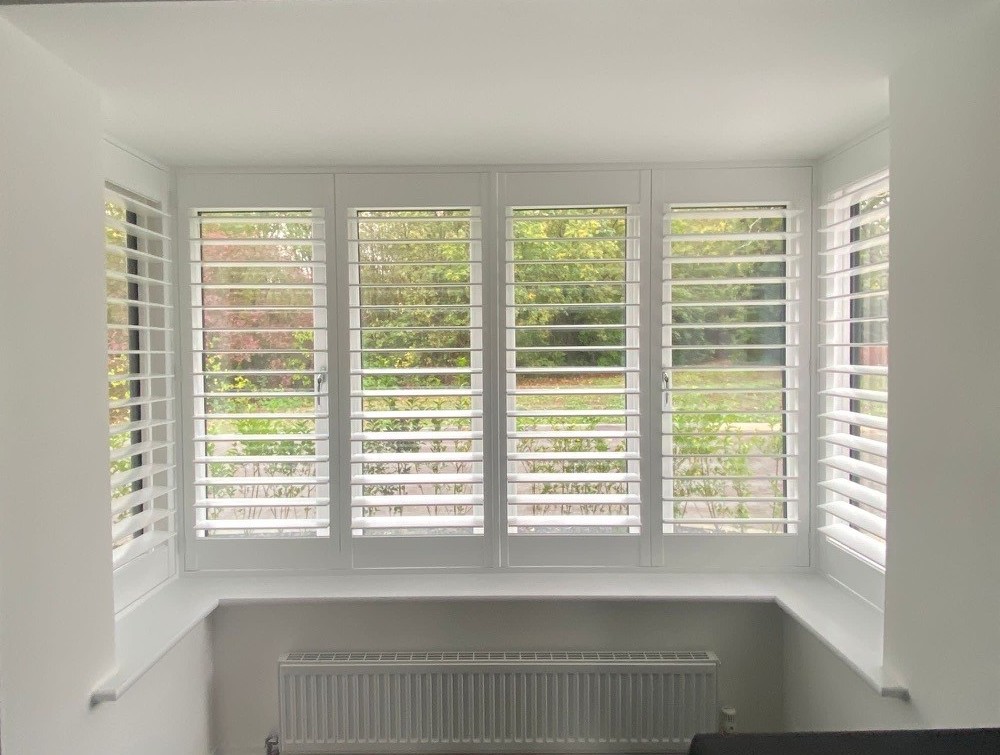
Living-room bay windows are the most common feature install in UK homes. Mitred frames and full-height panels give the cleanest look — see our bay window buyer’s guide for the full breakdown.
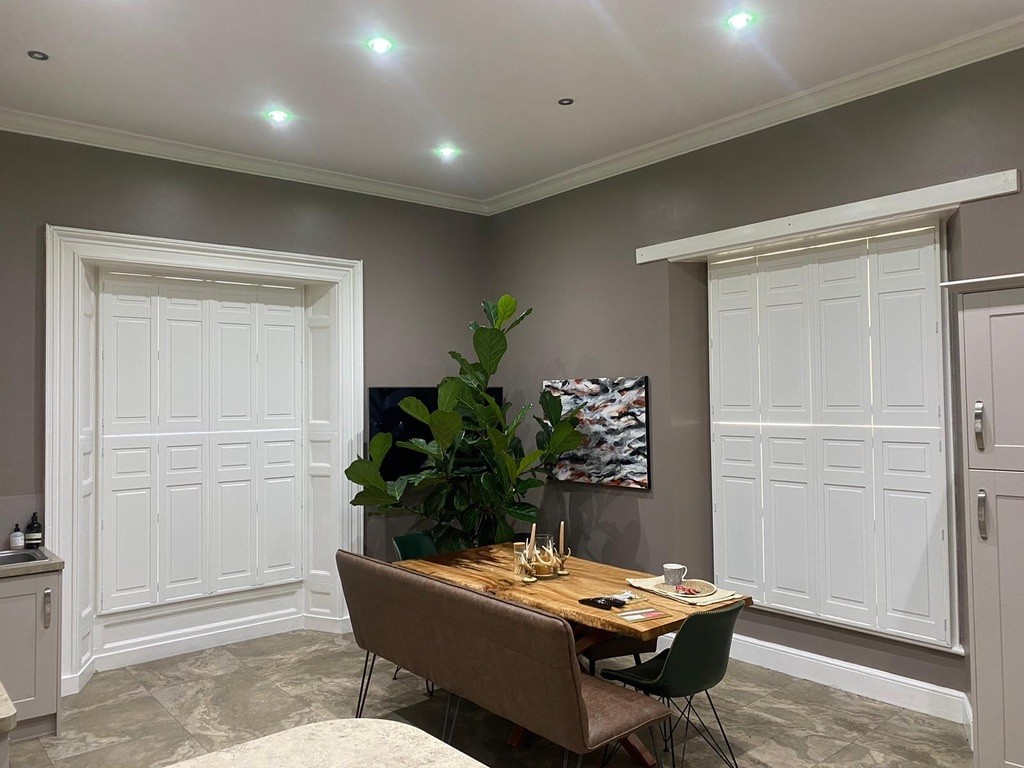
For corner glazing or wraparound windows, tracked shutters can fold open completely to one side — see tracked shutters.
Living rooms that work especially well with shutters
Some living-room layouts get more out of shutters than others:
- Front-of-house Victorian/Edwardian terraces with tall sash windows
- Open-plan kitchen-living rooms with bi-fold doors
- Sunny west-facing rooms with afternoon glare
- Street-facing ground floors needing privacy without curtains