Why kitchens need a different approach
Kitchens combine three challenges: heat from cooking, steam from the kettle and hob, and airborne grease that settles on every surface within reach of the cooker. Materials that look fine in a living room can struggle in a kitchen over years.
Kitchen shutters are usually composite for this reason — they wipe clean and do not absorb anything.
Material by window position
The right material depends on how close the window is to the busy parts of the kitchen.
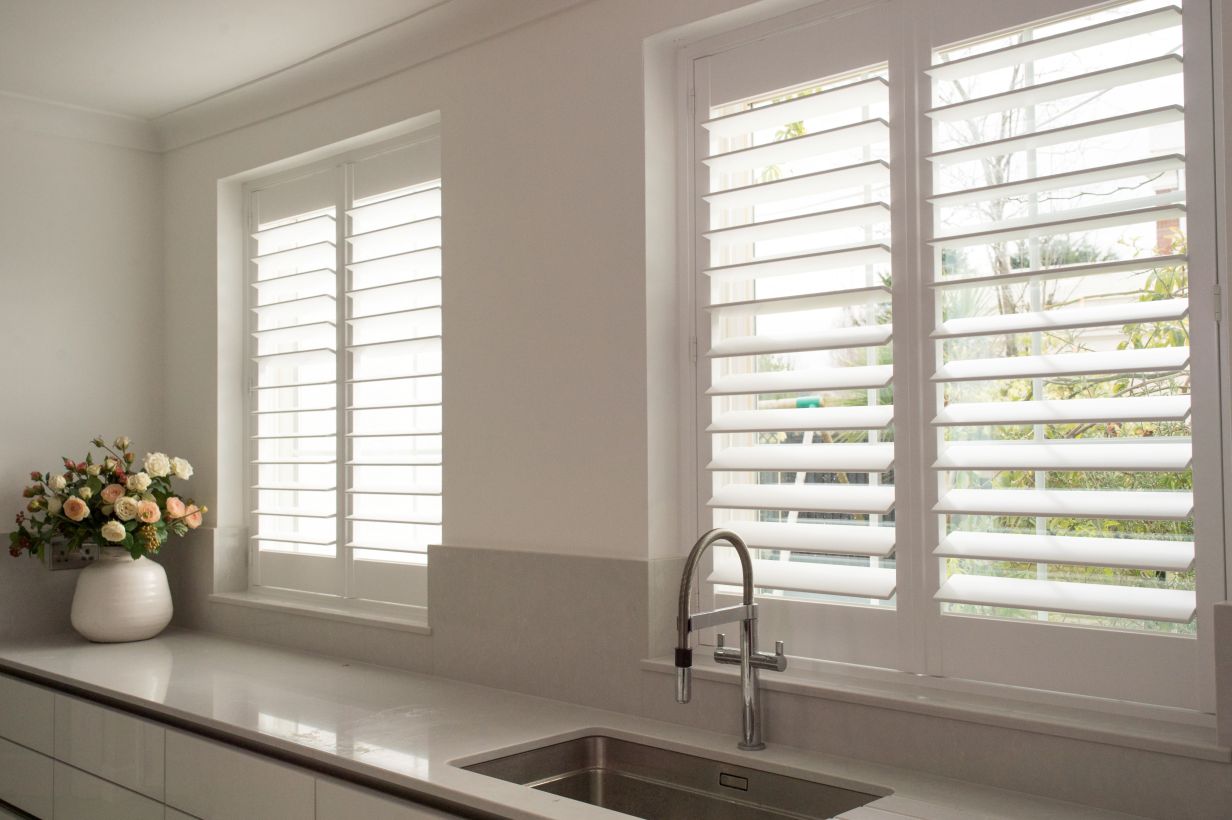
- Window above the sink: composite. Direct splashes are routine here.
- Window behind the hob: composite or aluminium. Heat and grease are constant.
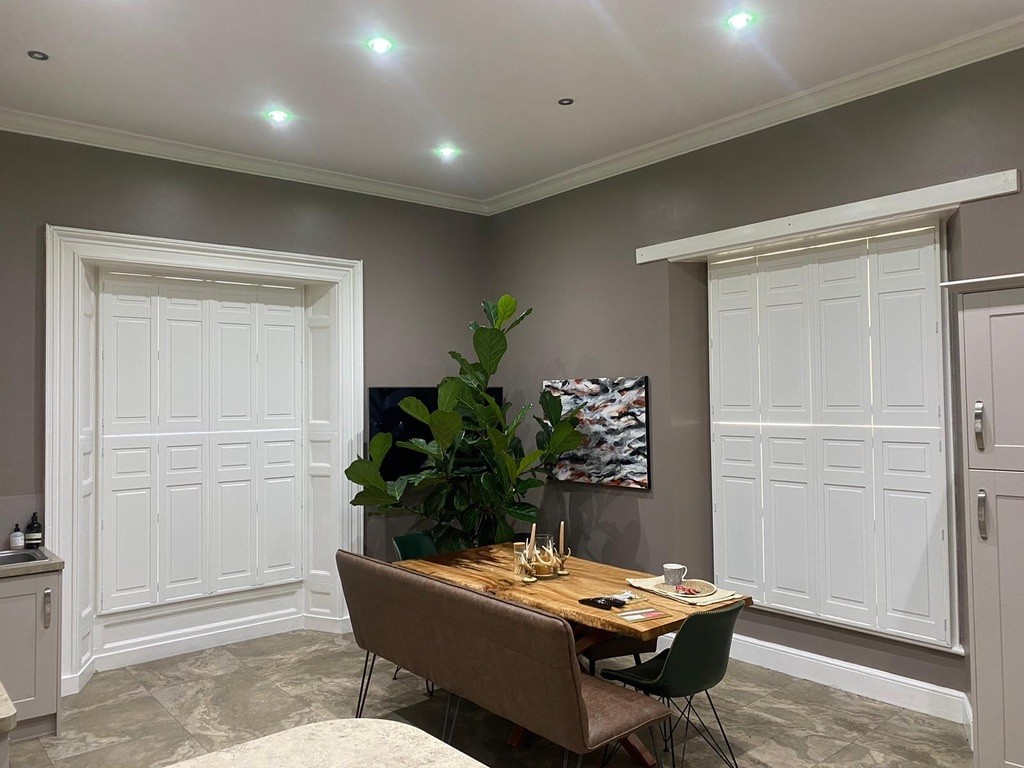
- Window across the room (breakfast nook, dining area): any material works — wood is fine if you prefer the look.
- Bi-fold doors onto the garden: aluminium for span and durability.
Style options for kitchen windows
Café style works well above sinks where you want to see out but block direct sun. Full-height is the default for larger feature windows. Tracked shutters handle bi-fold doors that fold open in summer.
See café style shutters, full-height shutters, and tracked shutters.
Cleaning and care
Composite shutters in a kitchen need a wipe with a damp cloth roughly once a week — more often near the hob. Mild washing-up liquid in warm water handles the airborne grease that ordinary dust cleaning leaves behind.
Avoid degreasers with solvents. They are unnecessary on composite and aluminium, and they will strip the paint off hardwood over time.
Common kitchen shutter mistakes
Three things we see going wrong in kitchens:
- Wood fitted directly behind a hob — works for a year, swells in year two.
- Frames without proper clearance from a steam-heavy kettle station.
- Skipping the deep clean for months — grease builds up and louvres start to feel sticky.