Why who you buy from matters as much as what you buy
The plantation shutter market in the UK has grown considerably since 2015. Dozens of suppliers now operate nationally, ranging from direct manufacturers with their own production facilities to resellers sourcing finished goods from third-party factories — often overseas — with limited visibility into how the product was made. The gap in quality between the best and the rest is wide, and it is rarely apparent from a website photograph or a showroom visit. The materials used in production, the accuracy of the site measurement, the honesty of the quoted price, and the willingness to respond if something goes wrong after fitting are the factors that separate a reliable company from one that looks credible at the quotation stage but disappoints in practice.
Asking structured questions before signing gives you the clearest picture of what you are buying and who stands behind it. The ten questions below cover the areas most likely to predict whether your shutter installation will be straightforward and satisfying — or frustrating and costly to resolve. For broader context on why production model matters for the shutters you actually receive, the article on how UK manufacturing origin affects shutter quality explains the key differences between a direct manufacturer and a product reseller.
Questions 1–3: Manufacturing credentials and materials
Question 1: Do you manufacture your own shutters? This is the single most revealing question you can ask. A company that manufactures its own shutters controls every stage of production: the timber species or polymer blend used, the louvre tolerances, the paint or powder-coat process, and the frame geometry. When a post-installation problem occurs — a louvre that sticks, a panel that does not close flush — a manufacturer can diagnose and resolve it with direct knowledge of how the product was built. A reseller must raise the issue indirectly with a third-party factory, which slows resolution and reduces accountability. UK-manufactured or directly controlled production is the strongest single indicator of consistent quality and fast issue resolution.
Question 2: What materials do you offer, and which is right for my home? A reputable company recommends the correct material for each room without upselling. Composite shutters do not absorb moisture and are the appropriate specification for bathrooms, kitchens, and any room with sustained humidity — composite shutters built for moisture-prone rooms handle the conditions that cause hardwood to swell or cup over time. Hardwood is the better match for living rooms and period reception rooms where the warmth of painted timber matters to the interior. A company that recommends hardwood across every room regardless of humidity conditions is either unfamiliar with its own products or prioritising margin over suitability. For a detailed side-by-side assessment, our guide on choosing between wood, composite, and aluminium shutters compares all three materials across every relevant dimension.
Question 3: What quality certifications does your product carry? Timber shutters should come from FSC-certified sustainable sources. Paint systems should meet stated finish standards — ask for the paint specification by brand and application method, not just the colour name. A supplier that answers these questions specifically and can provide documentation is one that has thought carefully about what it sells. One that deflects to brochures or cites proprietary processes without details has not. Ask to see a physical sample and look at the louvre edge at close range: consistent finish quality is visible and distinguishes a factory-applied specification from a production-line shortcut. Browse the full made-to-measure product range with material and specification details before your first surveyor visits.
Questions 4–5: The survey and measurement process
Question 4: Is the survey free, and does a qualified surveyor visit your home before anything is signed? A professional shutter company offers a free, no-obligation home survey carried out by a trained surveyor — not a salesperson working from customer-submitted photos or an online measuring kit. At the survey visit, the surveyor records window dimensions to the millimetre, assesses frame condition, identifies any unusual reveals or structural obstacles, and brings physical material and finish samples for you to compare in your own light. No payment or commitment is required to book the appointment. For a detailed account of what a professional survey visit covers and what to prepare for, what to expect from a free shutter survey walks through the process step by step.
Question 5: How are windows measured — digitally or by hand, and what happens with non-standard openings? Measurement accuracy is the most common root cause of fitment problems after installation. Windows in period houses — sash openings, projecting bay windows, shaped arches — are rarely perfectly parallel or true right-angled. A professional survey records each dimension independently, never assuming symmetry, and uses digital or laser tools to reduce transcription errors. For non-rectangular openings, ask how the frame is templated before manufacture. Our guide on how accurate window measurement works and what questions to raise at your survey explains what precise templating involves and how it affects the final fit.
Questions 6–7: Pricing and what is included
Question 6: Is the quoted price a fixed all-in supply-and-fit figure? A trustworthy company provides a single price covering the home survey, made-to-measure manufacturing, delivery, and professional installation — with no separate fitting fee, delivery surcharge, or survey cost added at a later stage. Be cautious of quotations that list survey, goods, and installation as separate line items confirmed only at successive stages; this structure creates opportunities for the total cost to increase beyond your initial expectation after the deposit is paid. For a realistic benchmark of what transparent pricing looks like across different materials and window types, what to expect from UK shutter prices in 2026 gives per-window ranges across composite, hardwood, and aluminium.
Question 7: What exactly is included in the supply-and-fit service? Confirm that the price covers the home survey, made-to-measure manufacture to your recorded dimensions, delivery to a confirmed date, installation by the company's own fitters, on-the-day adjustment of louvres and hinges, and removal and disposal of all packaging. Clarify whether any minor making-good around frames — filling fixing points, touching up paint — is included or falls to you. A supplier that is clear and specific about each element of its service at the quotation stage is one that manages expectations honestly from the beginning, which is itself a useful indicator of how it will behave if a problem arises later.
Questions 8–9: Guarantees and post-installation support
Question 8: What written guarantee covers the shutters and the installation? A minimum five-year guarantee on both the product and the installation workmanship should be standard; some manufacturers offer ten years on the shutters themselves and a separate period on workmanship. Ask for the guarantee terms in writing before signing and check whether it covers manufacturing defects (louvres that delaminate, frames that twist), installation defects (panels that will not close flush, hinges that misalign in normal use), and finish faults (paint that chips or yellows outside its expected service range). A guarantee with exclusions broad enough to cover ordinary domestic use is not worth keeping. Ask what the claim process involves, how quickly a site visit is committed, and whether replacement panels within the guarantee period are supplied and fitted free of charge.
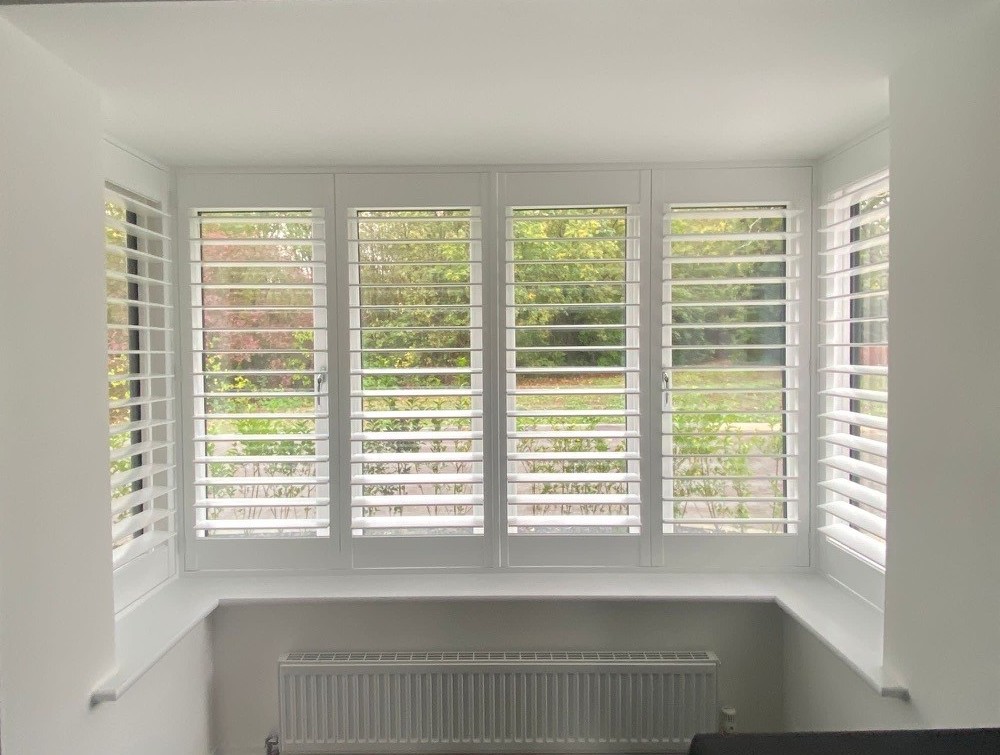
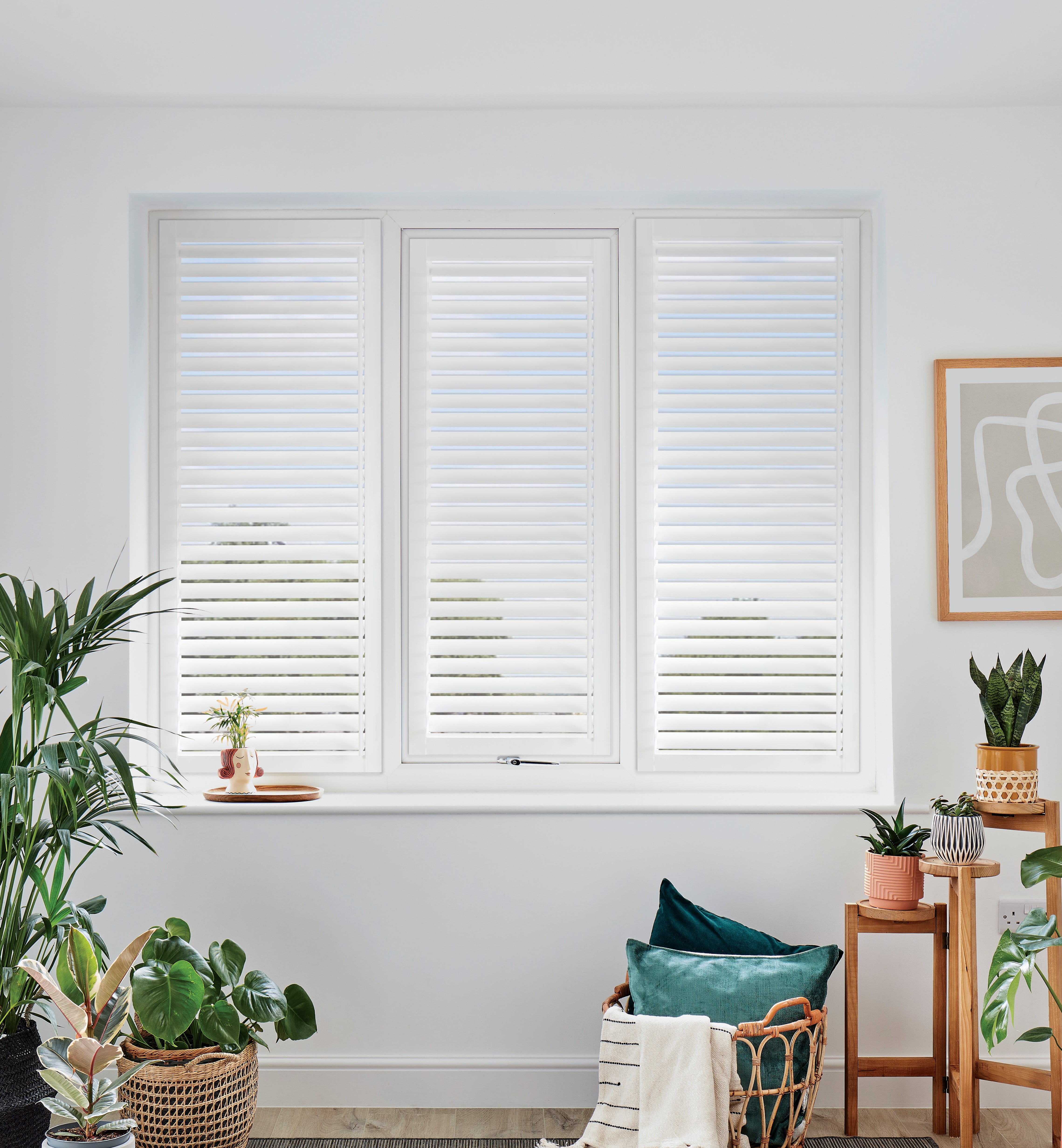
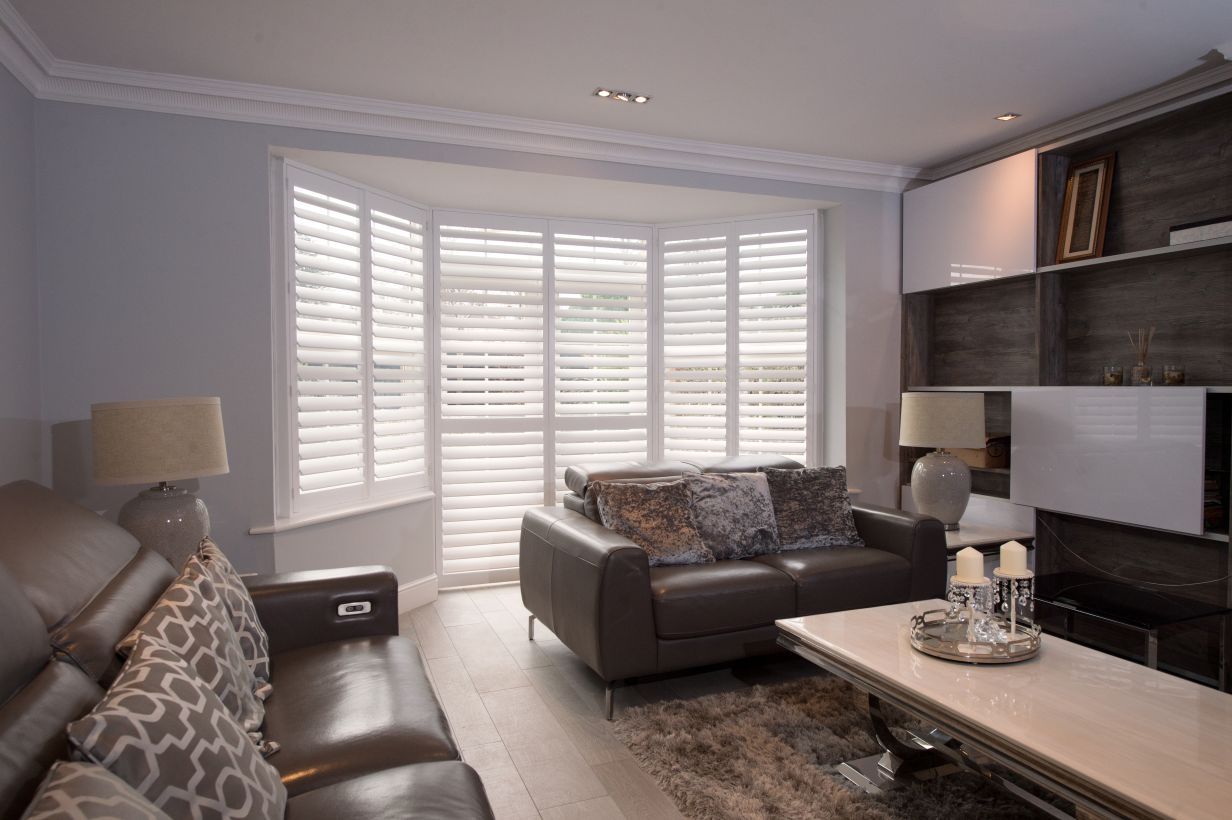
Question 9: What is the company's process if something goes wrong after installation? Ask specifically: who do you contact, how quickly does a technician visit, and are return visits to adjust or correct the installation charged for? A reputable company treats post-installation adjustment as part of the completed job, not a billable service call. Get this commitment in writing. The most persuasive evidence of a company's aftercare behaviour is detailed reviews that mention return visits or issue resolution — search for these specifically rather than overall star ratings. For context on how well-specified shutters perform over a ten-to-twenty-year service life, our article on whether plantation shutters are worth the investment over the long term addresses durability, maintenance, and resale value. For visual reference on how different configurations look when installed — louvred panels spanning a window from sill to head, tier-on-tier, tracked systems across large door openings — reviewing completed projects before your survey appointment sharpens the brief you give the surveyor.
Question 10 and how to act on what you have learned
Question 10: What are realistic lead times, and what happens if they extend? In 2026, composite shutters typically run four to six weeks from confirmed order to installation; hardwood and Paulownia six to eight weeks; aluminium four to eight weeks depending on configuration complexity. Any company quoting significantly shorter times — "two to three weeks from order to fit" — is either holding off-the-shelf stock that is not made to your specific window dimensions, or providing a sales timeline rather than an honest manufacturing one. Ask for the lead-time commitment in writing as part of the order agreement, and ask what notification process is in place if production runs late and your installation date needs to move.
A company that answers all ten of these questions clearly, specifically, and in writing is one you can work with confidently. One that deflects, gives vague answers, or becomes less engaged when questions move past the visual presentation of the product is telling you something important before any money changes hands. Book a free in-home survey with Shutters Factory — our surveyor brings physical samples, records your windows with precision, and confirms a fixed supply-and-fit price at the end of the visit with no obligation to proceed. To see the range of styles and finishes we fit across UK homes, see completed shutter installations from real UK projects before your appointment.