How each tilt rod type works
Every louvred plantation shutter has a mechanism that links all the blades together so they pivot in unison when you want to adjust the angle. That mechanism is the tilt system, and the two common implementations differ in where the linkage sits relative to the panel face.
A visible tilt rod is the bar most people picture when they think of a plantation shutter. It is a narrow vertical strip — typically 10–15mm wide — that runs down the centre or one side of the panel face, attached to each louvre at its front edge. When you push the rod upward, all the louvres tilt to let light in from above; pulling it downward closes them or reverses the angle. The mechanism is entirely on the surface: what you see is what operates the panel.
A hidden tilt rod replaces this surface bar with a gear mechanism built into the stile — the outer vertical rail of the shutter frame. Each louvre is connected to the gear through an internal linkage that passes through the stile rather than across the face of the panel. To operate it, you press any single louvre blade; the gear distributes that movement to every other blade simultaneously. There is nothing on the front face of the panel other than the louvres themselves.
The two systems deliver identical light and privacy control. A 30-degree louvre angle with a hidden rod admits the same amount of light and provides the same sightline block as a 30-degree angle with a visible rod. The tilt system has no effect on panel strength, louvre width options, or frame specification.
How they look from inside the room
The visual difference between the two systems is significant when standing close to the window, and subtler when the shutters are viewed from across the room. At close range, a panel with a visible tilt rod has a clear vertical element crossing the louvres — a dividing line that breaks the horizontal rhythm of the blades. On full-height louvred panels where the blade run extends the complete window height, the rod can read as a deliberate design feature, echoing the vertical stiles of a traditional shutter. On narrower panels or panels with wide 89mm blades, the rod is proportionally slender relative to the blade depth and tends to recede visually.
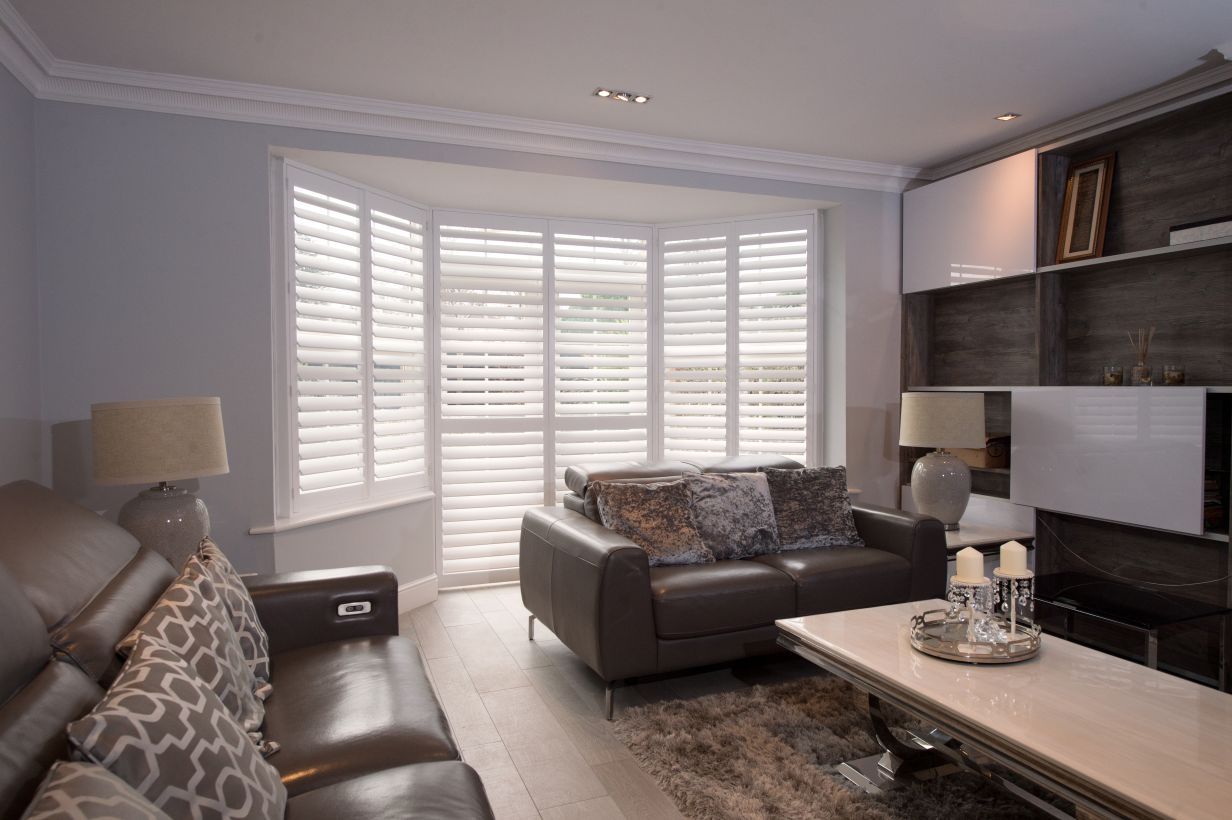
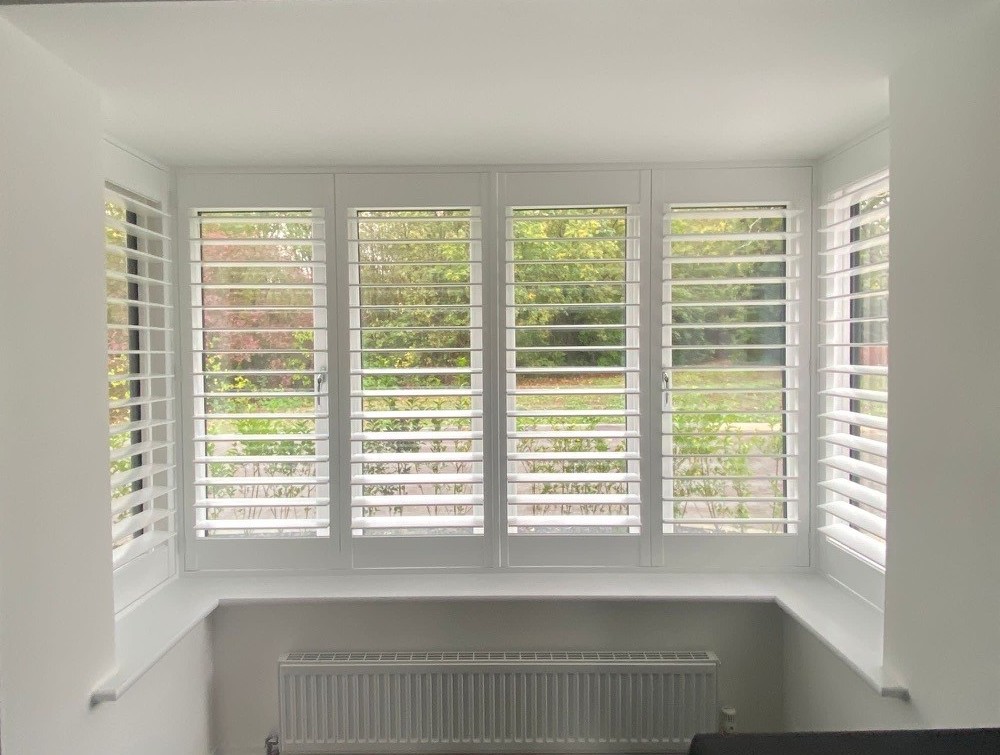
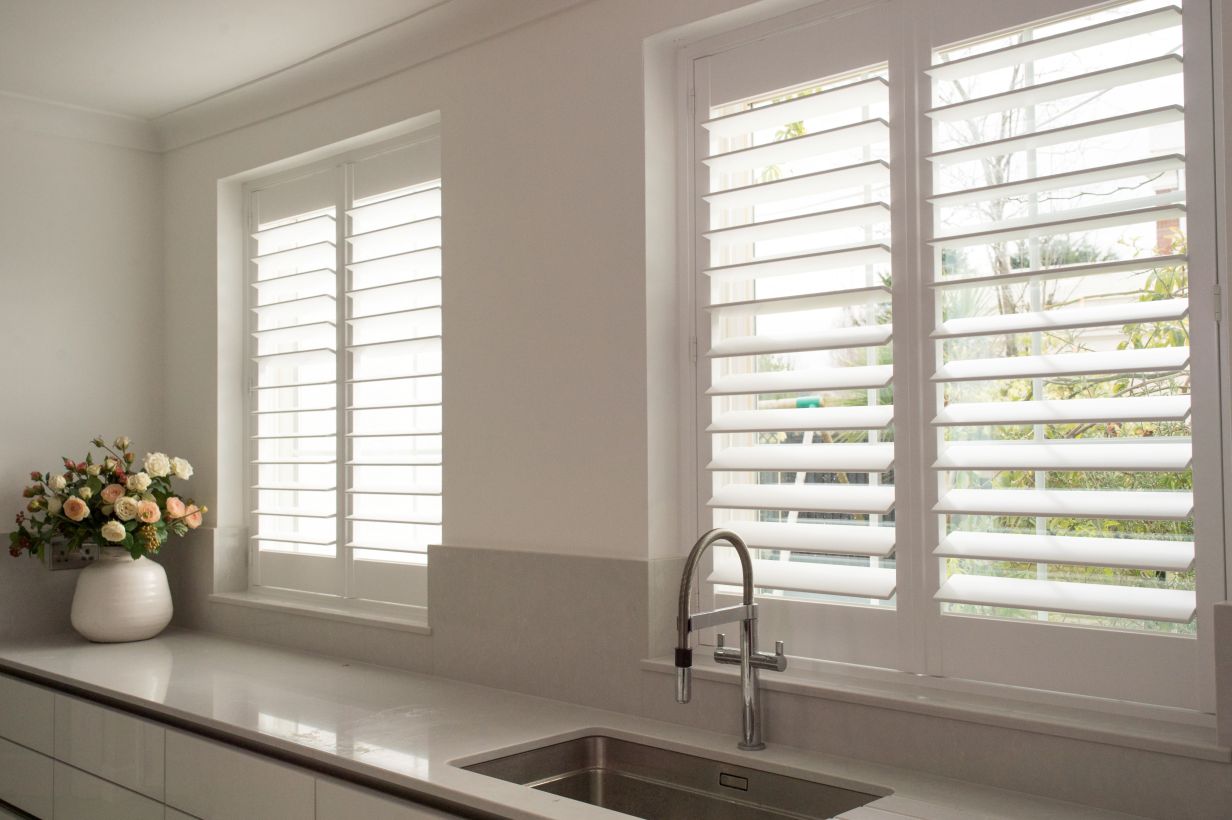
A panel with a hidden tilt rod presents an uninterrupted sequence of horizontal blades from edge to edge. The only visible elements are the outer stiles, the top and bottom rails, and the louvres themselves. The effect is the one associated with contemporary minimal design photography: a flat, layered surface where the hardware is invisible and the geometry of the louvres dominates.
Neither appearance is objectively superior — the choice depends on the interior. For Victorian and Edwardian period homes, a visible tilt rod references the shutters those houses originally had and reads as historically appropriate. For new-build apartments, converted lofts, and interiors with a deliberately paired-back aesthetic, hidden rods suit the surroundings more naturally. Both options are available across our range — browse every material in the made-to-measure range to see which configurations are offered in the material line you are considering, and check the photo library of real UK installs to compare how both look in finished rooms.
Which louvre sizes and panel configurations suit each style
Both tilt rod types are compatible with all three standard louvre widths — 47mm, 64mm, and 89mm — though the visual relationship between the rod and the louvres changes as blade width increases. On a 47mm panel, a visible tilt rod represents a meaningful proportion of the blade depth; the rod is prominent and reads as part of the panel's texture. On an 89mm panel, the same rod looks proportionally narrower, and many homeowners find it less visually intrusive on the wider blade than they expected. Our guide to how the three standard louvre widths compare covers the visual and practical implications of each size in detail.
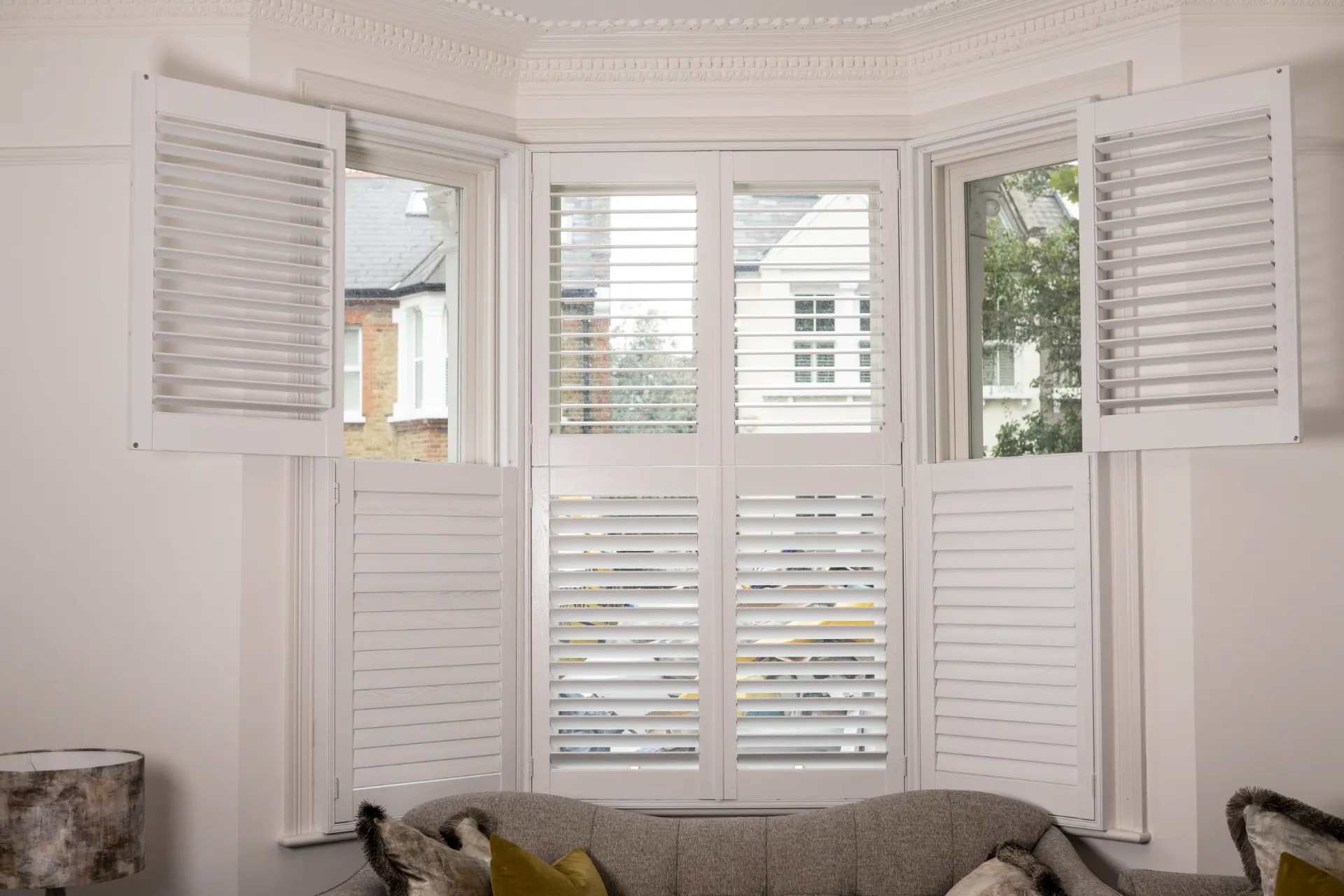
Hidden rods are available on single-tier full-height panels, tier-on-tier shutters where each section operates independently, and mid-rail panels with split-tilt. For mid-rail panels — where the panel is divided into upper and lower louvre sections by a horizontal rail — each section has its own tilt mechanism, and both can be hidden or visible independently. The practical guide to how mid-rails create split-tilt functionality explains how the upper and lower tilt controls interact in a mid-rail configuration, whether the rod is visible or concealed.
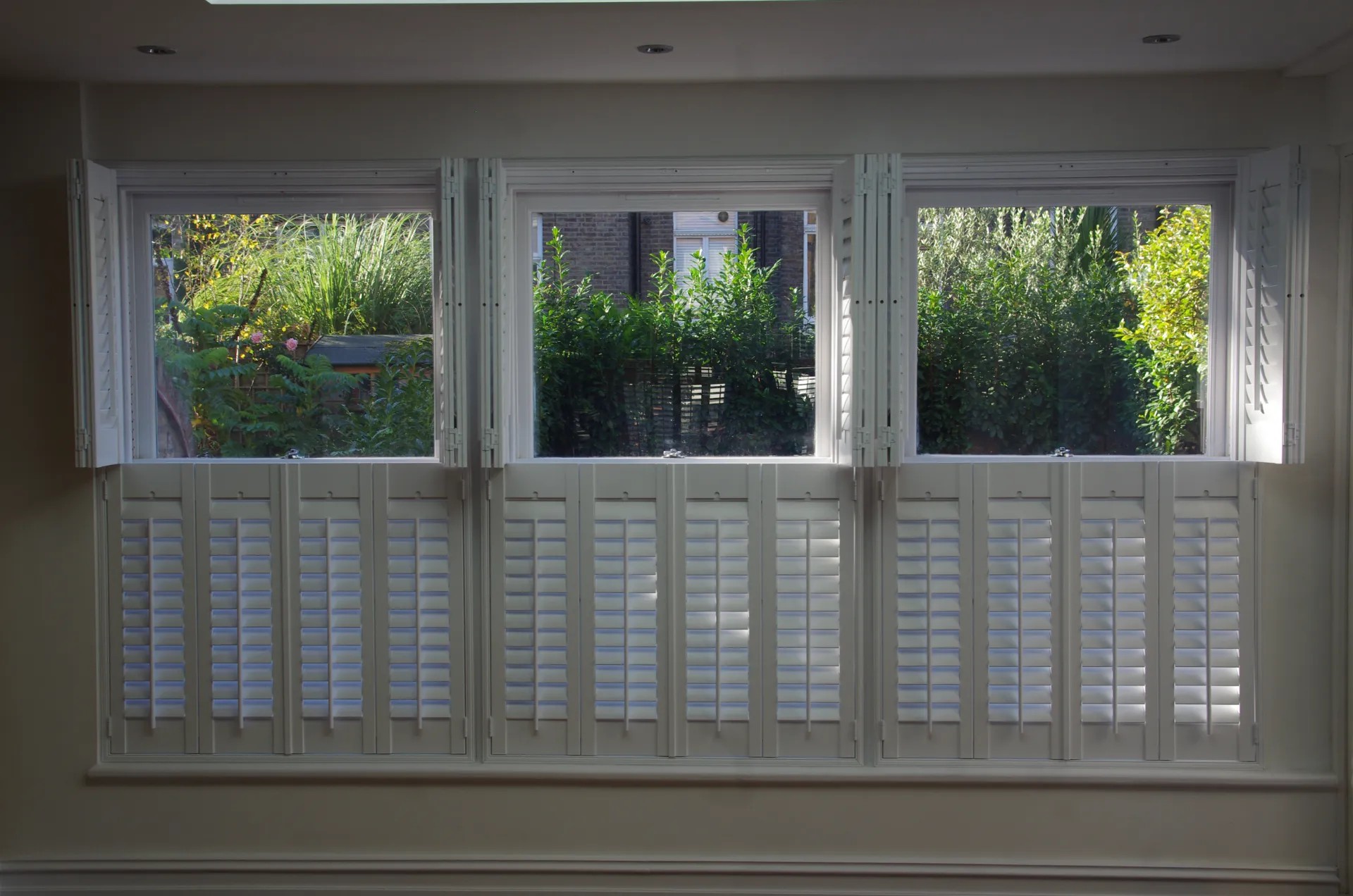
Café-style shutters covering only the lower half of the window are commonly specified with hidden tilt rods in contemporary settings, because the shorter panel height makes the uninterrupted blade surface particularly striking. With no rod breaking the face and the panel covering only the lower sash, the result is a very clean horizontal band of louvres across the window — popular in kitchen and dining room applications where the window is seen at close range.
Is a hidden tilt rod harder to use?
Operating feel is the most common concern raised about hidden tilt rods, and in most cases it is a non-issue in practice. Pressing a single louvre blade and watching all the others move simultaneously is intuitive, and most homeowners adapt within days of installation. For children and elderly users, pushing a louvre blade is as accessible as pushing a rod — neither requires significant dexterity or strength for a standard-size panel.
The relevant variable is panel width and louvre count. A wide panel carrying twenty or more 47mm louvres requires the hidden gear to move a larger number of blades from a single input point. On very wide panels — typically over 600mm — the force required to start the blades moving from a fully closed position can feel heavier than pressing a visible rod on the same panel. This is a tactile difference rather than a mechanical limitation: the gear is designed for the panel width, and the resistance reduces once the blades are in motion.
For panels at standard window widths — typically 350–600mm per panel section — the operating feel of a hidden rod is indistinguishable from a visible rod in everyday use. The surveyor assesses panel width at the appointment and will flag any configurations where the gear weight is worth weighing against the visual preference for a hidden mechanism.
Cost and availability across the range
Hidden tilt rods are available across Shutters Factory's composite, hardwood, and aluminium ranges, though availability varies by product line and louvre width. They are standard in certain configurations and an available upgrade in others. In all cases, pricing is confirmed on the written quotation issued at survey rather than as a generic online price, because the cost interaction between tilt rod type, material range, louvre width, and panel dimensions is specific to each window.
As a realistic guide, hidden tilt rods typically add £8–£18 per panel to the supply-and-fit cost relative to the equivalent visible rod specification — a modest premium for the aesthetic result it delivers. On a typical living room of three or four windows with two panels each, the total difference across all panels is usually well within £100. Whether that premium is worthwhile depends entirely on how visible the rod would be in that specific room and how strongly the interior points toward either traditional or contemporary.
For those choosing hardwood ranges specifically for period properties, it is worth noting that the visible tilt rod has a historical precedent that period home enthusiasts value. Our resource covering what to consider when choosing hardwood shutters addresses the period-specific aesthetic decisions within the hardwood range. The guide to why full-height panels dominate UK installs provides wider context on the specification choices most homeowners settle on, including how tilt rod style fits into the broader decision.
How to decide — and confirming at the survey
The most useful framing for the choice is this: if you stand back from your window and imagine the finished shutters, does the presence of a narrow vertical bar on each panel face read as a design element or an intrusion? For most period homes — Victorian terraces, Edwardian semis, Georgian townhouses — a visible rod is part of what plantation shutters look like and its absence would make the panel feel unusually bare. For contemporary flats, new-build houses, and interior schemes that rely on minimal surfaces and concealed hardware throughout, the hidden rod brings the shutter in line with the wider design language of the room.
A practical tip before the survey: look at both finishes in the same material range rather than comparing a hidden-rod image from one supplier with a visible-rod image from another. Material finish, paint shade, and blade width all affect how the rod reads from the room, and these variables interact more strongly than the rod type itself. The survey appointment is the right time to make the final call — the surveyor can show you samples, indicate the rod position on your actual window, and confirm which option is available in the range that suits your room conditions.
The choice between a hidden and visible rod is independent of other specification decisions. Frame type (L-Frame or Z-Frame), louvre width, material, and panel configuration are each confirmed separately at survey. Our guide to L-Frame and Z-Frame mounting options covers the frame specification side of the survey in detail. For those weighing the broader question of which panel layout best suits their windows, the article on the practical differences between full-height and tier-on-tier configurations is worth reading before the appointment.
Book a complimentary home survey with Shutters Factory and the surveyor will walk through tilt rod options, louvre size, frame type, and material in one visit — arriving with a fixed written quotation and samples to hold against your windows, at no cost or obligation.