What DIY shutters actually means — and the important distinctions
In the UK market, "DIY shutters" covers two very different products that are frequently conflated. The first is a genuinely self-installed option — a tension-mounted or clip-fit shutter system designed to hold itself in a window reveal without screws, wall anchors, or any permanent fixing. The second, marketed on many comparison sites as "DIY", is a made-to-measure or off-the-shelf shutter ordered online with the expectation that the buyer fits it using standard hand tools. These are fundamentally different propositions, and confusing them is where most buying mistakes begin.
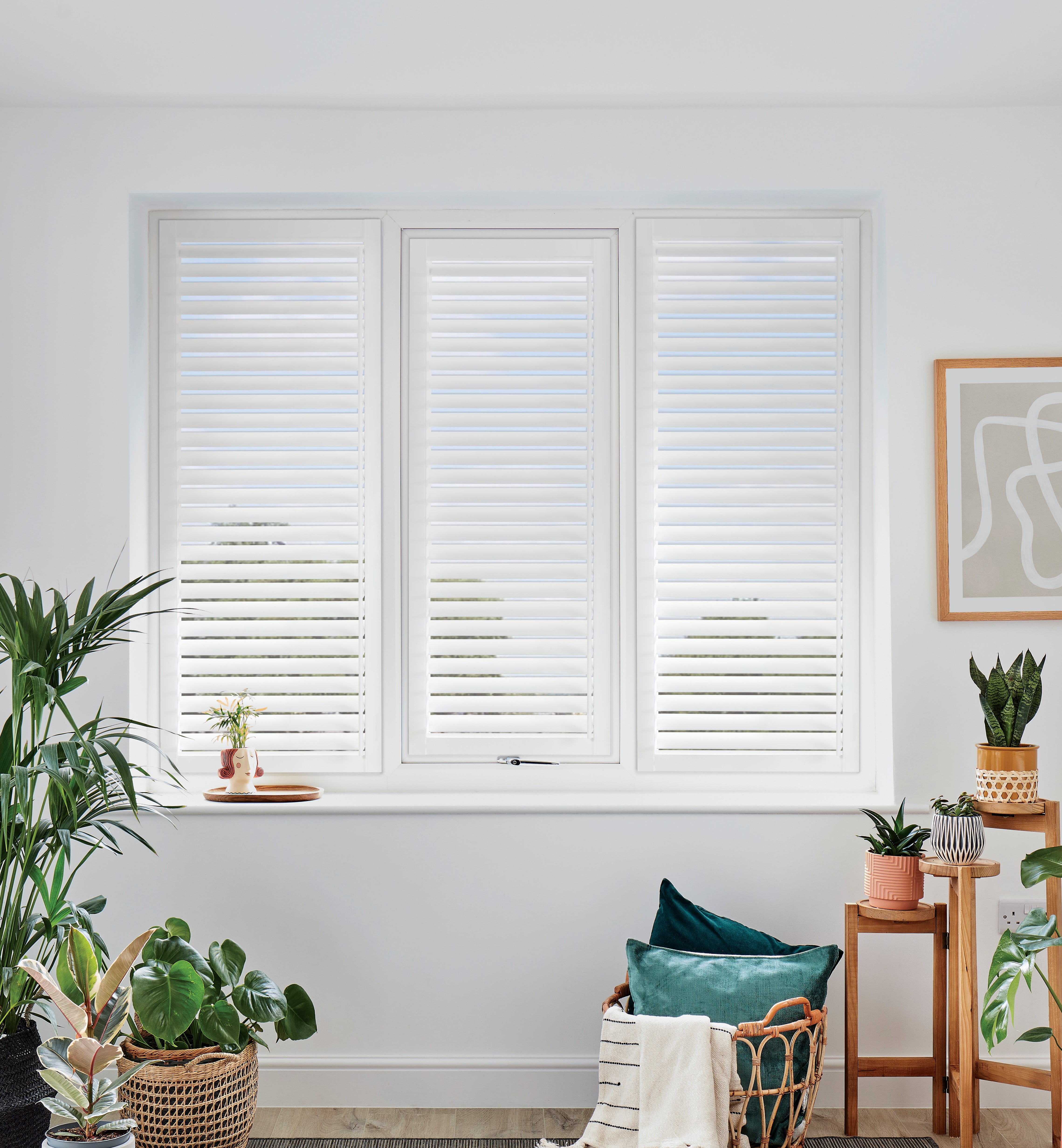
Tension-fit panels that clip into a window reveal without drilling or permanent fixing — such as the Luma range — are the most practical genuine DIY option in the current UK market. The frame is held in place by a top-tension mechanism that applies spring pressure to the head and sides of the reveal: no specialist tools, no screws, and no permanent contact with plasterwork or original timber surrounds. For the full picture of how easy-fit systems are specified and installed, our guide to easy-fit shutters and the fast-installation process covers the system in technical detail. Separately, ordering shutters from a supply-only source online and fitting them with general DIY tools is an entirely different undertaking — one with a distinct set of risks addressed in section six below.
What the professional made-to-measure route delivers
Made-to-measure shutters begin with a professional survey. A trained surveyor visits your home, measures every window in scope to the millimetre, checks reveal depths, and identifies non-standard conditions — irregular openings, sloping sills, unusual sash profiles, shaped window heads — recording any access or fitting constraints that affect the installation. The measurement data generates a precision production order: your shutters are manufactured to fit those specific windows and no others, primed and painted to your confirmed colour, quality-checked against the specification, and installed by a professional fitter who adjusts hinge tension, louvre operation, and panel alignment on the day.
This process costs more than ordering a panel online and installing it yourself — but the supply-and-fit price is all-inclusive. Composite made-to-measure shutters start at approximately £380–£580 per window; hardwood runs £550–£750; aluminium tracked systems across a bifold door opening are priced per linear metre and typically range from £1,200–£2,400 for the full door width. These figures include the survey, manufacture, delivery, and professional fitting. There is no separate installation fee and no charge for the initial survey visit, which carries no obligation to proceed.
The honest cost comparison
Off-the-shelf DIY shutters in standard sizes — typically available in 60 cm, 90 cm, and 120 cm width increments — are sold online at £80–£200 per panel, before any fitting cost is added. For a standard-sized window, two panels might cover the opening at a materials cost of £160–£400. The difficulty is that standard UK windows are not actually standard: Victorian, Edwardian, and interwar properties — which make up the majority of London and Home Counties housing stock — have window dimensions that rarely align with the size increments offered by off-the-shelf kits. A panel that is too narrow or too short for the opening leaves a visible gap at the frame edge that no amount of careful fitting corrects.
Easy-fit tension-mounted systems such as Luma cost approximately £200–£350 per window fully kitted, and self-installation is straightforward for a standard window in a modern property. For renters or homeowners with a short planning horizon, that figure represents a complete shutters installation with no marks left on the reveal. Made-to-measure supply-and-fit costs more — but for an owned property with period windows, the premium buys a confirmed fit, a professional installation, and access to materials and configurations no off-the-shelf kit can replicate. For a thorough treatment of the investment case, our analysis of whether the cost of plantation shutters is justified works through the financial and practical argument in detail.
When easy-fit or DIY shutters genuinely work
The two situations where easy-fit or DIY installation makes clear sense are: rented properties where permanent fixings are not permitted, and standard-sized modern windows where precision fit is achievable without custom manufacture.
Renters are the primary audience for tension-mounted systems. A leaseholder in a Victorian mansion flat conversion cannot drill into original timber window surrounds without risking a deposit or breaching a lease. An easy-fit system resolves this directly: the installation is reversible, leaves no trace on the reveal, and can be moved to the next property when the tenancy ends. The full Luma guide for renters and quick-install projects sets out which window types and configurations the tension-mount system accommodates and where the limits of the design apply. For a wider view of the options available in rental accommodation — including the landlord permission question and the practical differences between fixings that require consent and those that do not — what landlords and tenants need to know about shutters in rental homes covers the regulatory and practical landscape in full.
Standard new-build windows — post-2000 construction, uPVC or aluminium frames, regular rectangular openings — are a better candidate for off-the-shelf solutions than period windows. Dimensions are more predictable, tolerances are tighter, and the gap between a standard panel and the actual opening is more manageable. For these windows, a self-installed shutter is viable provided the buyer measures carefully and is comfortable with the finish result.
What made-to-measure can do that DIY cannot
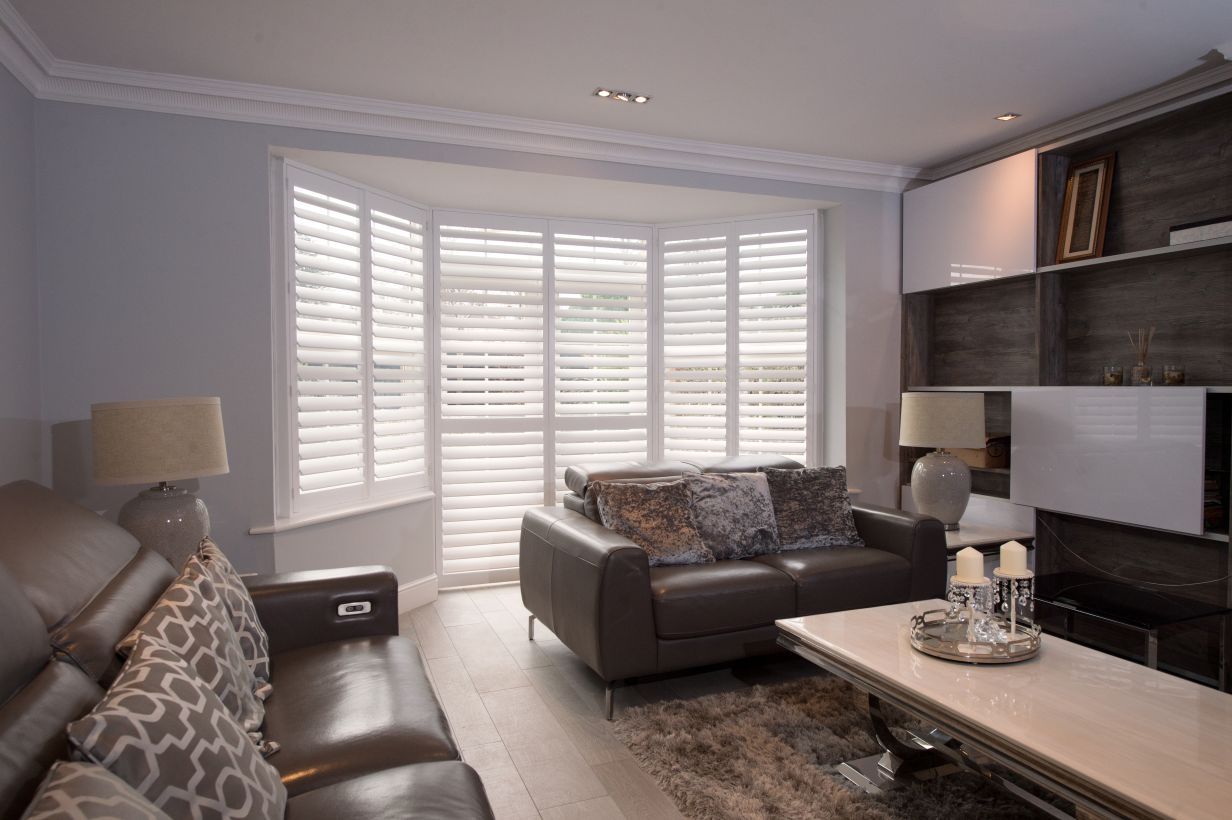
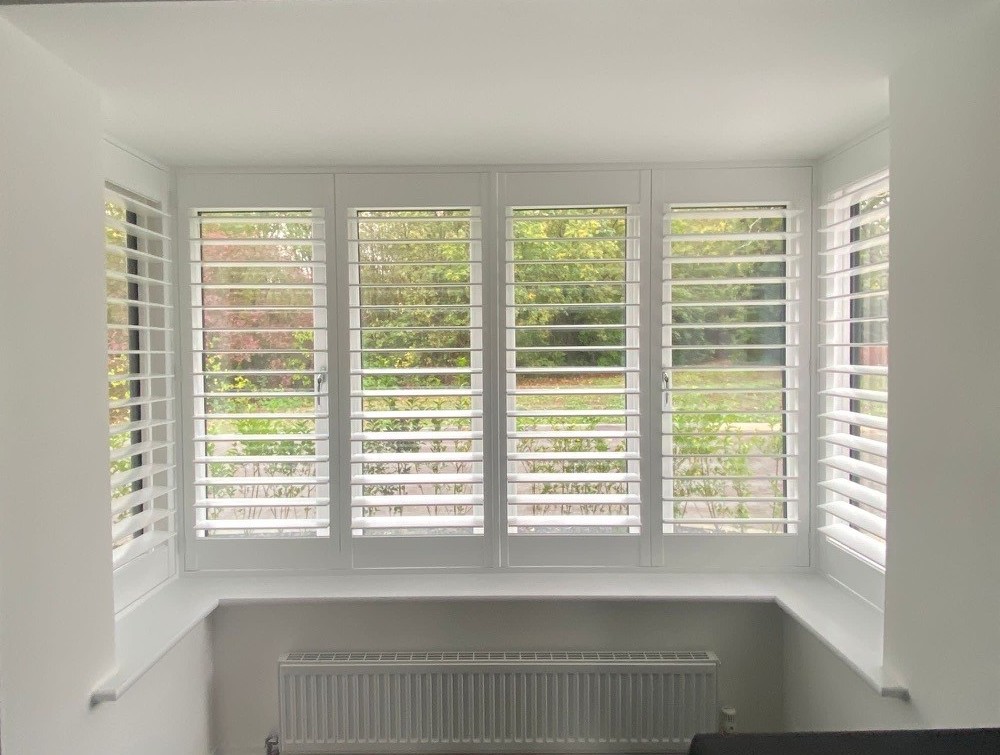
The practical limits of off-the-shelf and easy-fit shutters become apparent as soon as the window departs from the rectangular norm. Bay windows — which require individual panels angled to the geometry of each facet, with custom-hinged frames that return to the wall at the correct compound angle — cannot be covered by any off-the-shelf product. Shutters manufactured for bay and angled window openings require site-measured custom production for every panel. The same applies to arched window heads, sloping attic casements, shaped decorative openings, and reveals that are not square to the face of the wall.
Tracked systems across bifold and patio door openings — where multiple large panels must run precisely on a head track for smooth and reliable operation — require aluminium manufacture and professional track installation from the outset. Tracked shutters designed for bifold and wide door openings are incompatible with any DIY approach: the head track must be fixed level to the structural head or ceiling, each panel must be individually hung and balanced, and the complete system must be checked for friction-free travel across its full range — tasks that require professional experience of aluminium shutter hardware.
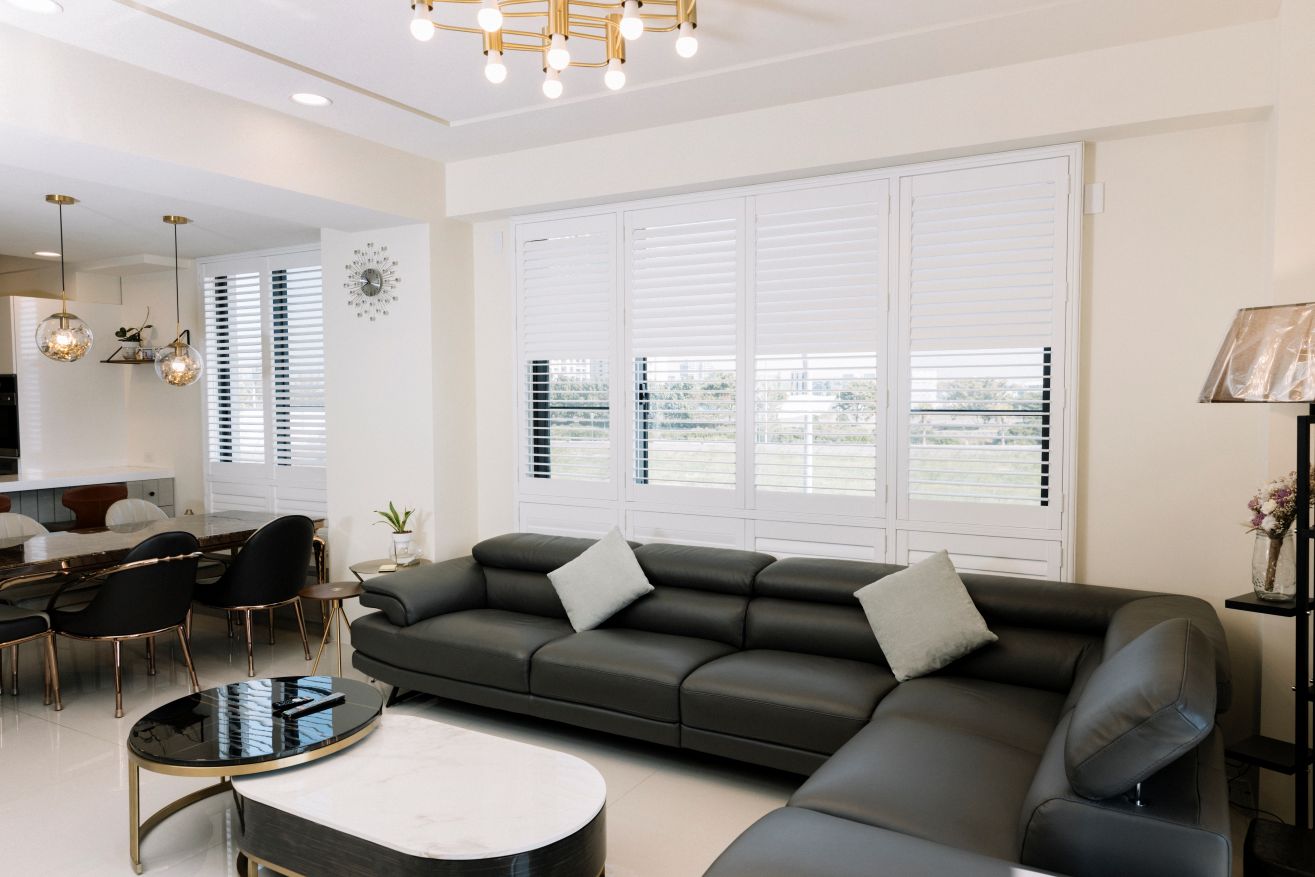
Beyond configuration, the material range is simply wider on the made-to-measure route. Hardwood, composite, and aluminium are all available with the full louvre width choice, the complete colour palette, and the specific frame profiles each opening requires. Off-the-shelf products are predominantly polymer, with limited louvre width and colour options. To see how each material reads in a finished installation, real project photography from UK homes we have fitted covers the full range of materials, configurations, and room types.
The installation: what is involved and where things go wrong
Professional installation of made-to-measure shutters takes two to three hours per room for a standard window configuration. The fitter arrives with all necessary tools, every panel, and the fixings appropriate to the reveal material — timber, plaster, or masonry. The homeowner is not involved in the installation beyond clearing access to the windows. Any site condition that differs from the survey record — a reveal that proves narrower at one side, a sill that is not level — is resolved by the fitter on the day without additional charge.
DIY installation from a supply-only source is a different proposition. Fitting a shutter frame into a reveal requires the frame to be perfectly plumb and level across the full height of the opening: a frame that is out of plumb by even two or three millimetres causes the panel to bind against the frame edge and louvres to sit unevenly when closed. Period masonry reveals rarely offer a flat, plumb surface without packing, and achieving a clean result requires patience, a reliable spirit level, and confidence working at height for upper-floor windows. The most common outcome of a DIY shutter installation is a panel that closes adequately but leaves visible light gaps at the frame edges — a direct consequence of frame misalignment or a panel that is fractionally undersized for the measured opening. How window measurement works for made-to-measure shutters explains the precision required and why professional measurement at the survey stage eliminates the most common source of dimension error before any panel enters production.
Making the decision: a clear framework for UK buyers
The decision reduces to three questions. First: do you own or rent the property? If you rent and your windows are a standard size, a tension-mounted easy-fit system is the practical route. If you own, made-to-measure supply-and-fit is almost always the better answer. Second: are your windows a standard rectangular size? In the majority of UK housing — Victorian, Edwardian, interwar, and many postwar builds — they are not, and an off-the-shelf panel will not close cleanly against the frame. Third: how long do you plan to stay? A made-to-measure installation pays back over ten or more years of daily use; if the planning horizon is two to three years, an easy-fit alternative may be sufficient.
For anyone who owns a UK property with non-standard, period, or complex windows, the made-to-measure route is the right one. The professional survey, precision manufacture, and professional fitting are not optional extras — they are the mechanism by which shutters are guaranteed to fit correctly and operate cleanly for the life of the installation. Request your free home survey and written quotation from Shutters Factory — your surveyor brings material and colour samples, measures every window in scope, and leaves a confirmed all-inclusive supply-and-fit price with no obligation to proceed.