Are shutters truly blackout?
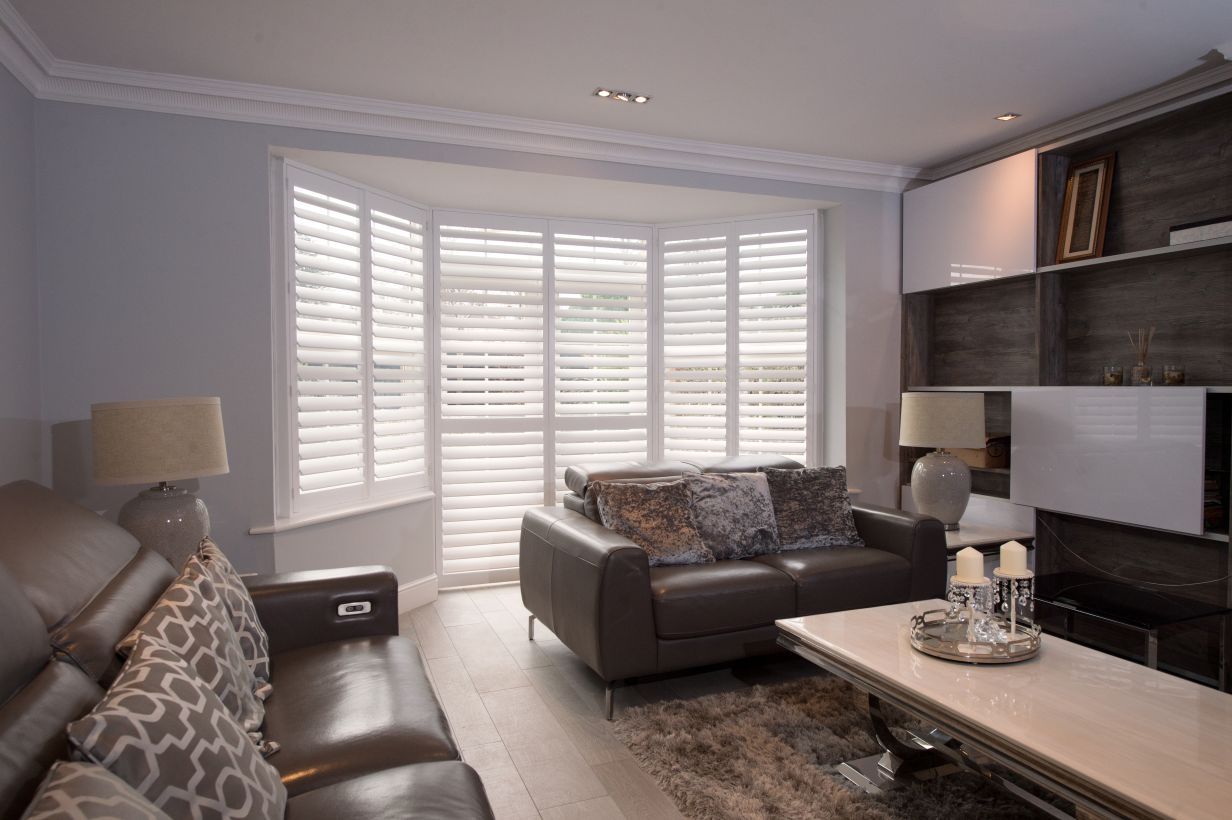
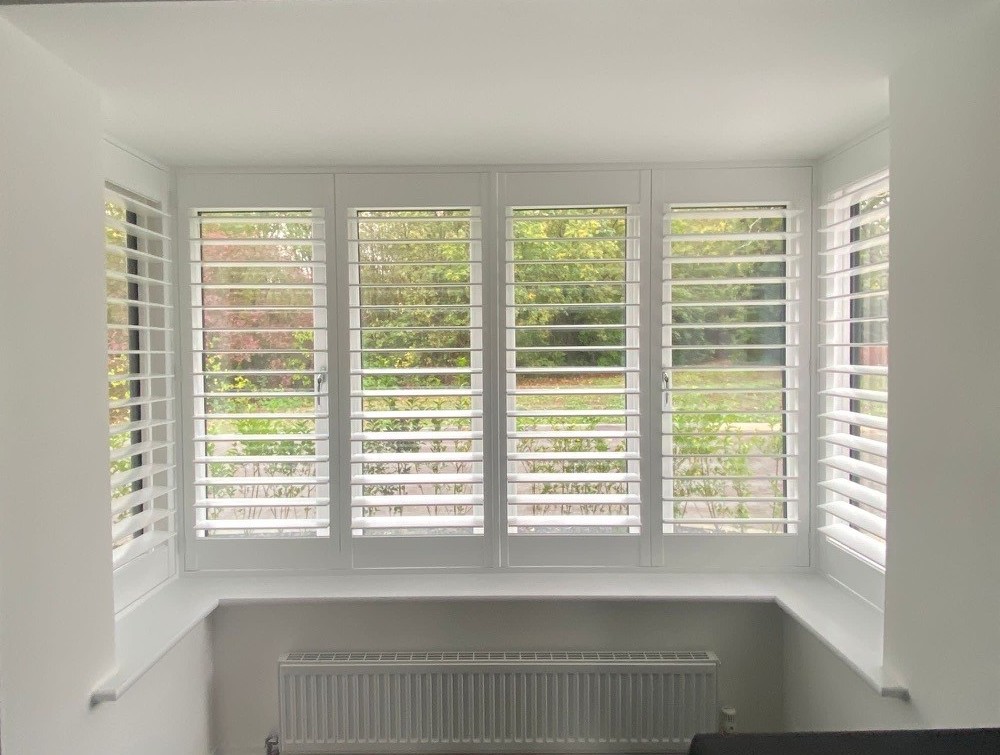
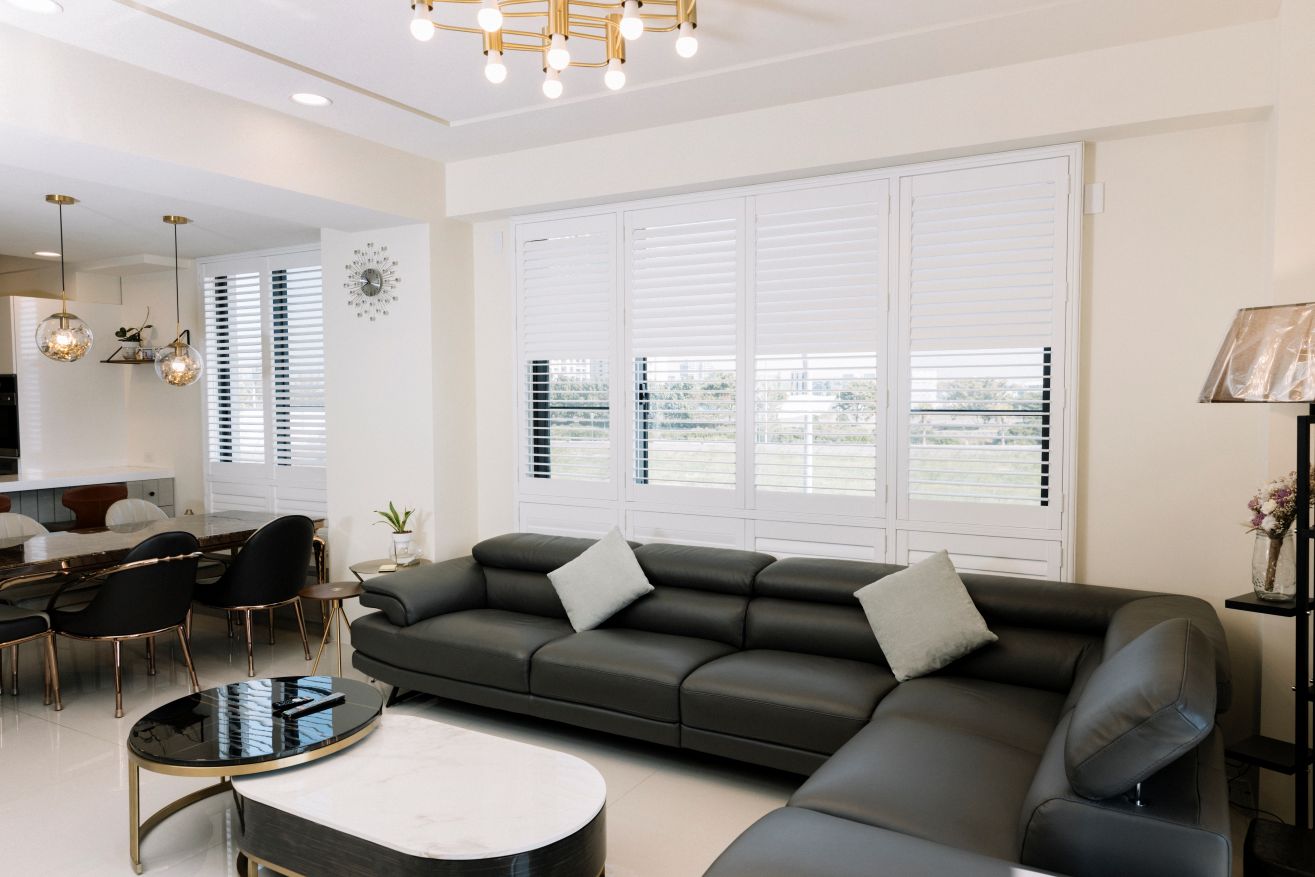
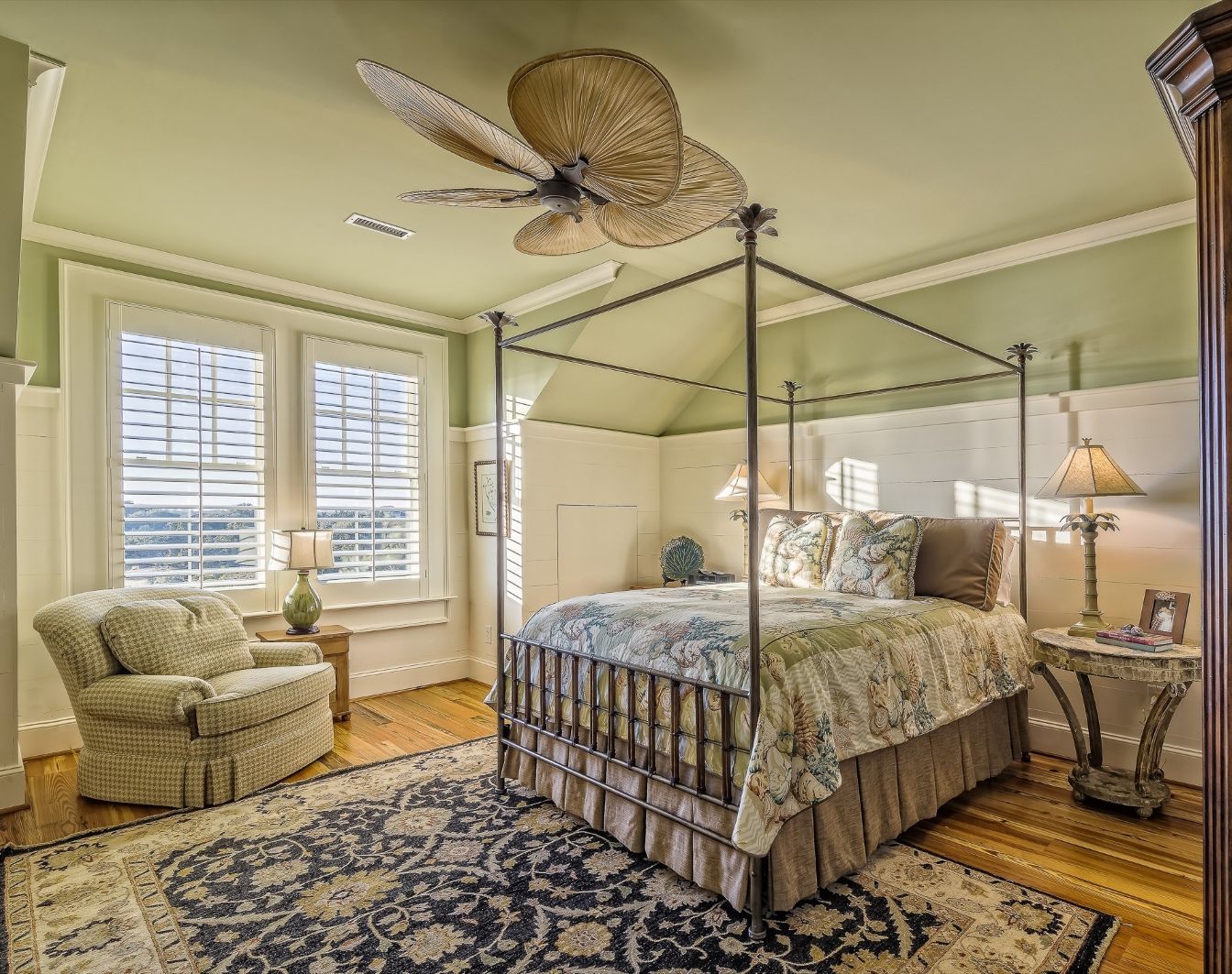
Closed louvres on a quality shutter block roughly 95–98% of light. The remaining gap is around the edge of the frame and between louvres. For light-sensitive sleepers and children, that small amount can still be noticeable on summer mornings.
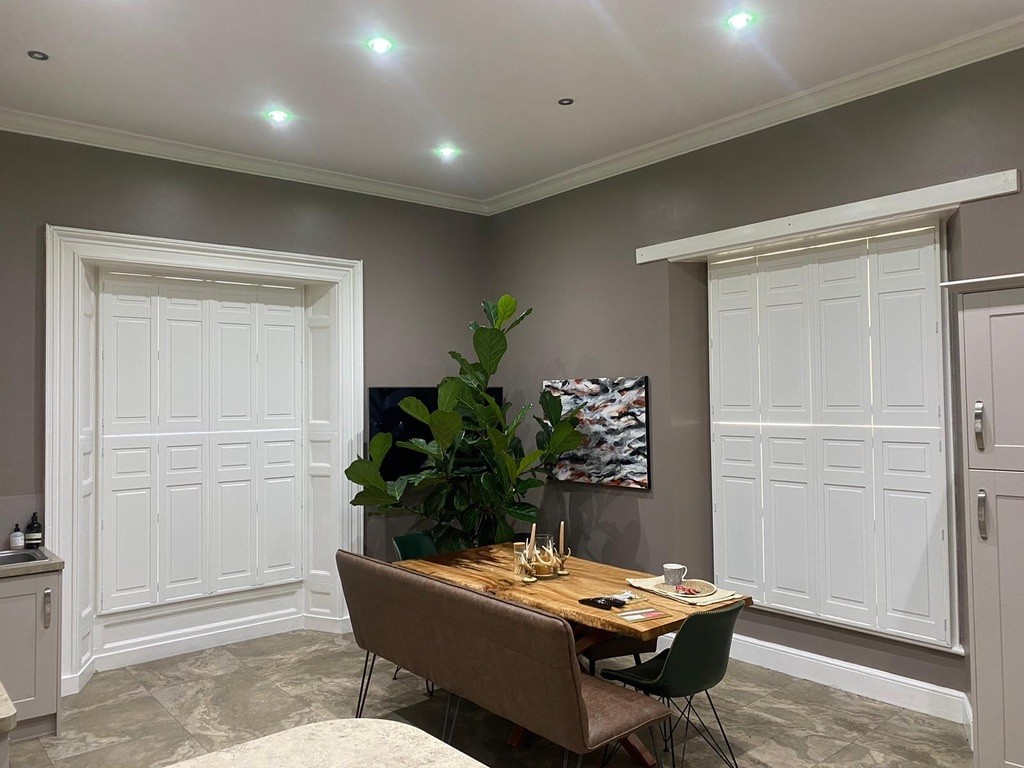
For true blackout, two options work: solid panel shutters (no louvres, fully closed surface — see solid panel shutters) or louvred shutters with a blackout liner behind them.
Best style for a bedroom
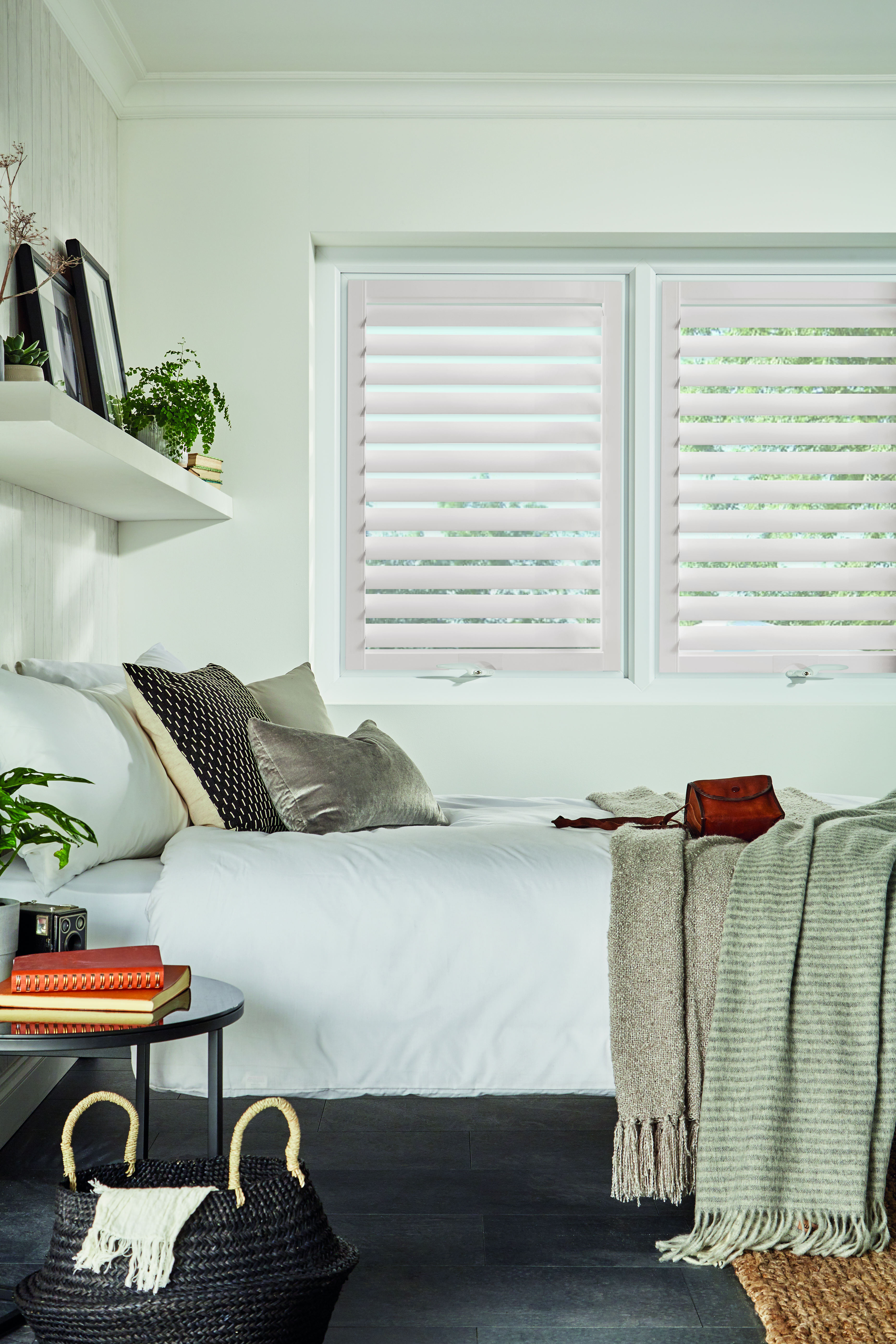
Tier-on-tier is the most popular bedroom style in the UK. The bottom half stays shut for privacy and blackout while the top half opens to ventilate or let early light in.
Full-height with a mid-rail is the second choice — slightly cleaner look, slightly less flexibility. See tier-on-tier and full-height.
Privacy on street-facing bedrooms
Closed louvres give complete visual privacy from outside, even at night with the room lights on. There is no need for net curtains or additional blinds.
For ground-floor bedrooms with passers-by directly outside, café-style shutters covering only the lower half balance privacy and light.
Children’s bedrooms
Two things matter in a kid’s room: blackout for nap times and safety. Cordless shutters are inherently safer than blinds with cords. Pair the shutters with a blackout liner for daytime sleep.
Mimeo composite wipes clean of crayon and sticky fingers — the practical choice for small children.
Materials and finishes
Bedrooms are dry rooms — any material works. Most UK installs use composite for its price and ease of cleaning, with hardwood as the upgrade where the rest of the room is finished to a high spec.
Stick to neutral whites and warm off-whites. Bedrooms benefit from calm palettes, and shutters in strong colours can dominate the room.