Where aluminium beats every other material
Dura aluminium shutters are not a luxury upgrade for the sake of it. They earn their place when the other materials physically cannot do the job:
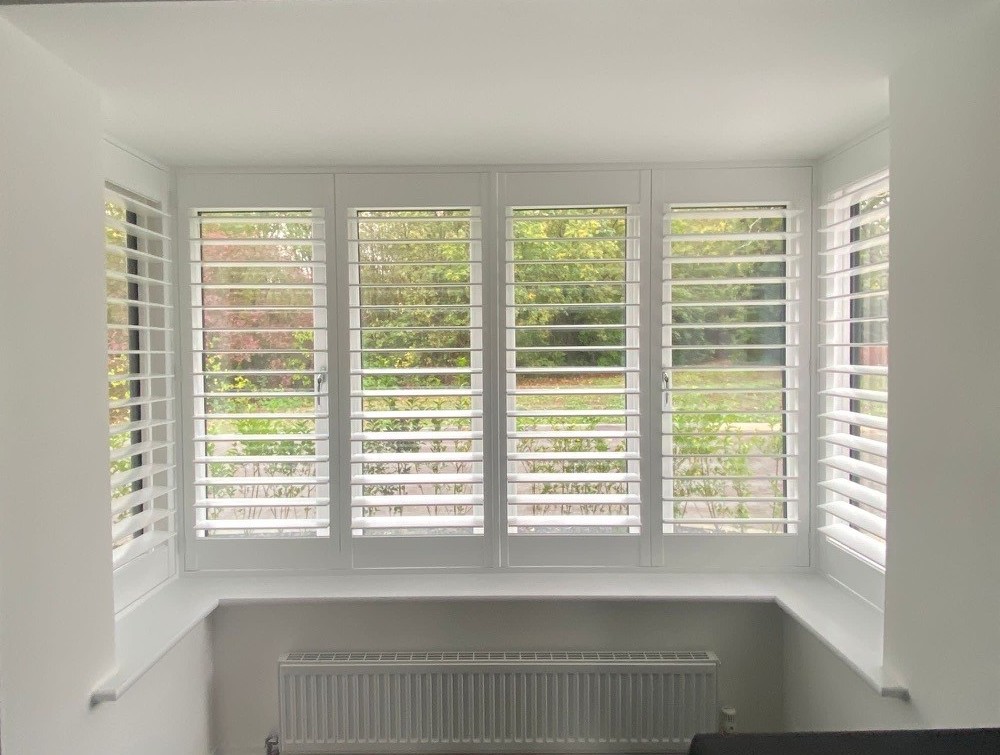
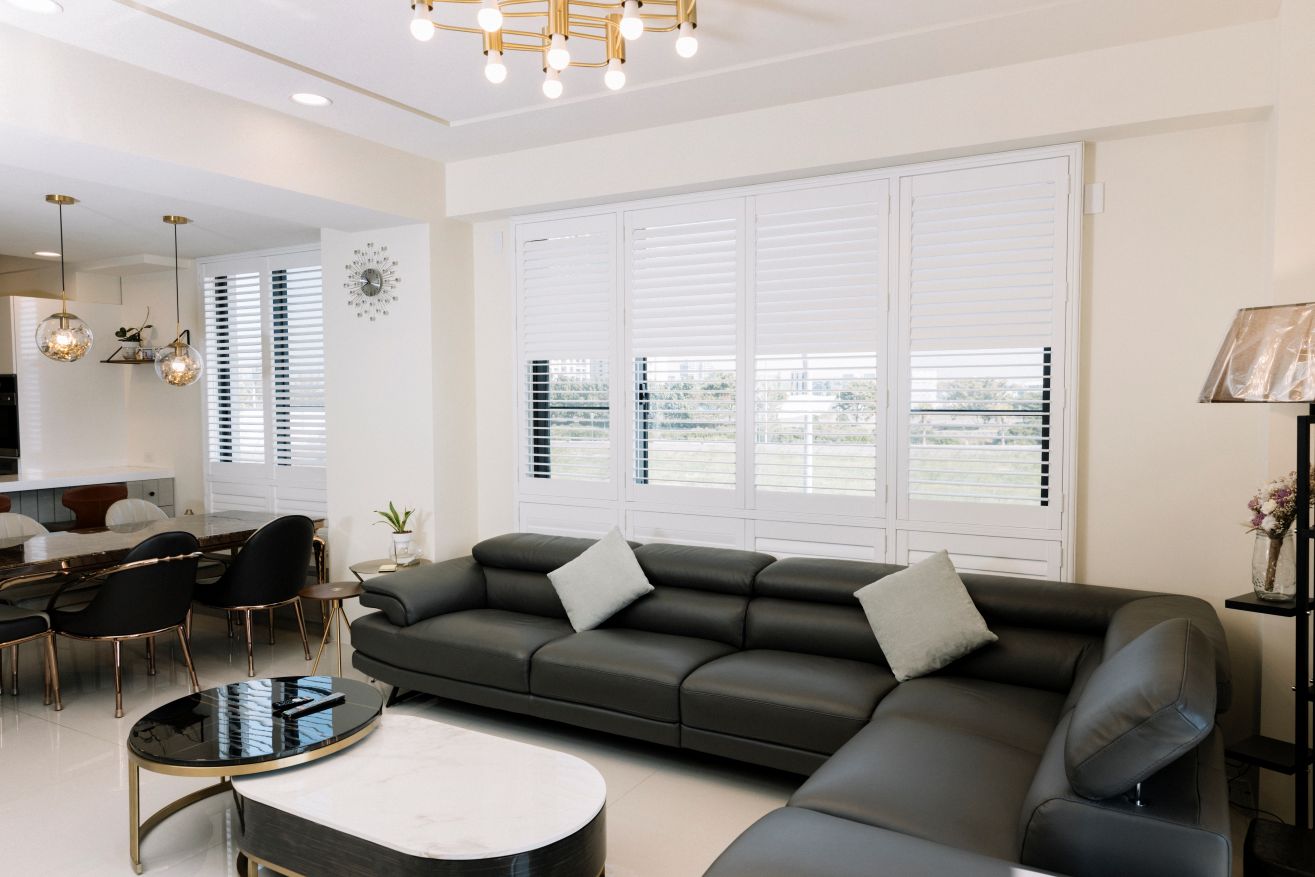
- Wide windows. Aluminium panels can span 900 mm+ without sagging. Composite tops out around 800 mm; wood usually 750 mm.
- Exterior installs. The only material rated for outdoor use without quick degradation.
- Coastal homes. Salt air corrodes most metals — Dura’s coating is rated for marine environments.
- Security applications. Solid aluminium is genuinely difficult to force compared with wood or composite.
Where aluminium does not earn its money
In a normal living room with a 1 m wide window, aluminium gives you no real benefit over composite. You pay 30–50% more for properties (heat resistance, span, exterior rating) you will never use.
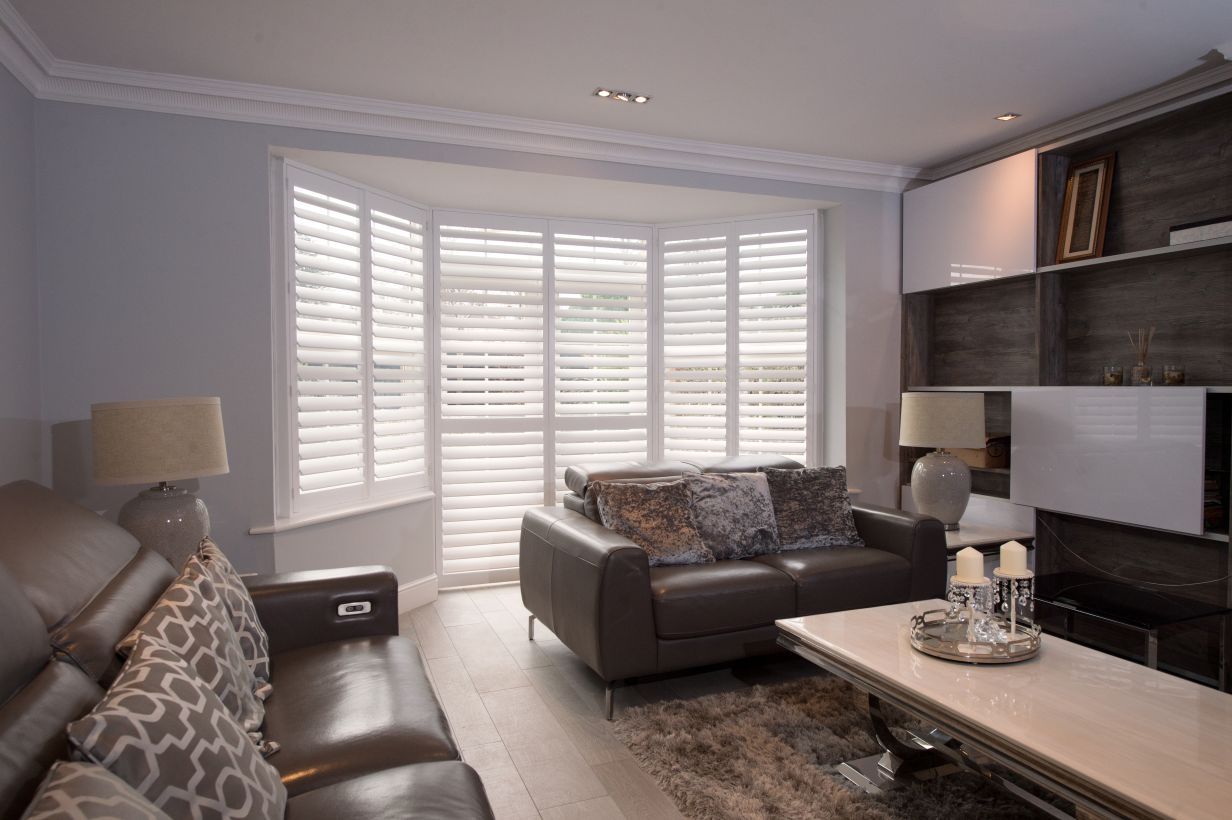
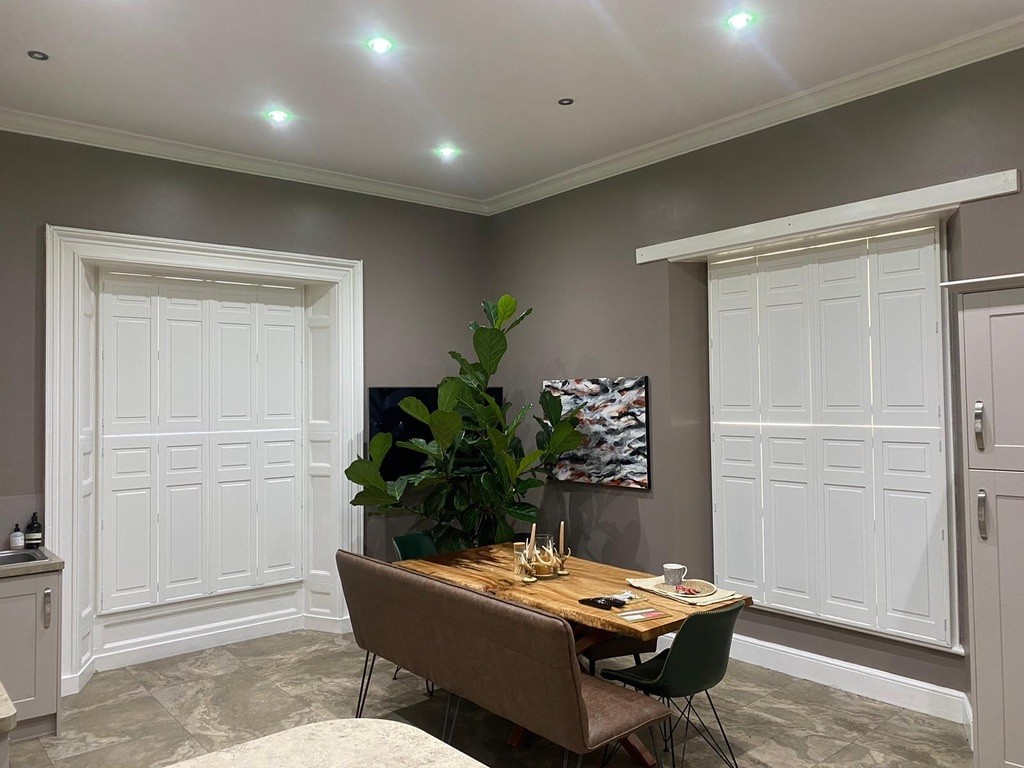
In period homes, the slightly cooler look of aluminium can clash with traditional architecture. Hardwood usually suits the property better.
Costs and warranty
Expect £420 per m² and up for Dura aluminium supply-and-fit, rising for security-rated configurations. Warranties typically run 25 years on the panel itself, with hardware terms separate.
Lead time is comparable to composite and wood — usually 4–6 weeks from survey to install.
Best UK use cases
The installs where Dura is the obvious right answer:
- Bi-fold doors and patio openings up to 6 m wide
- Coastal properties in Brighton, Bournemouth, the Kent coast
- Conservatories and orangeries with large glazed runs
- Wet rooms and pool houses
- Commercial use (restaurants, offices) where durability matters more than period look
How aluminium compares to composite at a glance
A quick side-by-side for the most common decision:
- Cost: aluminium 30–50% higher
- Span: aluminium up to ~1.2 m, composite up to ~0.8 m
- Lifespan: aluminium 30+ years, composite 25–30
- Look: composite is closer to wood in feel; aluminium has a slightly cleaner, more modern edge
- Exterior use: aluminium yes, composite no